


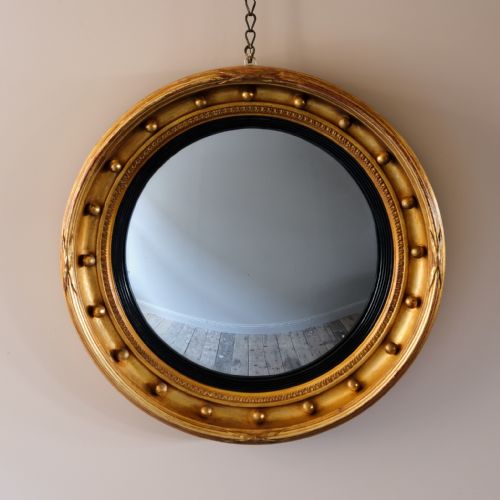


Late Regency Wall Mirror
A late regency wall mirror brings crisp classical balance and deep historical character to an interior.
Late Regency Wall Mirror
A late regency wall mirror brings formal classical lines and reflective depth to a room, appearing in forms that range from circular convex plates to broad overmantel formats. These pieces typically date from the nineteenth century, including both authentic period works and later revival pieces.
The most frequent examples found in these listings are giltwood convex mirrors and wide overmantel mirrors. They utilise traditional formats designed to bounce light across a parlour or drawing room, matching the styles recorded as Regency, Georgian, and Victorian.
Buyers will encounter wall mirrors, overmantel mirrors, and pier glass mirrors framed in giltwood, gesso, ebonised wood, and pine. These objects reflect the decorative ambitions of the nineteenth century through architectural framing and gilded finishes.
How they were made
Makers built the structural carcases of these frames from pine and general wood, applying layers of gesso to create smooth surfaces suitable for gilding. This combination allowed craftsmen to model intricate decorative details, such as carved friezes and convex bezels, before applying gold leaf.
Mirrors utilise historic glass plates, occasionally featuring specialist embellishments like eglomise decoration on glass panels. The silvering and reflection characteristics depend upon nineteenth-century glass production techniques.
Late Regency Wall Mirror Retail Price Guide 2026
Typical asking prices for late regency wall mirror among the pieces listed under this phrase on Sellingantiques today, from the lower quarter to the upper quarter. They describe what is for sale here now, not the wider market.
Convex mirrors were nicknamed banker's mirrors because their wide-angle view let shopkeepers keep an eye on patrons.
What varies in quality
The sophistication of the carved and gilded ornament distinguishes standard examples from superior pieces. Crisp definition in the gesso mouldings and the preservation of the original gilt finish indicate higher craftsmanship.
The survival of original glass plates and specialised decorative elements, such as eglomise panels or chariot friezes, elevates the standing of an individual mirror. The integrity of the wooden carcase beneath the gesso further separates exceptional survivals from heavily restored iterations.
The Late Regency Wall Mirror Glossary
- Giltwood
- Wood carved and coated with gold leaf. This finish defines the bright, reflective appearance characteristic of nineteenth-century formal mirrors.
- Gesso
- A plaster-like mixture applied to wood carcases as a base for gilding. Craftsmen carved intricate motifs directly into this layer.
- Convex mirror
- A round mirror with a bulging glass plate designed to reflect a wide panoramic view of a room. These pieces were often framed with gilt spheres.
- Overmantel mirror
- A wide mirror specifically proportioned to hang above a fireplace mantelpiece. They often feature multiple plate sections or detailed friezes.
- Eglomise
- A technique involving cold painting and gilding on the rear face of glass. It appears as decorative borders on pier glass mirrors.
- Pier glass
- A tall, narrow mirror designed to hang on the wall space between windows. These pieces maximised natural light in period rooms.
Late Regency Wall Mirror: Frequently Asked Questions
What is a late regency wall mirror?
A late regency wall mirror is a decorative looking glass made during the early to mid-nineteenth century. These items incorporate classical motifs and gilt finishes typical of the Regency and Georgian eras.
They appear in formats ranging from circular convex glasses to wide overmantel designs intended for principal reception rooms.
Where were these mirrors hung?
These mirrors were traditionally hung in drawing rooms, parlours, and dining spaces to enhance natural illumination. Pier glass versions occupied the narrow wall spaces between windows.
Overmantel variants were positioned directly above fireplace surrounds to anchor the decorative scheme of the room.
How do I identify the period?
Dating relies upon examining the framing materials, construction techniques, and glass characteristics. Nineteenth-century examples often feature pine carcases coated in gesso and gold leaf.
Stylistic cues bridge late Georgian, Regency, and subsequent Victorian revival movements through classical proportions and ornament.
What materials make up the frame?
Frames are constructed primarily from wood and pine, providing a stable foundation for decorative elements. Gesso is moulded over the wood to create sharp architectural details.
Many examples feature gilder's work in gold leaf, alongside occasional ebonised wood details on specific nineteenth-century models.
How should I care for the glass?
Historic glass and original gilding require gentle maintenance to preserve their surfaces. Cleaning should involve soft, dry cloths without harsh chemical sprays.
Avoiding direct moisture protects both the gesso layers and the historic silvering on the rear of the mirror plates.