


Late Georgian Chairs
When you search for late georgian chairs, you encounter seating built during the transition from the eighteenth century into the regency period.
Late Georgian Chairs
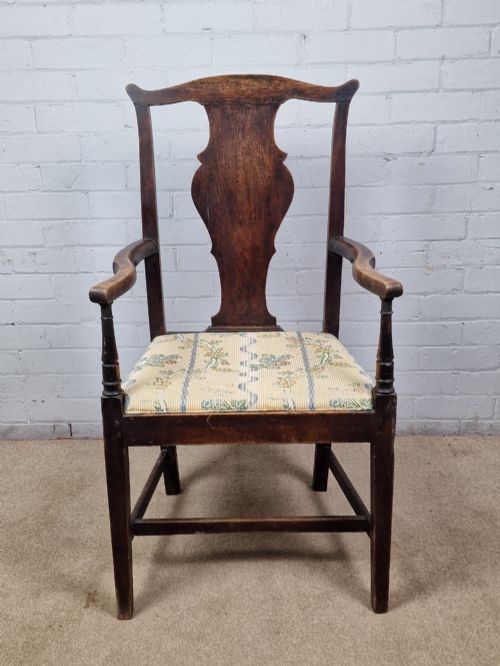
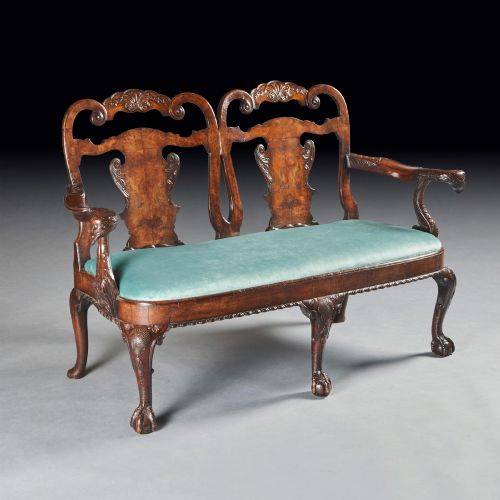
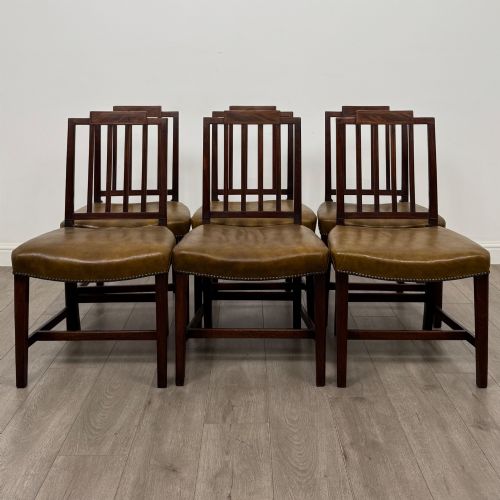
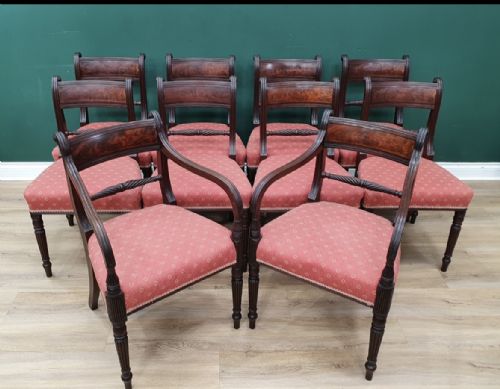
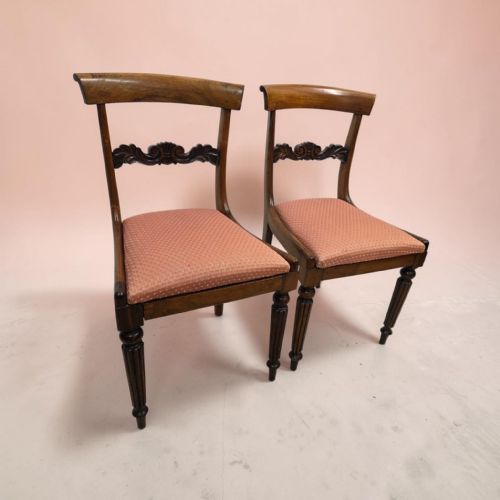
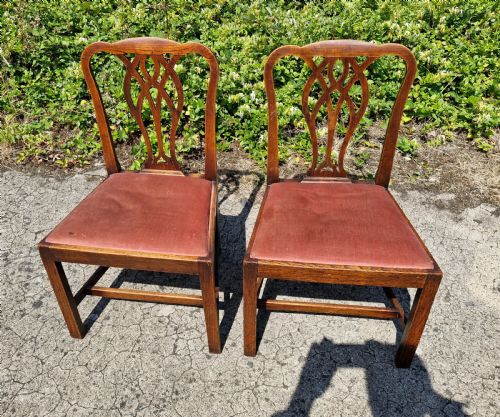
Late georgian chairs encompass a diverse group of seating furniture created across town and country workshops during the late eighteenth and early nineteenth centuries. The selections on this page bridge formal urban furniture in mahogany and informal country pieces fashioned from elm, oak, and fruitwood.
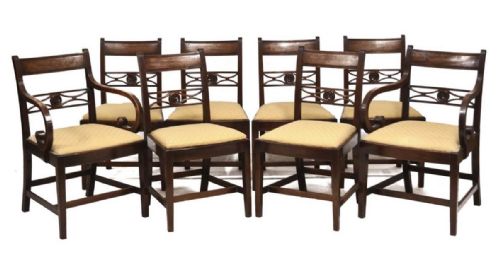
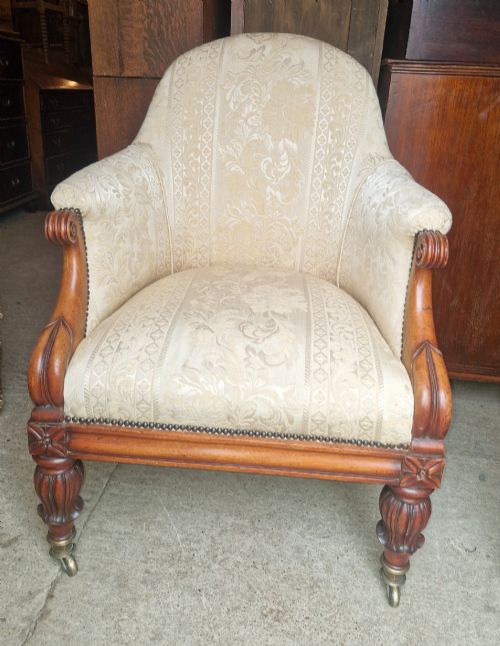
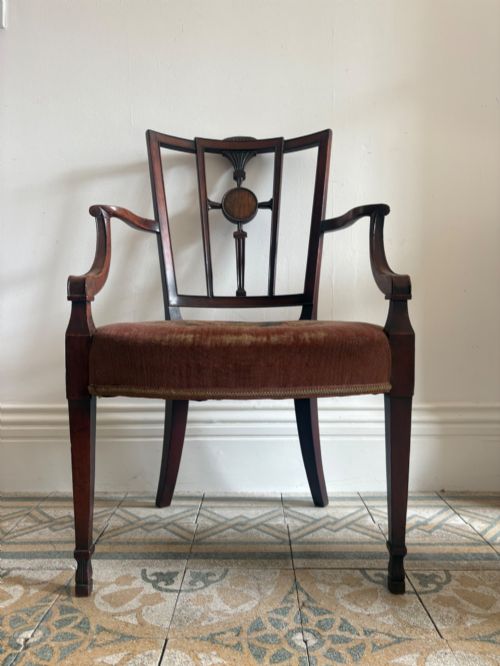
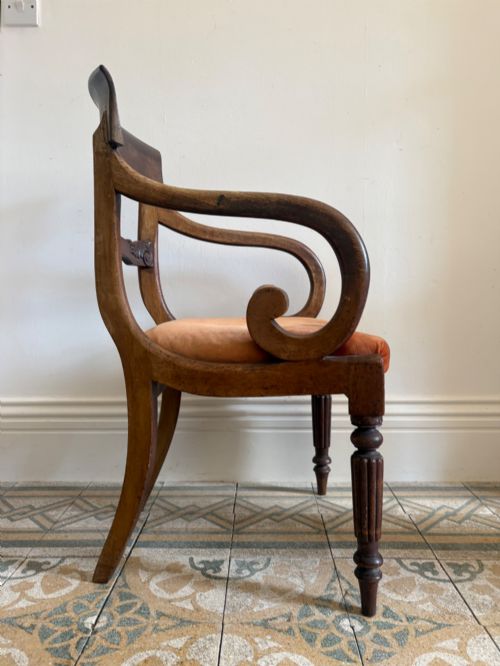
Dining chairs, armchairs, library chairs, and Windsor variations dominate the forms seen here. Buyers typically encounter both matched sets intended for formal dining rooms and sturdy single examples or pairs originating from regional workshops.
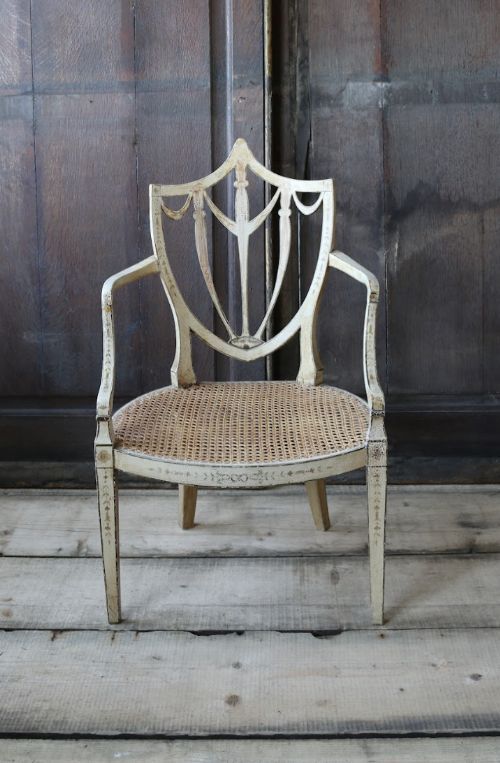
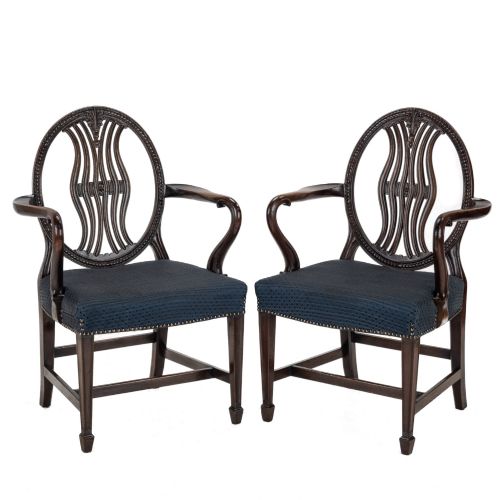
The aesthetic vocabulary spans simple stick backs and wheel backs to refined shield-back and ladder-back designs. Revivals from the later nineteenth century also appear, echoing the proportions and ornamentation of the original georgian era.
How they were made
Cabinetmakers and joiners relied primarily on solid hardwoods, pairing durable structural timbers like oak, elm, and ash with richly figured mahogany for finer formal commissions. Turned spindles, curved crest rails, and mortise and tenon joinery formed the structural backbone of these chairs.
Surface treatments varied widely according to the intended setting, ranging from polished mahogany and waxed fruitwood to painted and parcel-gilt finishes. Upholstery methods utilised drop-in seats, webbing, leather, and woven needlepoint secured over horsehair stuffing.
Forms range from library armchairs and metamorphic library steps to Windsor rocking chairs and child's chairs on stands.
What varies in quality
The hierarchy of quality rests on the selection of timber, the crispness of carved ornament, and the integrity of original construction. Superior examples display tightly figured mahogany, well-defined splats, and hand-carved details that reflect the confident hand of a skilled workshop.
Original surfaces and structural survival heavily influence desirability. Pieces retaining their early finish, undisturbed joinery, and matching upholstery configurations command greater attention than those altered or compromised by heavy restoration over time.
Gillows·Morgan and Sanders
The Late Georgian Chairs Glossary
- Carver
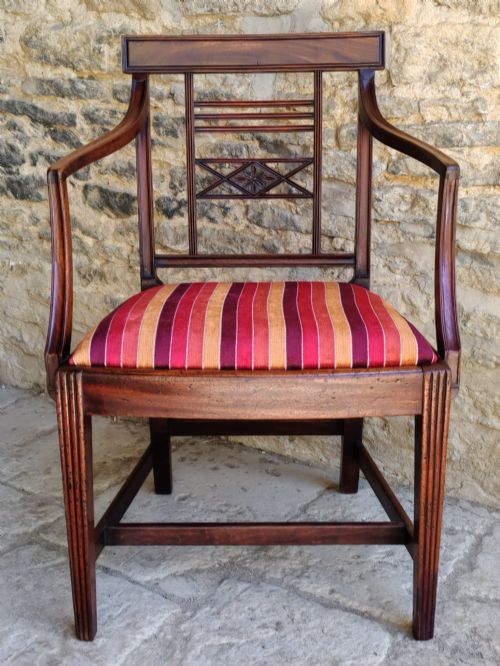
- An armchair, typically designed en suite with a set of smaller dining side chairs. These often sat at the head of a dining table.
- Drop-in seat
- A removable upholstered frame that fits tightly into the seat rails of a chair. This innovation allowed workshops to cover seats independently before securing them into the main structure.
- Windsor
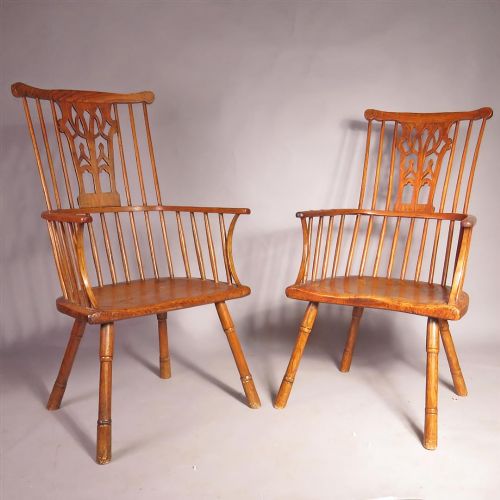
- A traditional chair constructed with a solid wooden seat into which legs and back spindles are wedged directly. Regional variations include comb backs, wheel backs, and Thames Valley stick backs.
- Splats
- The central vertical slat of wood positioned between the seat and the top rail of a chair back. These elements often carried the primary decorative carving of the design.
Late Georgian Chairs: Frequently Asked Questions
How do I identify a country piece?
Country examples typically utilise local timbers such as elm, oak, fruitwood, or ash rather than imported mahogany. Their construction prioritises robust utility, often resulting in simpler turned legs and regional variations like comb backs.
Makers working outside major urban centres adapted fashionable urban trends into sturdy seating suited for farmhouses and country dining rooms. These pieces frequently display harlequin groupings or mismatched sets gathered together over generations.
Were these chairs made in sets?
Many formal dining chairs were produced in matched sets of varying numbers to accommodate large households. Surviving sets often combine several single side chairs with a matching pair of armchairs.
Finding large, complete sets remains unusual due to the heavy use dining furniture endured. Harlequin sets, which share similar stylistic traits while differing in minor details, represent another common historical grouping.
How should I care for leather seats?
Hand-dyed leather seats benefit from gentle cleaning and occasional applications of microcrystalline wax or suitable leather conditioner. Avoiding direct sunlight prevents the hide from drying out and fading over time.
Preserving the original texture of aged leather requires restraint during cleaning. Regular dusting and careful humidity control ensure the material remains supple without altering its historical patina.
Can I use these at a modern table?
These seating options often feature lower seat heights than contemporary dining chairs. Checking the clearance beneath modern table aprons ensures comfortable legroom before daily use.
Placing them around a dining table adds historical character and varied texture to a room. Careful placement away from direct heat sources protects the antique timber joints from shrinking or cracking.