






Late 19th Century Busts
Late 19th century busts bring character and sculptural presence to a room, cast and carved in bronze, marble, and terracotta.
Late 19th Century Busts
Late 19th century busts capture historical figures, mythological subjects, and portrait studies produced during the Victorian and Art Nouveau periods.
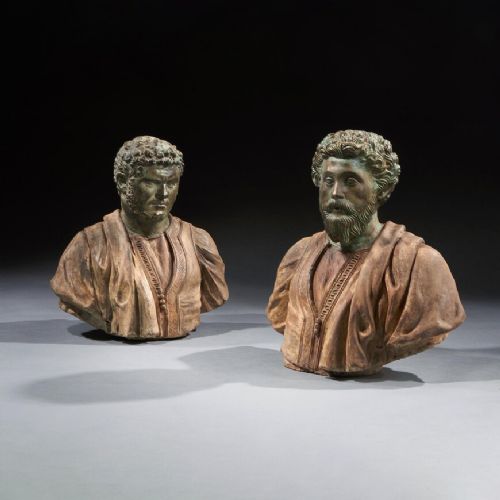
You will encounter subjects ranging from classical Caesars and Grand Tour nobility to contemporary children, mythological characters, and Orientalist figures.
These sculptures appear in materials such as bronze, terracotta, marble, and alabaster, often accompanied by stands and pedestals.
How they were made
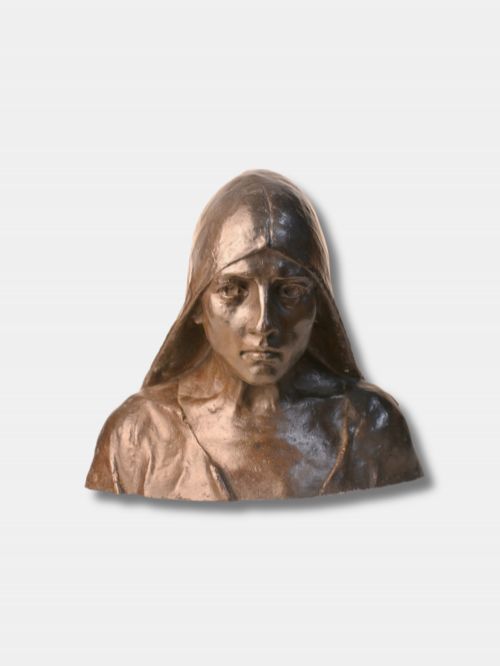
Bronze works rely on foundry casting and patination, while marble and alabaster pieces show skilled hand carving.
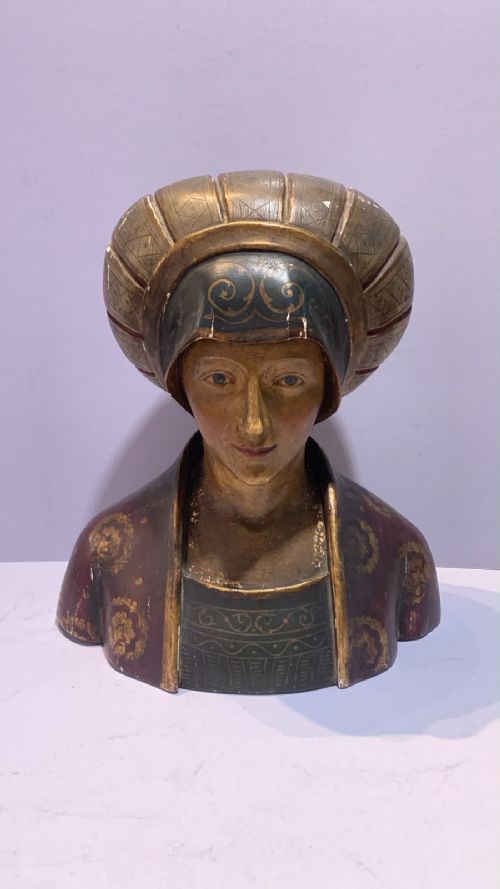
Terracotta and ceramic examples involve moulded clay finished with glazes or polychrome pigments.
Makers utilised secondary materials like walnut, gesso, and gold leaf for stands and presentation bases.
Late 19th Century Busts Retail Price Guide 2026
Typical asking prices for late 19th century busts among the pieces listed under this phrase on Sellingantiques today, from the lower quarter to the upper quarter. They describe what is for sale here now, not the wider market.
Listings feature works from the Victorian, Art Nouveau, Neoclassical, and Orientalist styles across materials including bronze, marble, terracotta, and alabaster.
What varies in quality
The refinement of the facial modelling and the crispness of detail separate standard foundry or workshop output from master works.
Material selection dictates much of the visual weight, from solid carved Carrara marble and heavy cast bronze to lighter terracotta and parian porcelain.
Surface finish, including original patination, polychrome colouring, and the integrity of carved details, determines the preservation of the piece.
Emmanuel Villanis·John Wenlock Rollins·Sir Thomas Brock·Mieczyslaw Leon Zawiejski·Ernst Whaliss·Pietro Calvi·Henri Ple·Auguste Moreau·Friedrich Goldscheider
The Late 19th Century Busts Glossary
- Patina
- The surface sheen and colour developed on bronze or metal through age and chemical treatment. It adds depth to the sculptural contours.
- Grand Tour
- Souvenirs and copies of classical antiquities collected by travellers in Europe during the nineteenth century. These often depict historical Romans or mythological deities.
- Polychrome
- Decoration utilising multiple colours applied to terracotta, ceramics, or wood. This technique heightens the lifelike appearance of portrait figures.
- Parian porcelain
- A fine-grained ceramic biscuit developed to imitate carved marble. It is frequently used for nineteenth-century portrait and figure studies.
- Terracotta
- Fired clay used for sculptural modelling. It allows artists to capture fluid surface textures before the firing process.
Late 19th Century Busts: Frequently Asked Questions
What materials were used for these busts?
Sculptors of the period worked in bronze, terracotta, marble, alabaster, parian porcelain, and glazed ceramics. Walnut, birch, and gesso frequently appeared in associated stands and pedestals.
Choice of medium often depended on the intended setting, with heavy marbles used for formal interiors and patinated bronzes favoured for studies.
How do I identify Art Nouveau examples?
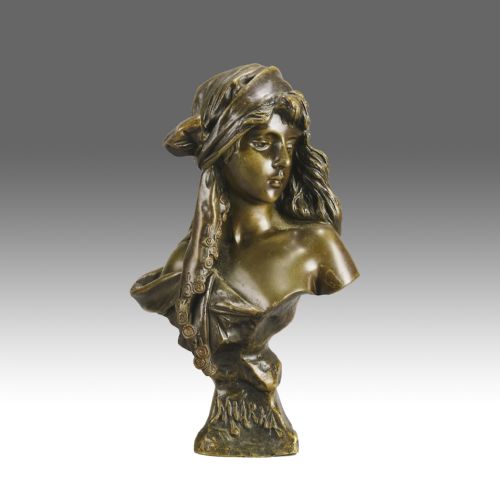
Art Nouveau pieces from this era show characteristic flowing lines, stylized hair, and organic motifs distinct from rigid classical styles. Subjects often bear titles such as Miarka or Daphne.
These works frequently combine bronze or ceramic with expressive, asymmetric bases typical of the turn of the century.
Where should I place a heavy marble bust?
Large stone and marble sculptures require sturdy support due to their substantial weight. Walnut pedestals and carved wooden stands from the same period provide appropriate elevation.
Placement should account for natural light to properly illuminate the carved contours of the face and shoulders.
What is a Grand Tour bust?
Grand Tour pieces are nineteenth-century reductions or interpretations of classical antiquities, such as Roman emperors and mythological figures. Travellers purchased them as mementos of educational tours across Europe.
Alabaster and bronze were common mediums for these portable works.