

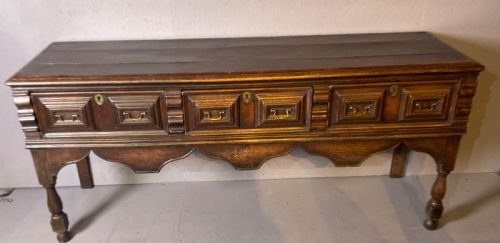


Late 17th Century Oak Table
A late 17th century oak table anchors a room with deep timber grain, sturdy jointwork, and centuries of domestic history.
Late 17th Century Oak Table
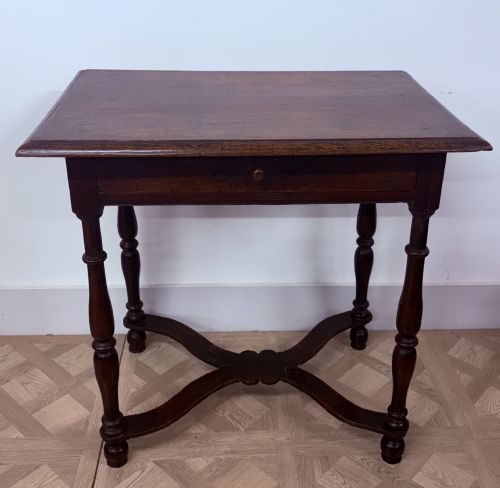
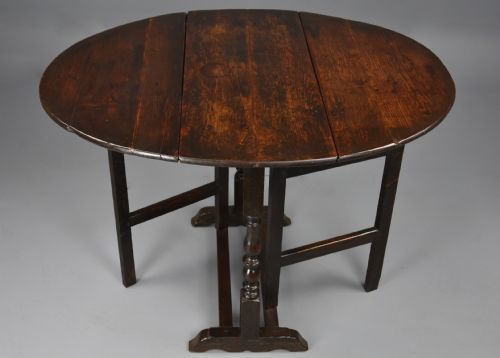
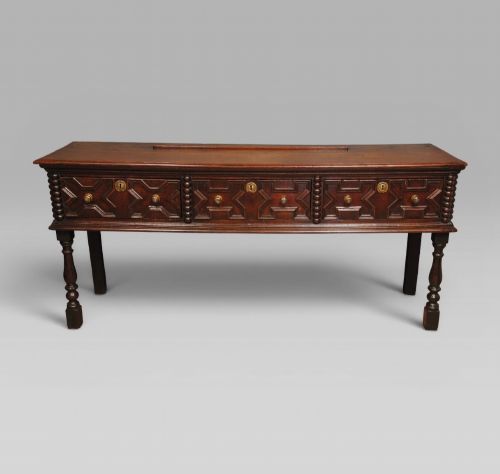
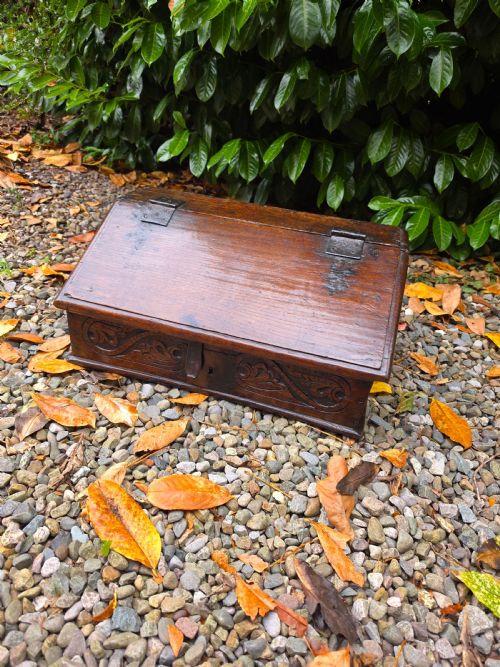
A late 17th century oak table encompasses sturdy functional furniture designed for daily household use in domestic spaces, farmhouses, and halls. These pieces survive in several practical forms, including side tables, gateleg dining tables, serving dressers, and low centre tables.
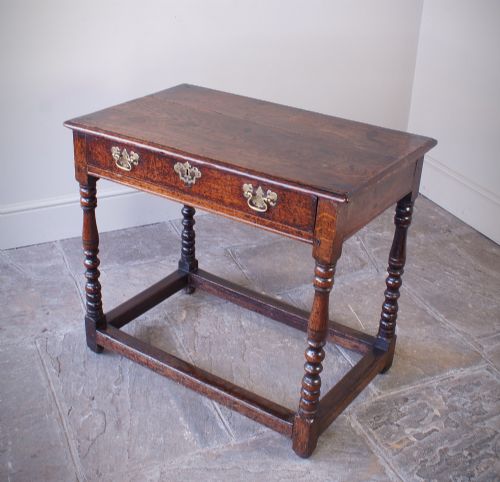
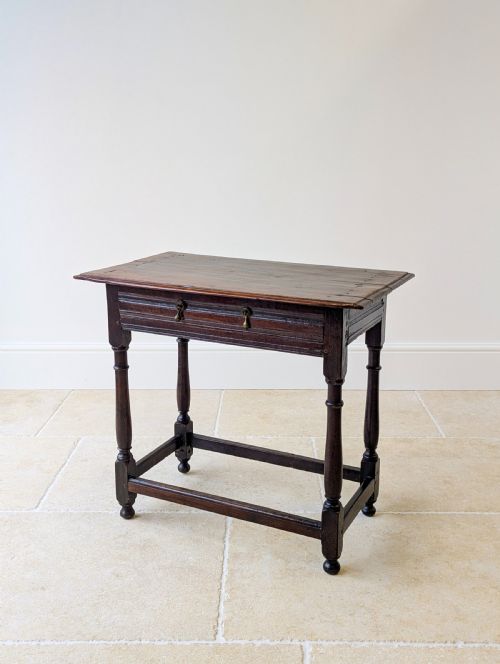
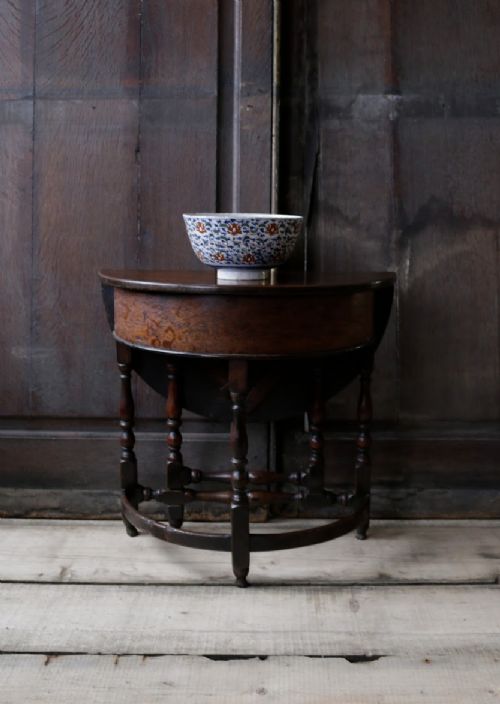
The version most commonly encountered in these selections is the oak side table or the drop-leaf gateleg table, often fitted with a single drawer. These specific formats reflect the domestic requirements of the period, providing adaptable surfaces that accommodated dining, writing, and household organisation.
Originating during periods spanning the late 1600s, William and Mary, and Jacobean or Carolean styles, these tables display regional English craftsmanship. Their forms bridge the transition from heavy medieval framing toward lighter, more domestic turnery.
Materials and construction methods
The primary material utilised across these pieces is solid oak, frequently supplemented by secondary timbers such as ash, elm, and walnut found in internal framing or secondary elements. Carpenters employed quarter-sawn oak boards to display distinctive medullary rays, commonly known as silver grain, across tabletops.
Joinery relied heavily on traditional pegged mortise and tenon frames, ensuring structural rigidity without relying on modern adhesives. Turning techniques produced substantial bobbin, spiral, or columnar legs on gateleg and side tables, connected by low stretchers for additional bracing.
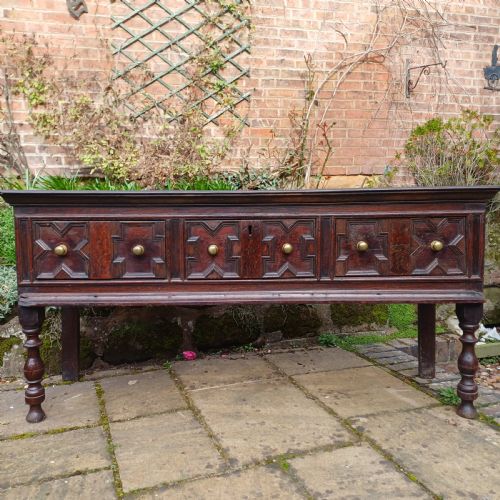
Listings demonstrate forms ranging from compact side tables and gateleg dining tables to serving dressers, constructed primarily in oak alongside ash, elm, and walnut.
Distinctions in quality and survival
Quality separates examples retaining their original timber surfaces and untouched structural integrity from those altered by extensive restoration or timber replacement. The presence of thick, single-board tabletops and original brass or iron hardware elevates the integrity of a piece.
Proportion and scale dictate the desirability of surviving tables, with smaller, versatile formats holding particular functional appeal. Subtleties in moulding profiles, such as geometrically moulded drawer fronts, demonstrate the refined hand of the period carpenter.
The Late 17th Century Oak Table Glossary
- Gateleg table
- A drop-leaf table featuring hinged flaps supported by swinging legs that pivot outward to hold the leaves. This design allowed tables to fold compactly against a wall when not in use.
- Patina
- The surface sheen and darkening developed by wood over centuries of exposure, handling, and wax polishing. A desirable patinated surface displays depth and warmth without artificial polishing.
- Stretcher
- A horizontal wooden brace connecting the legs of a table to provide lateral stability. These structural rails often sit close to the floor and show wear from footsteps.
- Bobbin turning
- A decorative woodworking technique producing a series of rounded, spherical shapes resembling spools or bobbins along the length of a table leg. This style is frequently observed on William and Mary period supports.
- Refectory table
- A long, narrow dining table traditionally built for communal dining halls. Surviving examples feature substantial rectangular timber tops resting on fixed trestle or frame bases.
Late 17th Century Oak Table: Frequently Asked Questions
How do I identify a late 17th century oak table?
Examination of the timber reveals hand-sawn board marks, pegged joints, and natural ageing patterns distinct from machine-made furniture. Construction relies on traditional joinery methods rather than modern metal screws.
Style indicators include turned legs, stretchers, and the characteristic density and grain of early English oak. Comparing the form against documented examples helps confirm the period.
Were these tables used for dining?
Larger gateleg and refectory formats served specifically for family and communal dining in domestic houses and halls. Their expandable leaves or long surfaces accommodated multiple diners.
Smaller side tables and lowboys functioned primarily for serving food, holding objects, or writing tasks. Domestic spaces adapted these versatile pieces according to daily household requirements.
How should I care for an antique oak surface?
Maintenance requires gentle cleaning with a soft cloth and occasional application of traditional beeswax to nourish the dry timber. Avoiding direct sunlight and stable humidity levels prevents the oak from splitting.
Liquid spills require immediate drying to protect the historic finish and prevent water staining. Proper placement away from direct heat sources preserves the structural timber.
What is the difference between a side table and a lowboy?
Side tables generally served general utility functions against walls, featuring simple rectangular tops and occasional single drawers. They provided stable surfaces for lighting, books, or decorative items.
Lowboys specifically functioned as low dressing or writing tables, commonly outfitted with one or more small drawers beneath the working surface. Their proportions remain compact to accommodate a seated user.