







Large Yellow Carpet
A large yellow carpet brings warmth and scale to a room, offering grand proportions and historic woven artistry from the late nineteenth and early twentieth centuries.
Large Yellow Carpet
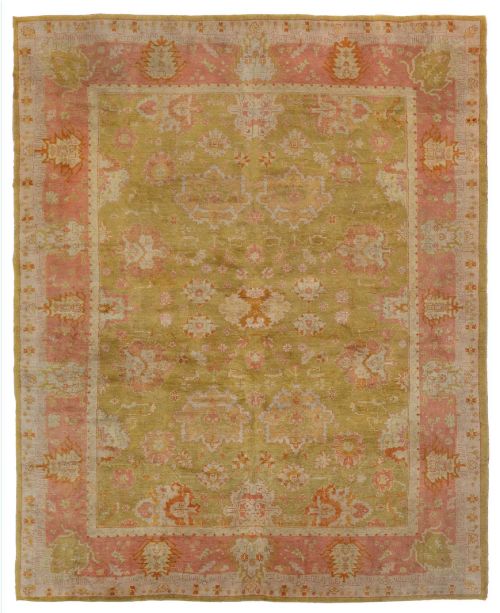
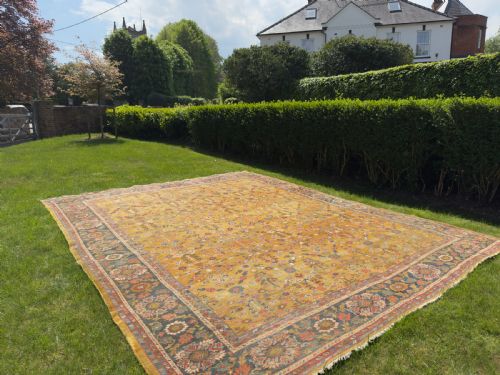
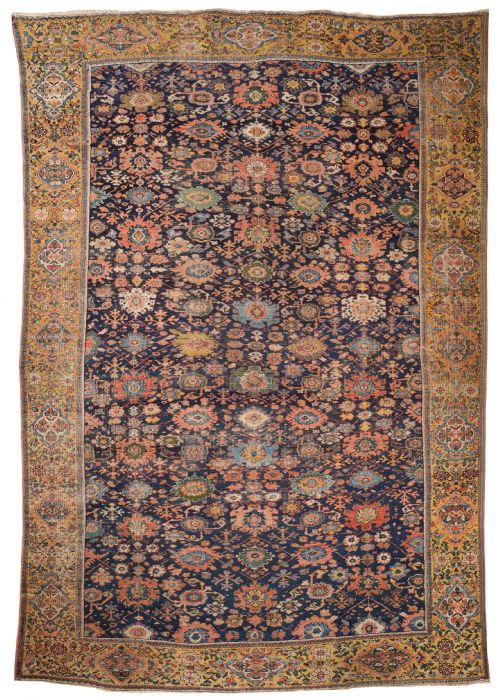
When you search for a large yellow carpet, you encounter substantial room-sized floor coverings originating from distinct weaving traditions across Turkey, Persia, and Central Asia. These pieces date predominantly from the late nineteenth century, spanning decades such as the eighteen-eighties, eighteen-nineties, and nineteen-hundreds.
The versions you are most likely to meet on this page include antique Oushak, Ziegler, Bidjar, and Fereghan carpets, alongside flat-woven kilims and Donegal works. They showcase generous dimensions, often exceeding four or five metres in length, designed to anchor large reception rooms and halls.
Makers and workshops from Western Turkey to Persian provinces utilised expansive golden, straw, and mustard fields as a backdrop for intricate floral, medallion, or tribal motifs. Each region imparted distinct structural characteristics, from the lighter wool density of Oushak weaves to the robust durability found in Bidjar construction.
How they were made
These carpets rely primarily on natural wool for the pile and cotton for the foundational warp and weft threads, providing structural strength across large surface areas. Weavers knotted hand-spun fleece by hand onto vertical looms, ensuring dense integration of the yarn.
Dye stuffs derived from plants and minerals created the characteristic golden and yellow fields seen across these examples, achieving variations that mellow gracefully over decades of light and use.
Large Yellow Carpet Retail Price Guide 2026
Typical asking prices for large yellow carpet among the pieces listed under this phrase on Sellingantiques today, from the lower quarter to the upper quarter. They describe what is for sale here now, not the wider market.
Listings feature antique Persian, Turkish, and Central Asian carpets utilising wool and cotton materials across the late nineteenth and early twentieth centuries.
What varies in quality
The fineness of the knotting and the complexity of the design determine the upper tier of these textiles, separating grand city workshop productions from simpler tribal examples. Tighter foundational structures provide better resilience under heavy foot traffic.
The depth, saturation, and stability of the yellow dye fields influence overall visual impact, with evenly struck golden tones commanding greater presence than unevenly faded grounds.
Gavin Morton Donegal
The Large Yellow Carpet Glossary
- Warp
- The vertical threads stretched tightly on the loom that form the skeletal foundation of the carpet. The exposed fringes at either end of the rug are the ends of these warp threads.
- Weft
- The horizontal strands passed alternately over and under the warp threads after each row of knots to bind the structure together. In many antique carpets, coloured wefts remain visible at the reverse.
- Pile
- The upright yarn surface formed by individual knots tied to the warp threads, which is then sheared to an even height. Flat-woven kilims lack this raised pile entirely.
- Oushak
- A traditional Turkish carpet style originating from the town of Usak, known for large-scale floral motifs and softer, muted wool textures. These pieces often feature expansive golden or yellow fields.
- Bidjar
- A Persian weaving style renowned for heavy construction, often called the iron rug of Iran due to its densely packed wool pile and rigid foundation. They withstand immense wear while retaining intricate medallion designs.
Large Yellow Carpet: Frequently Asked Questions
Where should a large yellow carpet go?
These generous floor coverings suit principal reception spaces, high-ceilinged drawing rooms, or spacious dining areas where furniture can sit comfortably upon the field. Their expansive scale requires open floor space to display the central medallions and border patterns fully.
Positioning them away from direct, harsh sunlight preserves the golden and yellow tones of the wool pile while allowing the historic patterns to anchor the room's decorative scheme.
How do I care for antique wool carpets?
Regular, gentle suction vacuuming without a beater bar prevents dust accumulation within the wool pile without straining the historical cotton foundation. Professional cleaning tailored to antique textiles maintains the integrity of natural plant dyes.
Rotating the rug every year ensures even exposure to foot traffic and ambient light, distributing wear across the expanse of the carpet.
How do I distinguish Oushak from Bidjar?
Oushak carpets present a softer, more relaxed handle with looser knotting and expansive, often faded floral fields in golden or yellow hues. They offer a decorative, painterly aesthetic suited to understated interiors.
Bidjar carpets feel considerably heavier and stiffer due to a densely packed construction technique that locks the pile upright. Their patterns often feature robust geometric medallions and precise floral sprays.
What is a Fereghan carpet?
Fereghan carpets originate from the Farahan district in Persia, celebrated for exceptionally fine knotting and sophisticated overall repeating patterns or Herati motifs. Their golden fields provide a refined backdrop for intricate detail.
These pieces represent high-tier nineteenth-century workshop production, combining durable materials with elegant composition intended for formal rooms.