


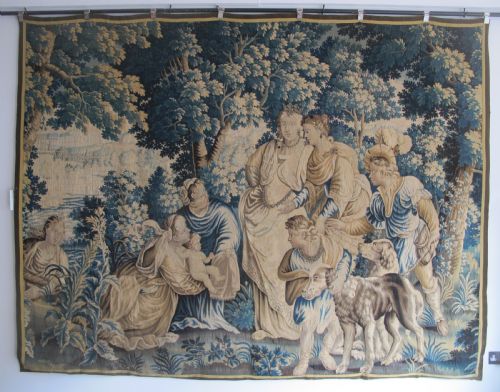

Large Wool Wall Tapestry
A large wool wall tapestry transforms a stark interior with centuries of woven narrative, deep botanical verdure and substantial architectural scale.
Large Wool Wall Tapestry
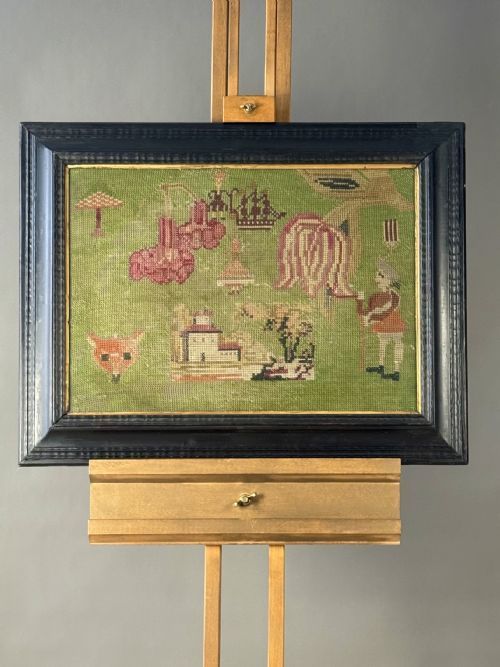
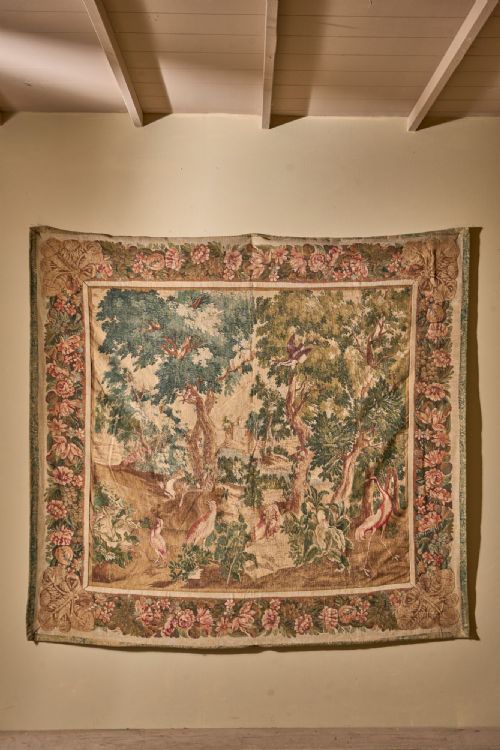
A large wool wall tapestry spans historical periods from the sixteenth century through the nineteenth century, encompassing European centres of weaving such as Flanders, France and Audenarde. When searching for a large wool wall tapestry, collectors encounter grand Flemish verdure landscapes, pastoral French scenes and framed Berlin woolwork panels.
The compositions vary widely in subject matter, ranging from dense woodland foliage and mythological narratives to biblical scenes and botanical mille-fleurs designs. Many examples incorporate wool alongside silk, linen, cotton and metal thread to create depth and texture across expansive wall hangings.
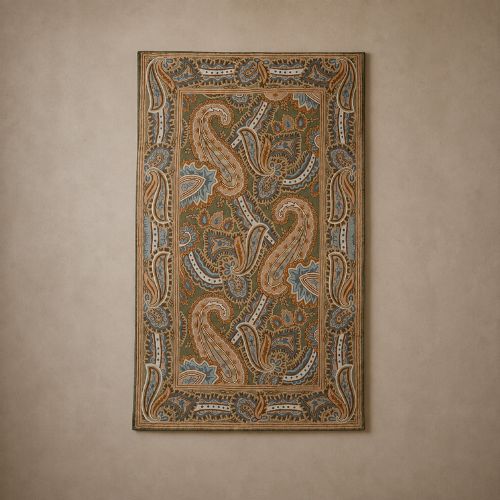
The selection ranges from monumental seventeenth-century Flemish architectural panels to later nineteenth-century Aubusson-style interpretations and crewelwork embroidered textile panels. Buyers select these textiles to anchor large rooms, utilising their substantial proportions and rich coloration to absorb sound and warm stone walls.
Materials and construction methods
The foundational structure relies heavily on wool and linen yarns, often combined with silk for lustrous highlights and metal threads for subtle illumination within the woven design. Artisans constructed these textiles on large looms using hand-weaving techniques that required months or years to complete complex pictorial scenes.
Needlework pieces, including Berlin wool work and crewelwork panels, were created by stitching wool yarns directly onto canvas or linen backings using various embroidery stitches. Many grand panels subsequently received wooden or gilt frames to protect the textile edges and facilitate interior display.
Listings feature items spanning from the sixteenth century to the mid-twentieth century, utilising wool, silk, cotton, linen, glass and wood.
Factors determining quality
The distinction between ordinary and exceptional examples rests upon the density of the weave, the complexity of the pictorial composition and the preservation of the original dye colours. Finer pieces demonstrate intricate shading in foliage and figures, whereas simpler works rely on repetitive patterns and coarser yarns.
The integrity of the textile fibres and the presence of original borders heavily influence the standing of a piece. Finer works retain their structural stability across large dimensions, while inferior examples suffer from extensive later repairs or loss of secondary materials like silk and metal thread.
The Large Wool Wall Tapestry Glossary
- Verdure
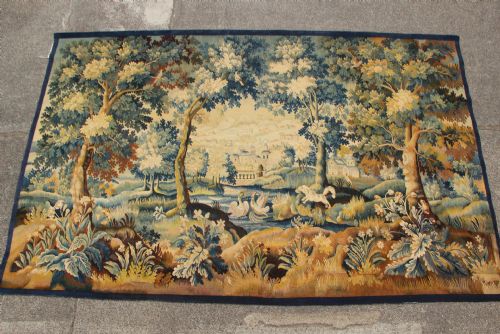
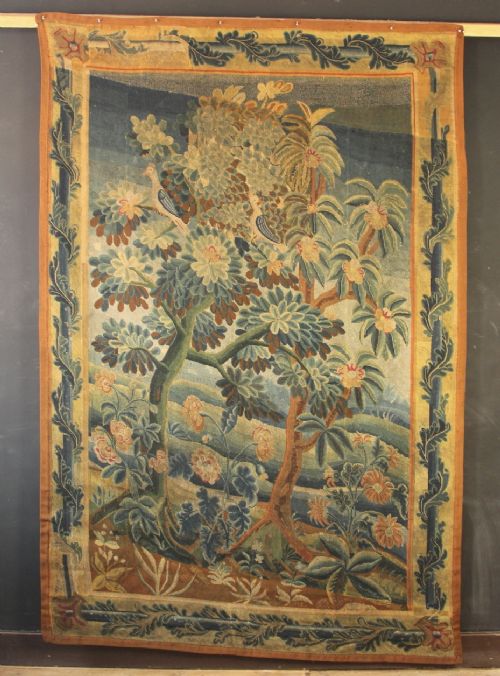
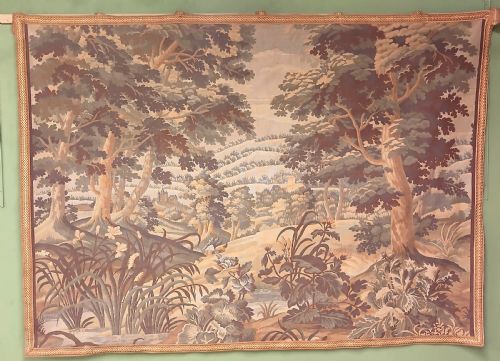
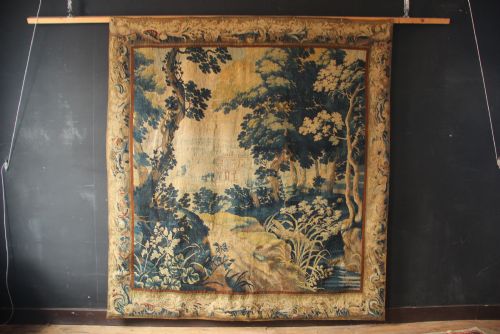
- A tapestry featuring a dominant landscape design of trees, foliage, plants and often birds or animals. These forest scenes dominated Flemish and French production during the seventeenth and eighteenth centuries.
- Aubusson
- A style or origin denoting woven tapestries produced in the French town of Aubusson, known for floral and pastoral compositions. They often incorporate soft pastel tones alongside robust wool weaves.
- Berlin wool work
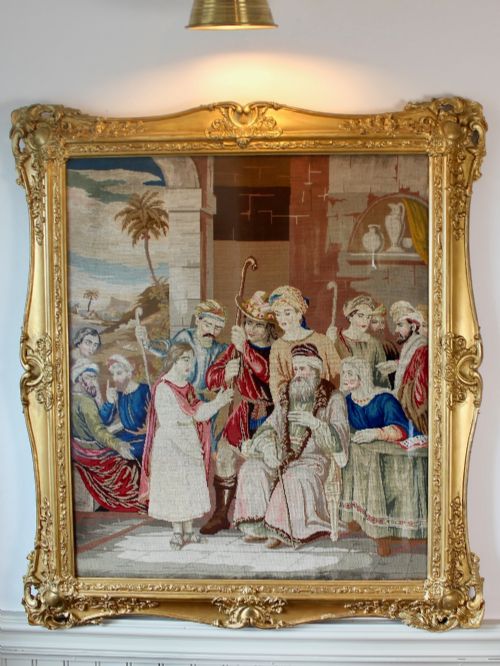
- A type of nineteenth-century needlework embroidered with brightly coloured wool yarns onto canvas using printed grid patterns. These framed pictures frequently depicted historical, religious or literary scenes.
- Crewelwork
- Embroidery executed with wool yarn on a linen or cotton ground, creating textured wall hangings and textile panels. This technique produces tactile surfaces with raised decorative motifs.
- Mille-fleurs
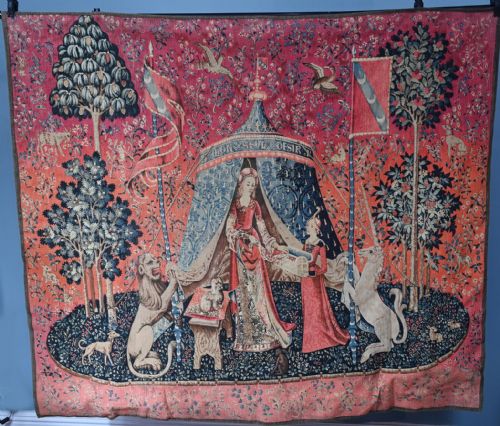
- A background style composed of countless small flowers and plants scattered across a dark field. This medieval and Renaissance design element appears in early French tapestry panels.
Large Wool Wall Tapestry: Frequently Asked Questions
How do I hang a heavy tapestry safely?
Large wool wall tapestries require even weight distribution across the entire top edge to prevent fibre distortion and tearing over time. Conservation methods typically involve stitching a wide linen sleeve to the reverse and sliding a flat wooden batten or metal rod through it, which is then secured to wall brackets.
Alternatively, some pieces are professionally mounted on wooden stretchers or framed behind glass within gilt mouldings. Avoid hanging heavy textiles directly from isolated rings or pins, as the vertical tension will weaken the wool warp threads.
How should I clean and maintain an antique tapestry?
Routine maintenance involves gentle surface cleaning using a soft brush attachment on a vacuum cleaner covered with mesh netting. This removes dust without pulling loose wool or silk fibres from the weave.
Professional textile conservators should handle any deep cleaning, washing or chemical treatments. Keep tapestries away from direct sunlight and high humidity to prevent the wool and dyed threads from fading and weakening.
What is the difference between a verdure and a pastoral tapestry?
Verdure tapestries focus primarily on dense natural landscapes filled with lush trees, leafy undergrowth, rivers and occasionally hidden animals. The palette relies heavily on greens, browns and ochres to recreate an immersive forest environment.
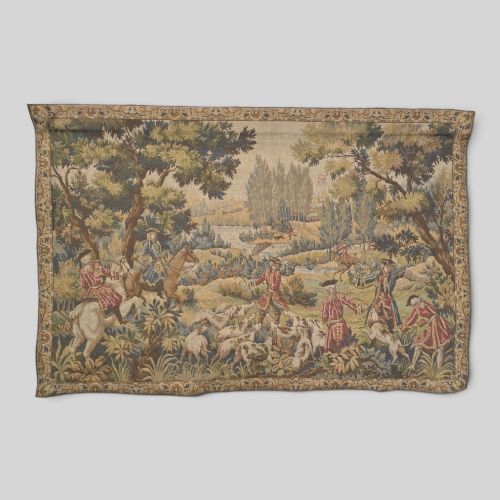
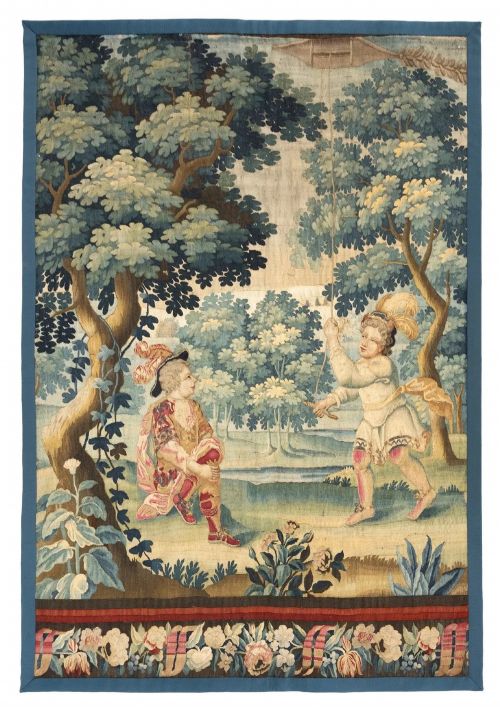
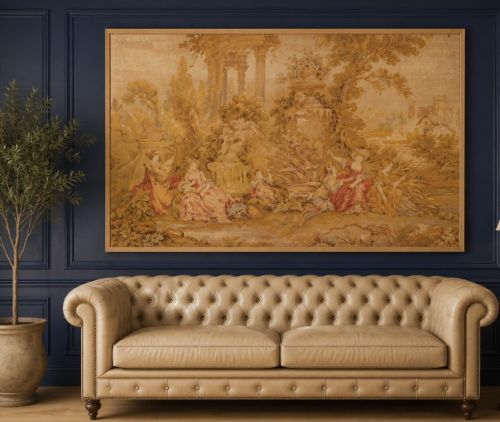
Pastoral tapestries centre on human activity, featuring figures in rural or courtly settings engaged in leisure, romance or mythology. These compositions balance natural scenery with narrative storytelling and architectural elements.
How can I tell a seventeenth-century Flemish tapestry from a nineteenth-century French piece?
Seventeenth-century Flemish works typically display heavy, atmospheric verdure landscapes with deep tonal shifts, robust wool weaves and naturalistic dyes that have aged to muted earth tones. The imagery often includes mythological motifs and complex framing borders characteristic of Audenarde or Flemish workshops.
Nineteenth-century French or Aubusson-style pieces generally feature lighter, brighter colour palettes, finer symmetrical floral borders and more decorative, revivalist compositions. Examining the back of the textile reveals differences in yarn preparation, knotting tightness and backing materials.