





Large Wooden Dinner Table
A large wooden dinner table anchors a room with presence, offering sturdy timber surfaces built for gathering people together.
Large Wooden Dinner Table
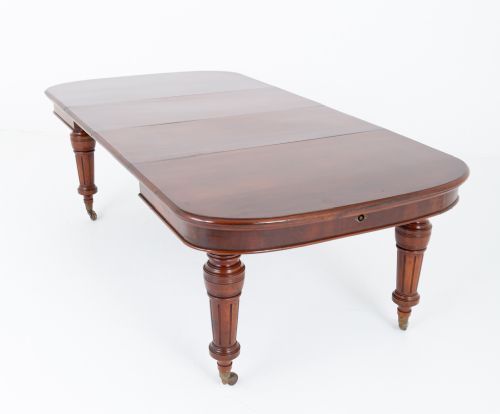
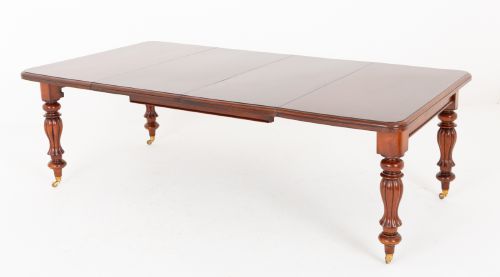
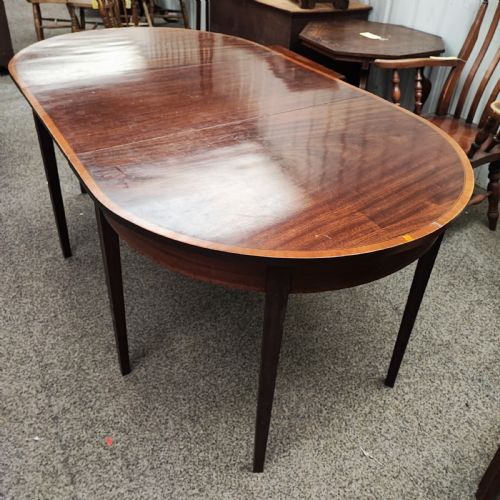
A large wooden dinner table spans various forms intended for communal dining, most frequently appearing here as mahogany extending dining tables with leaves. These pieces originate across the nineteenth century, encompassing Georgian style, Regency, William IV, and Victorian periods.
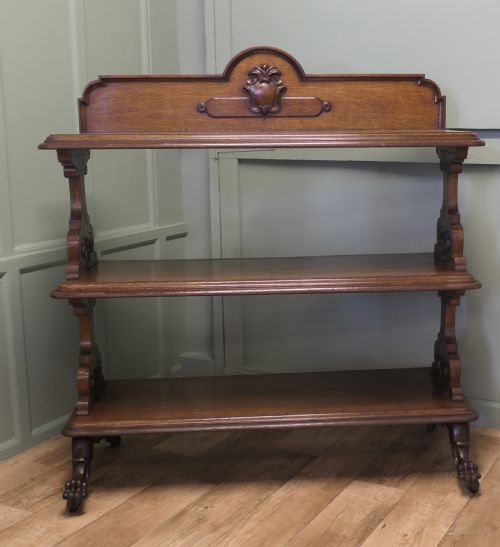
Alongside formal extending tables in mahogany, the selection includes rustic pine farmhouse tables, elm harvest tables, and carved oak buffets designed for practical domestic use. Most examples cater to large gatherings, seating up to ten or twelve diners comfortably.
Makers and origins stretch from British workshops to French provincial regions and Chinese export houses, creating a diverse group of large dining furniture united by substantial timber construction.
How they were made
Makers constructed these tables primarily from dense hardwoods like mahogany and oak, alongside softer timbers such as pine and elm for provincial pieces. Artisans incorporated satinwood inlay for decorative contrast on select surfaces and brass fittings to support extending mechanisms.
Extending models utilise internal leaves that expand the timber top to accommodate larger groups, often supported by carved legs featuring details such as claw and ball feet. Traditional joinery methods secured the heavy wooden tops and leaves to withstand regular daily use.
Large Wooden Dinner Table Retail Price Guide 2026
Typical asking prices for large wooden dinner table among the pieces listed under this phrase on Sellingantiques today, from the lower quarter to the upper quarter. They describe what is for sale here now, not the wider market.
Listings feature nineteenth-century pieces spanning the Regency, William IV, and Victorian periods, constructed from mahogany, oak, pine, elm, and brass.
What varies in quality
The degree of refinement in timber selection and carving separates standard items from finer examples, with figured mahogany and detailed leg carving indicating higher craftsmanship. Original leaves that match the primary timber grain and colour enhance the cohesion of extending tables.
Construction integrity and the smoothness of any extending mechanism determine how well a table functions over time. Pieces retaining their original configuration and finish demonstrate superior preservation compared to heavily altered examples.
The Large Wooden Dinner Table Glossary
- Extending dining table
- A table designed with a mechanism and removable leaves to increase the surface length for meals. This format appears frequently among nineteenth-century mahogany examples.
- Leaf
- A separate board inserted into a table top to extend its length. Tables in this group often feature between two and three original leaves.
- Farmhouse table
- A utilitarian wooden table built for everyday kitchen use, typically constructed from pine or elm. These tables often display a rustic finish acquired through long service.
- Satinwood inlay
- Decorative wood ornamentation inserted flush into a contrasting timber surface. This technique adds visual detail to select mahogany tables.
- Harvest table
- A long, narrow wooden table traditionally used for seasonal communal meals in rural areas. Examples here include elm versions sourced from south-west France.
Large Wooden Dinner Table: Frequently Asked Questions
How many people can these tables seat?
Many of these large dining tables accommodate ten to twelve diners, particularly the extending mahogany versions fitted with multiple leaves.
Provincial harvest tables and farmhouse models also offer extended lengths designed for group dining and large gatherings.
What woods are commonly used?
Mahogany forms the primary timber for formal nineteenth-century extending tables, often selected for its rich grain and durability.
Other pieces utilise oak, pine, elm, and hardwood, reflecting the regional origins and practical purposes of each individual table.
Do extending tables include original leaves?
Several extending tables retain their original leaves, which match the primary timber and ensure consistent colour and grain across the extended surface.
Listings specify when leaves are original to the table, helping buyers identify complete sets from periods like the Victorian and William IV eras.
How do I distinguish between periods like Regency and Victorian?
Periods are identified through characteristic design details, cabinetmaking techniques, and prevailing styles associated with specific nineteenth-century reigns and decades.
Consulting the listed dates and stylistic descriptors helps trace a table from Georgian and Regency forms through to later Victorian interpretations.