



Large Wooden Compactum
A large wooden compactum is a substantial storage piece offering hanging space and internal drawers, built to last generations.
Large Wooden Compactum
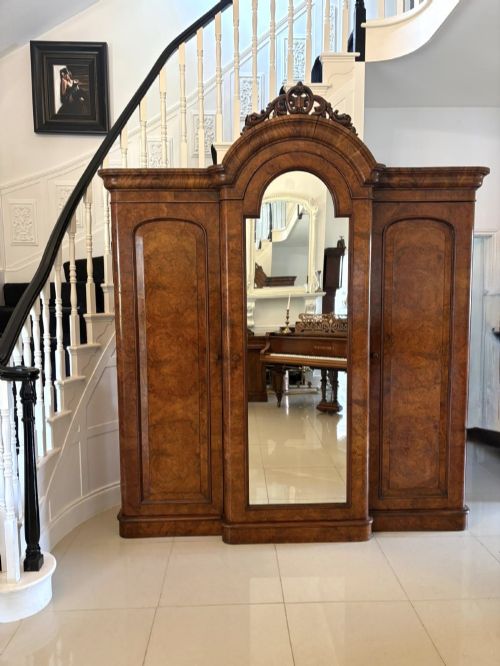
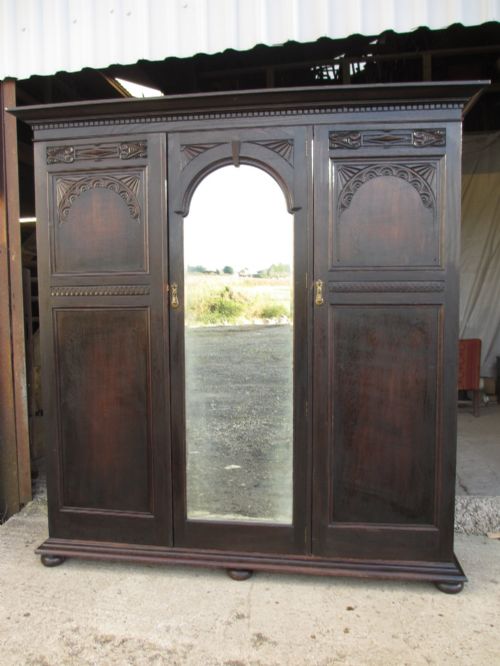
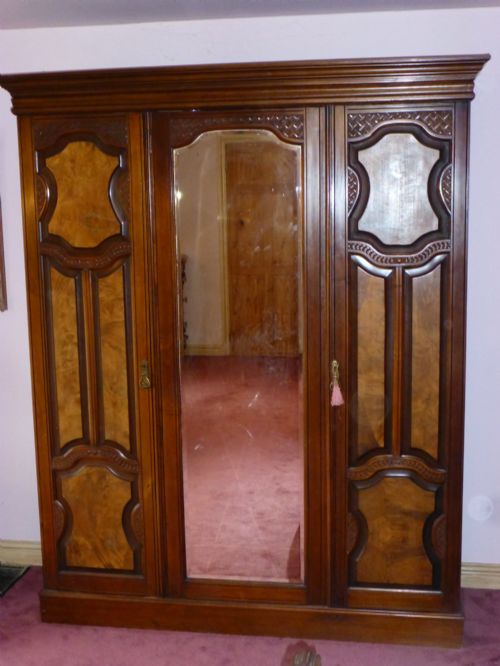
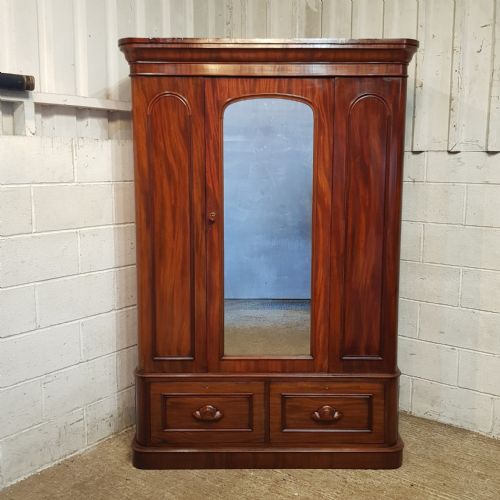
A large wooden compactum combines the functions of a wardrobe, linen press, and chest of drawers into a single grand piece of furniture. Buyers searching for a large wooden compactum will find triple and four-door configurations dating from the Georgian, Victorian, and Edwardian periods.
The materials span mahogany, walnut, burr walnut, satinwood, and oak, often detailed with mirrors or intricate inlay work. These pieces originate from the nineteenth and early twentieth centuries, reflecting the high standards of period cabinet makers.
How they were made
Cabinet makers utilised solid timbers alongside flame mahogany veneer, satinwood, and burr walnut to create striking grain patterns across large surfaces. Construction often involved brass hardware and glass mirror doors set into sturdy frames of oak or mahogany.
Techniques ranged from carved dark oak panelling to delicate marquetry and Sheraton Revival inlay. Interior sections were fitted with sliding linen trays, hanging space, and drawers designed for structured garment storage.
Large Wooden Compactum Retail Price Guide 2026
Typical asking prices for large wooden compactum among the pieces listed under this phrase on Sellingantiques today, from the lower quarter to the upper quarter. They describe what is for sale here now, not the wider market.
Some Victorian combination compactums include specialised sentry box compartments designed for tall garments.
What varies in quality
The distinction between standard items and the finest examples lies in the selection of timbers, such as highly figured burr walnut or curl mahogany veneers. Superior pieces feature sophisticated internal fitted arrangements, expert marquetry, and original brass hardware.
Proportion and scale dictate the visual presence of a wardrobe, with breakfront designs and carved architectural details elevating the craftsmanship. The integration of multiple sections, including combination compactums with central drawers, demonstrates advanced period joinery.
Holland and Sons·Edwards and Roberts
The Large Wooden Compactum Glossary
- Compactum
- A large wardrobe combining hanging space, shelving, and internal drawers within a single multi-door unit. This multi-functional design became popular during the Victorian era.
- Breakfront
- A piece of furniture where the central section projects forward from the flanking outer wings. This architectural arrangement adds depth and visual interest to large wardrobes.
- Burr walnut
- A highly prized wood grain featuring swirling patterns formed from tree growths or burls. It is sliced into veneer to cover large cabinet surfaces.
- Marquetry
- Decorative woodwork where pieces of different coloured wood veneer are fitted into a design on a solid background. It frequently appears on Sheraton Revival pieces.
- Satinwood
- A durable, yellowish timber with a lustrous sheen, often used as a veneer or for inlay work on Edwardian furniture.
Large Wooden Compactum: Frequently Asked Questions
How do I fit a large wooden compactum?
Measure your ceiling height and floor space carefully before purchasing, as these pieces arrive fully assembled or in large modular sections. Ensure doorways and stairwells offer sufficient clearance for delivery.
Position the unit away from direct sunlight and radiators to protect the timber and delicate veneer work from drying out.
What is the difference between a wardrobe and a compactum?
A standard wardrobe primarily provides vertical hanging space behind doors, sometimes with a single drawer beneath. A compactum integrates dedicated banks of internal drawers and linen presses alongside the hanging compartments.
This multi-purpose design offers comprehensive storage for various types of clothing within one unified cabinet.
How do I date a wooden compactum?
Examine the secondary woods inside the drawers, the style of the brass hardware, and exterior decorative motifs like inlay or carving. Georgian pieces often display architectural breakfronts, while Victorian examples frequently feature burr walnut or heavy mahogany.
Edwardian pieces tend to utilise satinwood inlay and lighter wood tones characteristic of the early twentieth century.
How do I care for antique wood furniture?
Dust the surfaces regularly with a soft, dry cloth and feed the timber periodically with appropriate wax to maintain the finish. Avoid silicone-based polishes which can damage antique veneer over time.
Maintain a stable room temperature and humidity level to prevent the wood from warping or cracking.