



Large Wooden Clock
A large wooden clock commands a room with timber warmth and steady mechanical rhythm, bringing presence and purpose to an interior.
Large Wooden Clock
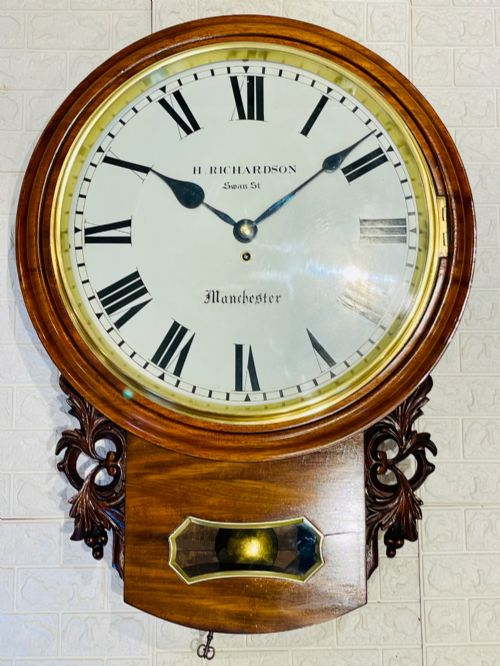
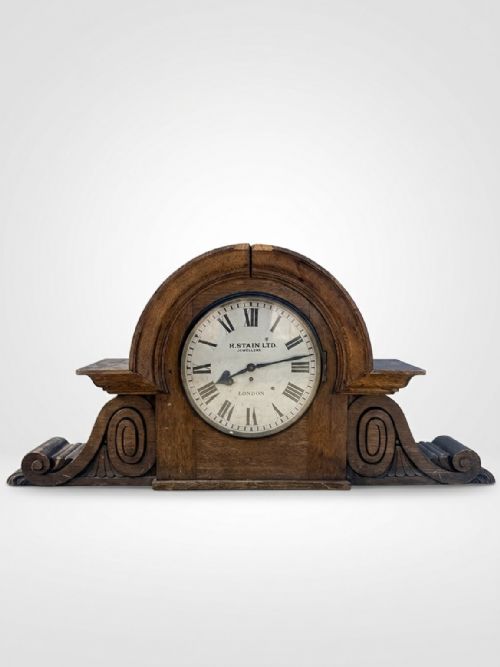
A large wooden clock encompasses substantial wall timepieces, bracket clocks, and architectural cases spanning the Victorian, Edwardian, and Art Deco periods. These substantial horological items serve as focal points in domestic and institutional spaces, housing complex movements within timber enclosures.
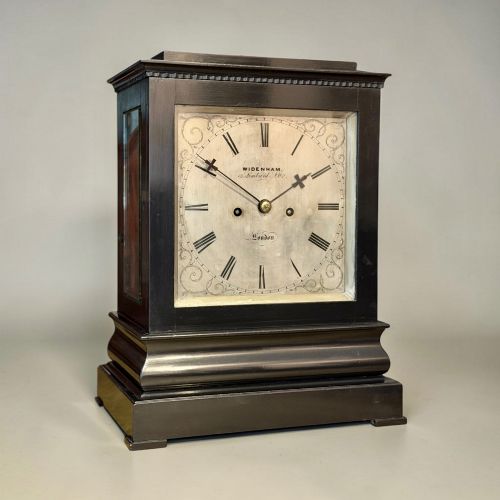
The version most commonly encountered on this page is the dial wall clock or mantel clock fashioned from mahogany, oak, or walnut. These pieces reflect regional British and continental workshops, ranging from simpler school and tavern formats to ornate bracket and chiming designs.
Originating largely from the nineteenth and early twentieth centuries, these objects combine utilitarian timekeeping with period craftsmanship. They capture a range of stylistic revivals and modern movements, from Gothic and Regency to industrial and modernist aesthetics.
How large wooden clocks were made
Cabinetmakers constructed the enclosures using solid and veneered hardwoods such as mahogany, oak, walnut, and pine, frequently incorporating brass inlay, copper, or fretwork. Movements were mounted within these timber frames alongside silvered metal dials, glass bezels, and brass fittings.
Specialised joinery methods shaped the architectural cases, balloon shapes, and octagonal frames that protect the mechanical movements. Surfaces were finished with original paint, French polish, or natural wax to preserve the grain of the wood.
Large Wooden Clock Retail Price Guide 2026
Typical asking prices for large wooden clock among the pieces listed under this phrase on Sellingantiques today, from the lower quarter to the upper quarter. They describe what is for sale here now, not the wider market.
Even the birds in the Black Forest cuckoo clocks need occasional timber maintenance after decades of shouting the hours.
What varies in quality
The standard of a large wooden clock rests upon the architectural integrity of the timber case and the sophistication of its internal movement, such as fusee mechanisms or musical chiming trains. Superior examples display crisp carved detailing, well-figured wood veneers, and harmonious proportions.
Execution of the dial and the integration of subsidiary elements like brass inlay or painted faces distinguish finer workshops from standard production. Preserved original finishes and untouched painted surfaces elevate the horological and decorative merit of the piece.
Widenham of London·Haller·Palmer and Co·Camerer Cuss
The Large Wooden Clock Glossary
- Fusee
- A conical pulley used in spring-driven clocks to equalise the torque of the mainspring as it unwinds. This mechanism helps the clock maintain a consistent rate throughout its running period.
- Bracket clock
- A portable spring-driven clock traditionally designed to sit on a bracket or shelf. These pieces often feature elaborate wooden cases and sophisticated striking or musical movements.
- Dial clock
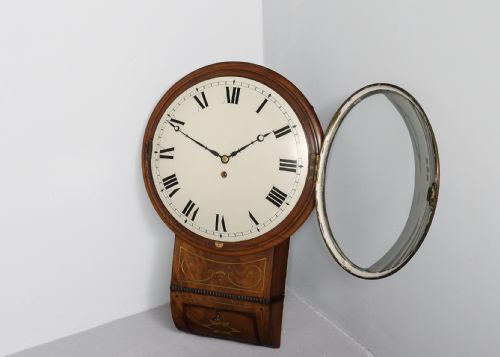
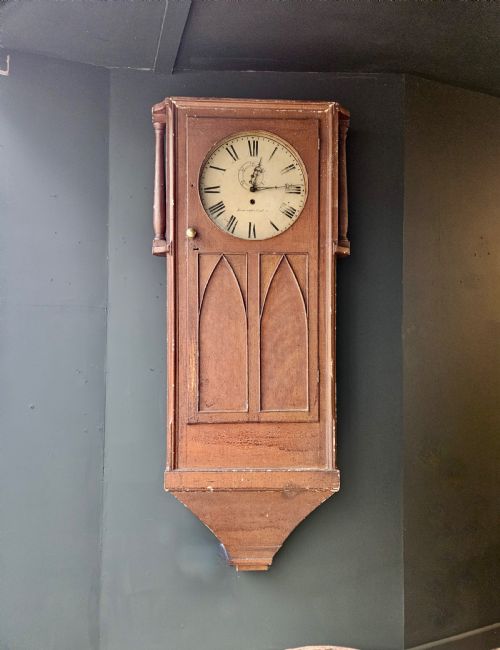
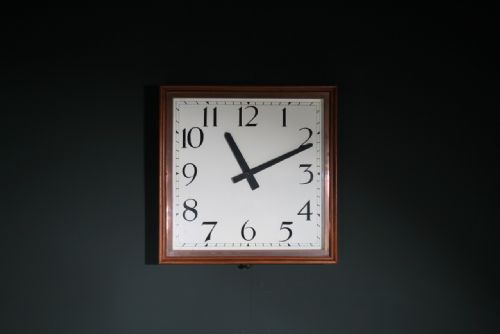
- A wall-mounted timepiece featuring a prominent circular face protected by glass and a wooden surround. They were widely used in public spaces, offices, and domestic halls.
- Fretwork
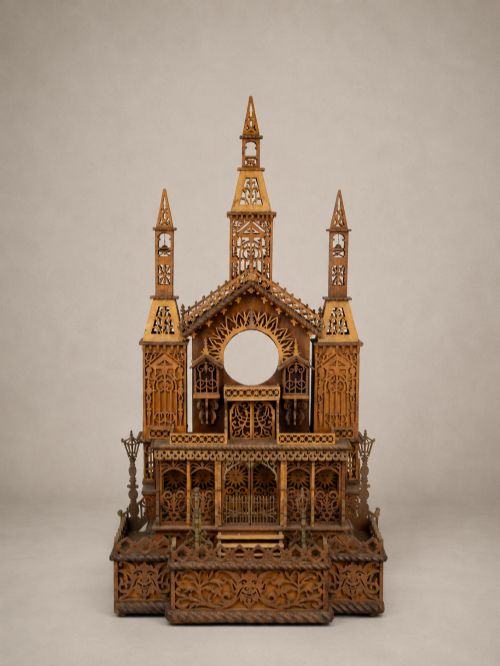
- Ornamental design created by cutting patterns through thin wood using a scroll saw or piercing saw. It appears on clock cases to allow sound to escape or to add decorative depth.
- Chimings
- The mechanical capability of a clock to strike bells or gongs at set intervals to indicate hours and quarters. Complex trains enable musical melodies on multiple gongs.
Large Wooden Clock: Frequently Asked Questions
Where should a large wooden clock be hung?
These sizable timepieces require a sturdy wall anchor capable of supporting the combined weight of the hardwood case and brass movement. Placing them away from direct heat sources protects the timber and veneer from drying out.
Positioning them at eye level in principal rooms allows the dial to be read easily while making the architectural timber case a natural focal point of the interior.
How do fusee movements work?
A fusee movement uses a conical pulley connected to the mainspring by a fine chain or cord. As the spring unwinds and loses tension, the chain moves to a wider part of the cone to maintain steady power.
This ingenious mechanical arrangement ensures consistent force is delivered to the escapement, which directly improves the timekeeping accuracy of the clock.
How do I identify the period of a wooden clock?
The stylistic clues lie in the case architecture, timber selection, and dial construction. Victorian and Georgian pieces frequently display rich mahogany and intricate carved bracket details, whereas Edwardian versions favour inlaid woodwork and balloon shapes.
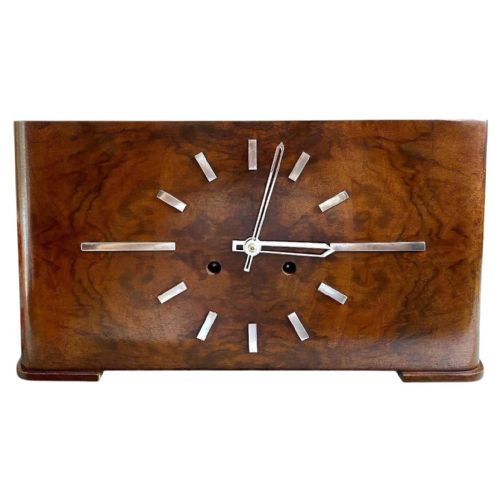
Later pieces from the nineteen-thirties often embrace clean geometric lines, walnut veneers, and octagonal silhouettes characteristic of Art Deco design.
What is a Black Forest clock?
Black Forest clocks originate from the mountainous region in Germany renowned for intricate woodcarving and domestic clockmaking traditions. They are typically characterised by elaborate hand-carved wooden foliage, animal motifs, and cuckoo mechanisms.
These whimsical pieces bring rustic charm and skilled carpentry together, making them distinct from formal British bracket and wall clocks.
How do I care for an antique clock case?
Maintain the timber by applying a microcrystalline wax sparingly to nourish the wood and protect the polished surface from atmospheric moisture. Avoid liquid polishes that contain silicones, as they can degrade historic finishes over time.
Keep the clock away from open windows and direct sunlight to prevent the solid woods and veneers from warping or fading.