

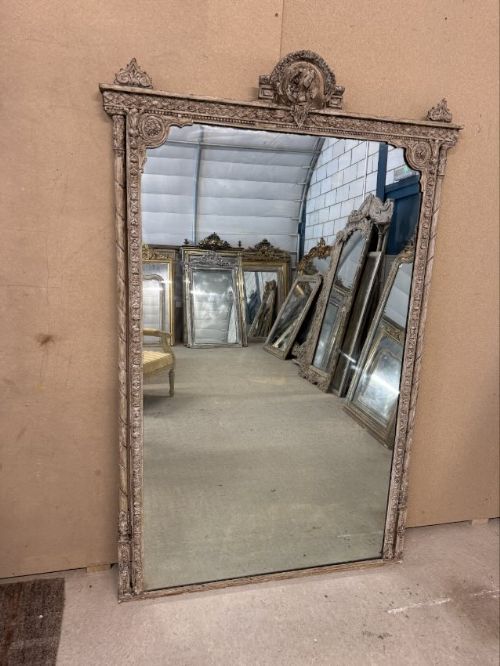
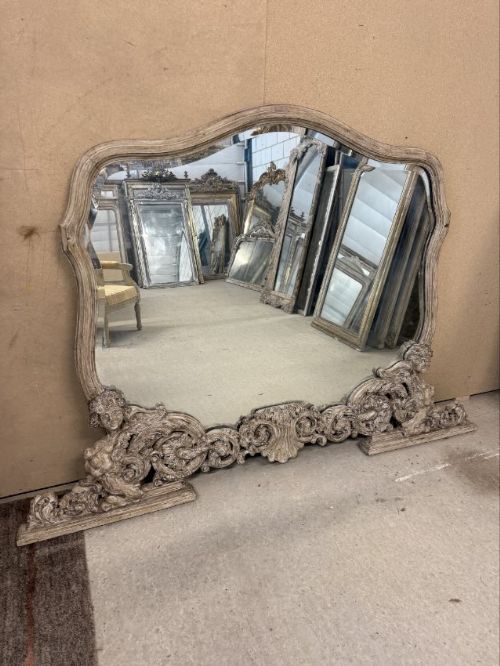
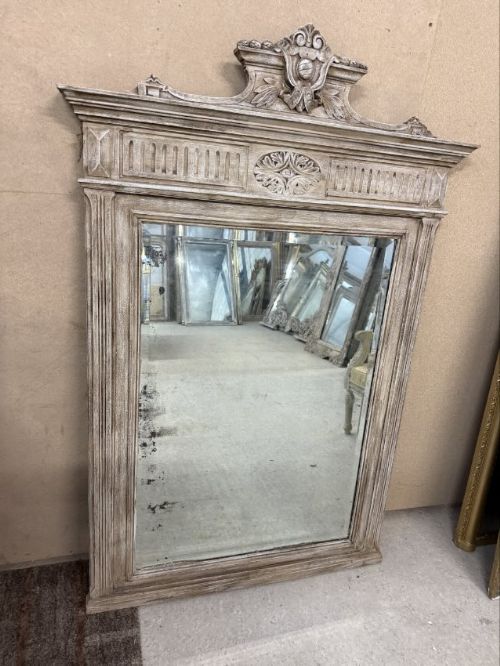
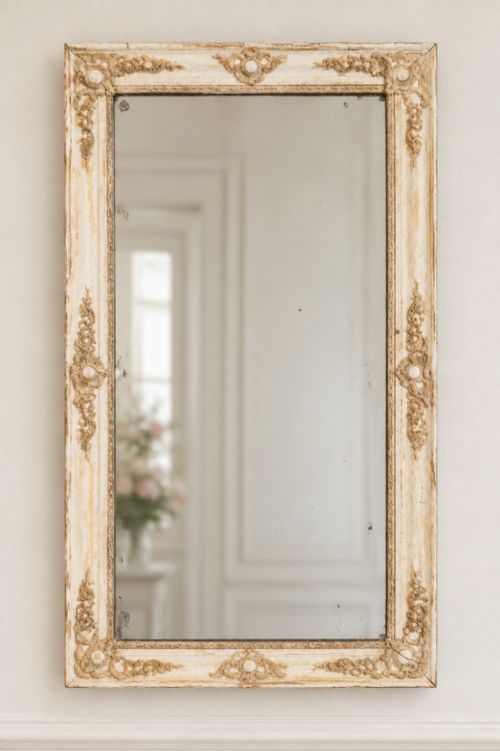



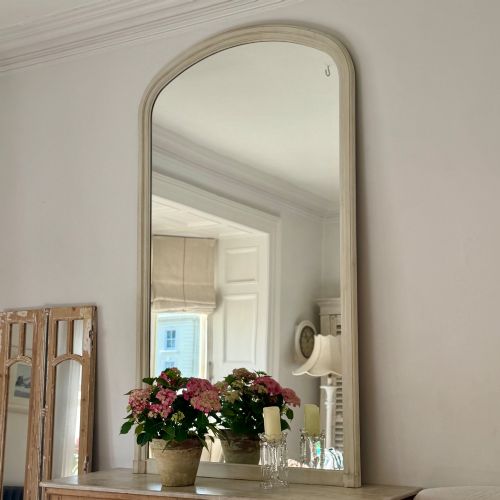


Large White Painted Mirror
A large white painted mirror anchors a room, bringing light and presence from the nineteenth and early twentieth centuries.
Large White Painted Mirror
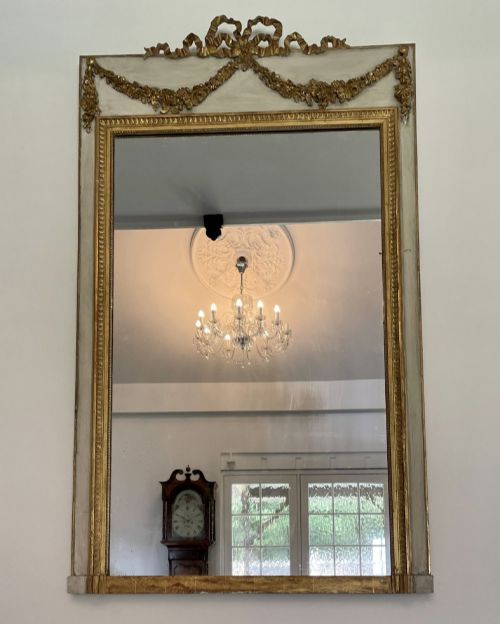
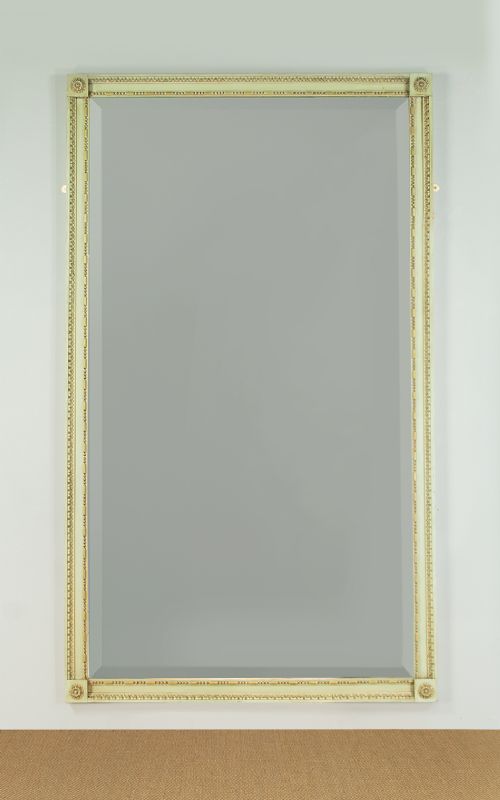
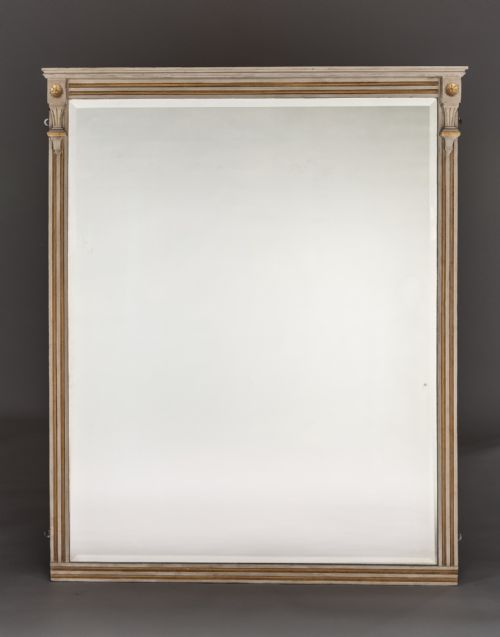
A large white painted mirror primarily takes the form of an overmantel mirror designed to sit above a fireplace, alongside substantial wall mirrors and architectural French chateau styles. These pieces span the nineteenth century through the Edwardian period, often appearing with arched tops, shaped frames, or triptych panels.
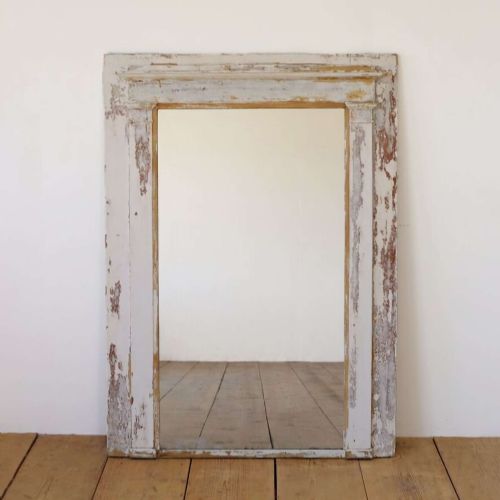
The version most commonly encountered on this page is the Victorian or nineteenth century English overmantel, finished in white paint paired with parcel-gilt details. Alongside these, French provincial and Louis Philippe examples bring distinct regional moulding and distressed painted surfaces.
Makers and craftsmen of the period constructed these large scale items to dominate reception rooms and halls, functioning as both architectural ornaments and practical glass panels. Their scale reflects the high ceilings of nineteenth century domestic interiors.
How they were made
Makers carved timber frames from solid wood before applying layers of gesso to build up decorative mouldings, scrolls, and floral motifs. This plaster-like medium allowed artisans to achieve sharp relief work before painting.
Surfaces received coats of white paint, frequently combined with parcel-gilt highlights where exposed wood or underlying bole showed through gold leaf. Over decades, this layering created the characteristic aged patina found on period frames.
Mirror glass of the era was set into these heavy wooden carcasses, occasionally retaining original plates with natural foxing and oxidation. Frames were secured with substantial backing boards to support the considerable weight of the glass.
Large White Painted Mirror Retail Price Guide 2026
Typical asking prices for large white painted mirror among the pieces listed under this phrase on Sellingantiques today, from the lower quarter to the upper quarter. They describe what is for sale here now, not the wider market.
Listings feature pieces from the 1860s through the Edwardian era, predominantly constructed from carved wood, gesso, and painted glass.
What varies in quality
The depth and execution of the carved wood and gesso ornamentation dictate the calibre of the frame, with hand-modelled relief work showing superior craftsmanship compared to simpler moulded plaster. Crisp lines in the foliage, columns, or scrollwork indicate a higher workshop standard.
The integrity of the painted finish and the retention of original gilding affect the character of the piece, where deliberate layering surpasses flat modern repainting. Original mirror plates with authentic age add significant depth to the overall composition.
The Large White Painted Mirror Glossary
- Overmantel mirror
- A large mirror specifically proportioned to hang on the wall directly above a fireplace mantelpiece. These horizontal formats often feature low-relief carvings designed to complement the fireplace surround.
- Gesso
- A mixture of plaster of Paris, chalk, and glue binder applied to carved wooden frames to create a smooth surface for gilding and painting. It allows intricate three-dimensional details to be sculpted onto the wood.
- Parcel-gilt
- A decorative treatment where portions of an object are covered in gold leaf while the remaining areas are painted or left as natural wood. This technique highlights specific architectural details like beads or scrolls.
- Trumeau
- A decorative wall mirror incorporating a painted panel or oil painting within the upper section of the frame. Originating in French interiors, these pieces combine wall panelling with glass.
- Marginal mirror
- A mirror featuring a central large glass plate surrounded by a border of smaller, bevelled mirror segments held within the frame. This style creates a multifaceted reflection and adds visual complexity.
Large White Painted Mirror: Frequently Asked Questions
Where should I hang an overmantel mirror?
An overmantel mirror traditionally rests on the chimney breast directly above the fireplace mantel, anchored securely to the wall to bear the substantial weight. Positioning it here reflects light from opposing windows across the room.
Alternatively, you can mount these large frames on plain walls in hallways or reception rooms to create an architectural focal point without a fireplace.
How do I clean an antique mirror glass?
Clean antique mirror glass gently using a soft microfibre cloth and a mild, ammonia-free glass cleaner sprayed onto the cloth rather than directly onto the glass. This prevents liquid from seeping behind the silvering or into the old wooden frame.
Avoid pressing hard against fragile or thin nineteenth-century glass plates, especially if the original backing shows signs of foxing or historical wear.
Are these mirrors heavy to hang?
These pieces are exceptionally heavy due to the solid wood construction, thick gesso mouldings, and large glass plates. Hanging them safely requires heavy-duty fixings anchored directly into masonry or secure wall studs.
Professional installation is recommended to ensure the weight is distributed properly across the wall brackets and frame structure.
What is foxing on mirror glass?
Foxing refers to the small brown spots, speckles, and cloudy patches that develop on antique mirror glass as the silver backing oxidises over time. This natural ageing process occurs when moisture reacts chemically with the reflective coating behind the glass.
Many collectors value original foxing because it confirms the genuine antiquity of the mirror plate and adds soft, atmospheric character.
How do I tell a French style mirror apart?
French style mirrors, such as Louis Philippe or Rococo revival examples, typically feature softer arched tops, sweeping scrollwork, and delicate floral gesso motifs. Their proportions often emphasise height over width compared to English overmantels.
They also frequently exhibit original distressed white paint finishes over gesso, reflecting continental decorative traditions from the nineteenth century.