


Large Walnut Shelving Unit
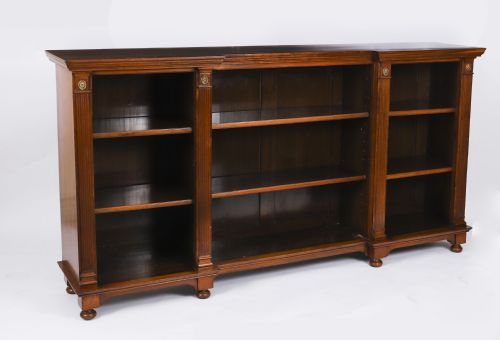
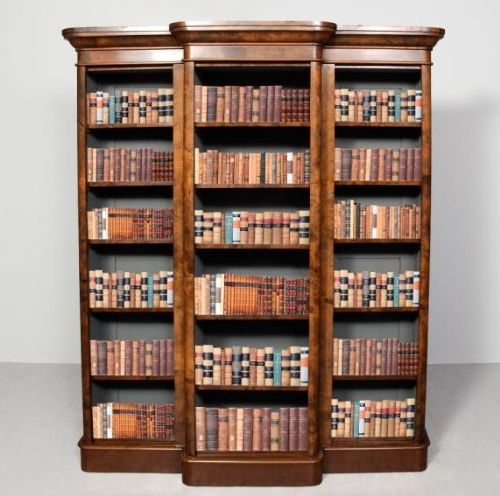
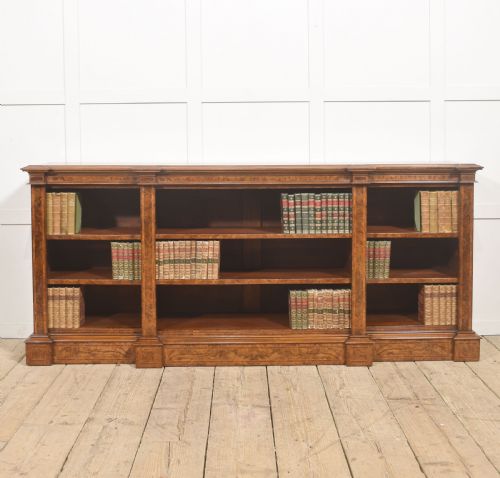
A large walnut shelving unit brings architectural presence and rich grain figure to a room, offering generous storage for significant libraries.
Large Walnut Shelving Unit
When you search for a large walnut shelving unit, you find substantial nineteenth and early twentieth-century furniture pieces designed for serious book storage and display. These items span Victorian, Mid-Victorian, Edwardian, and 19th Century periods, encompassing both open bookcases and hanging wall cabinets.
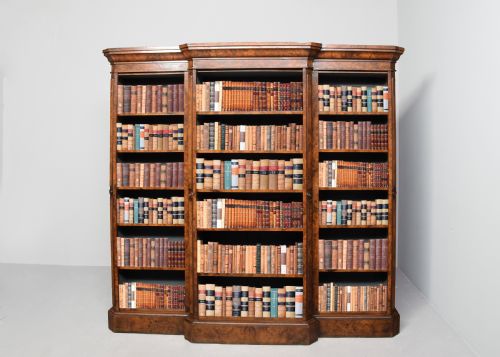
The version you are most likely to meet on this page is the breakfront open bookcase, frequently constructed in three sections with adjustable shelving. These larger formats often incorporate architectural details such as carved friezes and barley twist columns.
Origins represented in these listings range across the Victorian era up to 1910, reflecting traditional craftsmanship from the 1850s, 1860s, and Edwardian decades. They serve primarily as focal points in studies, libraries, and principal reception rooms.
How they were made
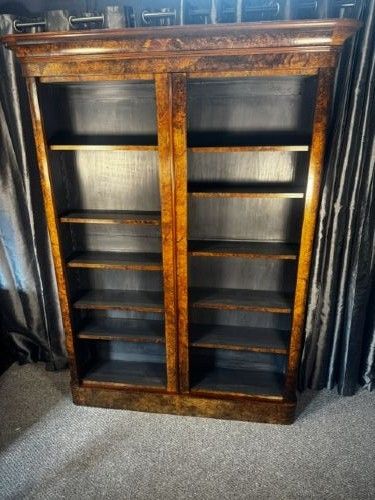
Cabinet makers utilised walnut timber and burr walnut veneer over supportive secondary woods such as softwood, selecting figured veneers to create striking patterns across wide breakfront facades. The distinctive grain provides the primary visual texture of the furniture.
Metal mounts in ormolu and brass frequently accent the walnut construction, particularly on pieces from the mid-nineteenth century. Carved friezes and barley twist columns demonstrate the traditional joinery and ornamentation employed by makers of these periods.
Some Victorian pieces feature barley twist columns, turning mundane bookshelf uprights into wooden corkscrews.
What varies in quality
The selection and book-matching of burr walnut veneer dictate the visual richness at the upper end of the range, where grain patterns align harmoniously across multiple sections. Simpler timber constructions without figured veneer sit lower down the scale.
Architectural elaboration sets apart the finer examples, such as those featuring crisp carved friezes, barley twist columns, and quality ormolu mounts. Simpler configurations with plain shelving represent more utilitarian domestic production.
The Large Walnut Shelving Unit Glossary
- Burr walnut
- A figured wood veneer taken from the wart-like growths on walnut trees, prized for its swirling grain patterns. It creates a decorative surface used on the front panels of better bookcases.
- Breakfront
- A cabinet design where the central section projects forward from the flanking wings. This configuration adds architectural depth and breaks up the linear expanse of large shelving units.
- Ormolu
- Gilt bronze ornamentation applied to furniture mounts and decorative accents. It provides a bright metallic contrast against dark walnut timber.
- Frieze
- The wide horizontal band situated beneath the cornice of a bookcase. On these pieces, it is frequently decorated with carved details.
- Barley twist
- A type of turned column resembling the spiral twist of a barley sugar stick. This decorative turning appears on upright supports and columns.
Large Walnut Shelving Unit: Frequently Asked Questions
How do I date a large walnut shelving unit?
Dating relies on stylistic clues and construction methods visible in the listings. Pieces from the 1850s and 1860s often display breakfront proportions and ormolu mounts.
Later Edwardian or 19th Century examples may incorporate simpler open configurations or different revival styles like Jacobean, reflecting the taste of their decade.
Are the shelves adjustable?
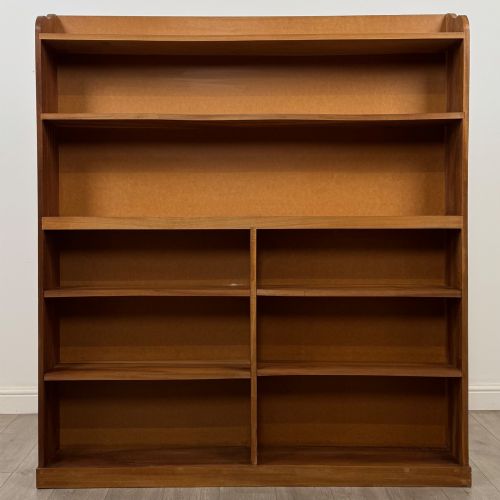
Many of the larger multi-section bookcases listed include adjustable shelving. This functional feature accommodates books of varying heights.
It reflects the practical library use for which these nineteenth-century pieces were built.
How do I care for walnut veneer?
Walnut veneer requires stable indoor humidity and protection from direct sunlight to prevent timber movement and fading. Regular dusting with a soft dry cloth preserves the polished surface.
Avoid placing damp items directly onto the timber.
What is the difference between open bookcases and wall shelves?
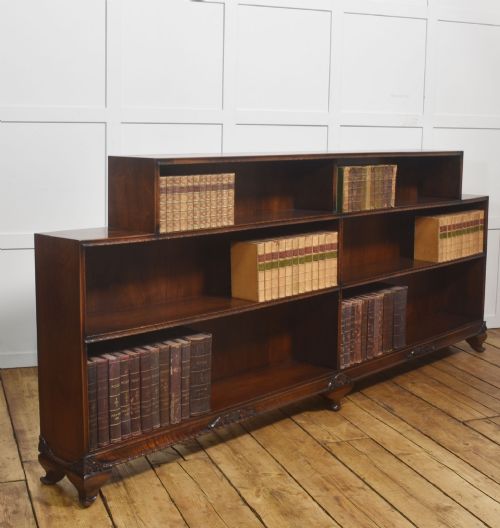
Open bookcases stand directly on the floor as large freestanding units, often divided into multiple breakfront sections. Hanging wall shelves mount securely to vertical wall surfaces.
Wall units combine smaller cabinet space with open display ledges.