
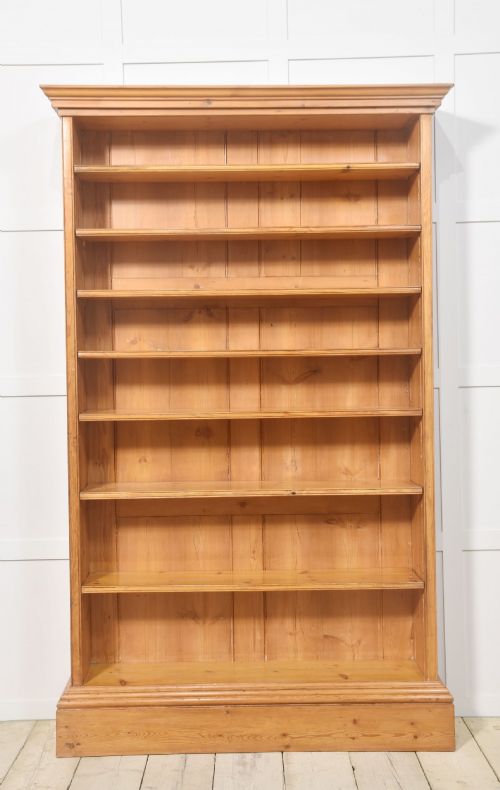
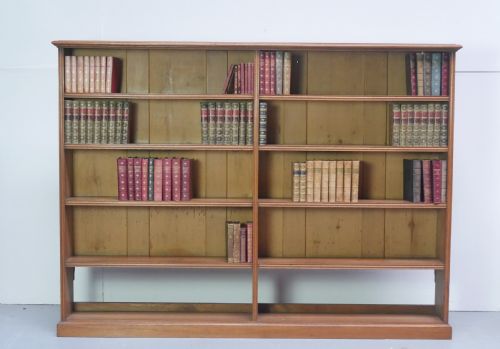

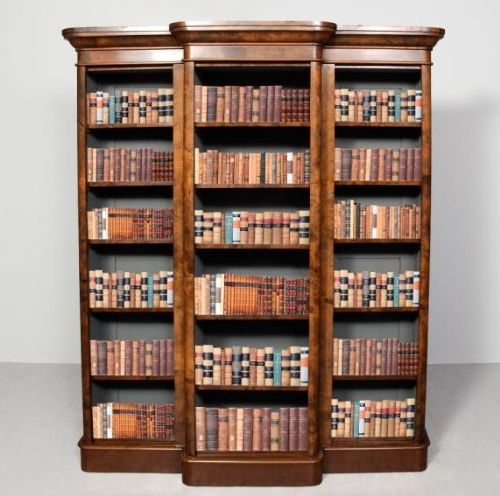


Large Victorian Book Cabinet
A large victorian book cabinet commands attention in a room, combining substantial proportions with practical storage for extensive volumes.
Large Victorian Book Cabinet
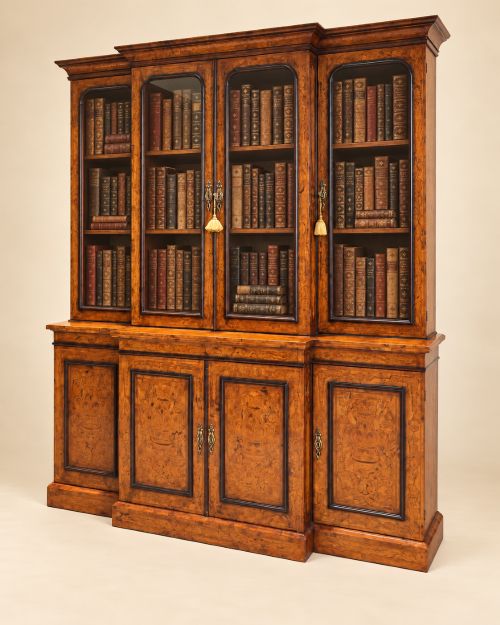
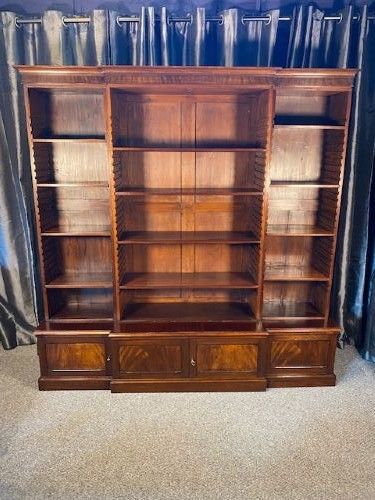
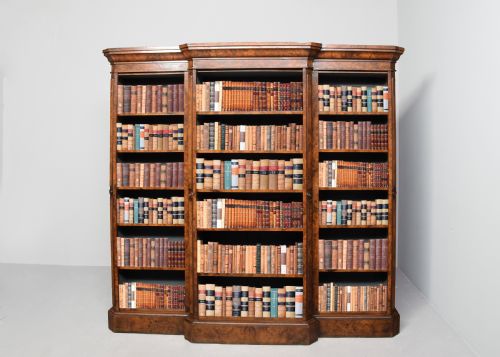
A large victorian book cabinet represents the grand scale of nineteenth-century libraries, designed to house substantial private collections in domestic or institutional settings. These pieces primarily date from the Victorian era and the broader nineteenth century, frequently appearing in robust multi-section breakfront formats.
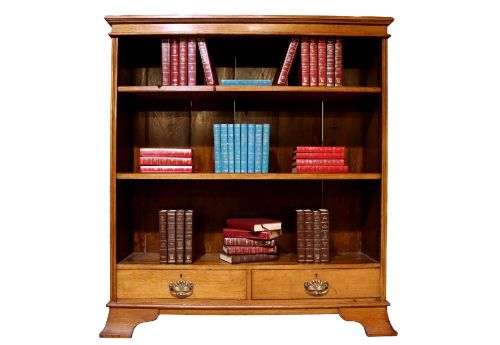
Makers constructed both open shelving variants and enclosed glazed display cabinets to protect leather-bound books from dust and light. Examples range from simple pine and deal wood utility pieces to elaborate architectural library cabinets carved from oak and mahogany.
The aesthetic vocabulary spans standard Victorian styling, Gothic Revival, Arts and Crafts, and Regency influences, reflecting the shifting tastes of the period. Buyers commonly encounter multi-part configurations featuring adjustable shelving and lower cupboard storage.
How They Were Made
Craftsmen built these substantial carcases using dense hardwoods such as mahogany, oak, and walnut, frequently applying figured veneers like flame mahogany or burr walnut to prominent surfaces. Secondary timbers like pine appear on internal partitions and backboards.
Glazing required precise framing for glass panel doors, while brass hardware served for hinges, locks, and shelf-support mechanisms. Carved detailing, inlaid woodwork, and ebonising appeared on higher-status commissions to enhance the architectural presence of the cabinet.
Some Victorian oak cabinets bear carved evidence of their original institutional homes, including manor libraries and university rooms.
What Varies in Quality
Substantial differences arise from the selection of timber and the sophistication of the joinery used in the breakfront framework. High-end pieces display carefully matched figured veneers and intricate, hand-carved ornamentation rather than applied mass-produced mouldings.
The integration of functional elements such as smoothly operating adjustable shelf systems and substantial brass fittings distinguishes superior examples. Construction depth, timber thickness, and the integrity of multi-section dismantling joints dictate the structural longevity of the piece.
Gillows·Holland & Sons
The Large Victorian Book Cabinet Glossary
- Breakfront
- A cabinet design where the central section projects forward from the flanking wings. This configuration adds architectural depth to large library furniture.
- Burr walnut
- A prized timber harvested from the warted growths of the walnut tree, showing intricate swirling grain patterns. Cabinetmakers used it as a veneer on statement panels.
- Pollard oak
- Oak timber taken from trees that were cut back near the main trunk to encourage dense, knotty growth. The resulting wood displays a highly figured and speckled appearance.
- Ebonised
- Timber treated with a dark finish to imitate expensive ebony. This technique gained popularity during the nineteenth century for formal display furniture.
- Secretaire
- A cabinet incorporating a pull-down writing drawer fitted with small compartments and pigeonholes. It merges library storage with a compact desk facility.
Large Victorian Book Cabinet: Frequently Asked Questions
How do I adjust the shelves?
Most period pieces utilise traditional wooden tooth-racks or brass shelf-stud strips inset into the interior uprights. You simply lift the shelf to clear the supports and reposition it into the desired slots.
Heavier timber shelves require careful handling due to their size, so removing the books beforehand prevents strain on the fittings.
Are these cabinets supplied in sections?
Large nineteenth-century library cabinets were constructed as modular two-part or three-section pieces to facilitate transport and placement. Breakfront designs typically separate into a heavy plinth base, central carcase sections, and an overhanging cornice.
This sectional build allows the furniture to be maneuvered through standard domestic doorways despite imposing overall dimensions.
How should I care for the wood?
Maintain polished mahogany, oak, and walnut surfaces by applying a traditional beeswax polish sparingly and buffing with a soft cloth. Avoid placing large wooden furniture near direct heat sources or in strong sunlight, which causes timber to dry and veneers to lift.
Consistent indoor humidity protects the structural stability of large panelled doors and prevents the wood from warping over time.