



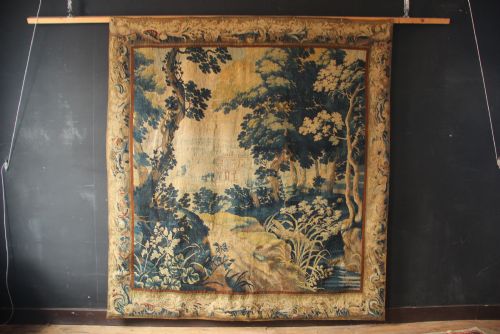
Large Tapestry Art
Large tapestry art brings centuries of woven narratives, verdant landscapes and figurative scenes directly onto the wall.
Large Tapestry Art
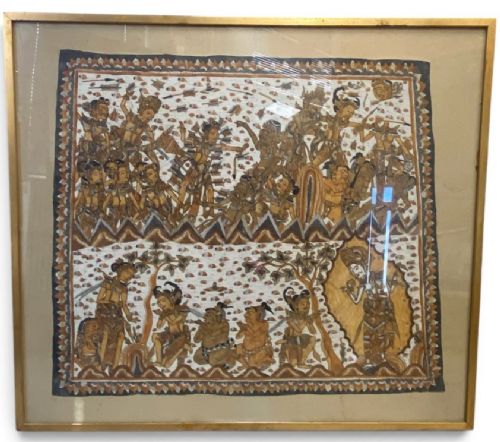
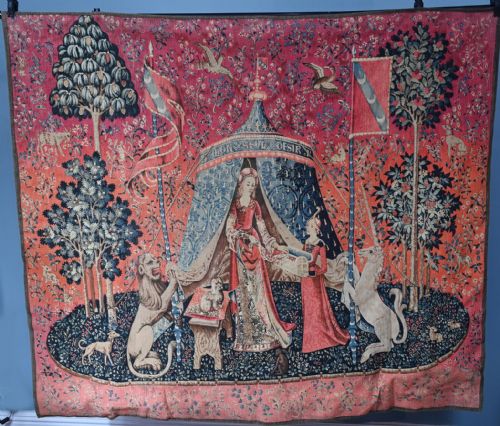
Large tapestry art encompasses woven wall hangings, framed needlework panels and expansive textile pieces spanning from the sixteenth century into the twentieth century. These works originate from European workshops in France and Flanders alongside Asian and Indonesian traditions, including Suzanis, Kalamkari and Ikat panels.
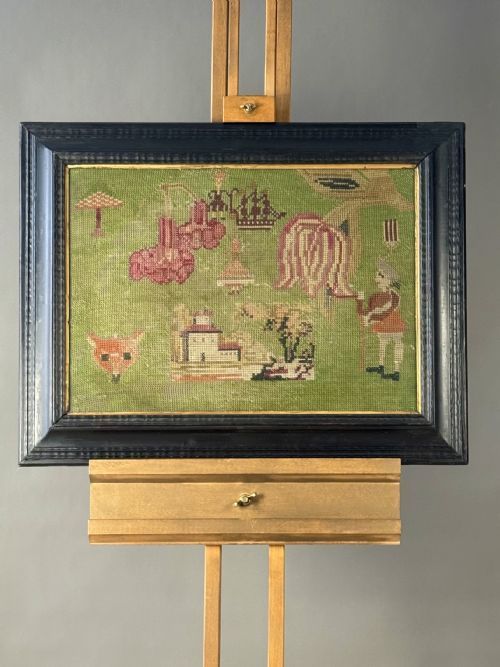
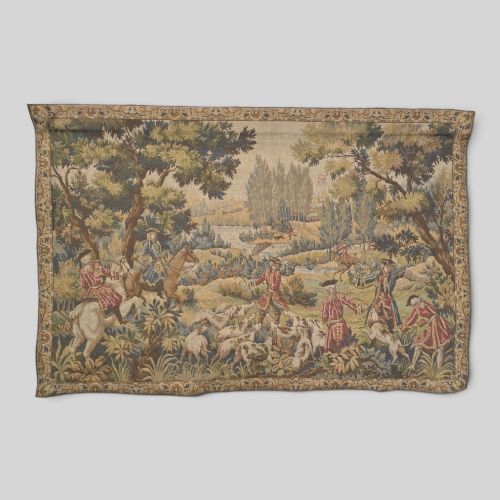
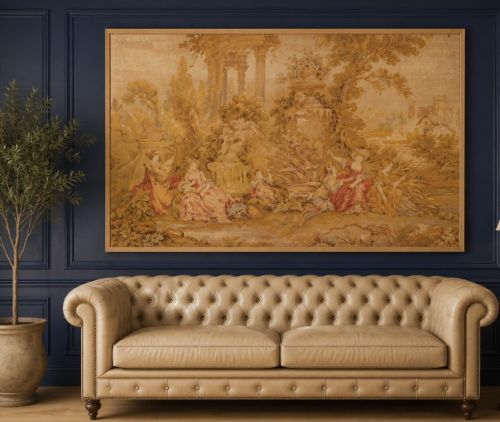
Buyers frequently encounter seventeenth-century Flemish verdure designs, eighteenth-century French pastoral scenes and nineteenth-century Berlin woolwork pictures. The category also includes framed wool work interpretations of paintings and substantial Asian embroidered wall hangings featuring traditional motifs.
Materials and construction methods
The materials recorded in these works rely principally upon natural fibres, combining wool, silk, cotton and linen on canvas or textile foundations. Certain specialised panels incorporate metal threads alongside standard yarns to provide reflective highlights within the composition.
Execution methods range from traditional warp-and-weft loom weaving in historic French and Flemish workshops to intricate needlework, crewelwork embroidery, and hand-painted or block-printed textiles from Asian and Indonesian origins.
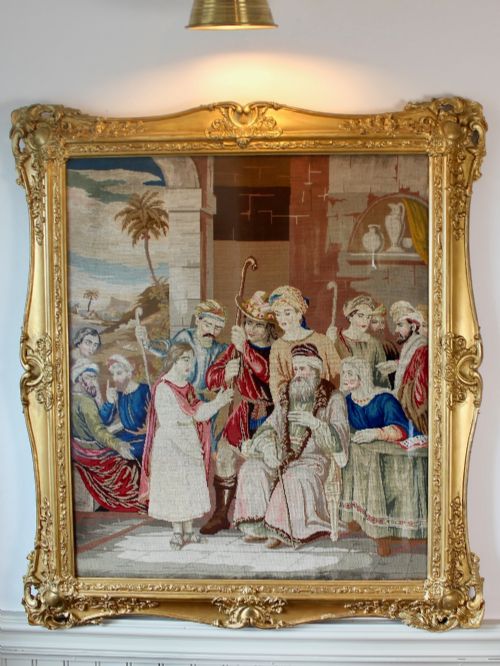
Pharaoh's dream hangs immortalised in wool, proving that historic artisans found endless inspiration in ancient architectural anxieties.
Distinctions in quality and execution
Quality separates examples by the nuance of the dye palette, the complexity of the figural or botanical drawing, and the tightness of the weave or needlework stitch. Pieces originating from documented weaving centres like Aubusson or Flanders display sophisticated tonal gradation, particularly in verdure foliage and mythological scenes.
The preservation of the original textile integrity, the stability of the fibres, and the presence of historic framing or backing materials heavily influence the standing of an individual piece within its period.
Thomas Webb
The Large Tapestry Art Glossary
- Verdure
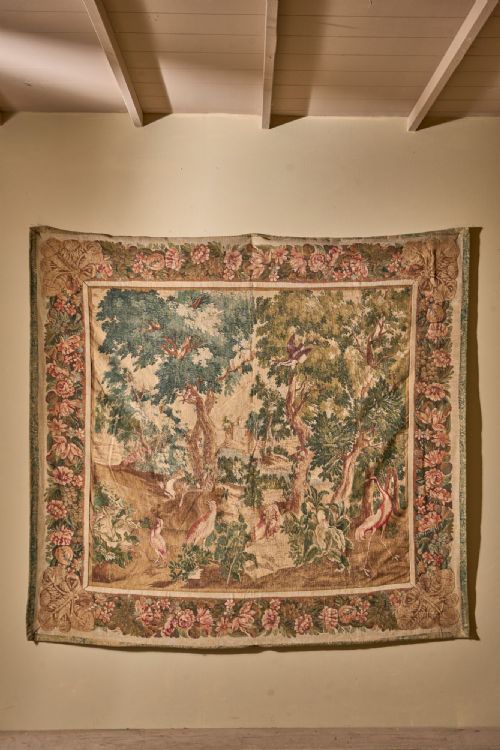
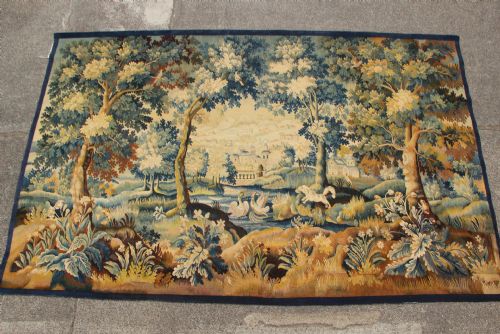
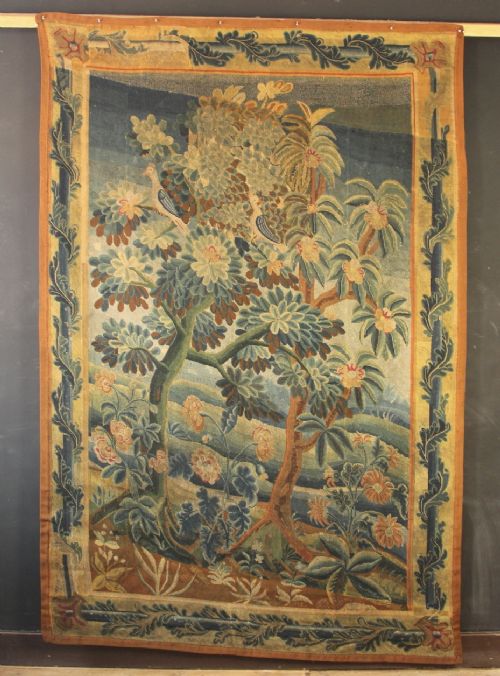
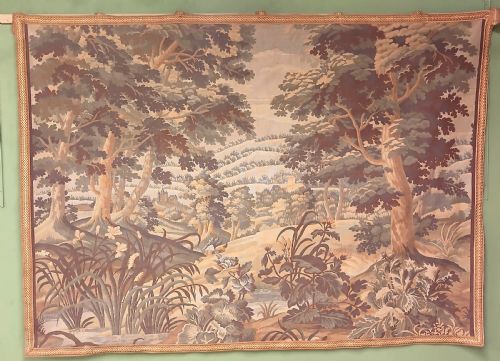
- A type of tapestry featuring a stylized landscape or woodland scene dominated by foliage, trees, and occasionally animals or birds. These panels were widely produced in Flemish and French workshops during the seventeenth and eighteenth centuries.
- Aubusson
- A town in France renowned for producing high-quality hand-woven tapestries and carpets since the historic period. Works from these workshops often depict pastoral scenes, floral motifs, or classical narratives.
- Berlin woolwork
- A type of embroidered needlework popular during the nineteenth century, worked in coloured wools on a canvas grid following printed pattern charts. These often reproduced famous paintings or biblical stories.
- Suzani
- A type of embroidered tribal textile made in Tajikistan, Uzbekistan, and other Central Asian nations. They typically feature bold floral designs worked in silk thread on a cotton or linen ground.
- Ikat
- A dyeing technique where bundles of threads are tightly wrapped and dyed prior to weaving to create intricate patterned textiles. These panels appear across various Asian and Indonesian island traditions.
Large Tapestry Art: Frequently Asked Questions
How do I hang a heavy antique tapestry?
Large woven textiles require weight distribution across a supportive wooden batten or a concealed pocket sewn to the reverse edge. This prevents undue strain on the historic fibres.
Alternatively, many nineteenth-century needlework pieces are housed within heavy gilt wooden frames that bear the structural load of the object entirely.
What is a verdure tapestry?
A verdure tapestry depicts a dense woodland landscape filled with stylised trees, lush foliage, and occasional birds or hunting animals. These pieces served as movable forest scenes inside historic stone rooms.
Tonal shifts in green, blue, and brown wool threads create a sense of deep perspective across the woven surface.
How are Flemish and French tapestries told apart?
Flemish pieces from the sixteenth and seventeenth centuries frequently employ heavier wool and verdure compositions filled with dense botanical detail and mythological narratives. French works, particularly later Aubusson productions, often lean toward lighter pastoral elegance and refined floral borders.
Examining the palette, edge finishes, and underlying weave structure helps indicate the likely regional workshop of origin.
Can antique textiles be cleaned?
Historic textiles require delicate specialist conservation rather than standard domestic laundering to protect fragile silk, wool, and metal threads. Gentle surface dust removal using low-suction methods through a mesh screen is typically the safest approach.
Professional textile conservators should handle any deeper cleaning to avoid irreversible shrinkage or dye transfer.