

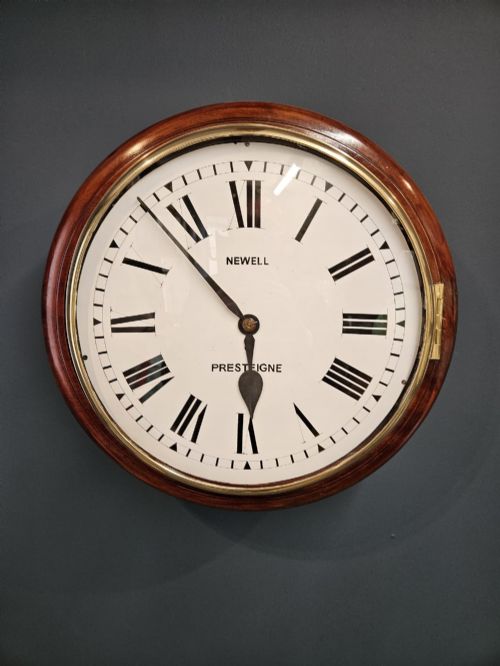
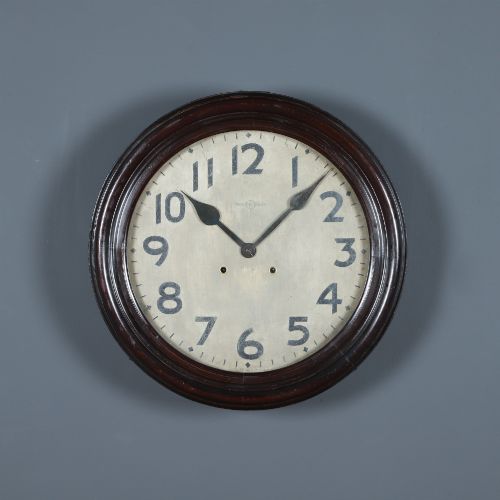


Large Station Clock
A large station clock commands attention with an expansive dial, serving as a striking focal point for a wide interior wall.
Large Station Clock
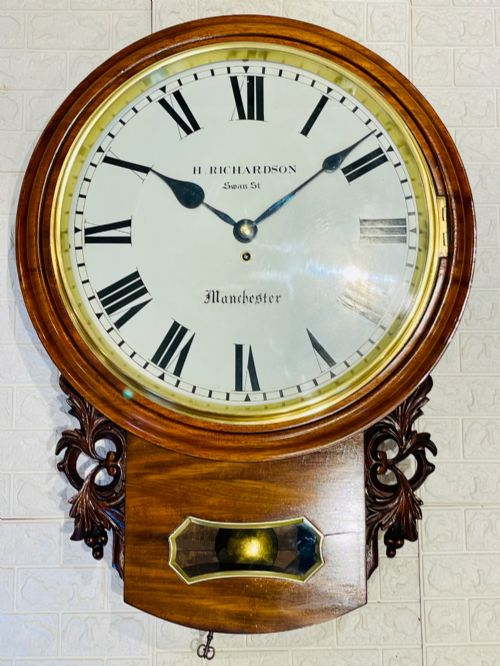
When buyers search for a large station clock, they encounter heavy-duty timepieces originally built to keep time in public transit hubs, factories, and municipal buildings. These utilitarian objects range from traditional wooden-framed wall clocks with fusee movements to monumental iron or brass outdoor dials salvaged from towers.
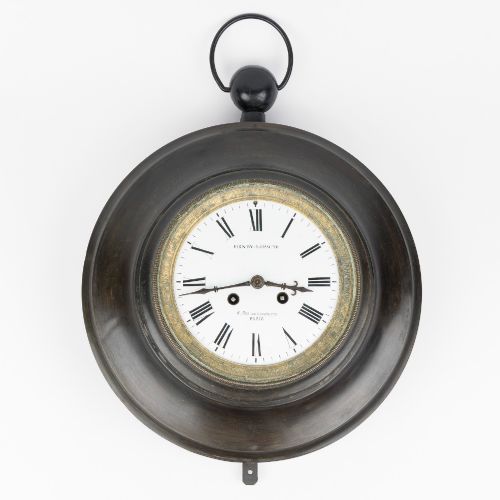
The versions most commonly met on this page span the Victorian, Edwardian, and early twentieth-century periods, often manifesting as robust wall clocks or architectural clock faces. Originating from English and French makers, they combine straightforward legibility with substantial industrial presence.
Surviving examples frequently display the marks of heavy public use, retaining clear enamel or painted dials alongside patinated metal or mahogany surrounds. Their enduring appeal lies in this combination of mechanical honesty and bold proportions.
How they were made
Makers constructed the structural cases of these timepieces from durable materials such as solid mahogany, cast iron, brass, and steel to withstand demanding public environments. Heavy glass protected the delicate paper, metal, or enamel dials from dust and damage in busy spaces.
Movements relied on robust mechanical engineering, notably fusee movements designed to maintain even tension and ensure accurate timekeeping as the mainspring wound down. Later twentieth-century versions integrated electric systems like Smiths Sectric movements to automate timekeeping in municipal and hospital settings.
Large Station Clock Retail Price Guide 2026
Typical asking prices for large station clock among the pieces listed under this phrase on Sellingantiques today, from the lower quarter to the upper quarter. They describe what is for sale here now, not the wider market.
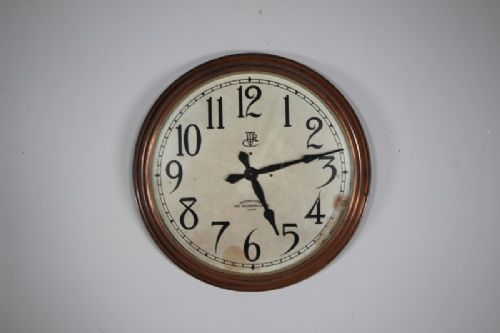
Listings feature clocks spanning the nineteenth century through the 1940s, utilising materials like Bakelite, brass, mahogany, and iron.
What varies in quality
The distinction between standard commercial pieces and top-tier examples rests upon the sophistication of the movement and the integrity of the original components. Fusee movements by noted makers command greater regard for their precision and complex mechanical assembly than standard wind-up mechanisms.
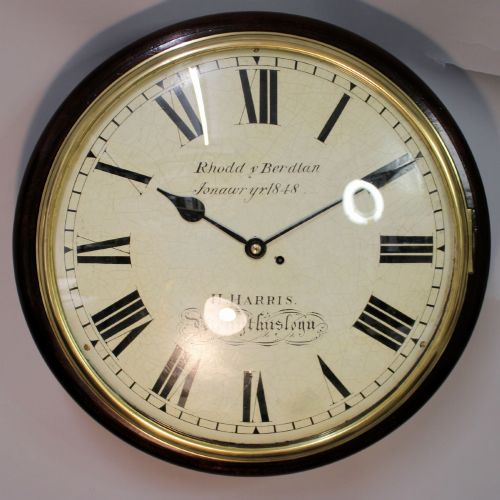
Material quality and dial preservation also dictate distinction, with clear, undamaged enamel or crisp wooden dials retaining higher integrity than heavily restored faces. The provenance of the maker, evident in signed dials or castings, elevates the standing of an individual clock.
Henry Lepaute of Paris·Henry Harris of Monythusloyn·Joyce Whitchurch·Gents of Leicester·Camerer Cuss
The Large Station Clock Glossary
- Fusee
- A conical pulley connected to the mainspring by a chain or cord, designed to equalise the torque as the spring unwinds. This mechanism is a hallmark of better-quality British clockmaking.
- Dial clock
- A wall clock featuring a prominent circular face, usually surrounded by a wooden or metal rim. These were standard issue for offices, railways, and public institutions.
- Turret clock
- A large clock mounted in a tower or gable, often featuring an oversized exterior dial. They were built for visibility across expansive grounds or town squares.
- Enamel dial
- A metal face coated with fused glass powder to create a smooth, durable white surface. Numbers and markings were typically fired directly into the glaze for permanence.
Large Station Clock: Frequently Asked Questions
Where were large station clocks originally used?
These clocks hung in railway termini, factory floors, municipal offices, and institutional buildings to coordinate schedules for the public and workforce. Their bold dimensions ensured legibility from a considerable distance.
Over time, many were salvaged during architectural refits and adapted for domestic or commercial interior display.
How do I hang a heavy wall clock safely?
Due to the substantial weight of mahogany cases, heavy iron bezels, and thick glass, these clocks require secure mounting directly into structural wall studs or masonry. Using heavy-duty fixings rated well beyond the clock's actual weight is essential for stability.
Professional installation is recommended to protect both the timber case and the mechanical movement from accidental impact.
How do I tell an antique dial from a reproduction?
Genuine period dials display authentic signs of age, such as hairline cracks in enamel, subtle fading on painted iron, or patination on the timber surrounds. The materials and construction methods on the reverse should align with the stated period, such as nineteenth-century brass movement plates.
Modern replicas often use synthetic distressing that lacks the depth of genuine industrial wear and tear.
Do these clocks require specialist maintenance?
Mechanical fusee and spring-driven clocks benefit from periodic professional servicing to clean old oils and ensure the gear train operates smoothly. Pendulum-driven wall clocks also require careful initial leveling on the wall to keep correct time.
Electric models from later decades require checks on their wiring and internal synchronous motors by a qualified technician.