

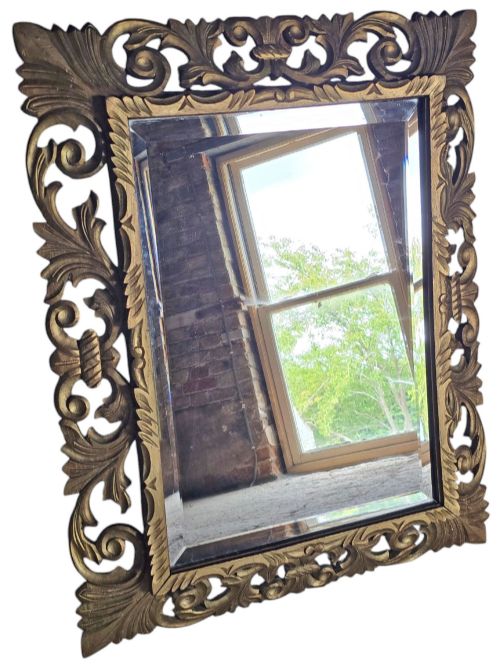


Large Statement Mirror
A large statement mirror anchors a room with scale and reflected light, drawing the eye instantly to its ornate frame.
Large Statement Mirror
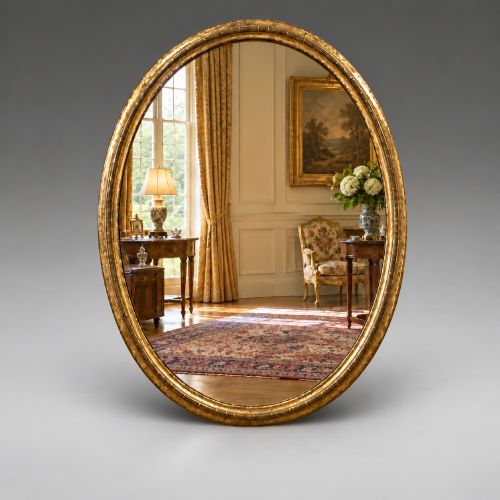
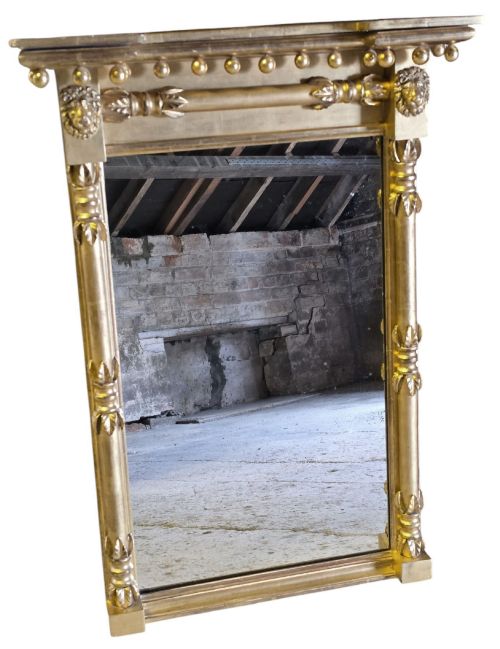
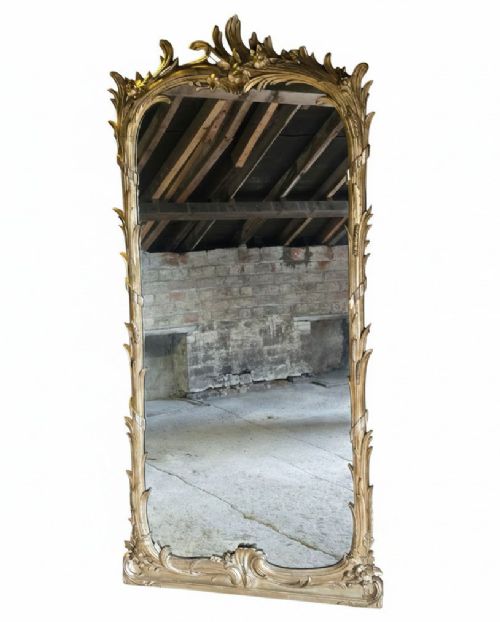
A large statement mirror primarily takes the form of an overmantel mirror, wall mirror, or pier mirror designed to dominate a wall space. These substantial pieces emerge predominantly from the nineteenth century, alongside examples from around nineteen-twenty and nineteen-thirty.
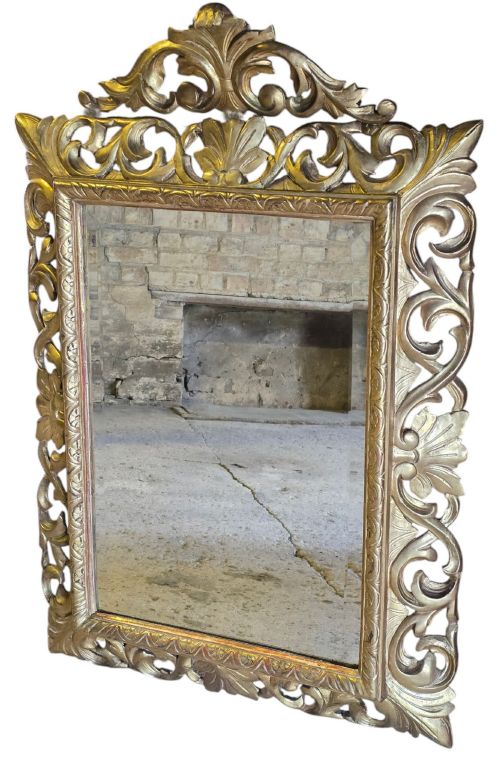
The styles span French chateau, Florentine, Regency, Rococo revival, and Victorian designs, encompassing both rectangular overmantels and curved oval or convex formats. Most items on this page lean heavily into nineteenth-century French and English decorative traditions with painted or gilded frames.
How they were made
The construction of these frames relies on timber foundations overlaid with gesso and plaster to build up intricate ornamental relief. Artisans then applied gold leaf or paint directly onto the composition surface to achieve a rich metallic finish.
Mirror glass is set within these heavy wooden and plaster structures, sometimes taking the form of specialised convex plates or traditional flat wall plates. The combination of carved wood, moulded composition, and reflective glass demands careful structural joinery to support the sheer weight.
Large Statement Mirror Retail Price Guide 2026
Typical asking prices for large statement mirror among the pieces listed under this phrase on Sellingantiques today, from the lower quarter to the upper quarter. They describe what is for sale here now, not the wider market.
Listings span the nineteenth century up to nineteen-thirty, combining giltwood, gesso, and mirror glass across wall and overmantel formats.
What varies in quality
The fineness of the carved or moulded ornamentation dictates the visual depth of the frame, separating simpler mouldings from deeply sculpted Rococo and Florentine flourishes. Crisp relief work in the gesso and plaster demonstrates superior craftsmanship.
The application of gold leaf versus basic paint finishes alters the luminosity and ageing characteristics of the piece. Heavier timber construction and intact original framing materials distinguish the more substantial works from lighter alternatives.
The Large Statement Mirror Glossary
- Giltwood
- Wood that has been coated with gold leaf. This finish provides a warm, reflective metallic sheen that ages gracefully over the centuries.
- Gesso
- A plaster-like mixture applied to wood frames to create a smooth surface for carving and gilding. It allows for intricate moulded details in ornate frames.
- Overmantel mirror
- A large mirror specifically designed to hang above a fireplace mantel. These pieces traditionally span the width of the hearth and open up the room.
- Convex mirror
- A round mirror with a curving outward glass surface that reflects a wide, distorted panoramic view of the interior. They often feature distinct circular frames.
- Pier mirror
- A tall mirror designed to hang on the narrow section of wall between two windows. They make efficient use of natural light in period rooms.
Large Statement Mirror: Frequently Asked Questions
How do I hang a heavy mirror safely?
These substantial frames require secure fixings anchored directly into structural wall studs or masonry. Professional installation is strongly advised due to the combined weight of timber, plaster, and glass.
Distributing the load across multiple brackets prevents strain on the original antique frame construction.
Where should I place an overmantel mirror?
Positioning an overmantel mirror directly above a fireplace mantel creates a traditional focal point in a reception room. This placement naturally reflects light from opposing windows across the entire space.
Ensure the width of the mirror complements the proportions of the fireplace surround below it.
How do I clean antique mirror glass?
Wipe the glass gently with a soft microfibre cloth dampened slightly with distilled water or a mild cleaning solution. Avoid spraying liquids directly onto the surface to prevent moisture seeping behind the silvering.
Keep moisture away from the surrounding giltwood and gesso frame edges during the cleaning process.
What defines a Florentine mirror frame?
Florentine frames typically feature elaborate carved scrollwork, acanthus leaves, and rich gilding inspired by Italian Renaissance aesthetics. These ornate designs contribute heavily to the statement character of the piece.
Such frames are built to draw immediate attention through dense, layered ornamentation.