


Large Silver Centrepiece
A large silver centrepiece commands the dining table, holding fruit, flowers or light to anchor a room.
Large Silver Centrepiece
When you search for a large silver centrepiece, you encounter substantial tableware designed to dominate a dining table or sideboard, originating primarily from the 18th, 19th and 20th centuries.
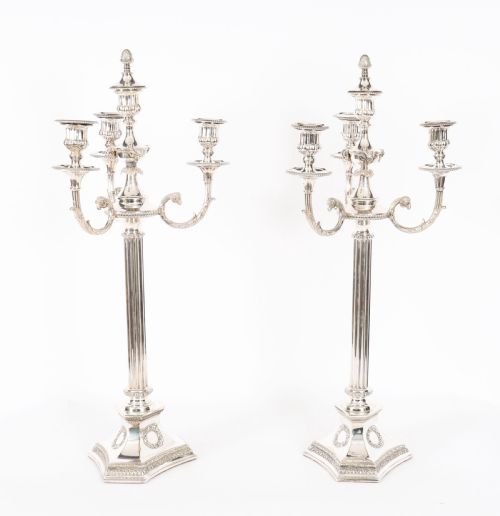
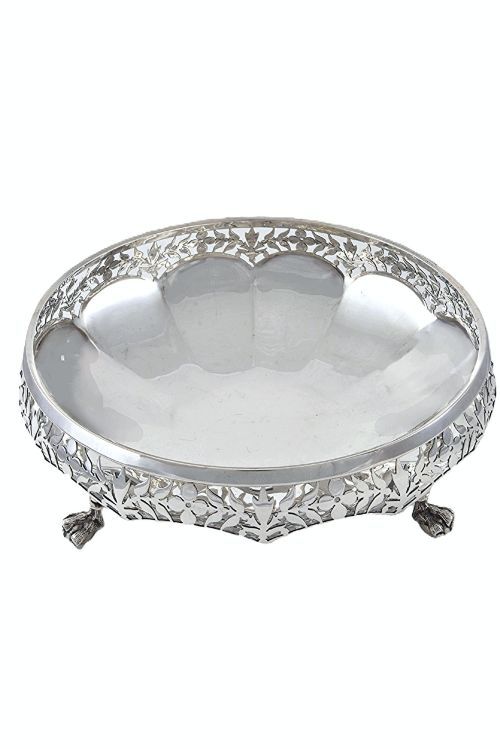
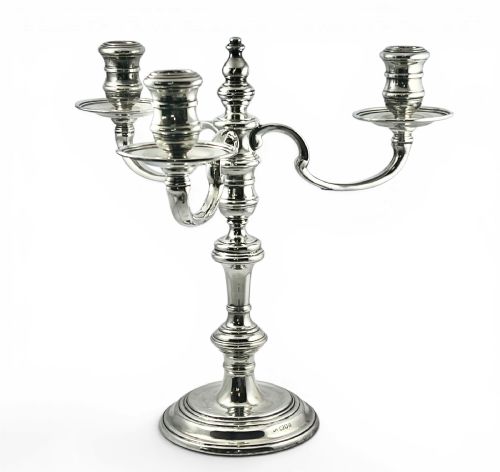
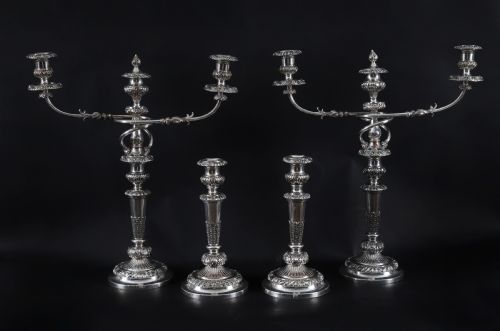
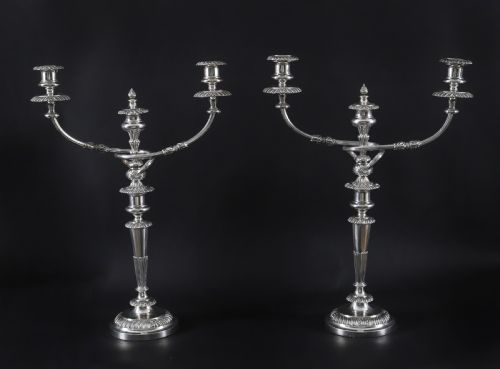
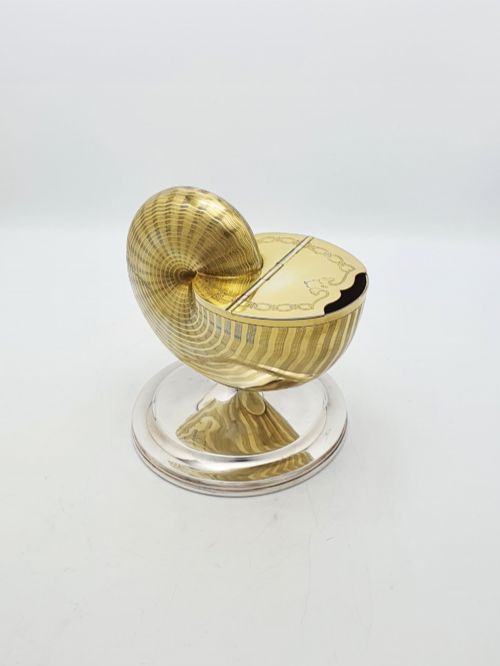
The most common forms on this page include deep presentation bowls, multi-branch candelabras, fruit containers and monteiths, executed in sterling silver, silver plate and Old Sheffield plate.
These vessels reflect shifting social rituals across Victorian, Edwardian and Georgian periods, moving from formal display pieces to functional dining accessories.
How they were made
Silversmiths formed sterling silver bodies through heavy hammering and raising, often adding cast decorative mounts and detailed handles by hand.
Makers of plated items applied thin sheets of silver over copper or base metal bases using Old Sheffield fusing or later electroplating techniques.
Surface enrichment relied on repoussé chasing, piercing and engraving to create floral, bird and architectural motifs across the metal.
Cherubs and winged infants frequently supervise candlelit dining tables from the bases of heavy 19th-century Elkington candelabras.
What varies in quality
The distinction between ordinary and exceptional pieces lies in the crispness of the hand-chased relief and the structural weight of the metal.
Superior examples retain integrated original components such as glass liners, matching sconces or complete multi-piece suites without later alterations.
Renowned makers contribute greater sculptural definition and balanced proportions to the overall form.
Matthew Boulton·Barker Ellis·Joseph Rodgers·Alexander Clarke And Co·Josiah Williams And Co·Elkington·S Kirk And Son Company·Walker And Hall·Mappin And Webb·WMF
The Large Silver Centrepiece Glossary
- Monteith
- A bowl with a scalloped or notched rim, originally used for chilling wine glasses by their stems. The notched edge held the glass securely in ice water.
- Candelabra
- A branched lighting fixture holding multiple candles on a central shaft. These often convert into table centrepieces by swapping upper sections for bowls.
- Repoussé
- A metalworking technique where the artisan hammers the design from the reverse side to create raised relief on the front. This adds deep texture to floral and animal motifs.
- Old Sheffield Plate
- An early fusing method where a thin layer of silver is fused to a copper core under heat. Pieces show a thin line of copper at exposed edges.
Large Silver Centrepiece: Frequently Asked Questions
What is a large silver centrepiece used for?
These large vessels served to anchor formal dining tables, holding floating flowers, fresh fruit, punch or wine bottles during grand meals. They functioned as the visual focal point of the tablescape.
Today, they perform a similar role in domestic interiors, standing empty as sculptural objects on sideboards or holding seasonal arrangements in a dining room.
How do I clean sterling silver and silver plate?
Maintenance requires gentle washing with warm soapy water and a soft cloth to remove dust and oils without scratching the metallic surface. Chemical dips should be avoided on plated items to protect the thin silver layer.
Periodic application of a quality silver polish maintains the shine. Care must be taken around repoussé work and engraved details to prevent abrasive build-up in crevices.
How can I tell sterling silver from silver plate?
Hallmarks stamped into the metal indicate standard sterling silver, showing symbols like a walking lion or numerical fineness marks alongside maker initials. Absence of these official assay marks often points to plated wares.
Examining the edges can reveal a copper base showing through worn silver plate, whereas solid sterling maintains consistent metal colour throughout its structure.
Are glass liners original to these pieces?
Many bowls, baskets and epergnes originally came with fitted glass inserts designed to protect the metal from acidic fruits, water and flower stems. Finding an intact matching liner increases the completeness of the object.
Replacement liners appear frequently due to the fragile nature of old glass, so checking for secure fits and matching period characteristics helps determine originality.