




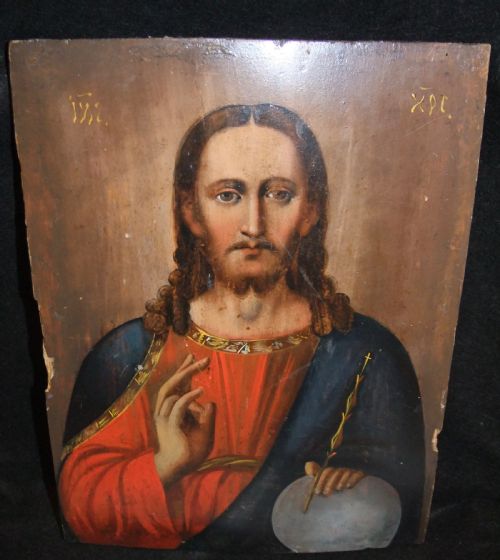


Large Religious Wall Painting
A large religious wall painting brings devotional presence into a room, spanning Baroque revival canvases and Russian icons.
Large Religious Wall Painting
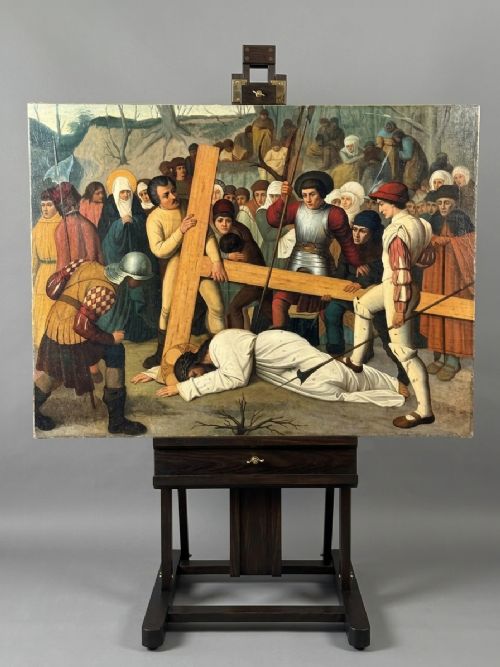
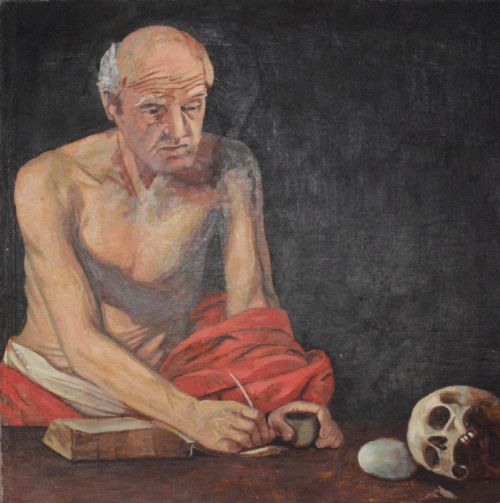
A large religious wall painting encompasses substantial devotional artworks designed for prominent domestic or ecclesiastical display. When you search for a large religious wall painting, you encounter heavy oil on canvas pieces, painted pine panels, and framed prints executed in distinct historical styles.
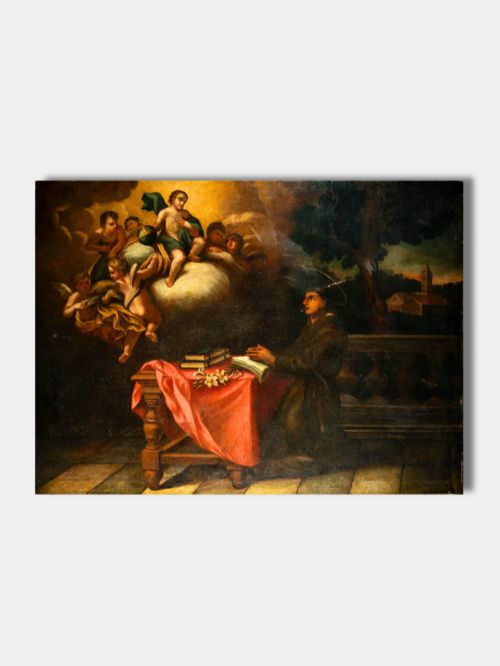
The selections available here range from nineteenth-century devotional studies and Russian icons to monumental eighteenth-century Spanish canvases. You are most likely to meet nineteenth-century oil paintings depicting sacred figures, often created after Renaissance masters or within revival traditions.
Works appear in various formats, including framed art, wall mirrors incorporating painted scenes, and traditional panel paintings. These objects reflect diverse cultural origins, drawing on Italian, Spanish, French, and Russian artistic practices across several centuries.
How they were made
Makers constructed these works primarily using oil paint applied to prepared canvas or wooden panels, sometimes incorporating structural elements like pine frames and walnut surrounds. Artisans also utilised giltwood and brass for ornamental framing or protective oklad coverings on icons.
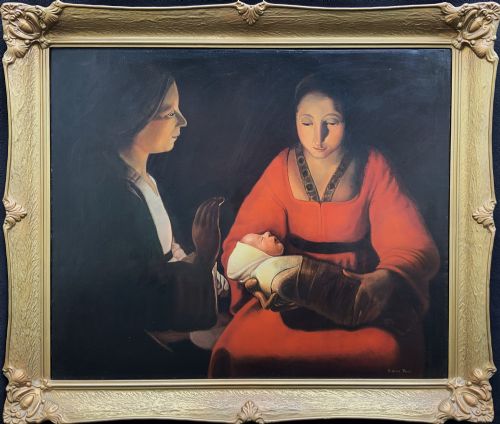
Techniques varied from direct oil painting to copying established compositions by masters such as Raphael, Murillo, and Georges de La Tour. Traditional workshop methods included priming timber panels and stretching heavy canvas over wooden supports before applying multiple layers of pigment.
The listings span from the eighteenth century through to the mid-twentieth century, featuring materials such as canvas, giltwood, pine, and brass.
What varies in quality
Quality in these works rests upon the depth of the pigment application, the surety of the brushwork, and the fidelity of the composition. Stronger pieces display confident handling of light, shadow, and anatomical detail, particularly within facial expressions and drapery.
Materials and secondary elements also distinguish the range, from simple painted pine display signs to monumental canvases set within elaborate giltwood frames. The skill involved in replicating or reinterpreting established devotional imagery dictates the visual impact of each piece.
The Large Religious Wall Painting Glossary
- Oil on canvas
- Pigments mixed with drying oil applied to a woven fabric support. This technique allowed artists to create rich colour depth and subtle tonal gradations.
- Icon
- A panel painting depicting sacred figures, traditionally produced in Eastern Christian traditions. These works often incorporate metal covers known as oklads.
- Giltwood
- Timber carved and coated with gold leaf or a gold-coloured finish. This material frequently frames monumental religious artworks to enhance their visual weight.
- Baroque revival
- A nineteenth-century artistic movement imitating the theatricality, dynamic movement, and dramatic lighting of seventeenth-century Baroque art.
- Panel painting
- A flat piece of wood used as a structural support for an artwork. Artists employed this solid base before canvas became the dominant medium.
Large Religious Wall Painting: Frequently Asked Questions
How do I hang a heavy religious painting safely?
Large canvases and framed panels require robust wall fixings secured directly into studs or masonry rather than plaster alone. Using professional mirror plates or heavy-duty wire supports distributes the substantial weight evenly.
Ensuring the hanging height places the central devotional imagery at eye level protects both the structural integrity of the wall and the balance of the room.
What does after an old master mean?
This phrase indicates that the artwork is a later painted study or copy based upon a famous composition by a preceding master. Such works were often created for educational purposes or private devotion.
These pieces capture the essence of renowned Renaissance or Baroque imagery while reflecting the painting techniques of the later period in which they were produced.
How do I care for antique oil paintings?
Keep religious canvases away from direct sunlight, damp environments, and rapid temperature fluctuations that cause the paint surface to crack. Gentle dusting with a soft, dry brush maintains the surface without introducing moisture.
Avoid chemical cleaning agents and consult a professional conservator if the varnish darkens or the canvas shows structural slackness.
What is an oklad on an icon?
An oklad is a protective metal covering, often fashioned from brass or silver, fitted over portions of a painted icon. It leaves visible only the faces and hands of the sacred figures.
This decorative metalwork shields the underlying tempera paint from candle soot and physical damage while adding tactile richness to the devotional object.