
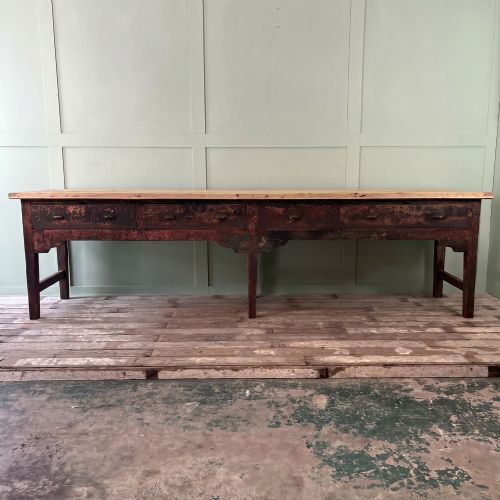

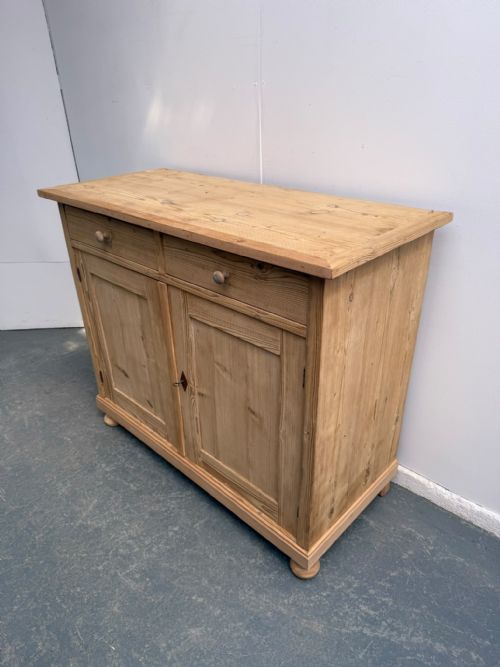


Large Pine Kitchen Sideboard
A large pine kitchen sideboard provides generous storage and a sturdy working surface, grounding a domestic interior with honest utility.
Large Pine Kitchen Sideboard
A large pine kitchen sideboard brings practical storage and preparation space to a room, appearing in forms such as dresser bases, serving tables, and long farmhouse sideboards. These pieces originate primarily from the nineteenth and eighteenth centuries, reflecting the robust utility of English and French country houses.
The versions most commonly met on this page date from the Victorian era and the nineteenth century, often featuring combinations of drawers and cupboards designed for heavy domestic use. Builders constructed them to stand up to daily kitchen tasks, resulting in practical proportions that anchor a modern room.
Makers shaped these items for hard-wearing environments, utilising softwoods like pine alongside oak and other woods for structural strength. Whether left as stripped wood, painted, or waxed, each piece shows the marks of its working past.
How they were made
Carpenters built these sideboards using solid pine for the main body, occasionally combining it with oak or other timbers for interior framing and drawer construction. Surfaces were either left plain to be scrubbed, coated in protective layers of wax, or finished with traditional paint.
Hardware typically includes brass and iron handles, knobs, or key escutcheons that secure doors and drawers. Some examples incorporate clever functional details like bread slides, built specifically for domestic food preparation.
Listings feature items built from pine, oak, and iron, spanning the eighteenth and nineteenth centuries in English and French styles.
What varies in quality
Quality in a large pine kitchen sideboard rests on the integrity of its construction and the proportion of its timbers. Pieces built with thicker planks and dovetail joinery in the drawers demonstrate superior craftsmanship from their period.
The handling of surfaces also distinguishes examples, from finely layered historic paint to well-maintained patinated wood. Retaining original hardware and functional elements like bread slides elevates an item's interest.
The Large Pine Kitchen Sideboard Glossary
- Dresser base
- The lower section of a kitchen dresser, featuring cupboards and drawers beneath a flat top, used independently as a sideboard.
- Bread slide
- A pull-out wooden shelf positioned above drawers, historically used for cooling bread or expanding workspace.
- Stripped pine
- Wood from which subsequent layers of paint or dark varnish have been removed down to the raw timber.
- Patina
- The surface sheen and colour acquired by wood and paint over decades of use and cleaning.
- Dovetail
- A traditional interlocking joint used to connect drawer sides to drawer fronts securely.
Large Pine Kitchen Sideboard: Frequently Asked Questions
How were these sideboards used originally?
These pieces served as heavy-duty work surfaces and storage units in country houses, farmhouses, and basements. Kitchen staff used the tops for food preparation and stored dishes, linens, and provisions within the cupboards and drawers.
Over time, their sturdy build allowed them to adapt to changing domestic needs while remaining central to daily kitchen work.
Are these pieces usually painted or stripped?
You will find both painted and stripped versions of these sideboards, depending on their history and how previous owners maintained them. Many nineteenth-century examples carried layers of paint that protected the softwood.
Other pieces were later stripped to reveal the natural grain of the pine, whilst some retain early or original painted finishes.
How do I tell an earlier piece apart?
Earlier examples, such as those from the eighteenth century or early nineteenth century, often display hand-cut joinery and thicker plank construction. Their proportions and hardware reflect the specific hand tools available to makers of that time.
Victorian and later nineteenth-century pieces tend to feature more standardised construction methods while retaining robust utility.
How do I live with a pine sideboard?
A large pine sideboard acts as a focal point in a kitchen, dining room, or hallway, providing substantial surface area and deep storage. The durable wood surface handles everyday objects easily and develops further character with use.
Maintenance involves simple dusting and occasional waxing if the wood is unpainted to keep the surface nourished.