



Large Pine Display Cabinet
A large pine display cabinet brings warmth and generous storage to a room, holding books or collections behind glass doors.
Large Pine Display Cabinet
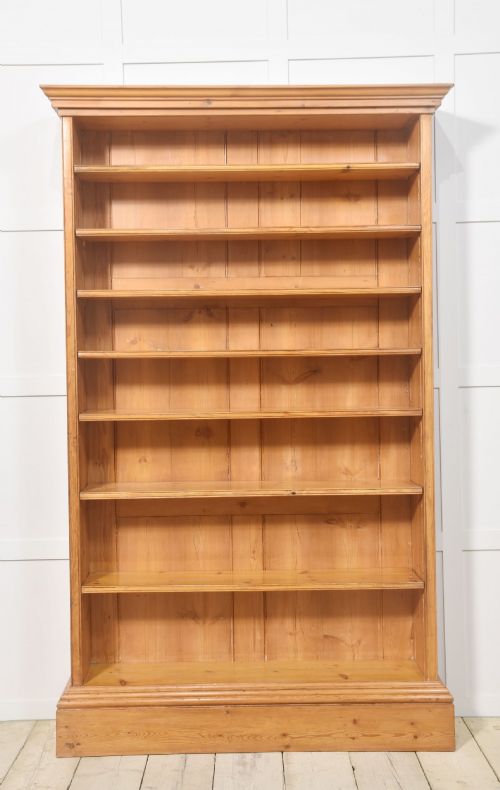
A large pine display cabinet is a substantial storage piece built to showcase books, china, or curiosities behind glazed doors. When you search for this phrase, you meet tall bookcases, kitchen dressers, library bookcases, and shop fittings designed to hold numerous items.
The pieces on this page span the Georgian, Victorian, and Edwardian periods, stretching into the early twentieth century. You find English country examples alongside French provincial, Irish, Scottish, Hungarian, and Swedish variants.
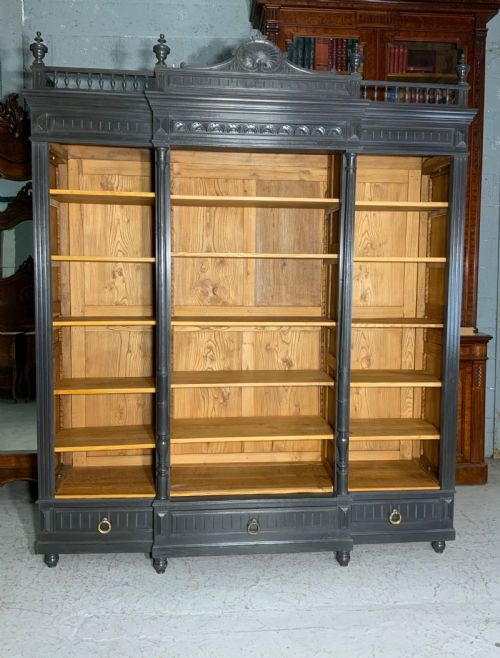
Forms vary from breakfront cupboards and double bookcases to secretaire cabinets and multi-drawer shop fittings. Many examples arrive in natural waxed pine, while others retain old painted wood surfaces.
How they were made
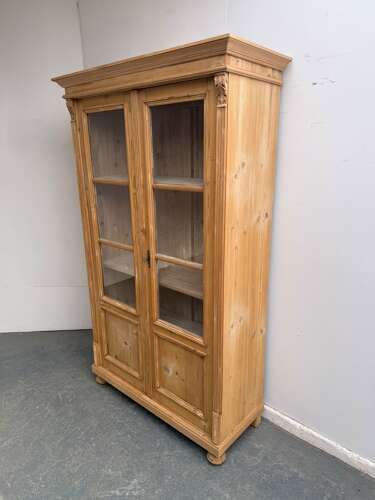
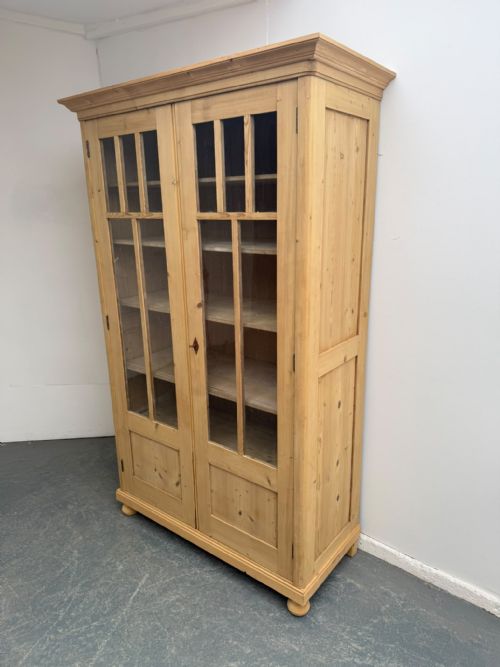
Constructed primarily from pine and pitch pine, these cabinets rely on solid timber frameworks built by carpenters and cabinet makers. Glazing bars hold individual panes of glass in the doors to protect the contents while keeping them visible.
Brass and iron hardware, including hinges, handles, and escutcheons, secure the doors and drawers. Many surfaces receive a wax finish or layers of paint, ranging from simple country coats to architectural details.
The furniture styles recorded include English Country, French Provincial, Rustic Country, Irish Country, George III Chippendale, and Victorian Country.
What varies in quality
Quality rests in the proportion of the timber, the delicacy of the glazing bars, and the integrity of the original construction. Better pieces display thoughtful architectural details, such as breakfront cornices and well-fitted drawer banks.
The treatment of the surface defines the character, whether a clean waxed pine finish or a genuine accumulated painted patina. Superior examples maintain balanced proportions across large double and four-door formats without appearing heavy.
The Large Pine Display Cabinet Glossary
- Breakfront
- A cabinet whose central section projects forward from the flanking wings. This style creates depth and architectural interest in large room settings.
- Secretaire
- A cabinet incorporating a pull-down writing drawer fitted with small compartments and pigeonholes. It combines desk functionality with display space.
- Pitch pine
- A durable, resinous pine variety noted for its pronounced grain pattern and strength. It appears frequently in nineteenth-century Scottish and English institutional furniture.
- Glazing bars
- The wooden strips that hold the individual glass panes within a cabinet door. Finer bars create lighter, more elegant window grids.
- Shop fitting
- Fixtures and furniture built specifically for commercial retail spaces, such as multi-drawer counters and large wall display cases. These pieces are robustly built for heavy daily use.
Large Pine Display Cabinet: Frequently Asked Questions
How do I clean antique pine?
Clean antique pine gently using a soft, dry cloth to remove dust. Avoid harsh chemical cleaners that strip wax or damage old painted wood surfaces.
For waxed cabinets, apply a suitable bees-wax polish sparingly and buff with a clean cloth to maintain the lustre. Keep the wood away from direct heat sources and strong sunlight to prevent warping.
Can I paint a waxed pine cabinet?
Painting a waxed pine cabinet requires thorough preparation because wax prevents paint from adhering properly. You must clean the surface completely and remove residual wax before applying a primer.
Many antique pieces already bear historic layers of paint, so consider whether a new coat suits the period and character of the specific furniture.
How do I date a pine cabinet?
Dating a pine cabinet involves examining construction techniques, hardware, timber types, and overall style. Hand-cut dovetails, older glass panes, and forged iron or brass fittings often indicate eighteenth-century or nineteenth-century origin.
Georgian and Victorian pieces display different architectural proportions and mouldings compared to later Edwardian or twentieth-century examples.