
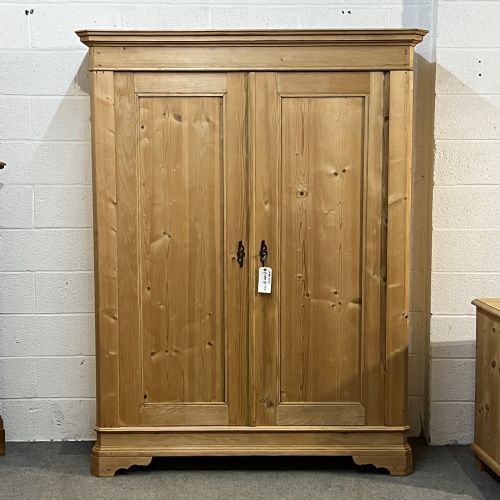
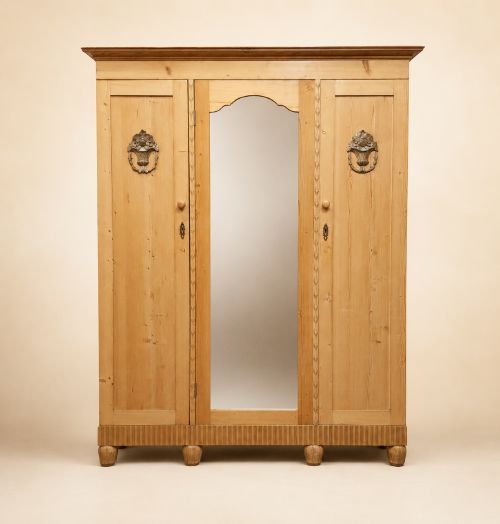
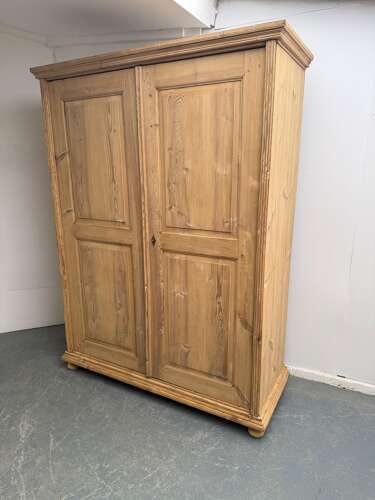
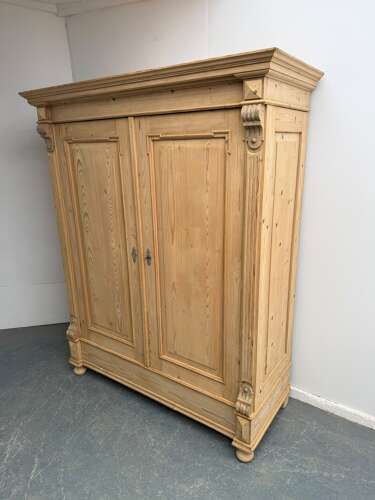
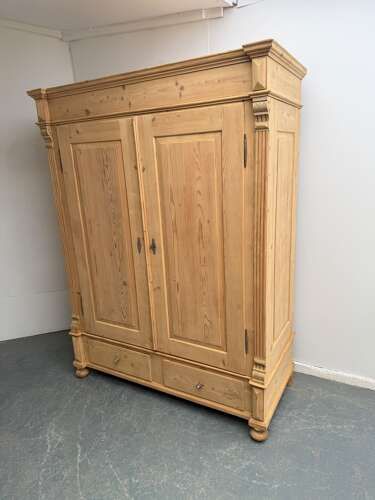
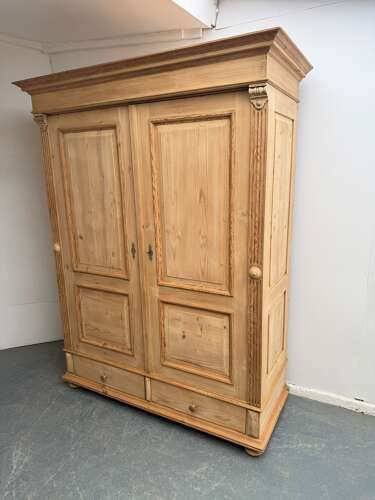
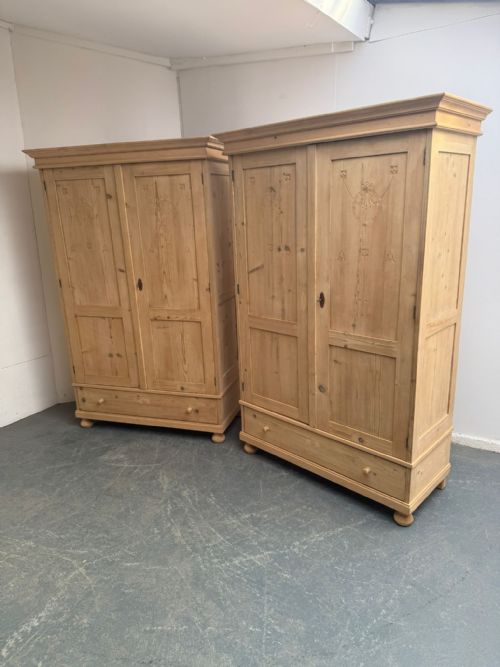
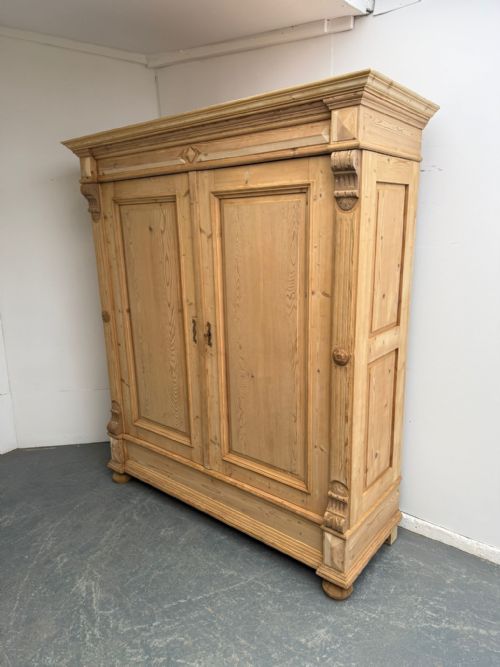
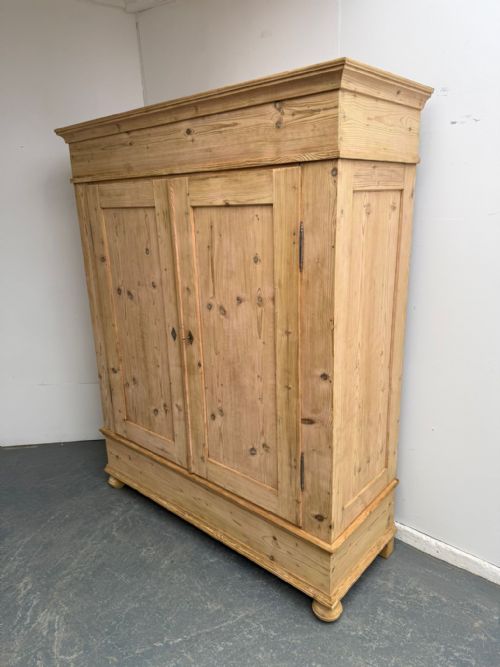

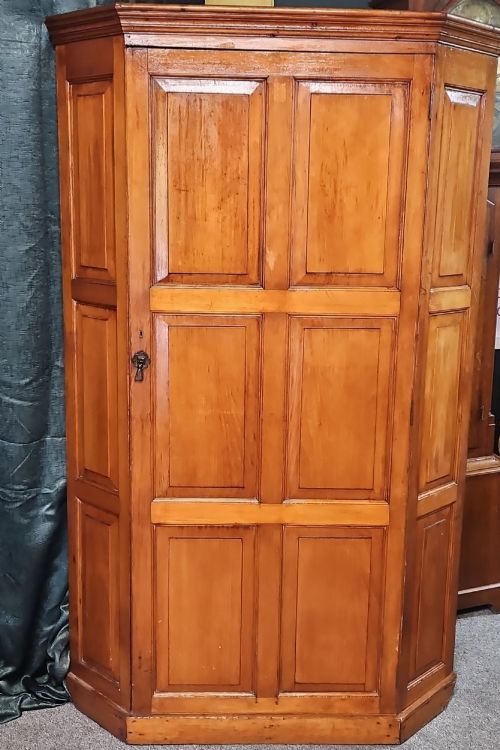


Large Pine Clothes Armoire
A large pine clothes armoire offers generous storage for garments while bringing robust rural character into a bedroom.
Large Pine Clothes Armoire
A large pine clothes armoire is a substantial storage piece built to hold garments, appearing primarily across Victorian, Georgian, and nineteenth-century periods. These heavy items often arrive as knockdown wardrobes designed for straightforward transport and assembly in domestic spaces.
The materials and styles span simple English country interpretations alongside French provincial designs, occasionally featuring fitted interior shelving or mirrored doors. Buyers frequently encounter two-door and triple-door formats tailored for substantial linen and clothing storage.
How they were made
Construction relies heavily on solid pine timbers, sometimes utilising pitch pine, joined with sturdy iron and brass hardware to support large frames. Surfaces are frequently finished with wax or left prepared for paint, depending on the original workshop intention.
Many examples utilise a knockdown format that allowed large carcases to be dismantled into manageable panels and sections for delivery. Exterior detailing includes moulded cornices, columned jambs, and glass or mirrored panels set into the doors.
The listings on this page span Victorian, Georgian, and Arts and Crafts periods, constructed entirely from pine, pitch pine, and painted wood.
What varies in quality
Quality rests upon the structural integrity of the timber frame and the precision of the knockdown joinery, which determines how securely the panels lock together. Fine examples display well-proportioned architectural mouldings and original columned details rather than plain, utilitarian boards.
The condition of the timber, the presence of original brass or iron hardware, and the survival of internal shelving or linen compartments set superior pieces apart from simpler utility items.
The Large Pine Clothes Armoire Glossary
- Knockdown wardrobe
- A large piece of furniture engineered to be easily dismantled into flat panels and separate cornices for transport. This clever design enabled massive storage carcases to pass through narrow domestic doorways.
- Pitch pine
- A dense, resinous softwood variety prized for its durability and strong grain patterns. It provides exceptional structural strength in nineteenth-century storage furniture.
- Compactum wardrobe
- A multi-functional wardrobe combining hanging space with internal drawers, shelves, and linen compartments in a single footprint. These fitted interiors represent clever spatial organisation from the Victorian period.
- Columned
- A style feature where vertical architectural pillars or half-columns frame the doors. This decorative treatment adds formal presence to country pine furniture.
- French provincial
- A style originating from regional French workshops, characterised by softer curves and traditional craftsmanship. These pieces bring a lighter aesthetic to traditional pine furniture.
Large Pine Clothes Armoire: Frequently Asked Questions
How do I assemble a knockdown wardrobe?
These large pieces use interlocking wooden tenons, wedges, or metal bolts concealed within the panels to secure the frame without permanent glue.
Having an extra pair of hands helps align the heavy side panels and cornice correctly before tightening the internal fixings.
Can I paint a waxed pine armoire?
Many period pieces are sold ready to wax or paint, allowing you to adapt the surface finish to your interior scheme.
Waxed surfaces require thorough cleaning and a suitable primer to ensure proper paint adhesion over older oils and resins.
What is the difference between an armoire and a wardrobe?
Traditionally, an armoire refers to a tall cupboard with doors enclosing shelves or hanging space, originating in continental Europe.
In British listings, the terms are often used interchangeably to describe large clothing storage furniture.
How do I care for antique pine furniture?
Keep wooden furniture away from direct heat sources and sudden temperature fluctuations to prevent the pine from splitting or warping.
Apply a traditional beeswax polish occasionally to nourish the grain and maintain a soft, protective lustre.