



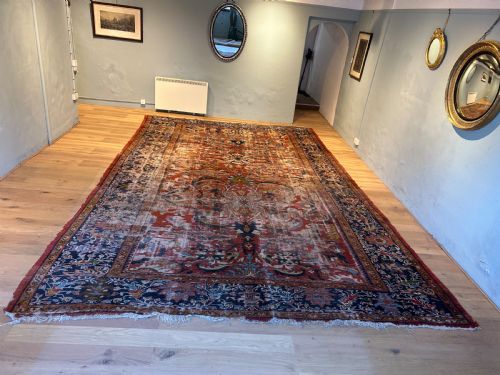


Large Oversized Persian Rug
A large oversized persian rug grounds a substantial interior with historic woven artistry, offering grand room-scale dimensions and rich botanical patterns.
Large Oversized Persian Rug
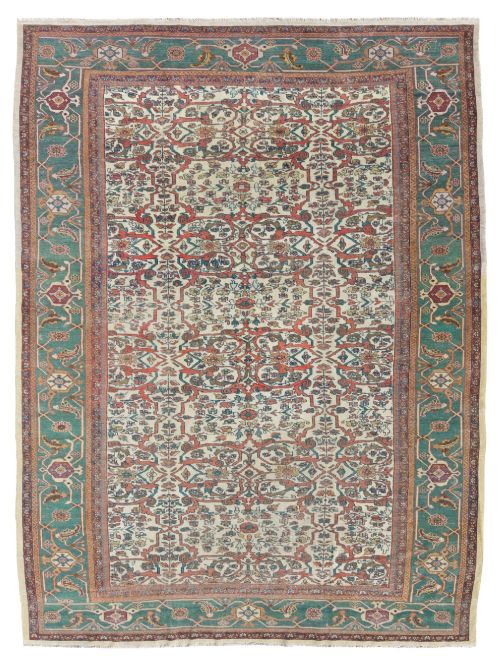
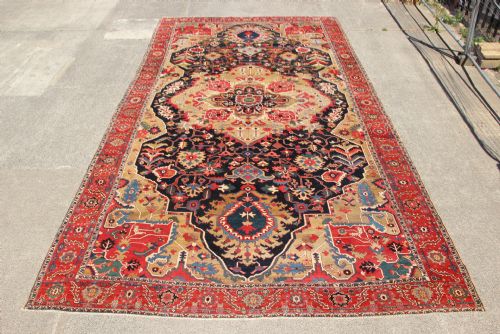
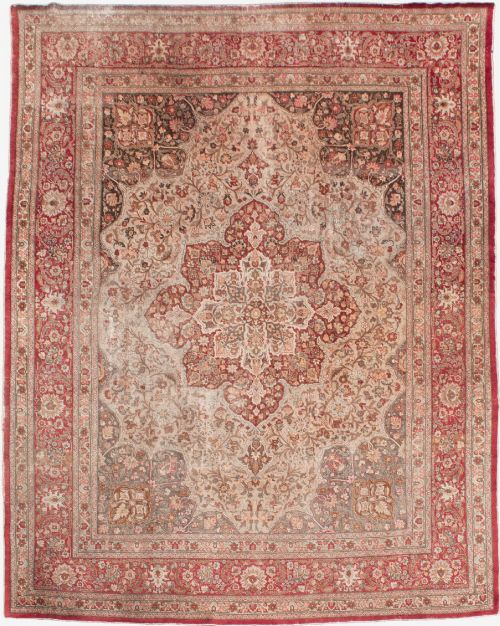
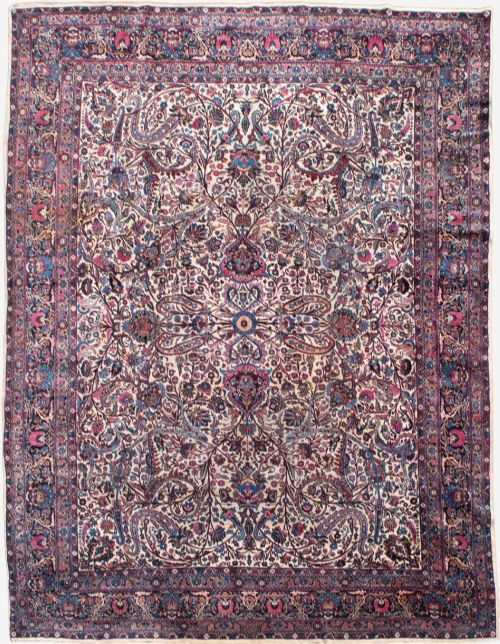
A large oversized persian rug represents grand room-scale floor coverings woven across Persian workshops during the nineteenth and early twentieth centuries. These substantial textiles include named village and city types such as Heriz, Sultanabad, Mahal, and Tabriz.
Buyers encounter room-size and palace-scale carpets featuring geometric medallions, all-over floral motifs, and expansive fields. The examples span woven production from the 1870s through the 1920s.
Regional weaving traditions dictate the scale of the patterns, ranging from the bold architectural geometry of Heriz and Serapi pieces to the delicate curvilinear compositions found in Kirman and Kashan carpets.
Materials and construction
Weavers constructed these large carpets using durable wool pile hand-knotted onto sturdy cotton foundations. This pairing provided the structural stability required for room-size and palace-scale formats.
Natural dye stuffs yielded deep indigo, madder red, and subtle golden tones that mellow gracefully over decades of use. Skilled artisans tied thousands of individual knots by hand to execute complex curvilinear and geometric layouts.
Listings feature carpets spanning the 1870s to the 1920s, constructed from wool pile on cotton foundations in traditional Persian styles.
Distinctions in craftsmanship
Knot density and precision of line separate standard room carpets from exceptionally fine weaving. Finer wool selection and more intricate dye work elevate the depth and clarity of the central medallion and border systems.
Structural integrity across massive dimensions depends on even tension during knotting and the preservation of original selvedges. Master workshops achieved superior balance between secondary ornament and primary field motifs.
Ziegler and Co·Haji Jalili
The Large Oversized Persian Rug Glossary
- Medillion
- A central ornamental design motif placed in the middle of the carpet field. It usually anchors the symmetry of the surrounding botanical or geometric elements.
- Selvedge
- The bound or reinforced side edges of a carpet that protect the foundation threads from fraying. Original borders indicate careful preservation of the textile width.
- Warp
- The vertical foundation threads stretched tightly on the loom before knotting begins. Cotton serves as the primary material for these structural strands.
- Weft
- The horizontal threads passed between rows of knots to lock the pile firmly in place. Multiple shots of weft contribute to the sturdy handle of heavy carpets.
- Pile
- The cut surface of hand-tied knots that forms the soft upper layer of the carpet. Wool provides the durable material for this decorative surface.
Large Oversized Persian Rug: Frequently Asked Questions
Where were these carpets made?
These carpets originated in various districts and weaving centres across Persia, including Heriz, Sultanabad, Tabriz, and Kirman.
Specific towns and workshops developed distinct regional designs, utilising local wool and traditional dye recipes unique to their geographical area.
How do I care for a large carpet?
Protect the textile by placing a quality rug underlay beneath it to prevent slipping and reduce friction against the floorboards.
Vacuum gently using suction attachments without a rotating brush roll, and arrange for professional specialist cleaning when required.
What defines a room-size carpet?
Room-size and oversized formats typically measure over four metres in length, designed to anchor expansive living spaces and country house interiors.
These grand dimensions require significant architectural space to display the full repeat of the border and field patterns properly.
How are different regional types distinguished?
Regional attribution relies on examining the specific drawing style, palette choices, and structural characteristics of the foundation.
Heriz pieces display bold geometric armatures, whereas Kirman and Kashan carpets feature fine curvilinear floral sprays and intricate vase motifs.