


Large Oval Silver Tray
A large oval silver tray anchors a drinks service or dining table with substantial presence, bringing functional elegance to domestic entertaining.
Large Oval Silver Tray
When searching for a large oval silver tray, you encounter substantial serving pieces designed for carrying tea services, cocktails, or decanters across Victorian, Edwardian, and mid-twentieth-century periods.
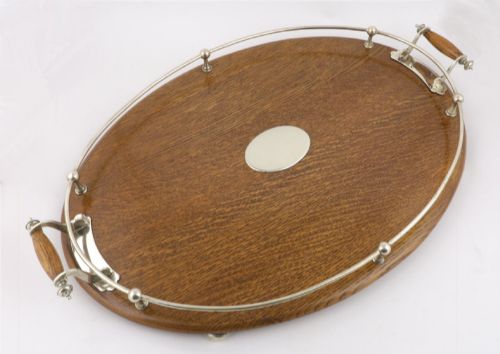
The version most commonly met on this page is the Edwardian silver-plated serving tray, often featuring an engraved centre, handles, and occasionally a pierced gallery.
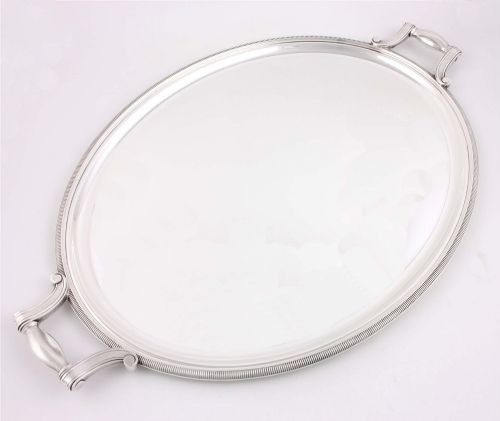
Pieces span from mid-nineteenth-century examples through to the mid-twentieth century, originating primarily from English workshops, alongside continental makers such as Christofle in Paris and Peters in Hamburg.
Materials and construction methods
Construction relies heavily on silver plate and electroplated nickel silver applied over base metal foundations, alongside solid sterling silver variations.
Many examples incorporate substantial English oak for the body or base, fitted with silver-plated or solid silver galleries, mounts, and handles.
Surface ornamentation is achieved through detailed hand engraving, chased borders, and pierced gallery work executed by skilled metalworkers.
Listings feature items spanning from the Victorian and Edwardian eras through to mid-century Art Deco designs by Christofle.
Distinctions in craftsmanship and materials
Quality separates through the choice of base materials, shifting from heavy gauge sterling silver and thick silver plating down to lighter base metal constructions.
The crispness and depth of hand engraving, the structural rigidity of integrated handles, and the solidity of oak frames distinguish superior pieces from standard production.
Maker attribution to notable firms such as Christofle, Elkington, or Walker & Hall elevates the standard of design execution and finishing details.
Christofle·Elkington & Co·Harrison Bros·John Grinsell·Mappin & Webb·Peters Hamburg·Walker & Hall
The Large Oval Silver Tray Glossary
- Gallery
- A raised pierced or openwork metal railing surrounding the perimeter of the tray to secure glassware and decanters. It prevents bottles from sliding off during transit.
- Silver Plate
- A thin layer of pure silver fused or electroplated onto a base metal core such as copper or nickel silver. It offers the visual appeal of solid silver at a different weight and cost.
- EPNS
- Electroplated Nickel Silver. A durable base alloy of copper, nickel, and zinc coated with an electrochemical layer of pure silver.
- Salver
- A flat serving tray, traditionally used for presenting letters, glasses, or visiting cards. In larger formats, it functions interchangeably with serving trays.
- Pierced
- Metalwork perforated with decorative patterns or open fretwork. This technique lightens visual weight while adding ornamental detail to galleries and borders.
Large Oval Silver Tray: Frequently Asked Questions
How do I clean a silver tray?
Use a specialised silver polish and a soft cloth to gently remove tarnish from silver-plated or sterling surfaces. Avoid harsh abrasives that can wear down thin plating over base metals.
For trays incorporating oak components, keep moisture away from the wood and dry the metal thoroughly immediately after cleaning.
Can these trays hold heavy decanters?
Most large specimens with sturdy handles and solid oak or heavy metal bases accommodate multiple decanters and heavy glassware easily. Gallery edges provide extra security during transport.
Lighter silver-plated variants suit tea services better than heavy bar loads.
How do I distinguish sterling silver from plate?
Examine the piece for official hallmarks indicating silver standard, city of assay, and date, which appear on solid sterling items. Silver-plated items generally display maker marks indicating electroplating methods.
Weight and the presence of base metal showing through worn areas also help identify plated items.
Where were these trays used historically?
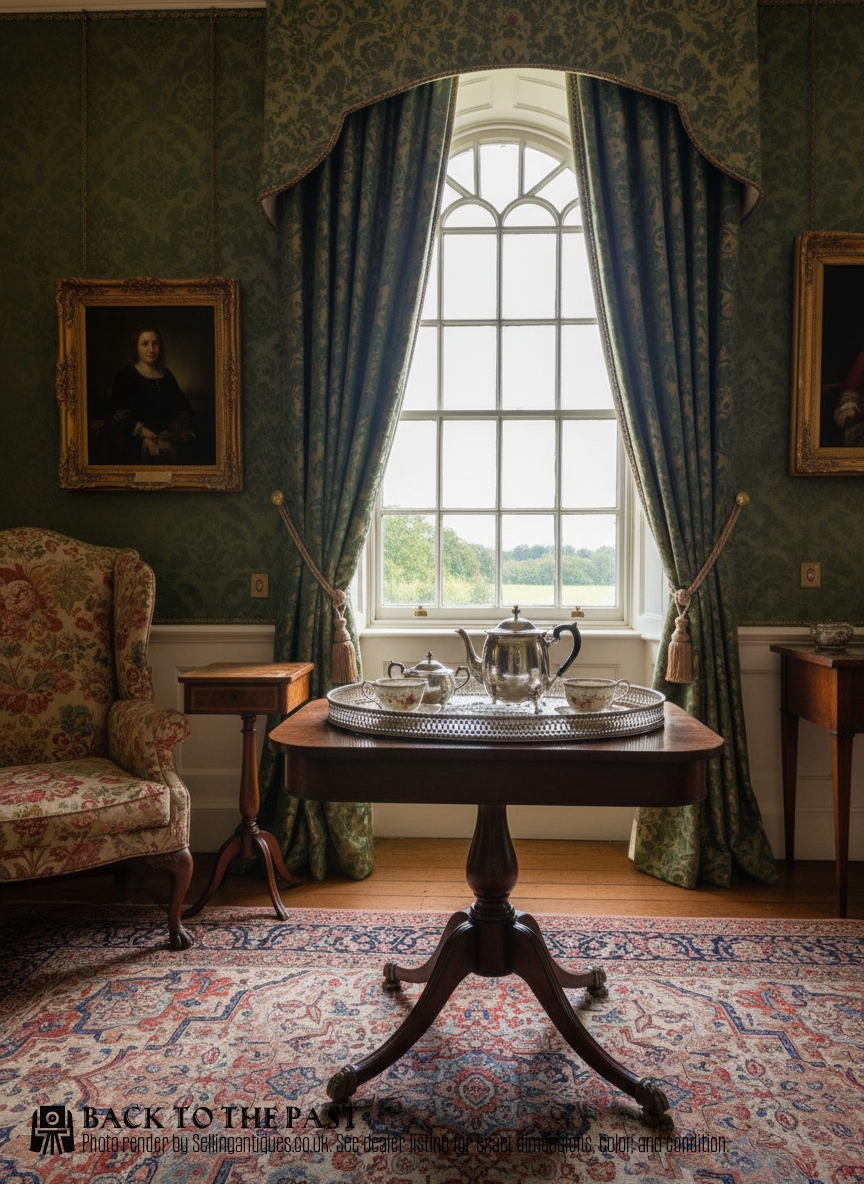
These pieces originated in formal dining rooms, drawing rooms, and studies of Victorian and Edwardian homes for serving afternoon tea or alcoholic beverages. Butlers utilised them to transport drinks from kitchens to entertaining spaces.
Today they transition onto sideboards and coffee tables as functional display surfaces.