

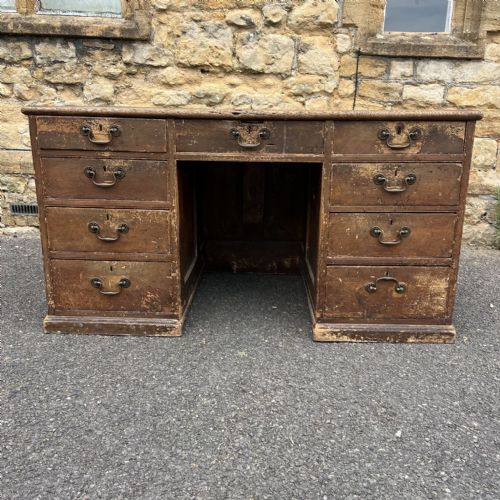

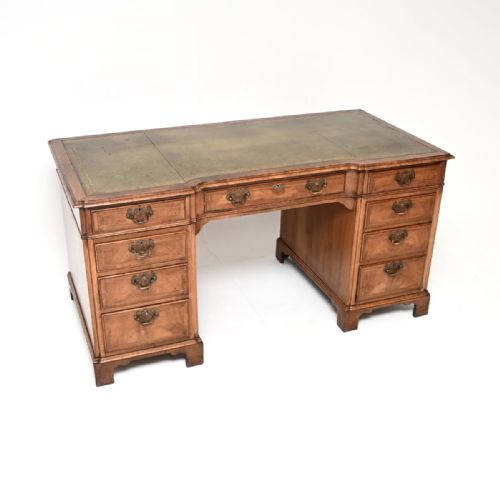
Large Office Table
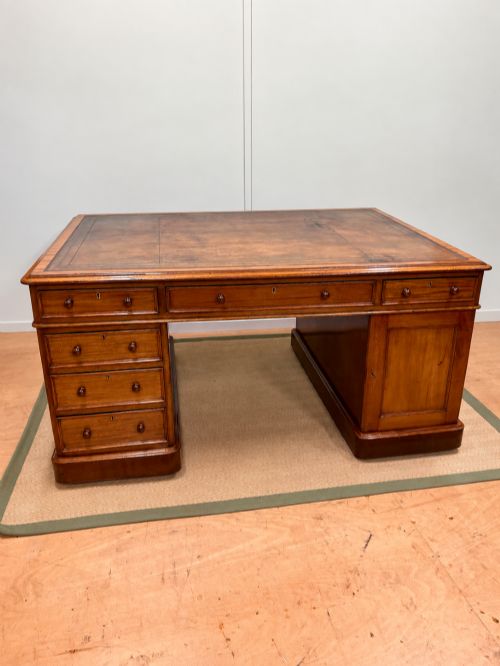
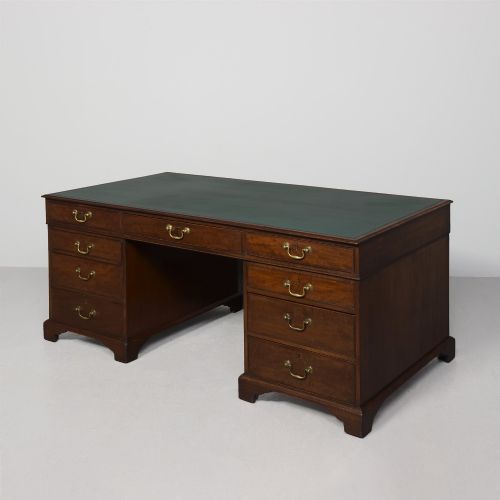
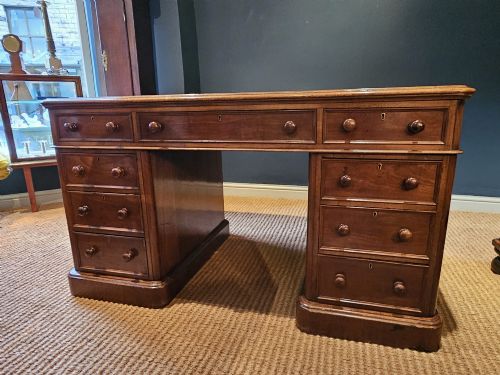
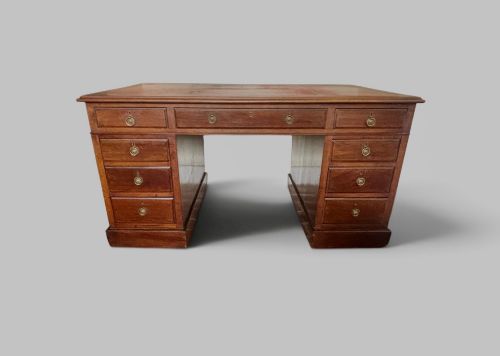
A large office table provides monumental workspace, anchoring a room with substantial timber and fitted leather surfaces.
Large Office Table
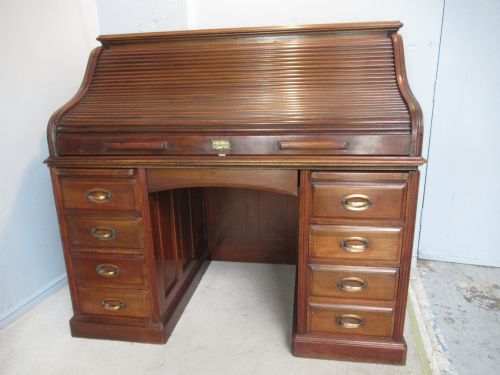
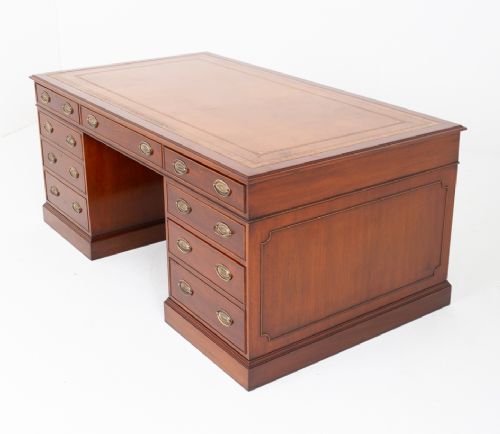
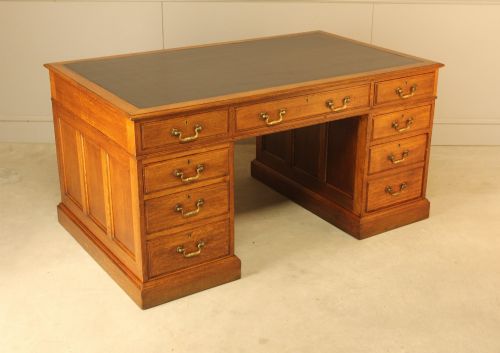
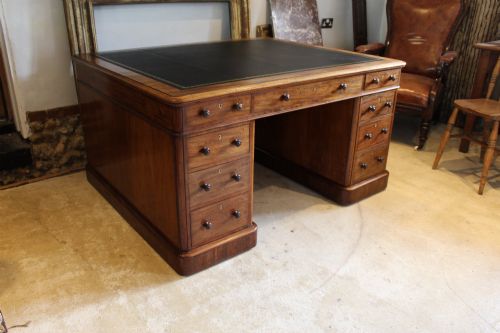
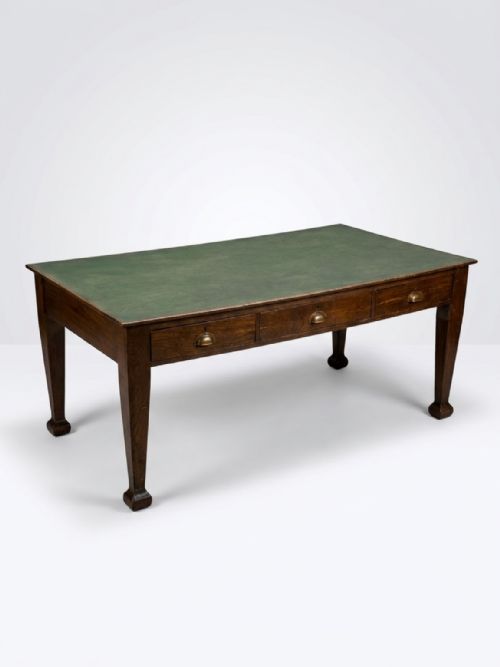
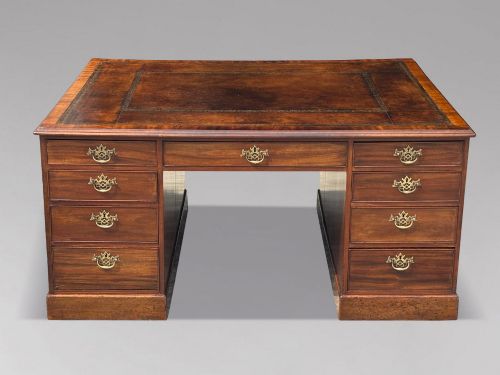
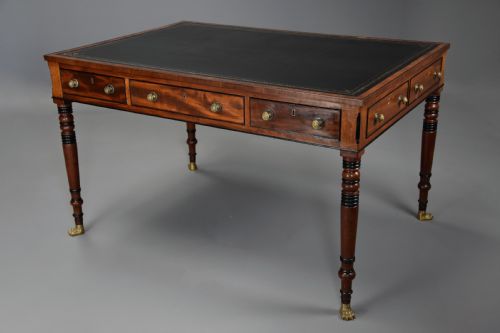
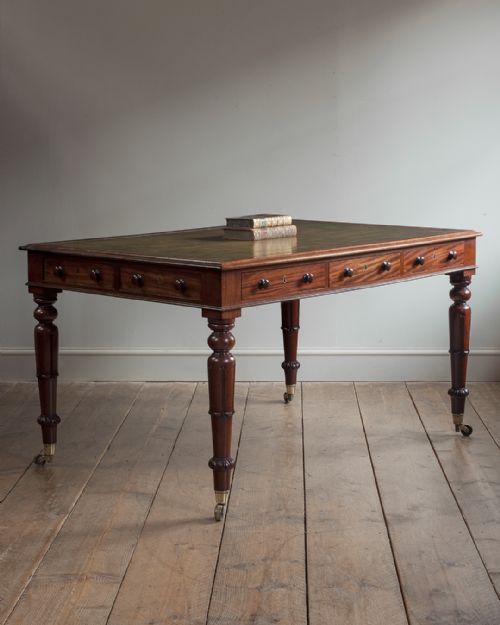
A large office table primarily appears as a partners desk, pedestal desk, or library table designed for grand studies and administrative spaces. These forms offer substantial surface areas and deep banks of drawers accessible from multiple sides.
The majority of pieces encountered on this page date from the nineteenth century and the Victorian era, constructed predominantly in mahogany, walnut, and oak. Surviving examples reflect periods from George III through to Edwardian and Art Deco revivals.
Makers utilised robust hardwoods to support heavy daily use, frequently incorporating inset leather writing surfaces framed by brass hardware. Grander formats include double-sided pedestal arrangements intended for joint occupants.
Determinants of quality
Quality separates through the selection of figured timber, such as flame mahogany or burr walnut, matched symmetrically across large expanses. Finer examples display crisp hand-carved detailing and well-executed cock-beading around drawer edges.
Internal construction standards dictate longevity, visible in the use of hand-cut dovetails on drawer boxes and substantial solid timber drawer linings rather than thin plywood substitutes. Original hardware, including brass locks and handles, preserves historical integrity.
Estate desks often retain the faint aroma of nineteenth-century ink and decades of beeswax polish within their hidden drawers.
Charles Andrea Nosotti·Cookes of Finsbury London·Eileen Grey
The Large Office Table Glossary
- Partners desk
- A large double-sided pedestal desk designed with drawers and cupboards on both faces for two people to work opposite one another. This form represents the grandest scale of nineteenth-century office furniture.
- Pedestal desk
- A writing desk consisting of a top surface resting on two independent pedestals containing banks of drawers. They often feature inset leather writing panels.
- Library table
- A freestanding table utilised in large rooms for reading and sorting papers, typically fitted with frieze drawers beneath the top. They lack the twin pedestal cupboards of a partners desk.
- Flame mahogany
- A veneer cut from the fork of the mahogany tree, producing a distinctive flickering flame-like grain pattern. Cabinet makers reserved this timber for principal visual surfaces.
- Cock-beading
- A narrow raised moulding fitted around the edges of drawer fronts to protect the veneer and frame the drawer boundary. Its presence denotes careful attention to detail.
Large Office Table: Frequently Asked Questions
What is a partners desk?
A partners desk is a large double-sided desk featuring banks of drawers and cupboards on both long sides. This layout allowed two people to sit and work opposite each other in professional or domestic libraries.
Such desks were built on a grand scale to serve as the centrepiece of a room. They remain practical today for shared studies or large central workspaces.
How do I care for the leather top?
The leather writing surface should be cleaned with a dry or barely damp cloth, avoiding harsh chemical cleaners that strip the original dye. Periodic application of neutral leather balm maintains suppleness.
Protecting the hide from direct sunlight prevents fading and drying out. Most historic desks retain tooled leather that benefits from gentle, regular maintenance.
How do I distinguish Victorian from Georgian pieces?
Georgian pieces, dating from the eighteenth and early nineteenth centuries, generally exhibit restrained classical proportions and fine cock-beading. Victorian desks tend to be heavier in scale, incorporating deep plinths and rich flame mahogany veneers.
Construction details also assist dating, as hand-cut dovetails and specific secondary timbers evolve across these periods. Examining the interior drawer linings reveals the manufacturing methods characteristic of each era.
Can these desks be dismantled for transport?
Many large office tables and partners desks dismantle into three main sections: the two pedestal bases and the top surface. This modular construction assists with moving heavy hardwood furniture through doorways.
Screws and brackets securing the top to the pedestals are typically accessed from inside the kneehole or top drawers. Care must be taken with heavy timber components during reassembly.