

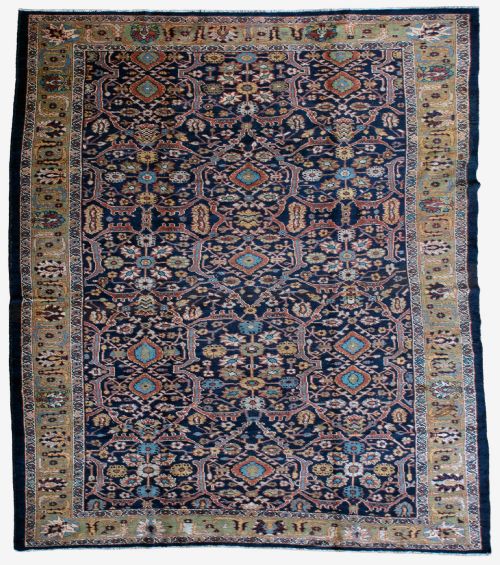
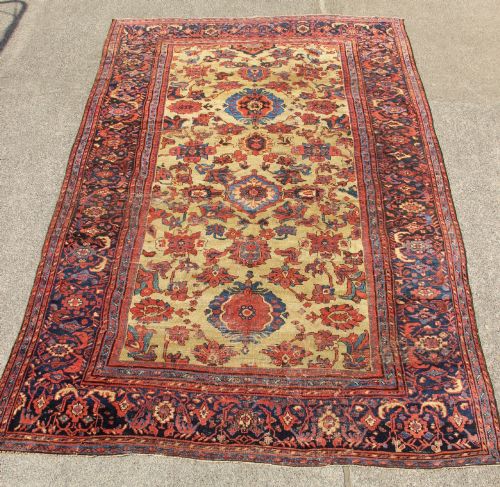
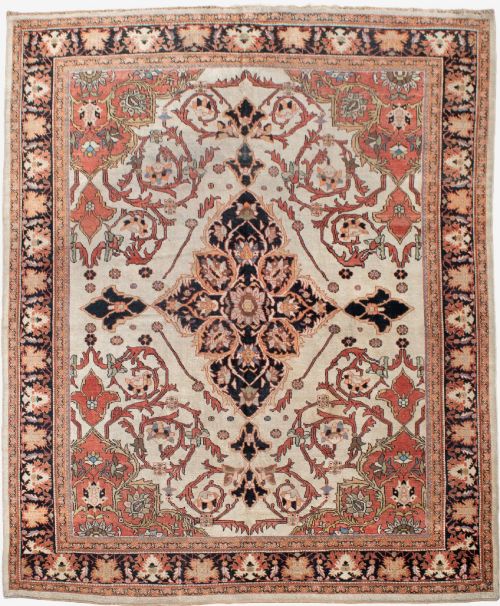
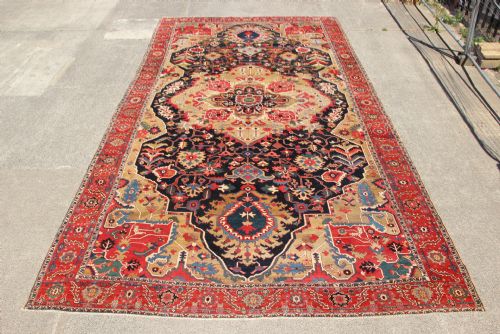
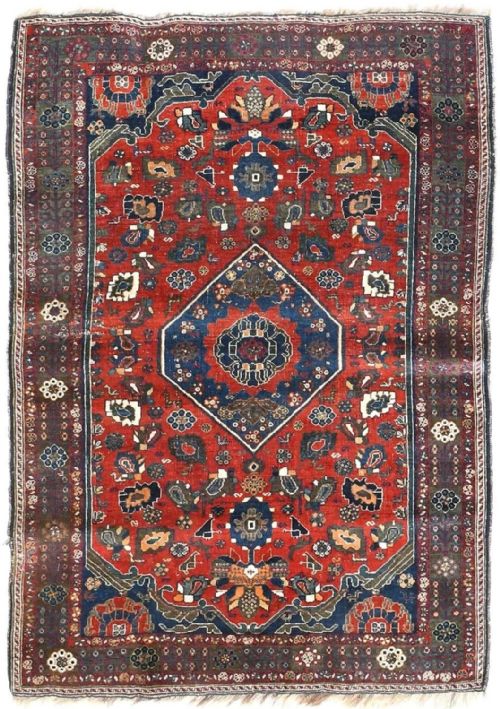
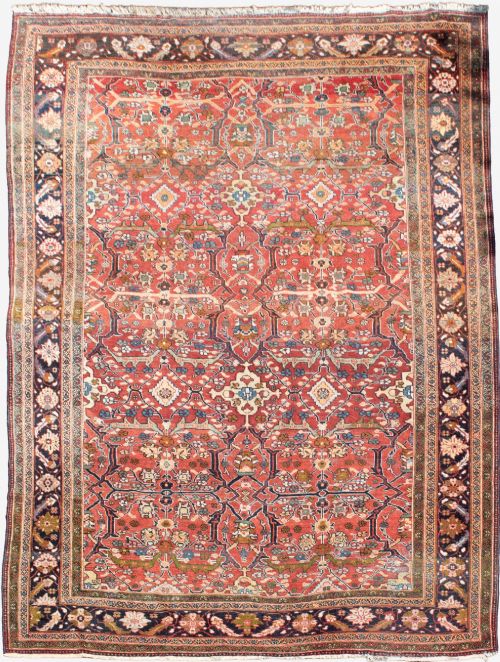
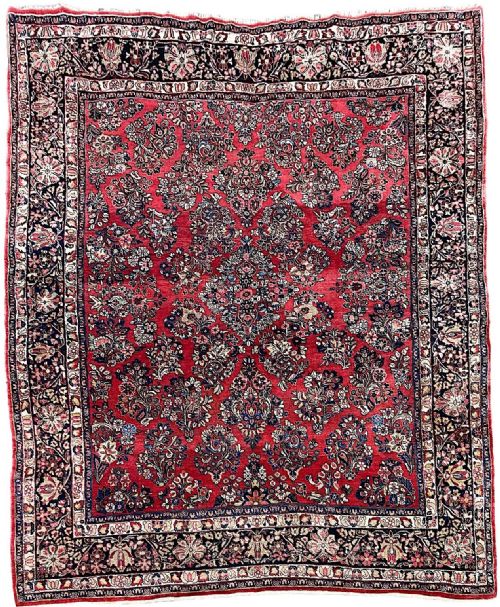


Large Navy Oriental Rug
A large navy oriental rug anchors a room with deep indigo tones and intricate patterns woven by skilled hands over a century ago.
Large Navy Oriental Rug
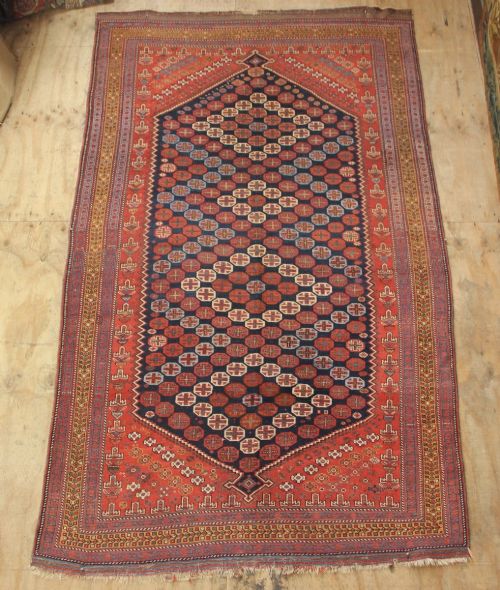
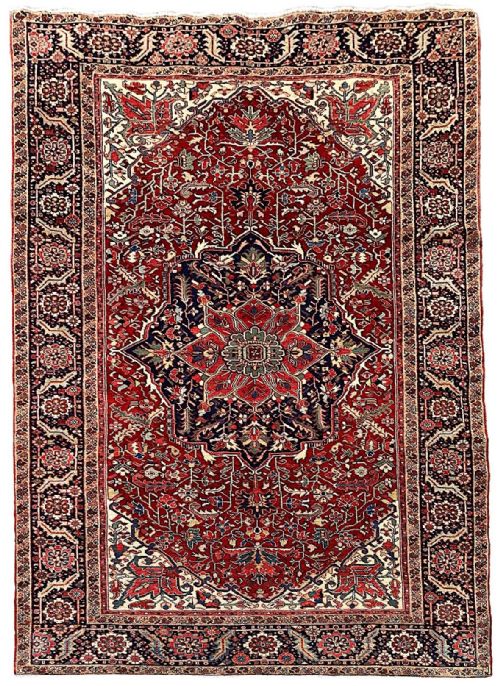
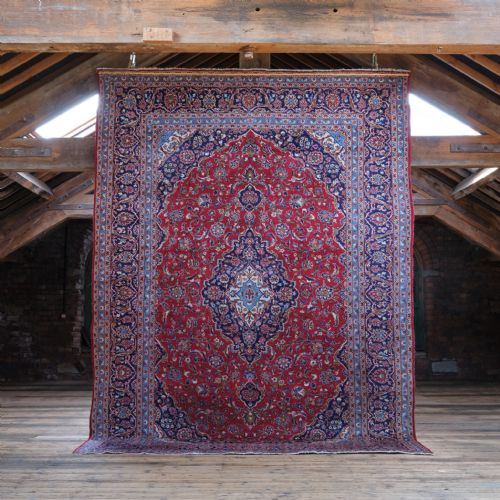
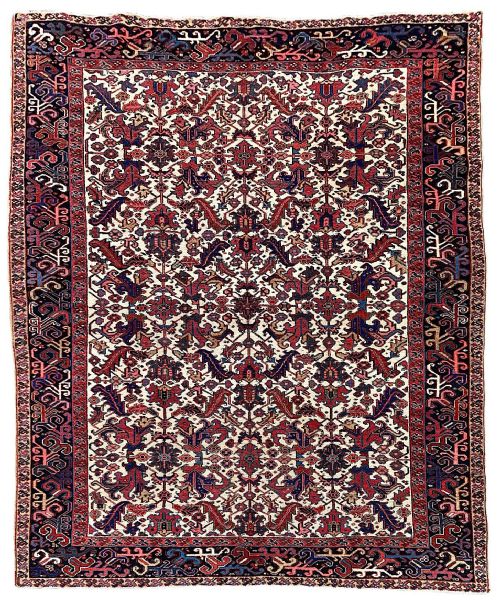
When you search for a large navy oriental rug, you are examining hand-knotted floor coverings originating mainly from Persian weaving centres and tribal regions. These pieces span from the mid-nineteenth century through the early twentieth century, offering substantial dimensions suited to expansive rooms.
The most common examples you will encounter on this page are Heriz and Mahal carpets dominated by deep blue grounds and geometric or floral motifs. Alongside these, items from Fereghan, Serapi, Kirman and Afshar workshops frequently appear, showcasing traditional Persian design traditions.
Materials and construction
These floor coverings rely on wool pile knotted tightly onto sturdy cotton foundations. The natural wool provides resilience underfoot while absorbing rich indigo and navy dye stuffs derived from traditional plants.
Weavers employed hand-knotting techniques across vertical looms, allowing for precise control over complex medallion and all-over field patterns. This meticulous assembly accounts for the enduring structural integrity found in nineteenth and early twentieth-century Persian weavings.
Many nineteenth-century weavers worked from memory without written patterns, occasionally resulting in charming botanical asymmetries.
Evaluating quality and execution
Knot density and the precision of the design execution set superior examples apart from standard work. Finer knotting permits sharper rendering of intricate floral curves and geometric borders.
The complexity of the palette and the depth of the navy dye also distinguish better pieces. Gradations in tone, known as abrash, demonstrate skilled natural dyeing methods rather than uniform chemical applications.
The Large Navy Oriental Rug Glossary
- Heriz
- A style of carpet originating from north-west Persia, known for bold geometric medallions and robust structural qualities. These pieces often feature large central motifs flanked by stylised corner spandrels.
- Abrash
- Natural colour variation within a field of wool caused by changes in dye batches or hand-spun yarn lots. It creates subtle horizontal shading that collectors value as proof of authentic artisanal production.
- Serapi
- An older, coarser grade of Heriz weaving characterised by spacious designs and muted earthy palettes. They date primarily to the nineteenth century and command strong interest.
- Medallion
- The central ornamental motif dominating the field of the carpet. Traditional Persian compositions typically build their symmetrical layout around this focal geometric or floral shape.
Large Navy Oriental Rug: Frequently Asked Questions
How do I clean an antique carpet?
Surface dust should be removed gently using a suction-only vacuum without a rotating brush bar. Professional cleaning by a specialist in antique textiles is recommended for deep washing.
Water exposure and standard household detergents must be avoided to prevent dye bleeding and fibre degradation in the wool pile.
Can I place these rugs in high traffic areas?
The dense wool pile and sturdy cotton foundations of nineteenth and early twentieth century Persian carpets provide remarkable durability. They withstand regular foot traffic in living rooms and reception spaces effectively.
Using a quality underlay beneath the carpet prevents slippage and cushions the fibres against premature wear from underlying floorboards.
How do I identify a Serapi from a Heriz?
Serapi carpets typically display broader, more open geometric layouts with a calmer distribution of design elements compared to later Heriz production. The colour palette often leans towards softer terracotta and muted indigo tones.
Heriz pieces from the early twentieth century generally feature tighter knots, sharper lines, and more intricate corner details within the main border.
What causes the colour variations in the wool?
Hand-spun wool dyed in small batches naturally absorbs indigo and other plant extracts unevenly. This phenomenon, termed abrash, results in gentle bands of shifting tone across the field.
Rather than indicating a fault, this tonal variation confirms the traditional artisanal methods used to create nineteenth-century Persian carpets.