
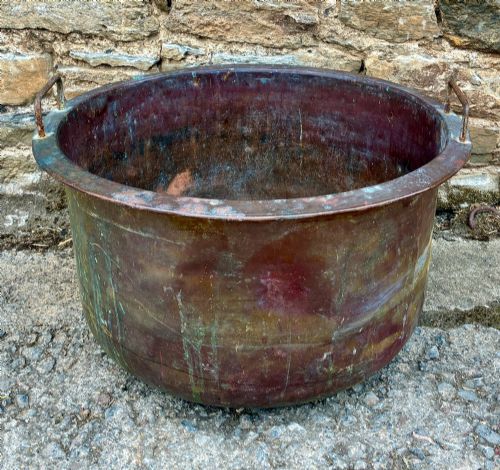
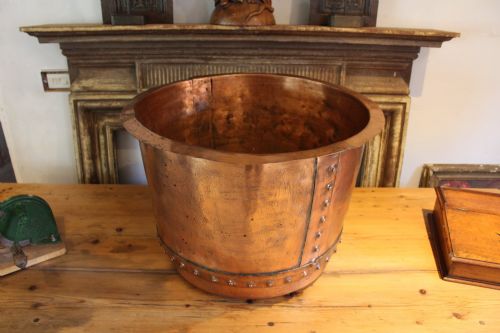
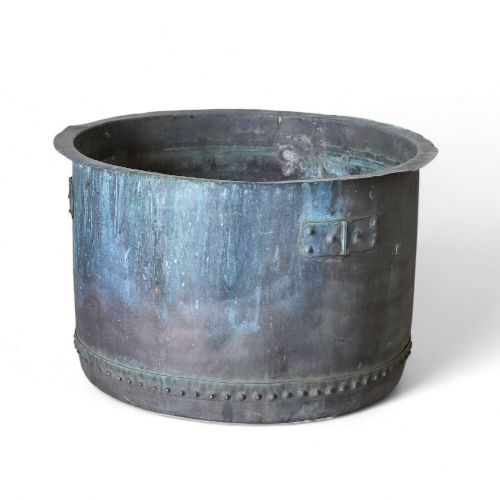
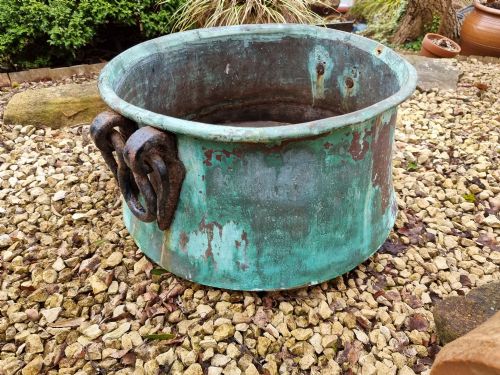



Large Metal Planter Bin
A large metal planter bin holds wood or greenery with weight and character, drawing the eye in any room or garden.
Large Metal Planter Bin
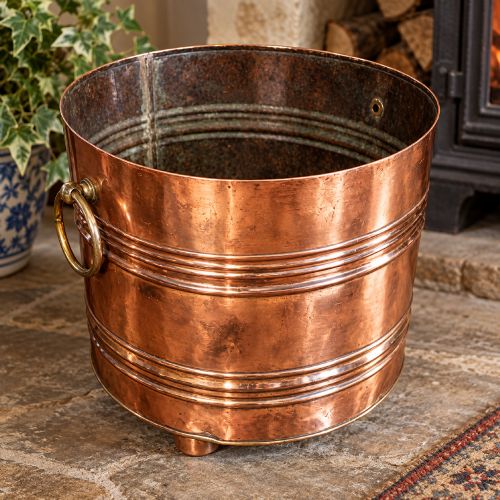
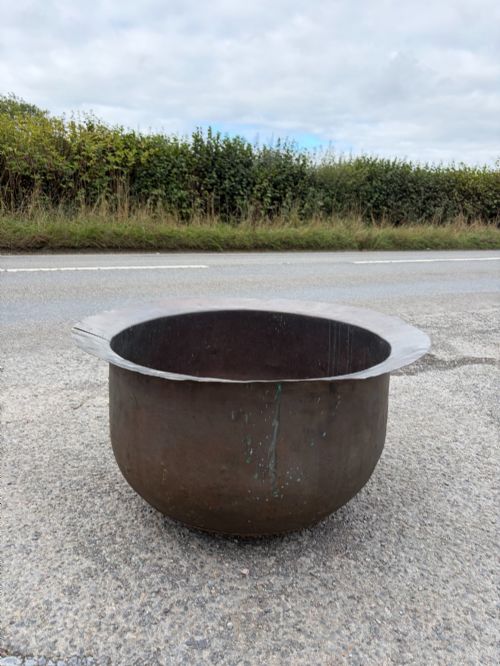
A large metal planter bin bridges utilitarian history and domestic display, often serving multiple functions across different eras. When you examine a large metal planter bin on this page, you meet items originally designed as wash tubs, grain measures, cauldrons, or coal buckets.
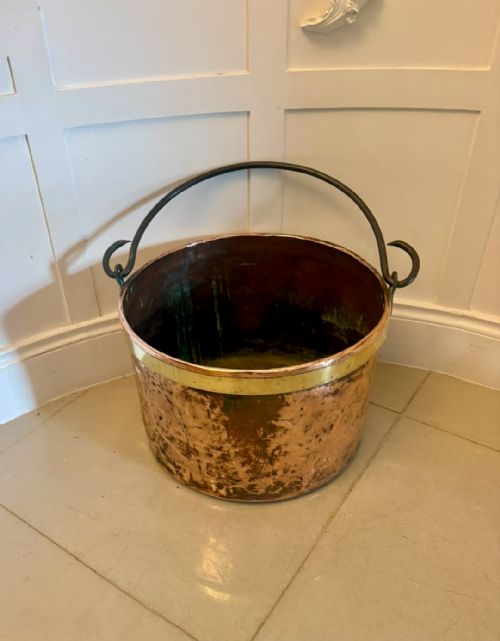
The selection leans heavily toward nineteenth-century examples in copper and brass, alongside iron and tin iterations. These vessels transition easily from fireside log storage to holding substantial plants and trees.
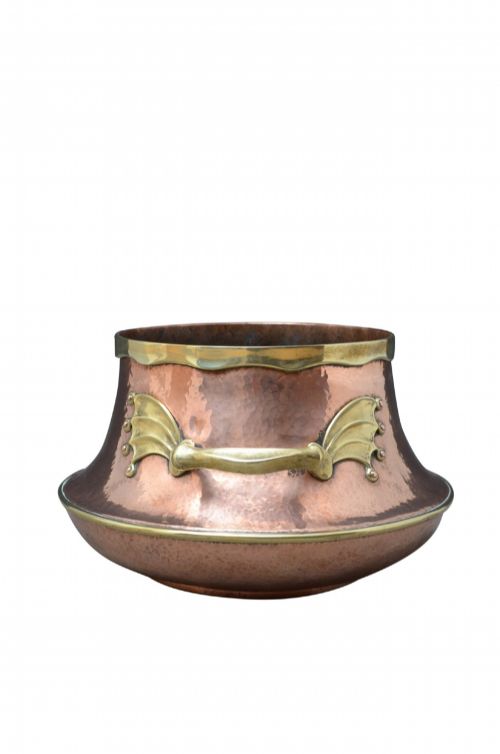
Victorian and Georgian periods dominate the offerings, showing utilitarian roots adapted for decorative interior and garden use. Buyers find pieces shaped as cylindrical buckets, deep cauldrons, and heavy jardinières.
Materials and construction
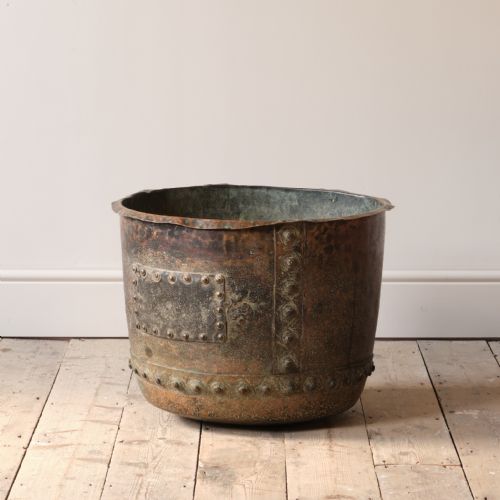
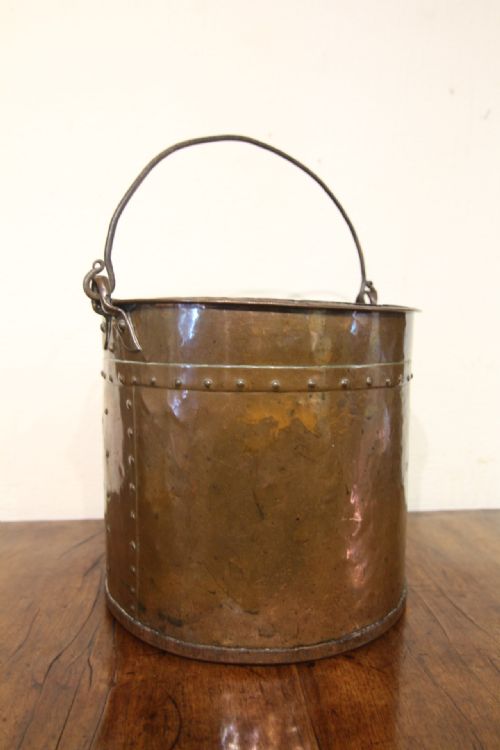
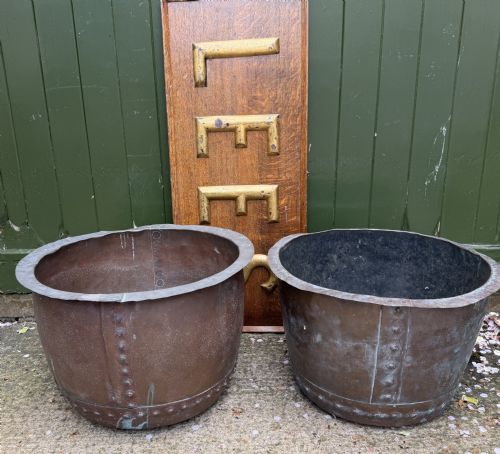
Makers constructed these vessels primarily from sheet copper, brass, and iron, frequently employing hand-riveted seams to join the heavy metal plates. Wrought iron handles and swing bail attachments provide structural support for lifting heavy loads of logs or damp soil.
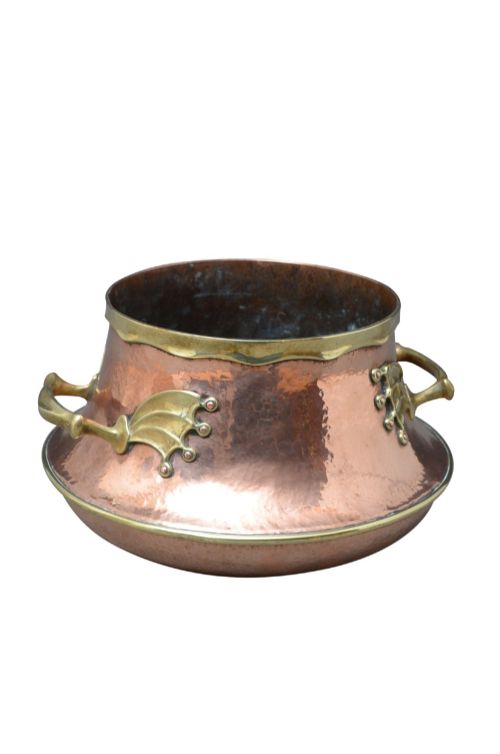
Surface finishes include hammered textures, aged patinas, and natural verdigris accumulated through decades of exposure and use. Metalworkers utilised spinning and beating techniques to shape flat sheets into deep vessels without modern machinery.
Listings feature items fabricated from copper, brass, iron, wrought iron, and tin across the Victorian, Georgian, and Art Deco periods.
Assessing the examples
Quality rests in the integrity of the original construction, particularly the thickness of the metal plate and the strength of the hand-formed rivets. Heavy-gauge copper and solid brass retain their structural form better over centuries of active service.
The character of the surface adds distinction, where undisturbed natural patinas and authentic verdigris indicate genuine age and honest wear. Retaining original wrought iron handles and fittings elevates a piece above those with replaced or modern hardware.
The Large Metal Planter Bin Glossary
- Jardiniere
- An ornamental pot or stand for holding plants or flowers. These vessels often feature decorative brass or copper bodies intended for interior display.
- Verdigris
- A green patina formed naturally on copper, brass, or bronze surfaces through atmospheric oxidation. This layer protects the underlying metal and indicates considerable age.
- Dinanderie
- Objects made of brass, copper, or bronze, particularly vessels and decorative items. The term originates from the Belgian town of Dinant, known for medieval metalwork.
- Cauldron
- A large metal pot with a wide mouth and a swing handle for boiling or holding contents. Georgian and Victorian examples frequently find new life as planters.
Large Metal Planter Bin: Frequently Asked Questions
How do I clean an old copper bin?
Wash the surface gently with warm soapy water and a soft cloth to remove surface dirt and dust.
Avoid abrasive polishes that strip away the authentic aged patina and verdigris accumulated over the centuries.
Can I use these outdoors for planting?
Most copper, brass, and iron vessels tolerate outdoor garden conditions well due to their durable metal construction.
Ensure adequate drainage if planting directly, or use the bin as an outer cachepot to protect the historic interior.
What is the difference between a log bin and a jardiniere?
Log bins typically possess robust iron handles and heavier walls designed to withstand the impact of firewood.
Jardinieres often display more decorative surface work, such as hammering or brass mounts, intended strictly for holding plants.
How do I date a nineteenth-century metal bin?
Examine the construction of the seams, noting whether makers joined the metal plates with hand-formed rivets or machine welding.
Handle attachments, rim styles, and the specific composition of the brass or copper also offer clues to the manufacturing decade.