
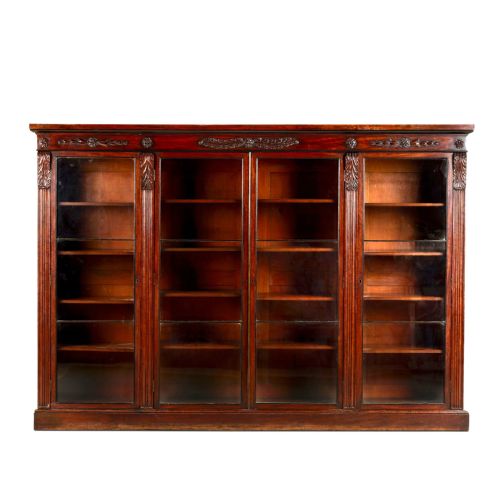
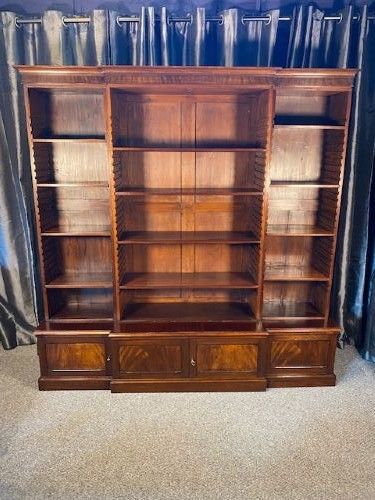
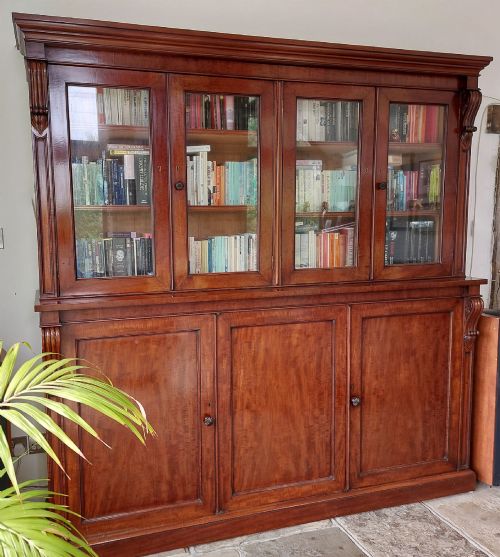
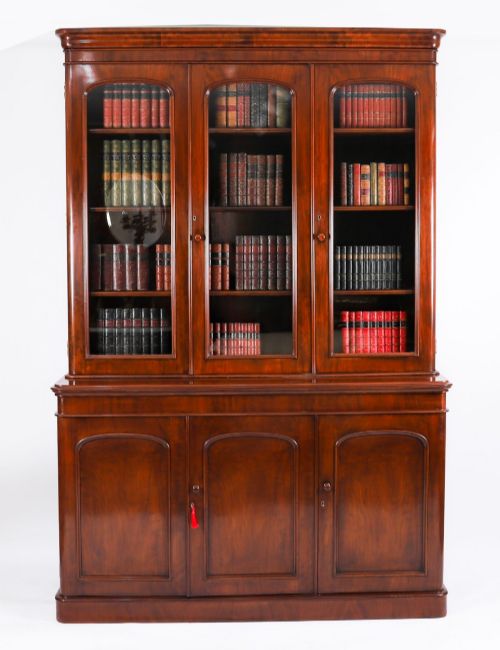
Large Mahogany Library Bookcase
When you need a large mahogany library bookcase, you want timber with depth and scale that anchors a serious room.
Large Mahogany Library Bookcase
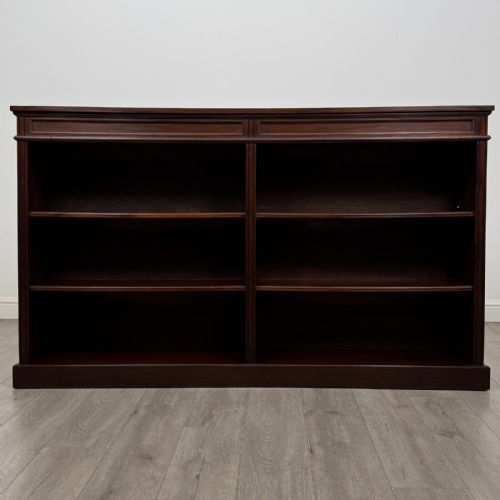
A large mahogany library bookcase is a substantial piece of furniture designed to house extensive collections of books in domestic or institutional settings. These architectural items provide serious storage capacity while serving as focal points within principal reception rooms or libraries.
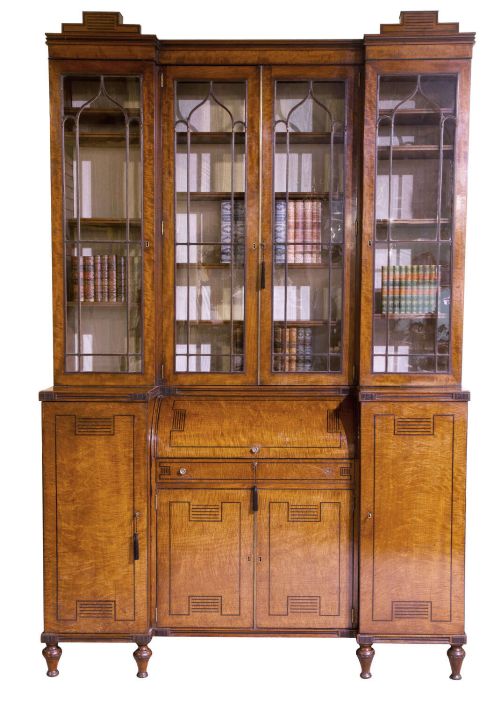
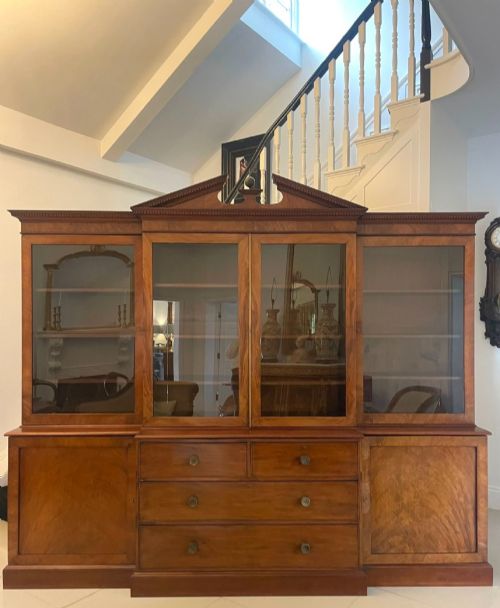
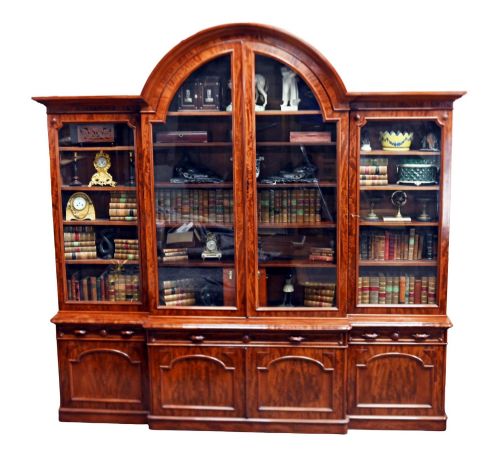
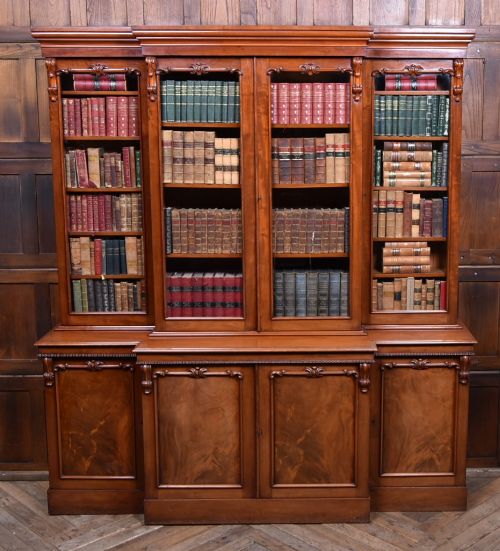
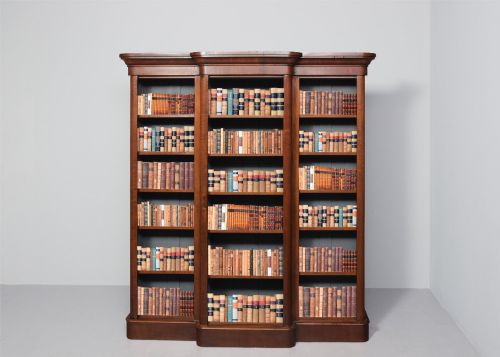
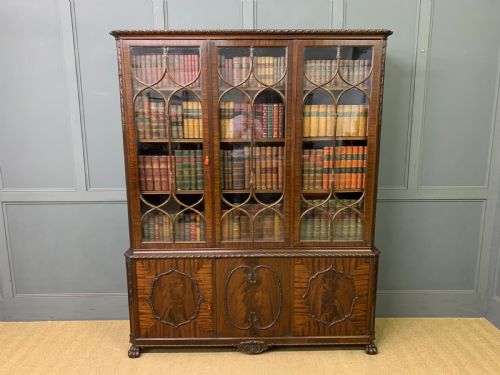
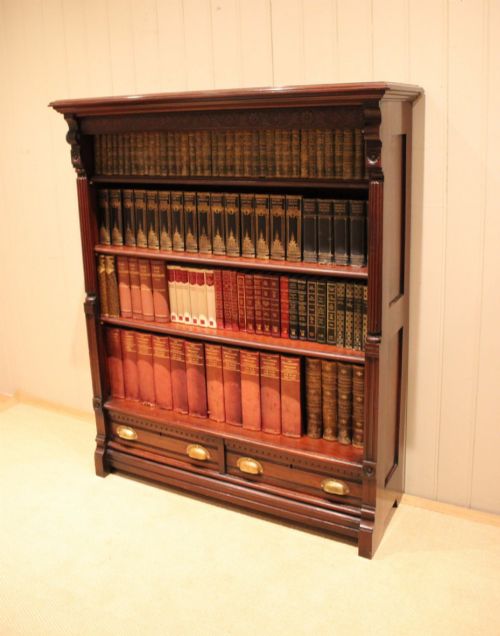
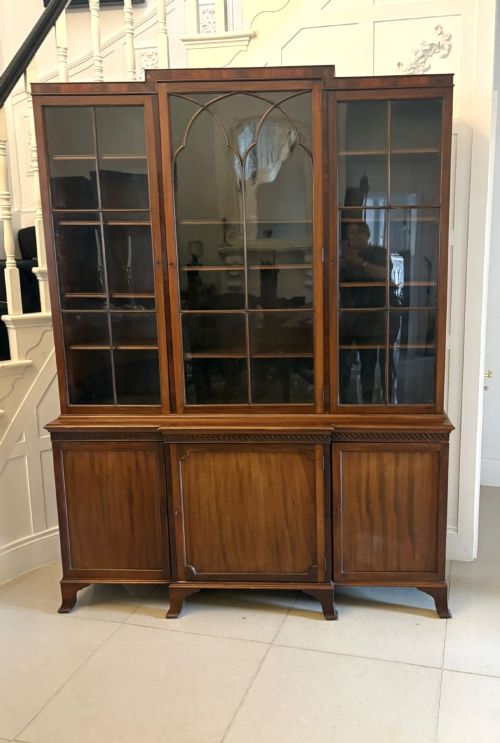
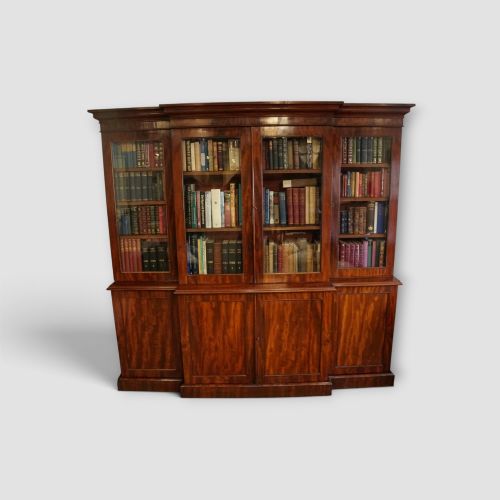
The versions most commonly met on this page span the Georgian, Regency, William IV, Victorian and Edwardian eras. They appear frequently in breakfront formats, often combining glazed upper display doors with lower wooden cupboards or open shelving configurations.
How they were made
Cabinet makers utilised solid mahogany and applied veneers such as flame mahogany or figured mahogany over secondary timbers like pine and oak to achieve rich visual grain patterns. Glazing bars formed geometric panes of glass in the upper doors, while internal construction often incorporated adjustable wooden shelving supported by peg systems.
Higher status examples integrated architectural mouldings, brass mounts, and fine inlaid details in satinwood. Carcase construction relied on heavy proportions to support the immense weight of volumes without warping over decades of use.
Listings feature mahogany, flame mahogany, oak, pine, satinwood, and brass across Georgian, Regency, William IV, Victorian, and Edwardian periods.
What varies in quality
The standard of a large mahogany library bookcase rests primarily on the choice of timber figure and the crispness of its architectural joinery. Pieces featuring highly figured flame mahogany veneers exhibit greater visual movement and warmth across expansive surfaces.
Proportion and academic correctness in style dictate the standing of a piece, separating standard commercial joinery from ambitious cabinet work commissioned for country houses. Original glass panes, intact brass hardware, and integrated adjustable shelving systems elevate the integrity of surviving examples.
Wylie and Lochhead·S and H Jewell
The Large Mahogany Library Bookcase Glossary
- Breakfront
- A cabinet configuration where the central section projects forward from the flanking outer wings. This architectural arrangement creates depth and shadow across the facade.
- Flame mahogany
- A veneer cut from the branch forks of the mahogany tree, displaying a distinctive roaring flame or feather pattern. It was favoured for high-status cabinet doors during the Georgian and Victorian periods.
- Glazing bar
- A narrow wooden strip holding individual panes of glass within a sash door. Finer bars indicate higher quality construction.
- Secretaire bookcase
- A hybrid form incorporating a fitted writing drawer with a drop-front desk surface situated between the upper shelving and lower cupboards. It provides a concealed workspace within the bookcase architecture.
- Revolving bookcase
- A compact freestanding bookshelf built on a rotating pivot mechanism. These items allowed easy access to reference volumes from a seated position.
Large Mahogany Library Bookcase: Frequently Asked Questions
How do I date a mahogany bookcase?
Dating relies on stylistic details, timber characteristics, and construction methods visible in the carcass and drawers. Georgian and Regency pieces display different cornice proportions and foot forms compared to Victorian or Edwardian iterations.
Secondary woods like oak point towards earlier periods, while pine backing often appears in later 19th-century workshop production. Examining the shelf adjustment mechanisms and glass characteristics provides further chronological clues.
Are the shelves adjustable on these bookcases?
Many library bookcases feature adjustable shelving supported by wooden ratchets, brass pegs, or saw-tooth tracks inside the carcase walls. This adaptability accommodates varying book heights from folio volumes to standard octavos.
Open versions and glazed cabinets frequently retained this functional utility for modern domestic use. Fixed shelving remains more typical in older or simplified vernacular pieces.
How do I care for mahogany timber?
Mahogany requires stable room humidity and protection from direct sunlight to prevent timber splitting and veneer fading. Regular dusting with a dry lint-free cloth preserves the polish without building up waxy residues.
Occasional application of appropriate furniture wax maintains the moisture and lustre of the antique surface. Avoid placing large bookcases directly against damp exterior walls or near active heating vents.