
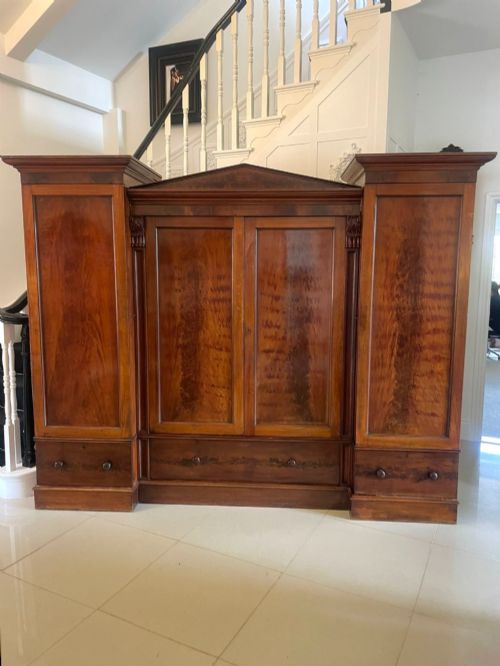
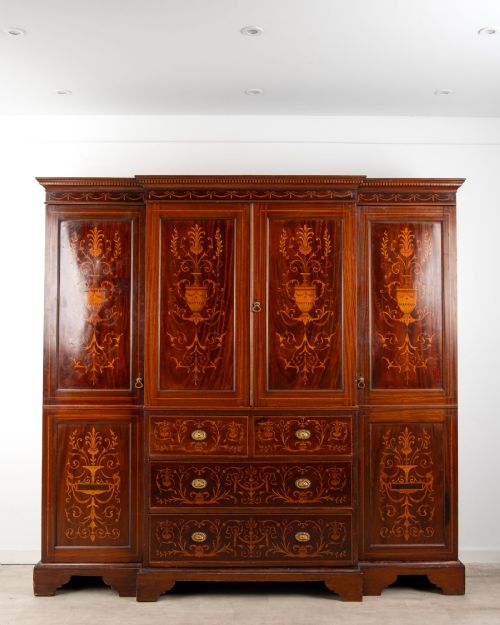
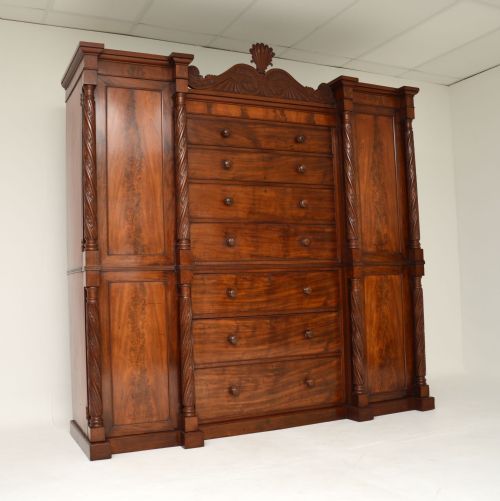
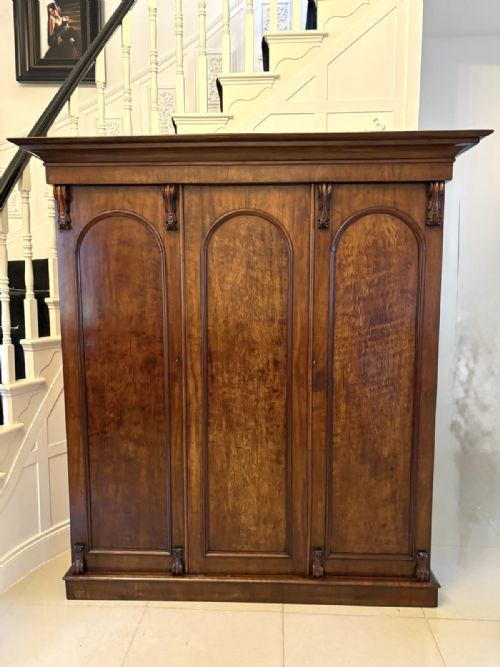


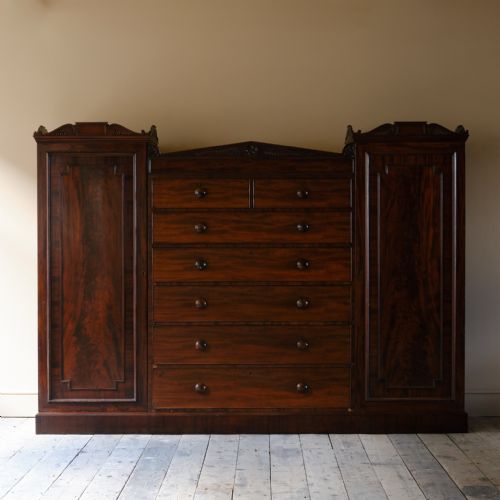
Large Mahogany Clothes Press
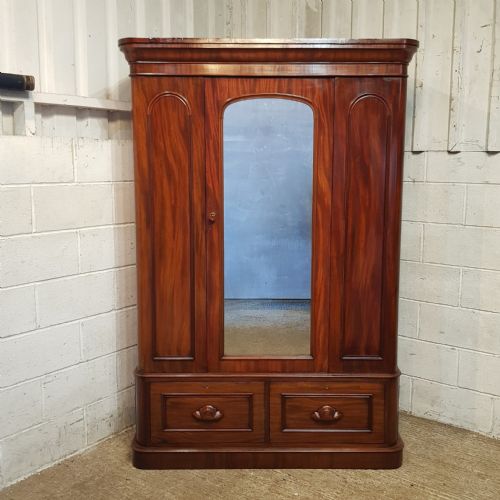
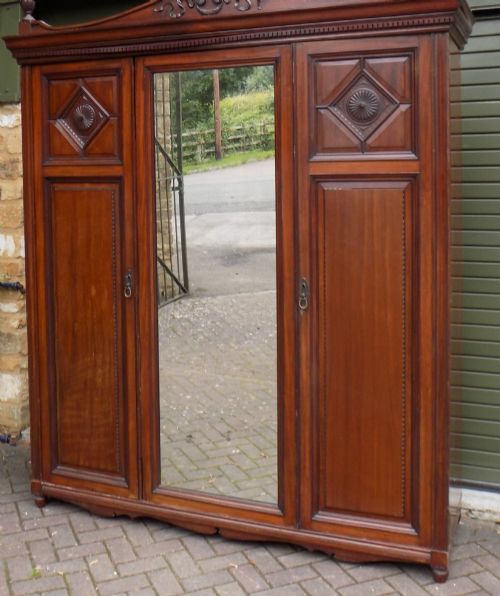
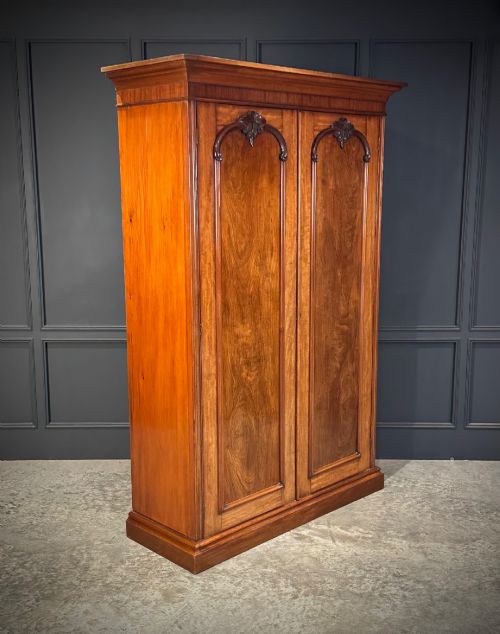
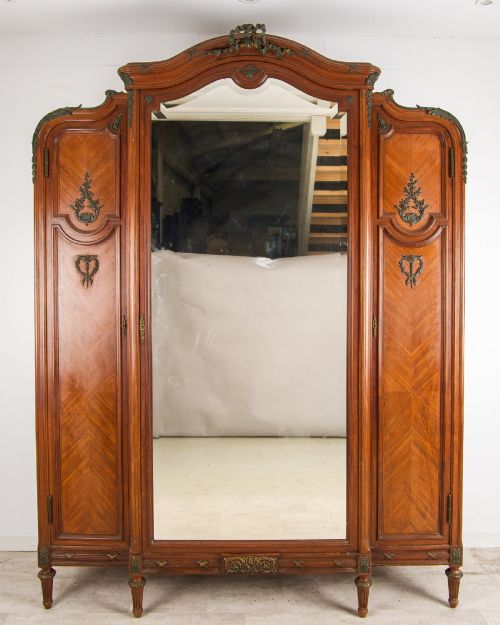
A large mahogany clothes press provides substantial bedroom storage through dignified architectural timber and deep drawers.
Large Mahogany Clothes Press
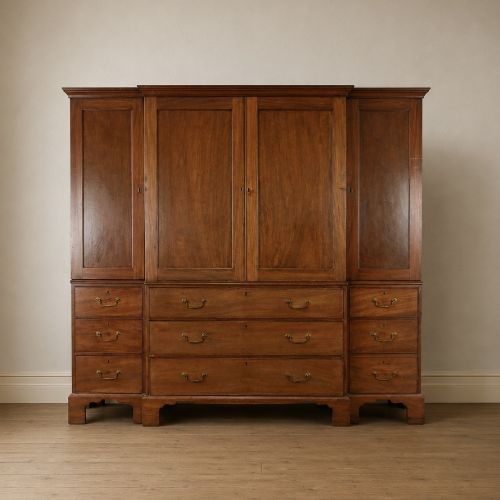
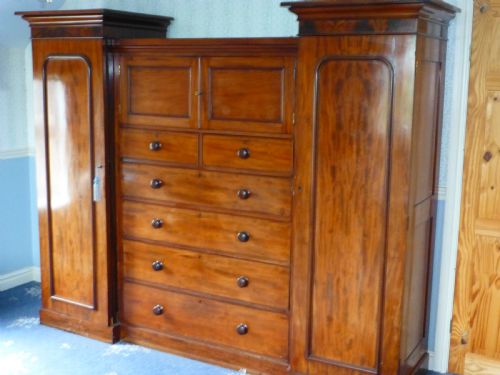
A large mahogany clothes press combines hanging space with sliding trays or drawers, often appearing under the broader headings of wardrobes, armoires and linen presses. These substantial pieces span the Georgian, Regency, William IV, Victorian and Edwardian periods, reflecting changing domestic storage needs over more than a century.
The versions most commonly met on this page include multi-door breakfront carcasses, compactum layouts with fitted internal configurations, and tall triple or four-door formats. They originate from British cabinet makers working in styles ranging from George III classicism through to Edwardian revivalism.
Makers utilised architectural cornices, panelled doors and substantial plinths to give these large storage items a commanding presence in a bedchamber. The interior typically houses sliding linen shelves behind the upper doors, positioned above a chest base.
Materials and Technique
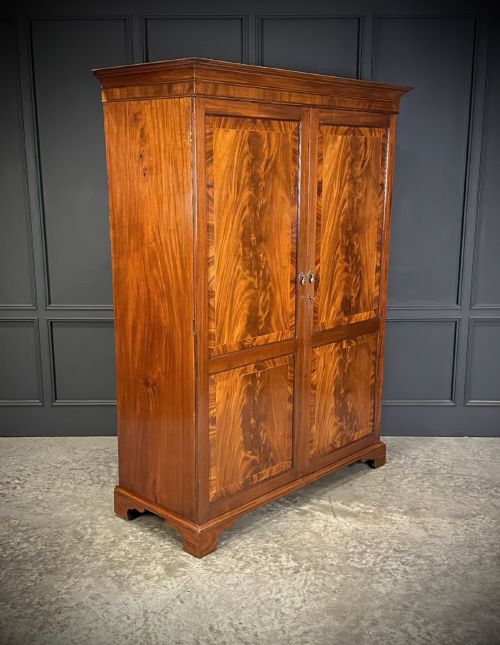
Cabinet makers built these pieces using solid mahogany frameworks lined with secondary timbers, applying figured mahogany veneer, flame mahogany veneer or curl mahogany to the primary visible surfaces. Selected sections frequently display rich natural grain patterns enhanced by French polishing.
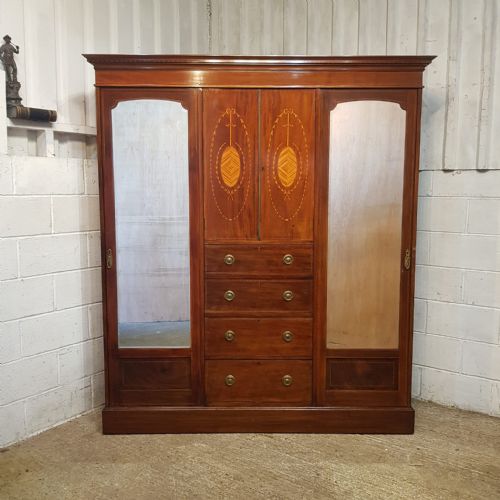
Decorative detailing relies on contrasting timbers such as satinwood for inlay work, alongside cast brass handles, escutcheons and occasional gilt bronze ormolu mounts. Glass panels and mirror glass appear within doors on later Victorian and Edwardian examples.
Internal configurations vary widely across these items, featuring sliding linen trays, linen presses, compactum divisions and mirror glass doors.
Judging Quality
Quality rests upon the selection of timber veneers and the architectural integrity of the breakfront or cornice mouldings. Pieces featuring highly figured flame mahogany or intricate satinwood inlay demonstrate superior workshop ambition.
The internal carpentry reveals the maker's hand through the pigeonhole divisions, the smooth running of the sliding linen trays, and the depth of the drawer linings. External proportions remain balanced even on the largest four-door and compactum carcasses.
Gillows·Robert Strahan of Dublin·Edwards & Roberts
The Large Mahogany Clothes Press Glossary
- Compactum
- A fitted wardrobe designed to maximise internal storage by combining hanging space, drawers, shelves and sliding trays in a single carcass. This efficient layout became particularly popular during the Victorian and Edwardian eras.
- Breakfront
- A cabinet front where the central section projects forward from the flanking outer wings. This architectural arrangement creates shadow lines and visual depth across large wardrobe facades.
- Flame mahogany
- A veneer cut from timber where the branch meets the trunk, producing a distinctive flickering flame pattern. Cabinet makers reserved this highly decorative grain for prominent door panels.
- Linen press
- A piece of furniture traditionally used for storing household linen flat upon internal sliding trays. Early examples often place these trays above a chest base containing practical drawers.
- Satinwood
- A pale, hard timber native to Ceylon and India, used extensively for contrasting stringing and inlay work. It provides a bright golden accent against darker mahogany surfaces.
Large Mahogany Clothes Press: Frequently Asked Questions
Will a large mahogany clothes press fit in my bedroom?
These substantial items require adequate wall space and sufficient ceiling height to accommodate heavy architectural cornices. Measuring the clearance for opening doors and pulling out internal drawers is essential before placement.
Many period examples dismantle into modular sections, including the cornice, base, and flanking wardrobes, to ease transportation and room entry. Professional assembly ensures the carcass remains square and level.
How do I care for antique mahogany surfaces?
Maintenance requires regular dusting with a soft, dry cloth and occasional application of traditional beeswax to nourish the timber. Direct sunlight and proximity to heat sources should be avoided to prevent the veneer from drying out.
Proper humidity levels in the room protect the underlying timber movement and maintain the stability of the French polished finish. Gentle care preserves the depth and warmth of the mahogany grain over generations.
How can I date a mahogany clothes press?
Dating relies upon stylistic markers, construction methods, and the choice of secondary timbers used inside the drawers. Georgian and Regency pieces display classical proportions and fine cockbeading, while Victorian and Edwardian examples often incorporate mirror glass and heavier cornices.
Internal elements such as hand-cut dovetails, original brass locks, and maker signatures help narrow down the period of manufacture. Comparing the decorative vocabulary to known regional workshop traditions confirms the era.