





Large Lion Figure
These large lion figure pieces range from nineteenth-century bronze temple guardians to carved wooden beasts, offering commanding presence for any interior.
Large Lion Figure
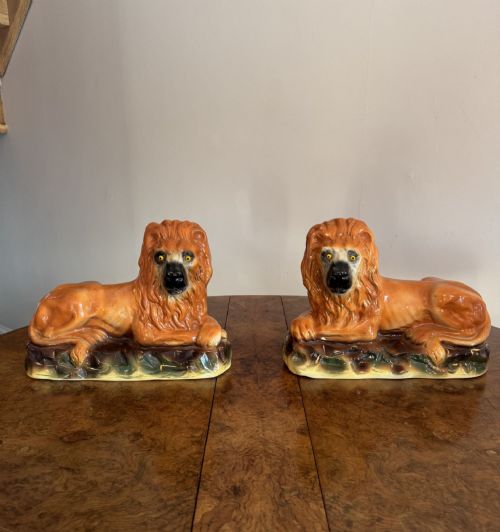
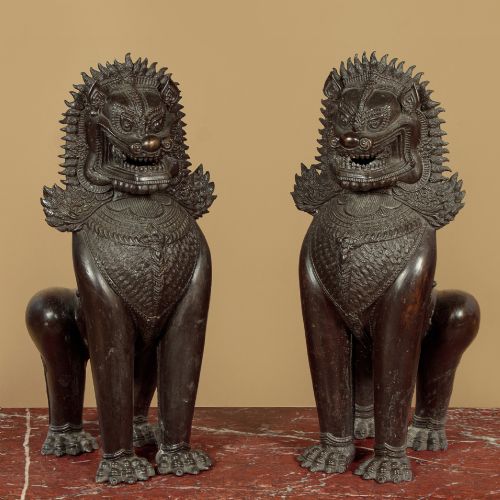
A large lion figure encompasses sculptural representations modelled in bronze, carved wood, terracotta, and ceramic across various historic periods. Buyers encounter nineteenth-century temple lions, Victorian Staffordshire pairs, and twentieth-century decorative pieces.
The selections span distinct stylistic traditions including Japanese Meiji, Tibetan Buddhist, Grand Tour neoclassical, and folk art. Statues and garden ornaments appear alongside monumental indoor sculptures.
How they were made
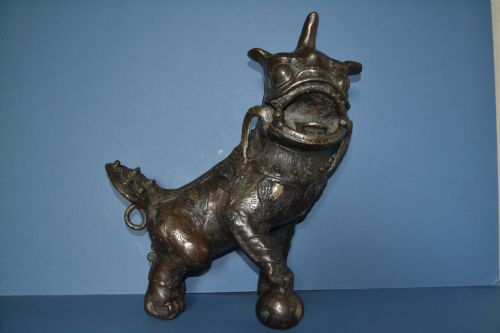
Metal pieces utilise bronze, brass, iron, and copper lustre finishes, frequently cast with intricate surface detail. Foundry methods range from traditional lost-wax casting in Asian temples to nineteenth-century European production.
Carved pieces employ solid wood, marble, and reconstituted stone, shaped by hand using traditional chisels and polishing tools. Terracotta and earthenware figures rely on moulded clay fired in kilns and finished with paint or glaze.
Large Lion Figure Retail Price Guide 2026
Typical asking prices for large lion figure among the pieces listed under this phrase on Sellingantiques today, from the lower quarter to the upper quarter. They describe what is for sale here now, not the wider market.
Several listings include thirty-five kilogram bronze temple guardians that demand serious muscle to move.
What varies in quality
The refinement of the modelling distinguishes superior sculptural work, particularly in the rendering of musculature, facial expression, and mane texture. Vigorous anatomical proportion elevates an ordinary casting into a compelling artistic statement.
Material integrity and surface preservation dictate the standing of individual examples. Original patination on bronzes and authentic glaze or paint retention on ceramics significantly influence the character of the piece.
Seiunsai Miyamoto Sei·Antoine-Felix Bouré·Royal Dux
The Large Lion Figure Glossary
- Medici Lions
- A pair of marble lion sculptures guarding the Villa Medici in Rome, widely copied during the Grand Tour period in bronze, terracotta, and stone. They depict one paw resting on a sphere.
- Terracotta
- Fired clay used for sculptural figures, varying in colour from orange-red to buff. It permits intricate modelling before kiln firing.
- Foo Dog
- A traditional guardian lion in East Asian art, frequently cast in bronze or carved from stone. They typically appear in pairs guarding entrances.
Large Lion Figure: Frequently Asked Questions
Where should I place a large lion figure?
These substantial sculptures suit prominent locations such as entrance halls, garden terraces, or flanking a fireplace. Their visual weight commands attention in generous spaces.
Pairs often work well framing a doorway or positioned on low pedestals to maximise their height and presence.
How do I care for bronze lion figures?
Bronze pieces require minimal maintenance, needing only gentle dusting with a soft cloth to prevent grime accumulation. Avoid harsh chemical cleaners that might strip the historic patination.
Occasional application of microcrystalline wax helps protect the surface finish, particularly on pieces displayed in outdoor environments.
Are these figures suitable for outdoor display?
Suitability depends entirely on the material composition of the specific sculpture. Reconstituted stone, terracotta, and cast iron generally withstand garden conditions.
Wood, plaster, and ceramic pieces require indoor placement to protect them from moisture and frost damage over time.
How do I distinguish nineteenth-century pieces?
Nineteenth-century examples often exhibit heavier casting techniques, hand-chiselled detailing in wood or stone, and aged patination consistent with centuries of handling. Material ageing provides reliable clues.
Stylistic conventions of the Victorian, Meiji, and Grand Tour periods offer further chronological markers for attribution.