

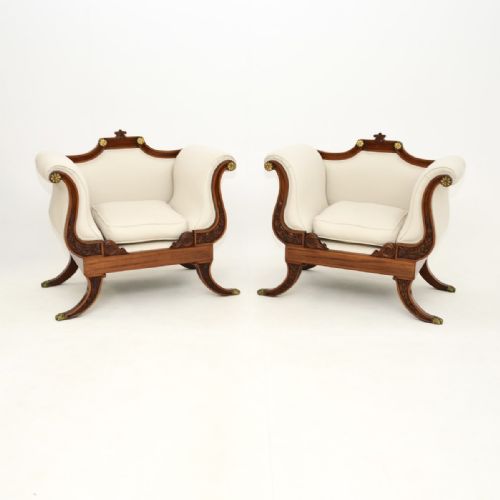


Large Leather Armchairs
Large leather armchairs are substantial seats that anchor a room with presence, offering deep comfort and enduring character through aged hide.
Large Leather Armchairs
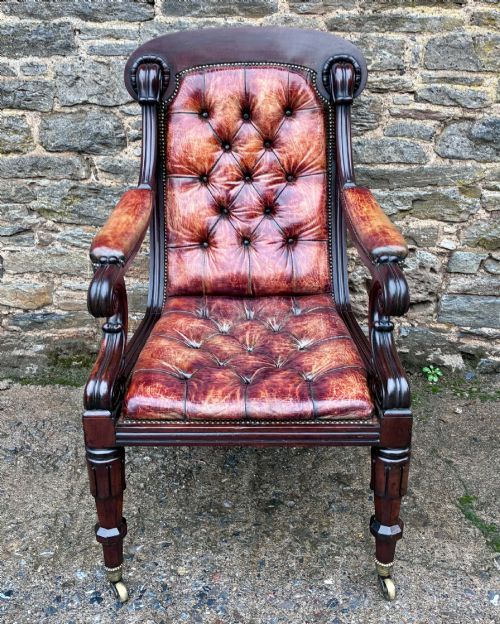
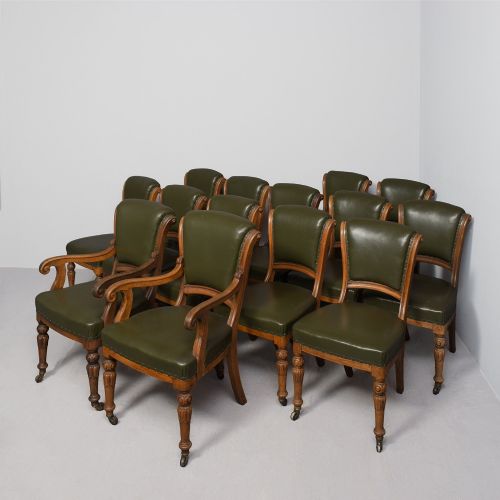
Large leather armchairs span several centuries of British design, appearing in heavy oak, mahogany, rosewood, and painted wood frames. Buyers seeking large leather armchairs commonly encounter mahogany frames from the Georgian and Regency periods, alongside substantial Victorian and later 20th-century iterations.
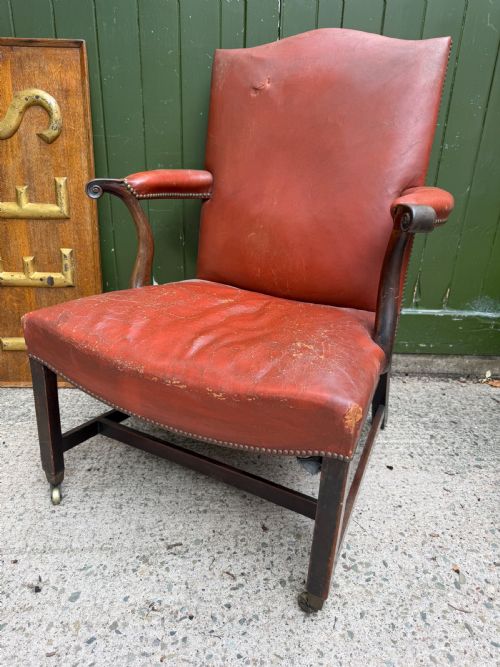
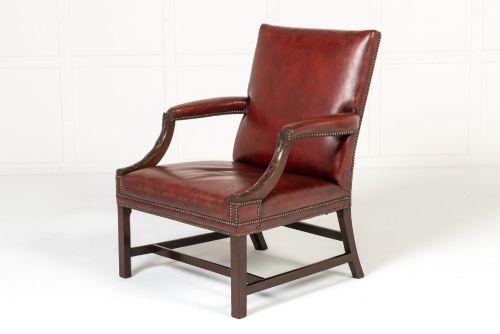
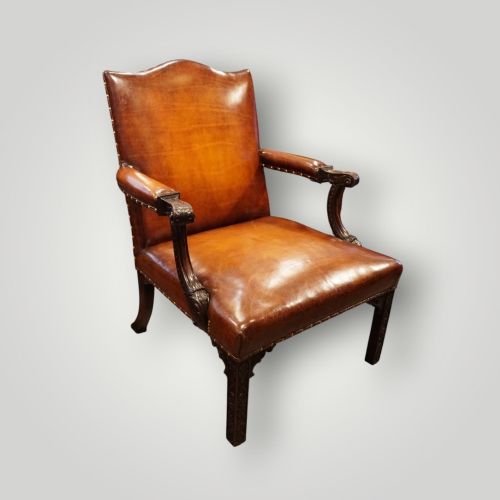
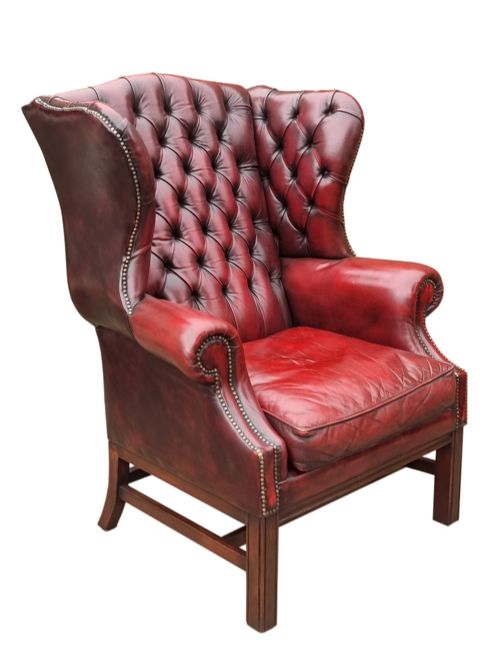
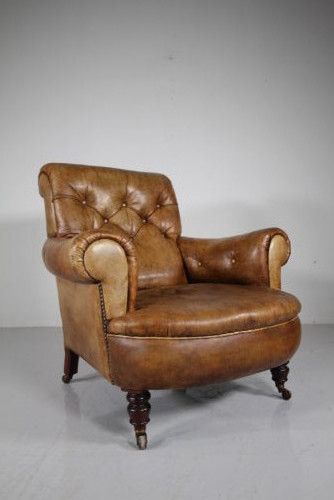
The forms range from open-frame Gainsborough library chairs and wing armchairs to button-back salon seats and reclining library chairs. Many examples feature substantial timber arm structures and deep seats designed for long periods of study or relaxation.
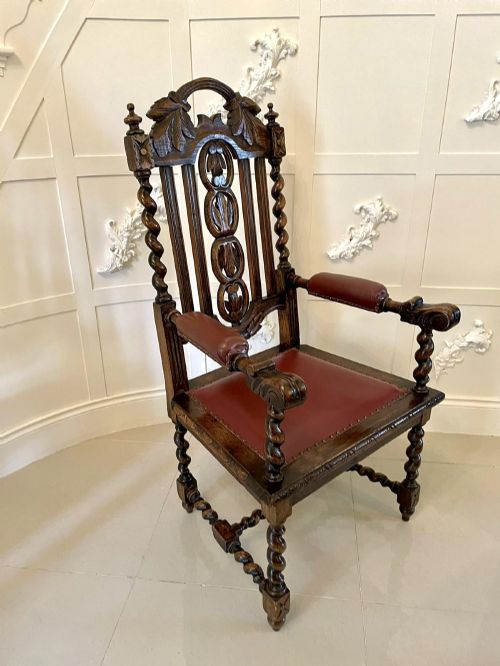
Origins stretch from the 18th century through to the early decades of the 20th century, capturing shifts in domestic comfort from formal sitting rooms to dedicated libraries. These pieces frequently employ traditional upholstery techniques combined with exposed timber frames carved in styles from Gothic to Art Nouveau and Art Deco.
How they were made
Makers constructed the primary frames of large leather armchairs using sturdy hardwoods such as mahogany, oak, and rosewood, ensuring structural integrity beneath the upholstery. Joinery relied on traditional peg and dowel methods to bear the weight of heavy timber arms and deep springing.
The hides used for covering included English hide leather, applied over traditional stuff-over foundations and secured with hand-driven brass tacks. Carved details on the wooden components, such as blind fretwork or structural mouldings, were executed by hand using chisels and gouges before the final polishing.
Large Leather Armchairs Retail Price Guide 2026
Typical asking prices for large leather armchairs among the pieces listed under this phrase on Sellingantiques today, from the lower quarter to the upper quarter. They describe what is for sale here now, not the wider market.
Listings feature woods such as mahogany, oak, rosewood, and painted wood, paired with leather and brass.
What varies in quality
The refinement of the timber carving distinguishes finer seating, with crisp blind fretwork or deeply sculpted mahogany arms marking out superior workshops. Grain selection in the primary woods, such as figured mahogany or rich rosewood, also elevates the visual weight of the frame.
The character and treatment of the hide create further distinction, where hand-dyed English hide leather shows subtle depth compared to flat modern finishes. The integration of the upholstery with the timber frame, down to the placement of brass tacks and the handling of buttoning, determines the overall presence of the piece.
The Large Leather Armchairs Glossary
- Wing armchair
- A high-backed seat featuring protective side panels designed to deflect draughts from open fires and retain body heat. These chairs often combine deep leather upholstery with substantial wooden legs.
- Blind carving
- Carved ornamentation applied to a flat surface in low relief, often seen on the stiles and stretchers of 18th-century mahogany chairs. It mimics open fretwork without piercing the timber completely.
- English hide leather
- Heavy cattle leather traditionally used for upholstery, noted for its durability and capacity to develop a rich patina through age and use. It forms the primary covering on library and wing chairs.
Large Leather Armchairs: Frequently Asked Questions
Where should I place a large leather armchair?
These substantial seats suit studies, libraries, and large living spaces where their physical scale balances other heavy furniture. They function well beside fireplaces or reading tables.
Ensure there is adequate clearance around the piece to accommodate the projecting arms and deep seats without crowding smaller tables.
How do I care for antique leather upholstery?
Keep leather armchairs away from direct heat sources and strong sunlight to prevent the hide from drying out and cracking over time. Regular dusting with a soft cloth maintains the surface.
Feed the material periodically with appropriate leather balms to preserve suppleness without blocking the natural grain of the hide.
How do I distinguish a George III chair from a Victorian copy?
Examine the timber underneath and behind for tool marks, seasoning splits, and the specific density of the mahogany or oak used in the primary frame. 18th-century pieces often display hand-cut joinery methods distinct from later 19th-century production.
Check the stretcher arrangement and block construction beneath the seat, as construction techniques shifted noticeably between the Georgian period and the Victorian revival eras.