

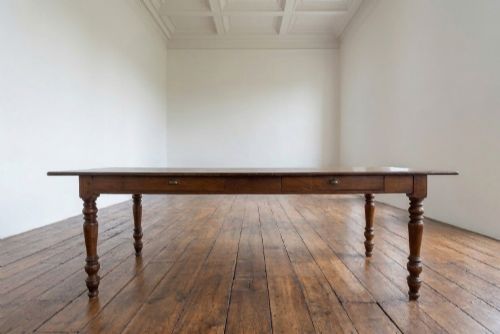
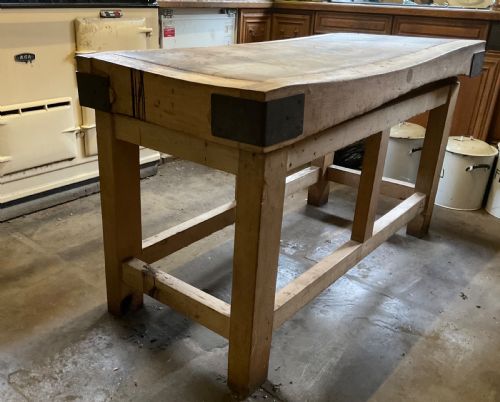
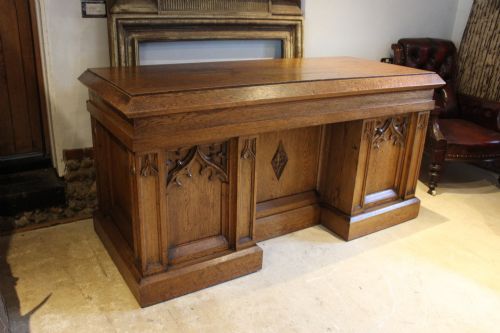
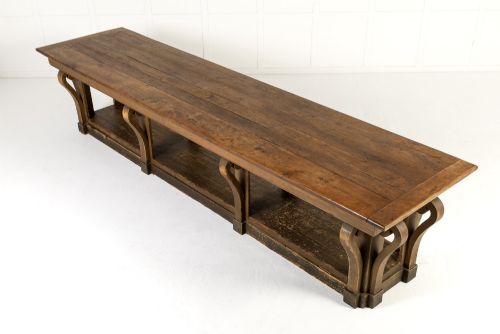


Large Kitchen Prep Table
A large kitchen prep table is a heavy utilitarian working surface built to handle daily culinary labour.
Large Kitchen Prep Table
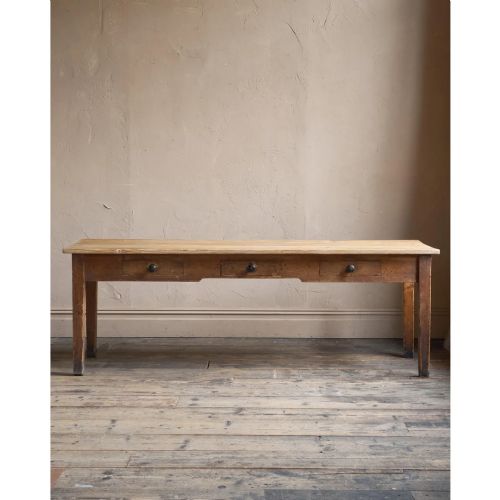
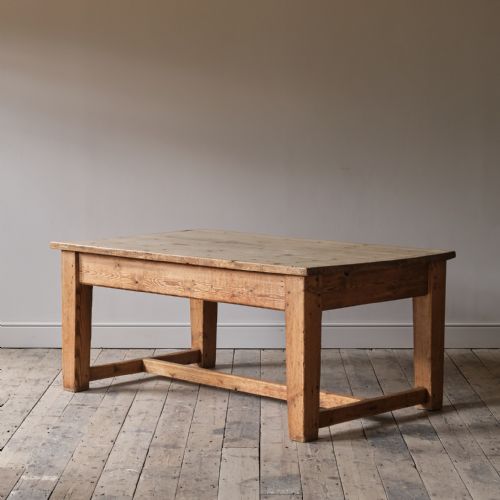
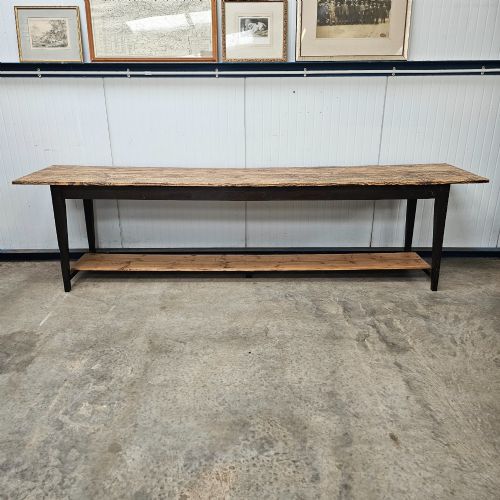
A large kitchen prep table provides substantial surface area for food preparation, baking, and serving in domestic spaces. These functional items originate predominantly from the nineteenth century, encompassing Georgian, Victorian, Edwardian, and early twentieth-century examples.
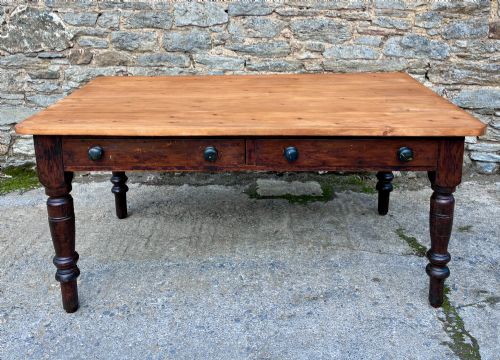
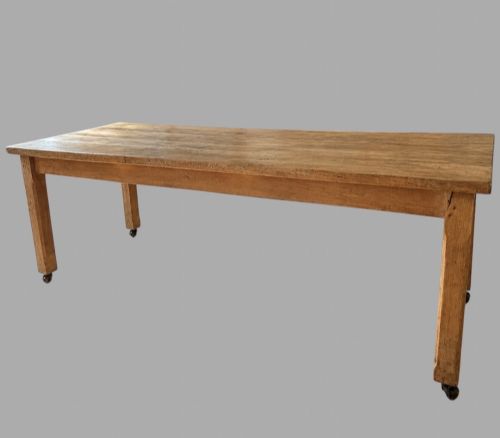
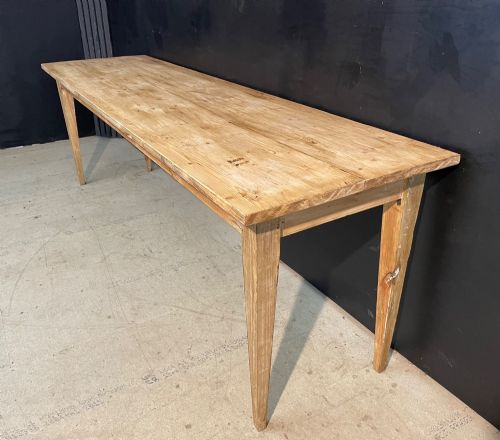
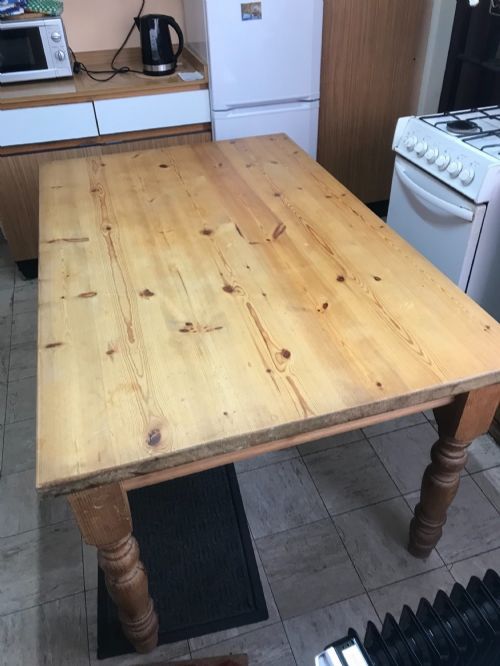
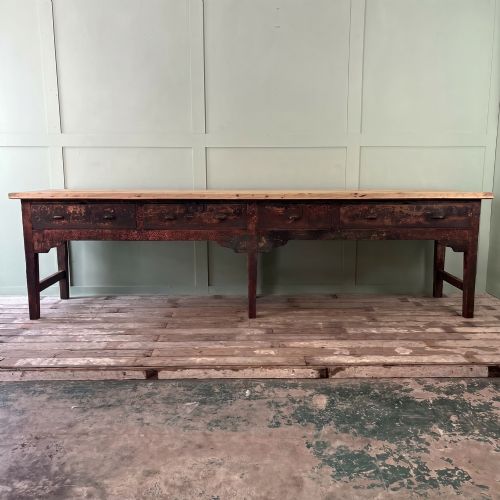
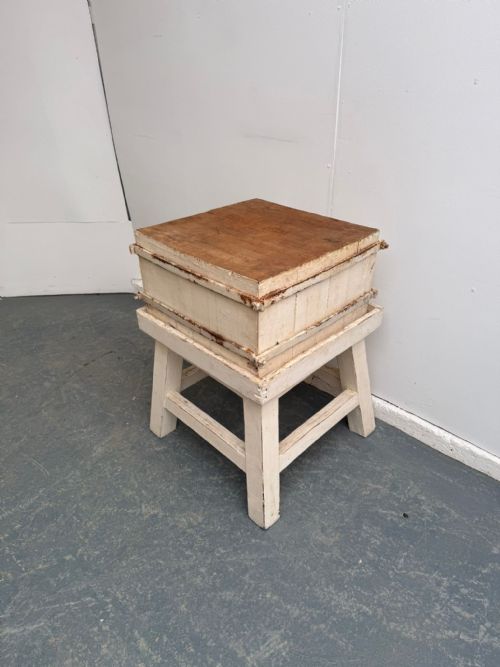
The most common version met on this page is the pine farmhouse table or scrubbed pine kitchen table, often featuring practical drawers or lower potboards. Alongside these, buyers find French and English oak drapers tables, Scandinavian painted pine pieces, and specialised butchers blocks.
Forms vary from rustic country and farmhouse styles to provincial serving tables and console work surfaces. They span origins including English, French, Hungarian, and Swedish workshops, reflecting robust utilitarian design across Europe.
How they were made
Makers constructed these sturdy tables primarily using solid pine, oak, elm, and other hardwoods for enduring strength under heavy daily use. Timber surfaces were frequently scrubbed bare or left untreated to withstand constant washing and scrubbing.
Construction methods relied on thick solid timber tops fixed to sturdy square-section supports, legs, or trestle bases. Many examples incorporate dovetailed drawers, brass hardware, iron fittings, and lower potboards for additional storage stability.
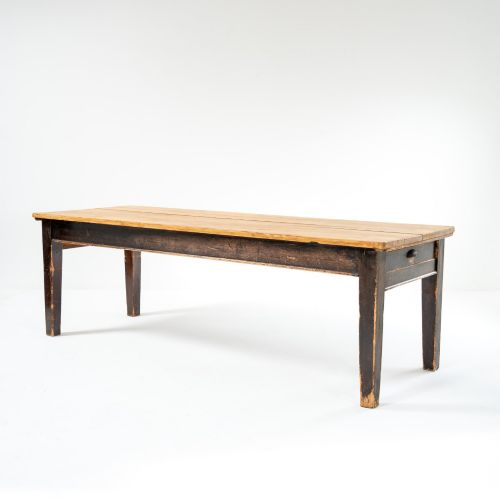
Painted finishes appear frequently, utilising painted wood, painted timber, and white paint over pine and softwood structures. These surface treatments protected the wood while suiting provincial and country domestic interiors.
Large Kitchen Prep Table Retail Price Guide 2026
Typical asking prices for large kitchen prep table among the pieces listed under this phrase on Sellingantiques today, from the lower quarter to the upper quarter. They describe what is for sale here now, not the wider market.
Several tables show scars from heavy nineteenth-century cleaver work, reminding us they fed entire Victorian households.
What varies in quality
Quality rests upon the structural integrity of the timber and the honesty of its wear and patina. Tables retaining original scrubbed surfaces, uncompromised joints, and authentic proportion command greater appreciation from collectors.
The choice of materials dictates overall robustness, with dense hardwoods like oak and heavy elm offering superior longevity compared to softer timbers. Evidence of genuine period use, such as deep score marks and natural weathering on the top, distinguishes superior utility pieces.
The Large Kitchen Prep Table Glossary
- Drapers table
- A long, often narrow table originally utilised in fabric shops for displaying and measuring cloth, characterised by multiple tiers or drawers.
- Potboard
- A lower open shelf fitted between the legs of a table, traditionally used for storing pots, pans, and heavy kitchen utensils.
- Scrubbed pine
- A pine table surface repeatedly scoured with water and brush to clean the wood, resulting in a pale, smooth, weathered texture.
- Harvest table
- A large dining or work table built with generous proportions to accommodate farm workers during seasonal harvest meals.
- Butchers block
- A thick, solid block of timber end-grain mounted on sturdy supports, designed specifically for heavy meat chopping and butchery tasks.
Large Kitchen Prep Table: Frequently Asked Questions
What is a large kitchen prep table?
A large kitchen prep table is a heavy utility surface designed for food preparation, baking, and domestic work.
These pieces originate mainly from the nineteenth century and reflect practical farmhouse, scullery, and provincial designs.
How were prep tables used historically?
Historically, these tables served as central work stations for kneading bread, chopping meat, and organising kitchen provisions.
Lower potboards and drawers kept heavy cookware and utensils close at hand during daily culinary tasks.
What woods were used for prep tables?
Makers predominantly built these tables using solid pine, oak, elm, and other durable hardwoods.
Softwoods were often scrubbed bare, while some regional examples featured painted pine or timber finishes.
How do I care for a antique prep table?
Maintain the dry, scrubbed timber surface by cleaning gently without harsh chemical finishes that strip the historic patina.
Allow the natural wood to breathe and accept normal household wear as part of its historical character.