






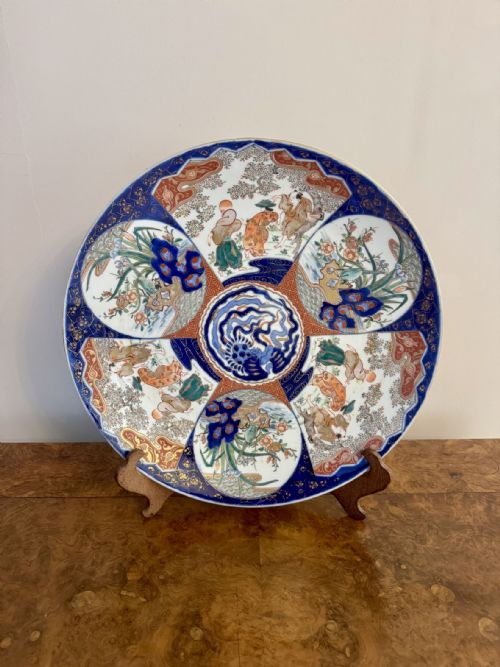


Large Imari Plate
A large imari plate brings heavy cobalt glaze, ironstone, and porcelain into a room with striking visual depth.
Large Imari Plate
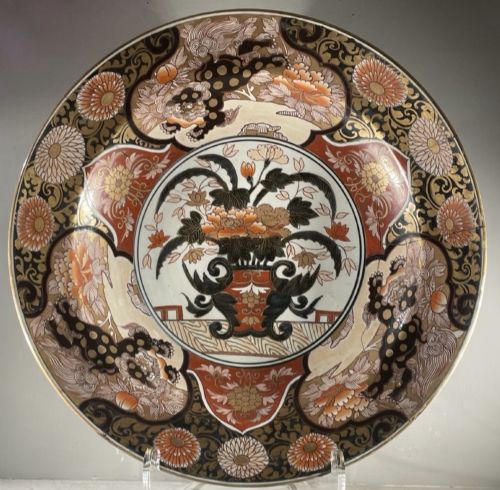
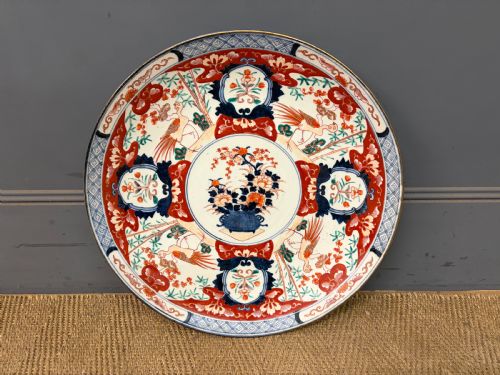
A large imari plate represents a broad category of substantial ceramics designed for display or service, originating largely from Japanese Arita kilns alongside domestic interpretations. These items span periods from the Edo and Meiji eras through the nineteenth century into the early twentieth century, taking the form of deep chargers, serving platters, and wide display dishes.
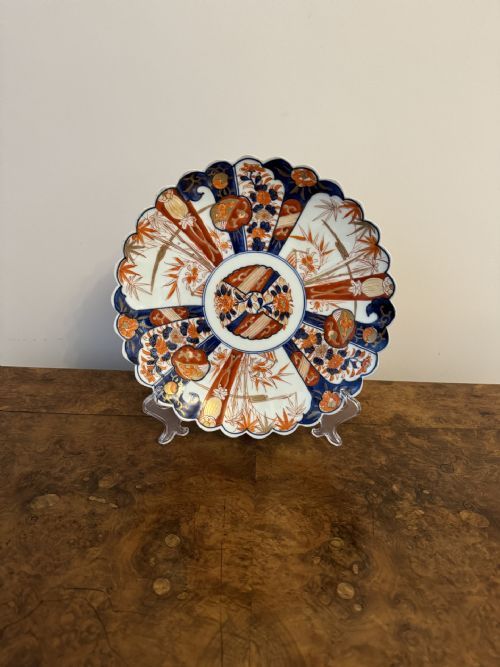
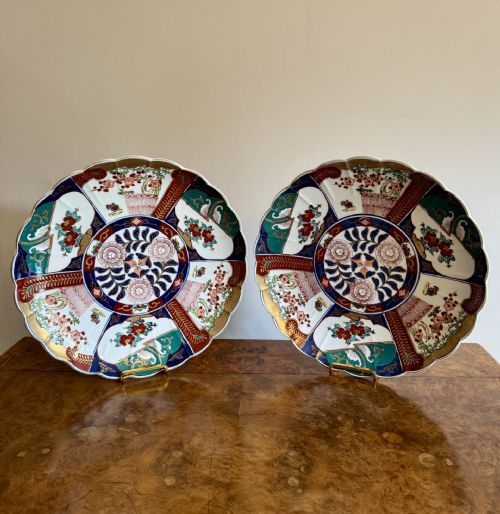
The buyer on this page will most frequently encounter Japanese imari plates and chargers dating from around 1800 to 1920, often characterised by scalloped edges, square formats, or traditional round profiles. These objects combine utility and display, functioning historically as meat platters, fruit display dishes, and wall chargers.
Materials and construction
Potters built these plates using ceramic, ironstone, and fine porcelain bodies, applying cobalt glaze for deep blue underglaze decoration alongside enamel pigments and gold leaf or gilt details. Artisans shaped these pieces into heavy chargers and platters before firing and painting them by hand.
The decorative schemes rely on cobalt blue and iron-red enamel, often accented with gilding to highlight intricate scrolling foliate borders, figurative scenes such as the Seven Lucky Gods, and animal subjects like koi carp.
Large Imari Plate Retail Price Guide 2026
Typical asking prices for large imari plate among the pieces listed under this phrase on Sellingantiques today, from the lower quarter to the upper quarter. They describe what is for sale here now, not the wider market.
Object types documented in the inventory include decorative chargers, meat serving platters, scalloped plates, and square display dishes.
Assessing quality
The standard of a large imari plate rests upon the crispness of the hand-painted brushwork, the depth and vibrancy of the enamel colours, and the application of gold leaf. Pieces exhibiting finely detailed figurative work or complex scrolling borders demonstrate superior artistic control.
Subtleties in the porcelain body, the evenness of the glaze, and the preservation of the overglaze enamels and gilding distinguish standard decorative items from exceptional nineteenth-century chargers.
The Large Imari Plate Glossary
- Imari
- A style of Japanese porcelain decorated in underglaze blue, iron red, and gilt, named after the port from which these wares were shipped. This aesthetic influenced ceramic production across multiple continents.
- Charger
- A large decorative plate or platter intended primarily for display on a wall or sideboard rather than daily dining service. These substantial vessels often measure over forty centimetres in diameter.
- Arita
- The Japanese town and surrounding region where the production of Japanese porcelain began during the Edo period. Kilns in this area created the porcelain bodies for traditional imari ware.
- Cobalt Glaze
- A metallic oxide pigment applied under the glaze to produce a deep blue colour during high-temperature firing. This pigment remains stable under extreme kiln conditions.
- Enamel
- Opaque glass-like coloured paints applied over the fired glaze and fixed in a second, lower-temperature kiln firing. These pigments supply the characteristic reds, greens, and yellows found on these plates.
Large Imari Plate: Frequently Asked Questions
How were large imari plates used?
These large plates and chargers served both functional and decorative purposes in domestic settings. Historical examples functioned as meat serving platters, fruit display dishes, and wall-mounted art.
Their substantial size and rich colour palettes made them focal points in dining rooms and parlours, where families displayed them on sideboards or hung them on walls.
How do I care for antique ceramic plates?
Maintenance requires gentle handling and avoidance of harsh cleaning agents that might degrade the overglaze enamels and gold leaf. Dusting with a soft, dry cloth keeps the surface clean.
Displaying them securely on stable plate stands or using professional wall-mounting hardware protects these heavy porcelain and ironstone chargers from accidental slips.
How do I identify a Meiji period piece?
Meiji period ceramics typically date between 1868 and 1912, reflecting the artistic output of Japan following the reopening of international trade. These items often feature dense hand-painted patterns, including scrolling foliate borders and specific motifs like koi carp or deities.
Examining the weight of the porcelain, the hue of the cobalt blue, and the texture of the enamel provides further clues to dating.
What is the difference between porcelain and ironstone?
Porcelain is a fine, vitrified ceramic material made from kaolin fired at high temperatures, resulting in a dense, white body that often shows translucency. Ironstone is a heavy, durable earthenware developed in the nineteenth century to imitate porcelain.
While both materials support the thick glazes and enamels seen on large plates, ironstone generally offers a heavier and more opaque structural base.