

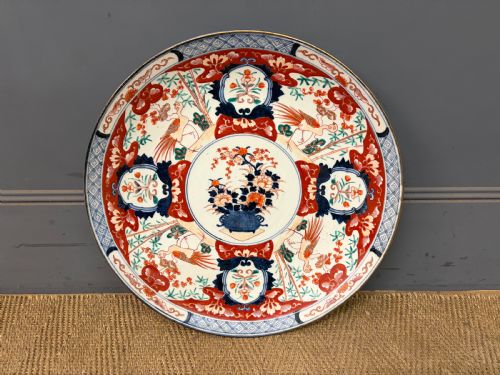
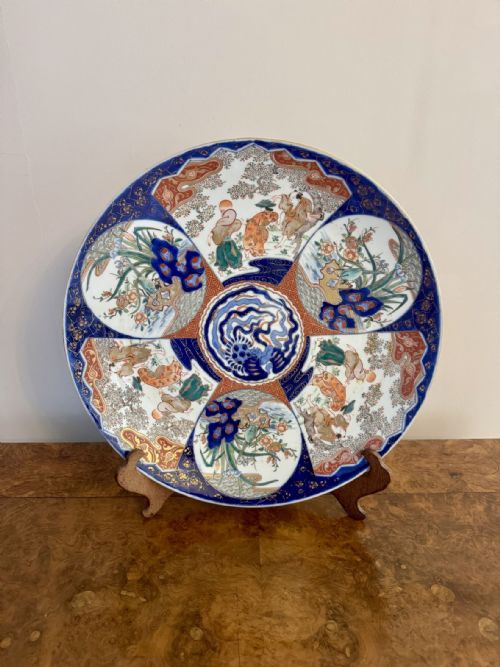
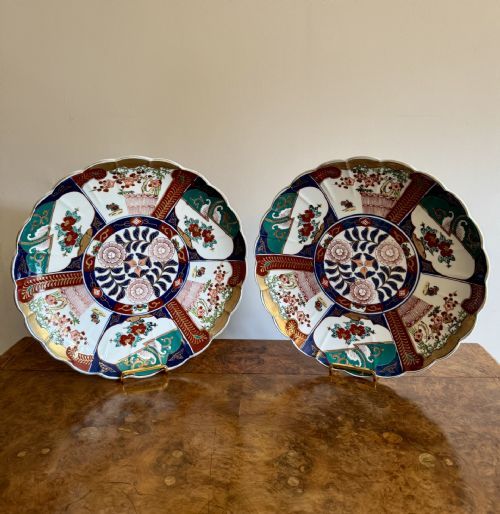
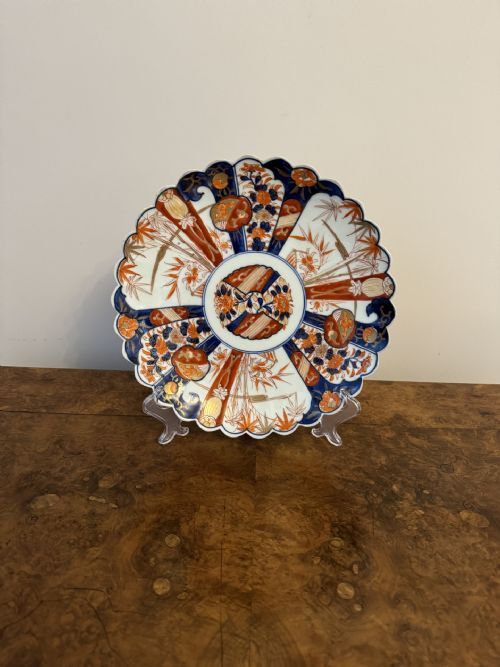
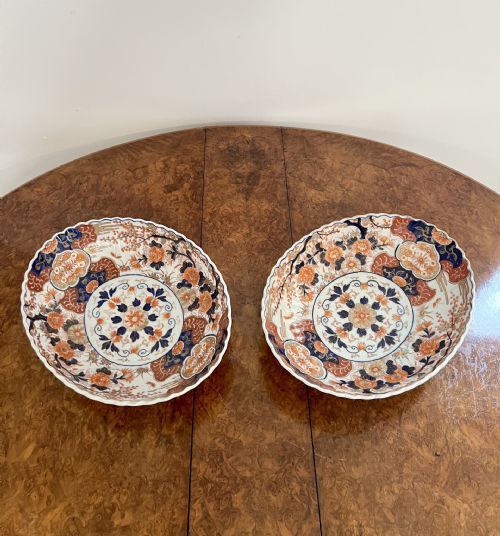


Large Imari Charger
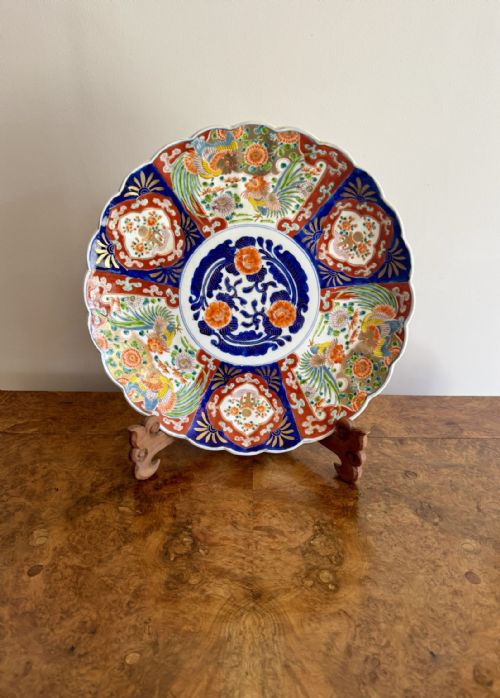
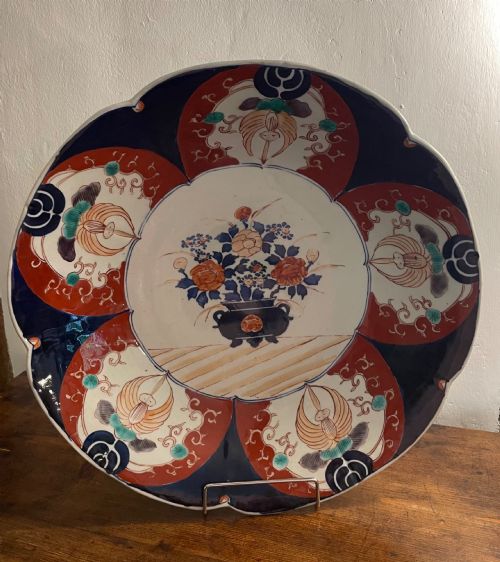
These large imari charger pieces are heavy porcelain display vessels carrying rich cobalt blue and iron red enamel.
Large Imari Charger
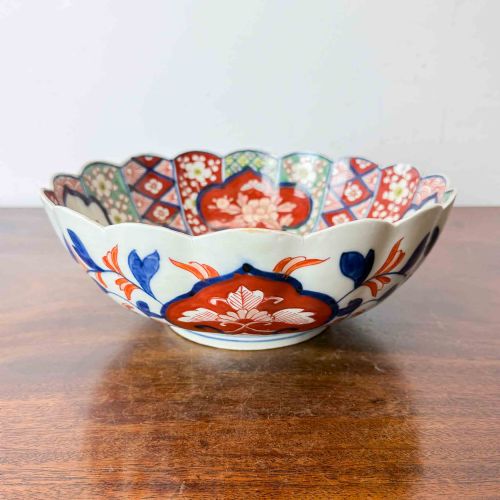
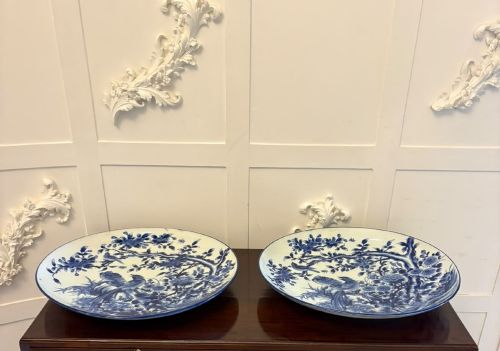
A large imari charger is a broad ceramic plate or shallow bowl intended primarily for display rather than dining. When searching for a large imari charger, buyers encounter round chargers, scalloped plates, and square platters originating from Japan and European aesthetic contexts.
The pieces on this page span the Edo and Meiji periods, alongside Victorian and Edwardian interpretations. Most examples date from the late nineteenth century and around nineteen hundred, combining traditional ceramic forms with robust decorative schemes.
Designs frequently incorporate cobalt pigment, blue and white patterns, and gilt highlights depicting motifs such as the Seven Lucky Gods and koi carp. These objects range from standard circular chargers to shaped bowls and fruit display plates.
How they were made
Maker workshops shaped these items from porcelain clay before applying initial underglaze cobalt blue pigment. Potters then fired the ceramic body to fix the cobalt design beneath a clear glossy glaze.
Artisans added secondary overglaze colours including enamel and gold leaf, often incorporating gilding highlights by hand. A lower temperature secondary kiln firing fused these surface enamels and gold details to the glazed surface.
Large Imari Charger Retail Price Guide 2026
Typical asking prices for large imari charger among the pieces listed under this phrase on Sellingantiques today, from the lower quarter to the upper quarter. They describe what is for sale here now, not the wider market.
The listings here include porcelain and ceramic pieces featuring enamel, gold leaf, and cobalt glaze spanning the late seventeenth century to nineteen twenty.
What varies in quality
The visual strength of the cobalt pigment and the precision of the hand painting dictate the character of each piece. Crisp lines in the blue and white underglaze work distinguish finer items from simpler production.
The presence and preservation of supplementary enamel colours and gold leaf influence the overall richness of the surface. Greater depth in the layering of glaze and gilding signals superior ceramic manufacture.
The Large Imari Charger Glossary
- Imari
- A style of Japanese porcelain originating from the port of Arita, traditionally characterised by a palette of cobalt blue, iron red, and gold.
- Charger
- A large decorative plate or platter used traditionally for ceremonial display rather than functional dining.
- Meiji Period
- The era in Japanese history spanning from eighteen sixty-eight to nineteen twelve, noted for extensive ceramic export to Western markets.
- Cobalt Glaze
- A deep blue metallic oxide pigment applied under the glaze to create permanent dark blue linear patterns on ceramic bodies.
- Scalloped Edge
- A curved or indented rim contour shaped into decorative lobes rather than a simple circular finish.
Large Imari Charger: Frequently Asked Questions
What is a large imari charger used for?
These large ceramic vessels served primarily as decorative display pieces on tables, sideboards, and walls rather than for serving food.
Households utilised their colourful patterns to brighten reception rooms and display fine craftsmanship to visitors.
How do you display a large imari charger?
Owners typically place chargers on sturdy plate stands for tabletop display or mount them securely using specialised wall hangers.
Positioning them away from direct sunlight protects the delicate enamel colours and gold leaf details over time.
How do I date a large imari charger?
Dating relies on examining the weight of the porcelain body, the intensity of the cobalt pigment, and the style of the overglaze enamels.
Pieces from the Meiji period often display denser painting styles, whereas earlier Edo examples show different potting characteristics.
Are these chargers made in Japan?
The majority of these pieces originate from Japanese kilns, particularly around Arita, created specifically for domestic use and international export.
Victorian and Edwardian buyers collected them eagerly, leading to widespread appreciation across British interiors.