






Large Hallway Rug
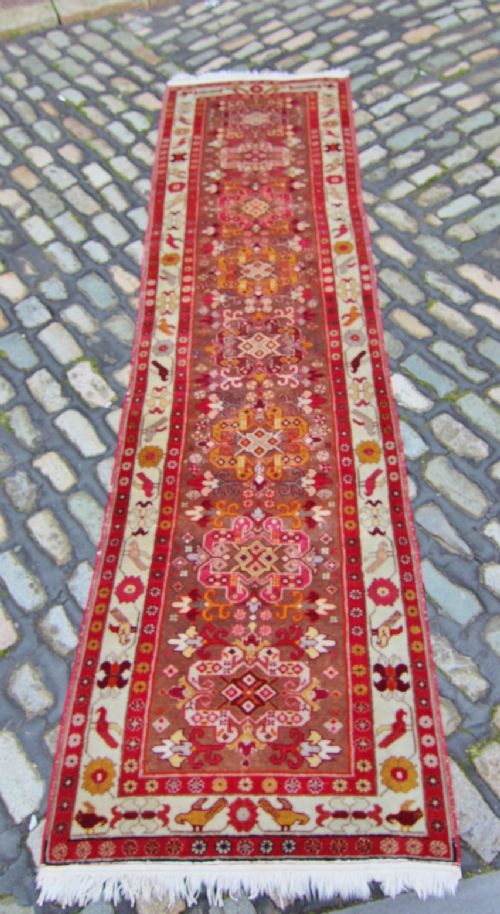
A large hallway rug anchors an extended floor space with the deep patterns of nineteenth and early twentieth century weaving.
Large Hallway Rug
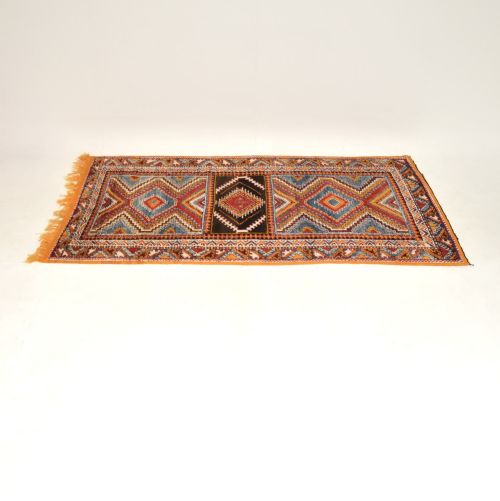
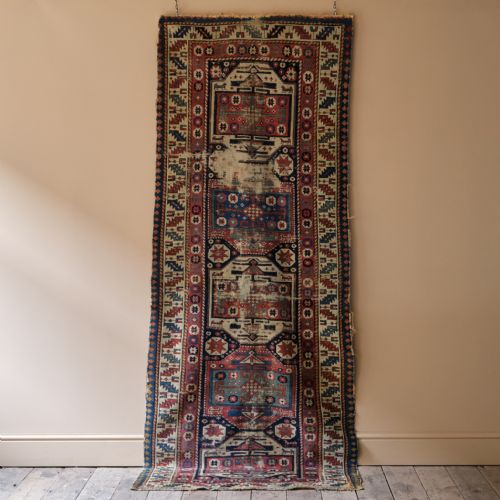
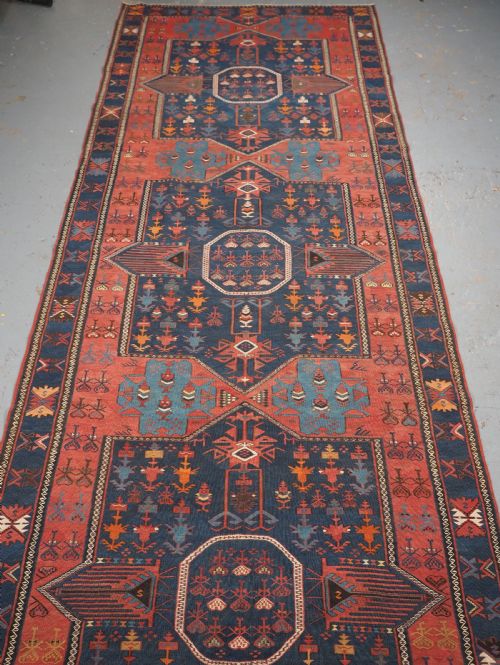
A large hallway rug takes the form of an elongated runner or a wide gallery carpet designed to span long domestic corridors and grand entrance spaces. These sizeable floor coverings establish a commanding presence in narrow architectural proportions through extended formats.
The selections available here span diverse origins including Persian tribal workshops, Caucasian weaving traditions, and Anatolian kilims. Pieces range from Kurdish Kelleh carpets and Serapi gallery formats to Akstafa runners and Ersari carpets.
Makers from the nineteenth century onward utilised traditional wool and cotton to construct these enduring textiles. Surviving examples demonstrate the robust qualities required for heavy foot traffic in domestic environments.
Materials and construction methods
Weavers constructed these carpets predominantly from handspun wool for the pile and foundation, often supplemented by cotton warps and wefts in specific regional traditions. Natural dyes provided the rich palette seen across Persian and Caucasian examples.
Knotting techniques and flatweave flatbed structures varied by region, from Kurdish Kelleh work to Anatolian kilim construction. These methods yielded dense, resilient textiles capable of enduring decades of heavy use.
Large Hallway Rug Retail Price Guide 2026
Typical asking prices for large hallway rug among the pieces listed under this phrase on Sellingantiques today, from the lower quarter to the upper quarter. They describe what is for sale here now, not the wider market.
Several nineteenth century weavers included large peacocks striding across their runners, apparently unconcerned about domestic bird etiquette.
Assessing quality in antique carpets
The integrity of the wool foundation and the density of the knotting dictate the structural longevity of a large hallway rug. Superior examples maintain crisp geometric motifs and balanced proportions across extended lengths.
Dye consistency and the complexity of tribal iconography, such as boteh patterns or star medallions, separate ordinary utility pieces from distinguished gallery carpets. The harmony of the aged palette reflects the skill of the original dyers.
The Large Hallway Rug Glossary
- Kelleh
- A large format long rug or carpet traditionally woven in Persian workshops, often possessing generous proportions suited to expansive rooms and corridors.
- Boteh
- A motif resembling a almond or twisted teardrop, frequently repeated across tribal and village carpets to symbolise life and eternity.
- Serapi
- A distinct regional style associated with large geometric carpets from the Heriz district, known for bold central medallions and balanced corners.
- Kilim
- A flatwoven textile produced without a pile, utilising slit-weave techniques to create sharp geometric patterns across Anatolian and Caucasian examples.
- Runner
- An elongated carpet format specifically proportioned for corridors, hallways, and narrow architectural spaces.
Large Hallway Rug: Frequently Asked Questions
Where should I place a large hallway rug?
These long carpets and runners suit entrance halls, extended corridors, and gallery spaces where furniture does not obscure the central design. They protect underlying wooden floors while introducing warmth and historical character.
Ensure the dimensions leave a consistent border of exposed floor around the edges to maintain balanced proportions within the room.
How do I care for antique wool carpets?
Vacuum gently using a suction-only attachment without a rotating brush roll to protect the aged wool pile and foundation threads. Professional cleaning should be undertaken periodically by specialists familiar with antique textiles and natural dyes.
Rotate the rug every year to distribute foot traffic evenly across the surface and prevent localized wear patterns.
What defines a Serapi carpet?
Serapi carpets originate from the Heriz region and are distinguished by large-scale geometric medallions, open fields, and harmonious secondary colours. Their bold designs offer a more architectural appearance than curvilinear city carpets.
These gallery-sized pieces were built for durability using sturdy wool foundations.
How do I identify Caucasian runners?
Caucasian runners typically feature crisp geometric medallions, stylised animal forms like peacocks, and stark primary colour contrasts. Akstafa examples often incorporate distinctive star motifs and elongated bird forms.
The use of saturated blues, reds, and ivory creates a striking visual rhythm down the length of the runner.