
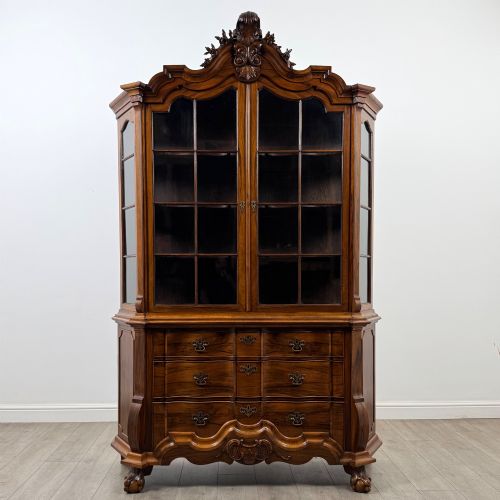
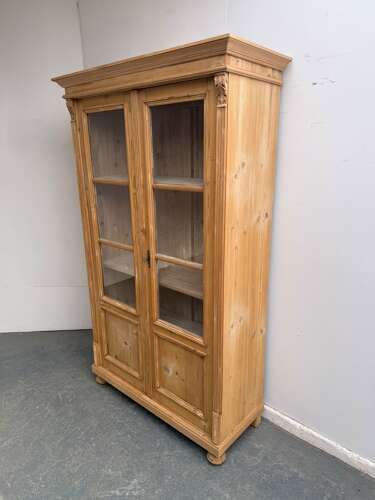
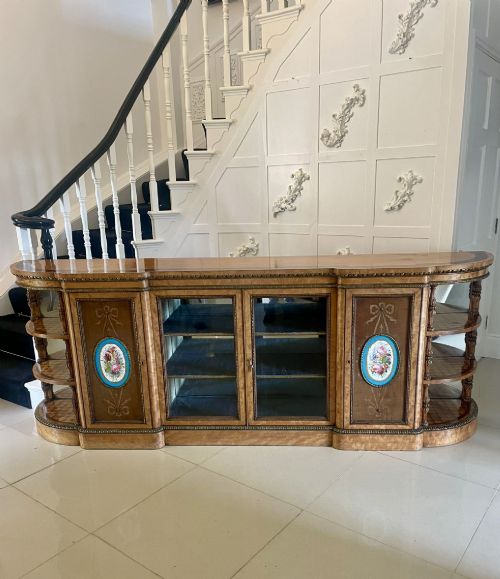
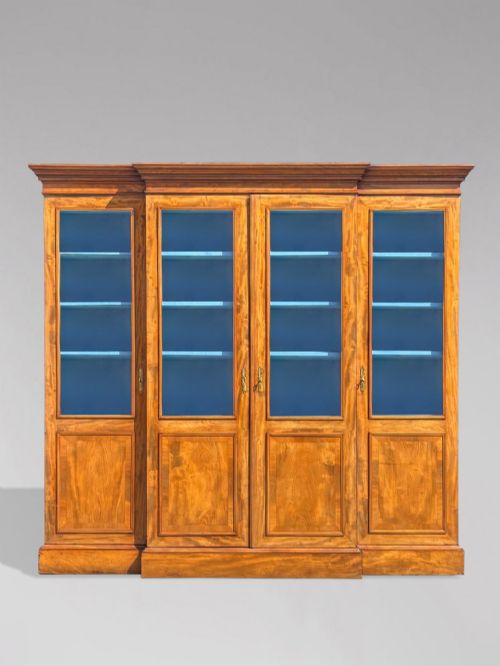


Large Glazed Vitrine
When you search for a large glazed vitrine, you are looking at substantial display pieces designed to showcase collections behind glass.
Large Glazed Vitrine
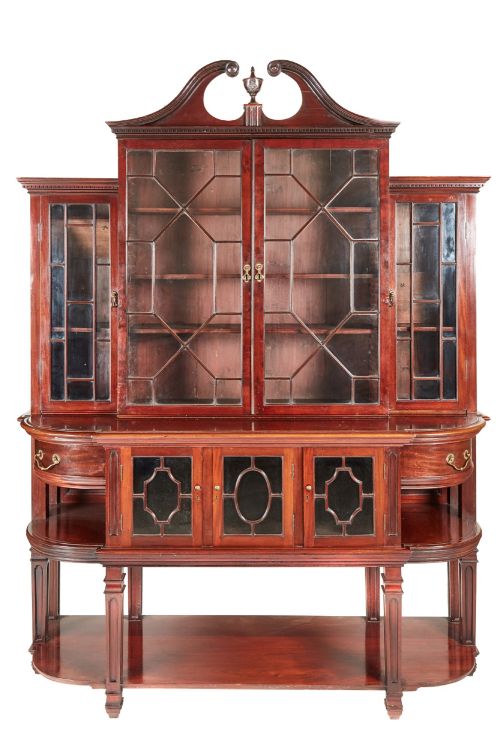
A large glazed vitrine brings together prominent display furniture spanning the nineteenth and twentieth centuries, predominantly featuring Victorian, Edwardian, and Art Deco periods.
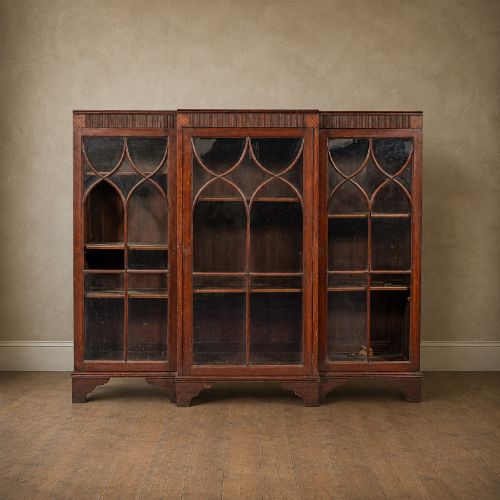
The selections on this page range from breakfront bookcases and bombé display cabinets to credenzas, sideboards, and shop display counters.
Origins stretch across English, French, Italian, and Chinese Chippendale styles, offering formal drawing room pieces alongside commercial counters.
Materials and Construction
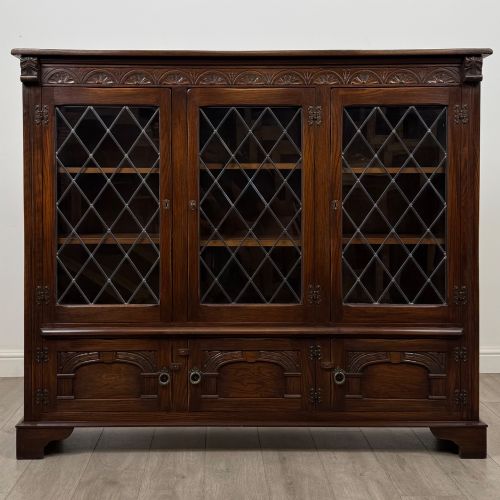
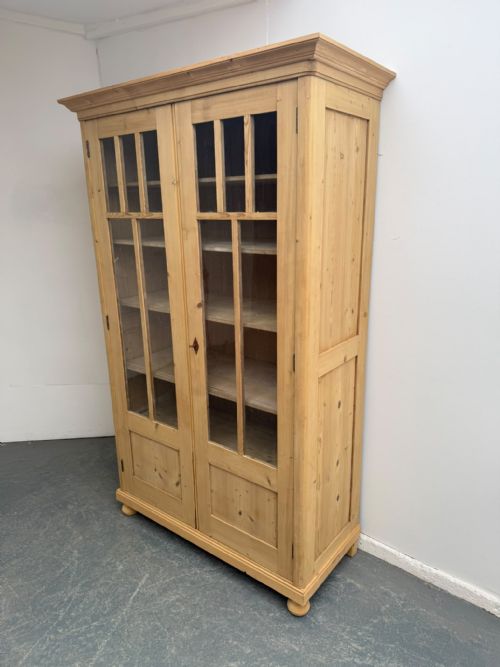
Timbers such as mahogany, walnut, kingwood, satinwood, oak, and pine provide the structural carcass for these large cabinets.
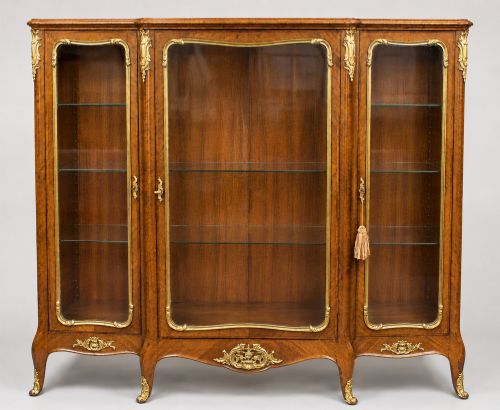
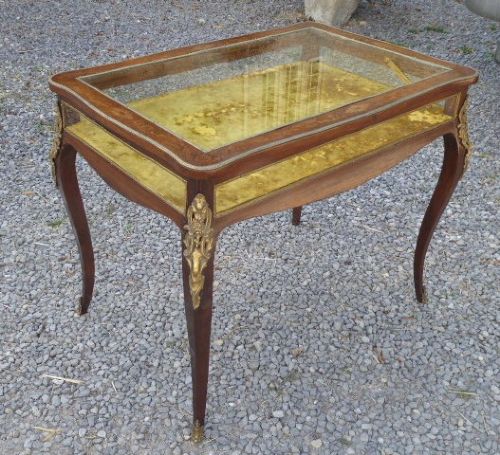
Glazing forms the primary viewing panels, supported by brass, ormolu, or gilt mounts, alongside intricate marquetry, floral inlays, and parcel-gilt details.
The listings span eight distinct periods, from 1800 through the 1930s.
Distinctions in Standard
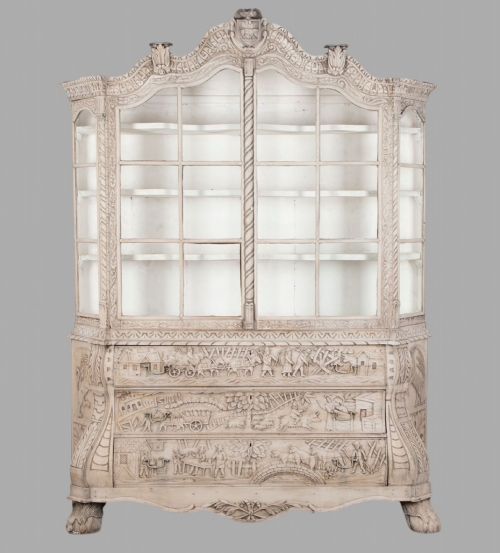
Quality separates through the ambition of the timber work, where dense burr walnut, intricate kingwood marquetry, and hand-carved oak outshine plain painted pine.
The presence of fine ormolu mounts, vernis martin panels, and precise astragal glazing indicates workshop production of a higher order.
E. Pollard & Co. Ltd.·Linke
The Large Glazed Vitrine Glossary
- Vitrine
- A glass-sided cabinet designed for displaying fine objects and porcelain. These pieces prioritize visibility through expansive glass panels.
- Ormolu
- Gilt-bronze mounts applied to furniture. This technique adds metallic ornament to the corners and frames of French and English cabinets.
- Marquetry
- Inlaid wood veneers forming decorative patterns. Craftsmen use contrasting timbers like satinwood and kingwood to create floral or geometric designs.
- Breakfront
- A cabinet front where the central section projects forward from the wings. This architectural form creates depth in large bookcases and display units.
- Bombe
- An outward-swelling, convex cabinet shape associated with continental furniture. This curving form requires specialised carpentry to maintain structural integrity.
Large Glazed Vitrine: Frequently Asked Questions
What is a large glazed vitrine used for?
These cabinets serve primarily to display and protect valuable collections, porcelain, and books behind glass doors.
They occupy prominent positions in drawing rooms and reception spaces to exhibit prized possessions.
How do I tell Victorian from Edwardian pieces?
Victorian cabinets often employ heavy dark timbers like mahogany with elaborate carving and Gothic or Rococo influences.
Edwardian examples tend towards lighter satinwood inlays and neoclassical revival styles.
Are these cabinets difficult to place in a room?
Due to their generous proportions, these pieces require adequate wall space and clearance for opening large glass doors.
Positioning them away from direct sunlight helps protect both the timber and the objects displayed inside.
What distinguishes French vitrines from English ones?
French cabinets frequently feature curved bombé shapes, extensive ormolu mounts, and kingwood marquetry.
English equivalents lean towards breakfront mahogany bookcases and structured architectural lines.