

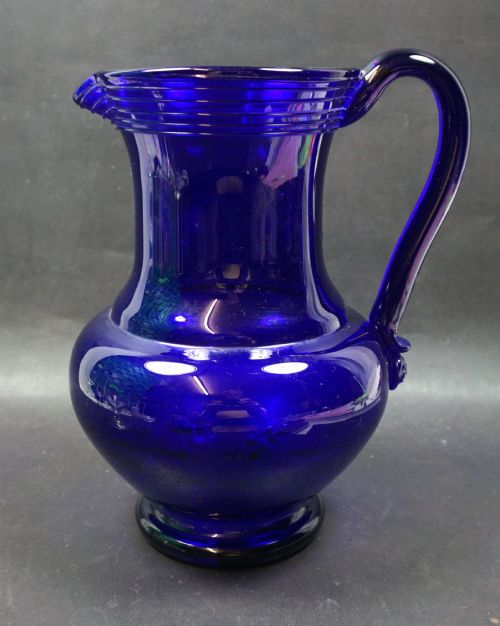
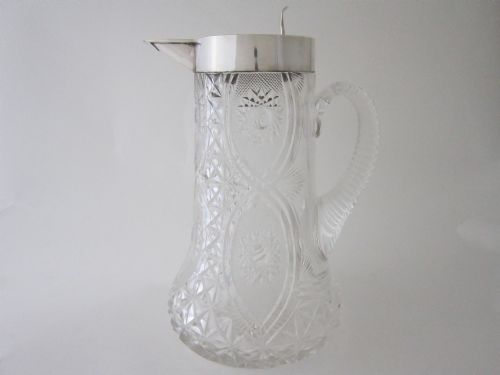
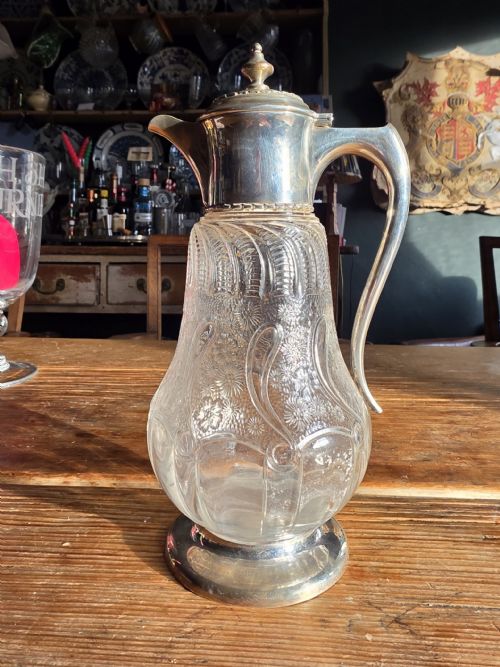
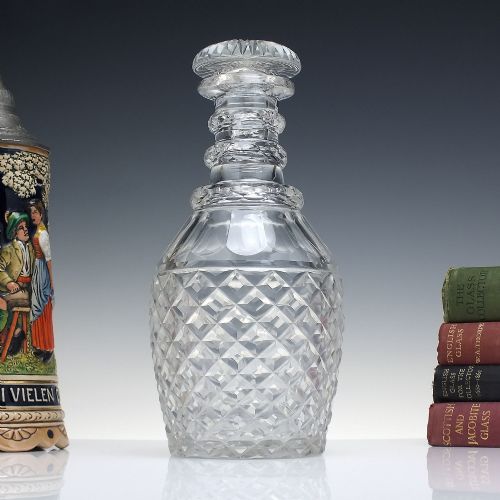
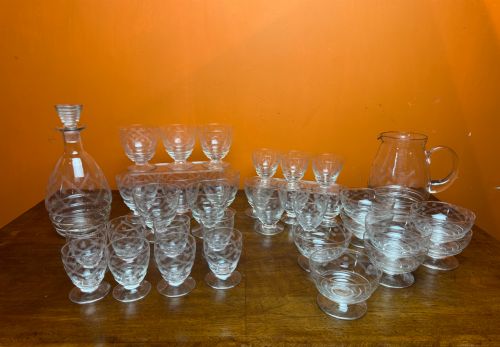
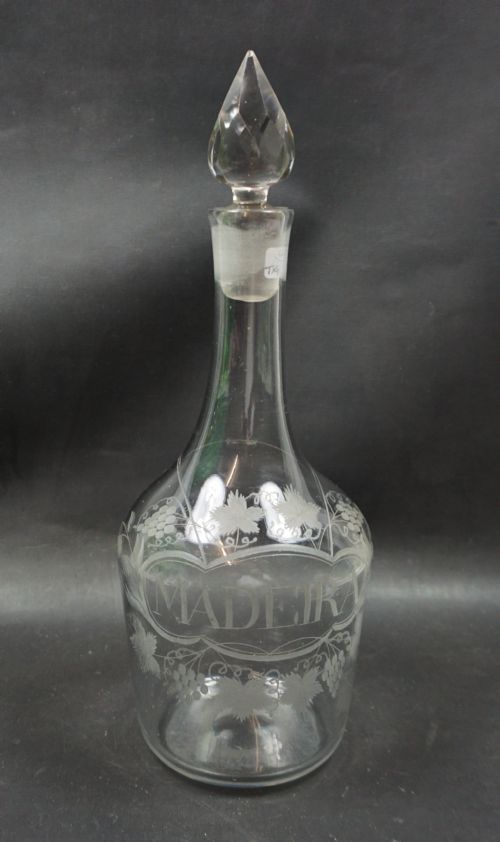


Large Glass Decanter
These large glass decanter pieces bring practical heft and visual clarity to a table, combining heavy vessels with silver mounts or cut patterns.
Large Glass Decanter
A large glass decanter takes many physical forms across the centuries, ranging from robust 18th-century blown vessels to ornate Victorian cut glass wine containers and Edwardian silver-mounted water jugs. Buyers searching for a large glass decanter will encounter shoulder decanters, spirit flasks, and spirit dispensers spanning Georgian, Victorian, and later periods.
The material composition varies from clear glass and lead crystal to coloured variants like cranberry glass and red crystal, frequently accompanied by sterling silver or silver-plated mounts. Formats extend beyond simple wine storage to include claret jugs, cruet sets, and three-decanter tantalus arrangements.
Materials and construction
Makers fashioned these vessels primarily through glass blowing and heavy cutting, shaping clear or coloured metal into forms capable of holding liquids securely. Surfaces often received detailed engraved decoration depicting labels or botanical motifs such as fruiting vines.
Metalwork played a structural and decorative role, with silversmiths adding cast or pierced sterling silver collars, stoppers, and mounts. Silver plate and silver gilt provided alternative metallic accents that complemented the transparency and refraction of the glass body.
Large Glass Decanter Retail Price Guide 2026
Typical asking prices for large glass decanter among the pieces listed under this phrase on Sellingantiques today, from the lower quarter to the upper quarter. They describe what is for sale here now, not the wider market.
Assessing quality
Quality rests in the weight of the glass, the crispness of the wheel-cut facets, and the integrity of any associated silver or silver-plated mounts. Superior examples demonstrate substantial proportions with clean, heavy lead crystal and secure, well-fitted stoppers or hardware.
The precision of engraved detailing and the presence of fully marked silver components elevate a piece above standard domestic ware. Integration between the glass body and metal mounts indicates higher manufacturing standards during periods such as the Victorian and Edwardian eras.
William Comyns·Hukin & Heath Ltd
The Large Glass Decanter Glossary
- Cut Glass
- Glass shaped and patterned by abrasive wheels, producing sharp facets that catch the light. This technique defines much of the Victorian output.
- Cranberry Glass
- A rich red-pink glass created by adding gold chloride to the molten batch during production. It appears frequently in Edwardian jugs and decanters.
- Sterling Silver
- An alloy containing 92.5 percent silver by mass, widely used for the collars, handles, and stoppers of finer decanters. British pieces typically bear standard hallmarks.
- Silver Plate
- A base metal substrate coated with a thin layer of pure silver. It offered a durable, brighter finish for cruet sets and mounts at a lower cost than solid silver.
- Lead Crystal
- Glass containing a high percentage of lead oxide, which increases the weight, refractive index, and clarity of the vessel. It forms the heavy base of many antique decanters.
- Claret Jug
- A specialised pouring vessel designed specifically for serving red wine at the table. These often combine blown glass bodies with hinged silver lids and mounts.
Large Glass Decanter: Frequently Asked Questions
How do I date a large glass decanter?
Dating relies on examining the pontil mark on the base, the style of any engraved decoration, and the shape of the neck and shoulders. Earlier 18th-century examples often display rough pontils and simpler blown forms, while Victorian and Edwardian pieces show heavier machine cutting or silver hallmarks.
Silver mounts provide precise chronological markers through London or provincial assay office stamps and date letters. Comparing the overall weight, glass tint, and stopper fitment against documented periods helps confirm the era of manufacture.
How should I clean antique glass decanters?
Cleaning requires warm water and mild detergent, avoiding sudden temperature changes that can crack aged glass. Stubborn internal residue responds best to traditional methods using non-abrasive cleaning beads or diluted vinegar.
Silver mounts should be polished separately with a soft cloth, keeping cleaning pastes away from the glass surface to prevent staining in engraved crevices.
Can I use these decanters for daily service?
These vessels remain entirely functional for serving wine, water, or spirits at the table. Heavy lead crystal and solid silver mounts are robust enough for regular handling, provided they are lifted by the body rather than the handle or stopper alone.
Careful washing by hand ensures the silver mounts and engraved glass remain undamaged during routine use.