


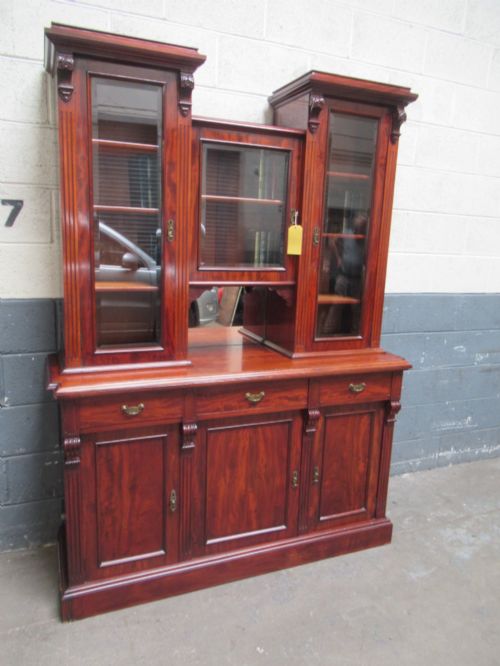
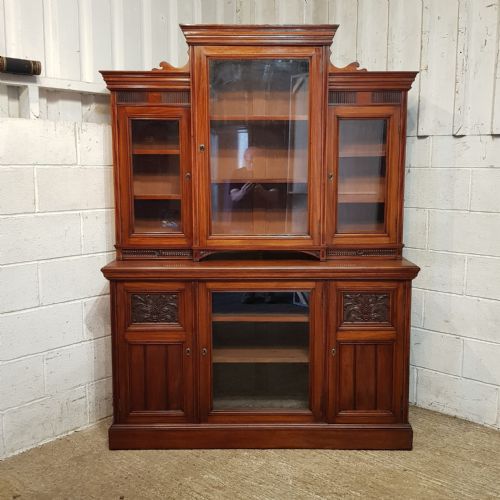
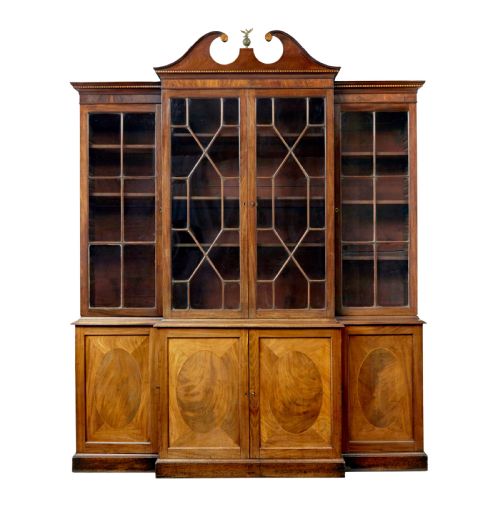
Large Glass Cabinet
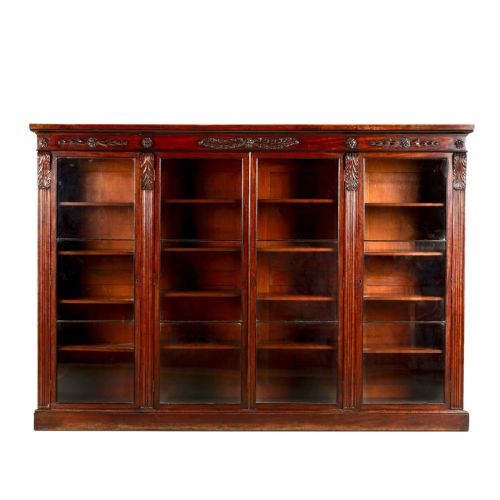
A large glass cabinet holds a room's worth of volumes or porcelain behind timber-framed panes, offering presence and practical storage.
Large Glass Cabinet
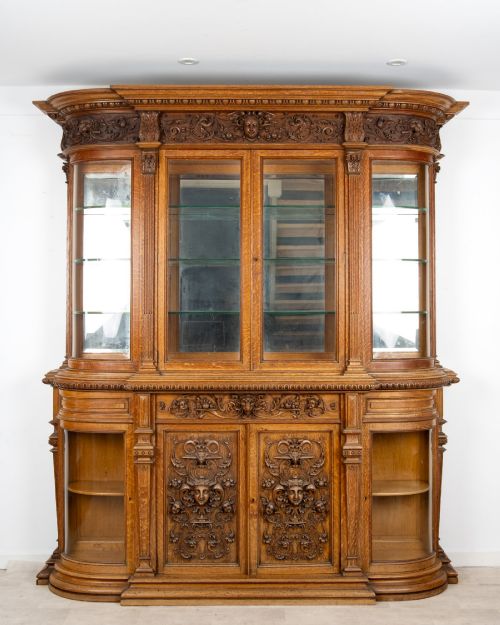
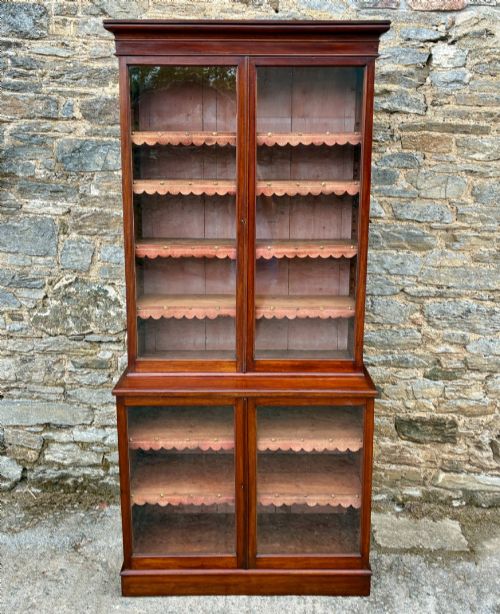
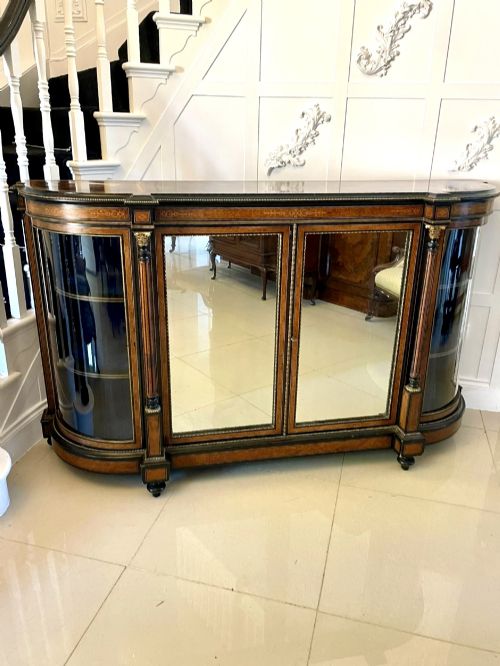
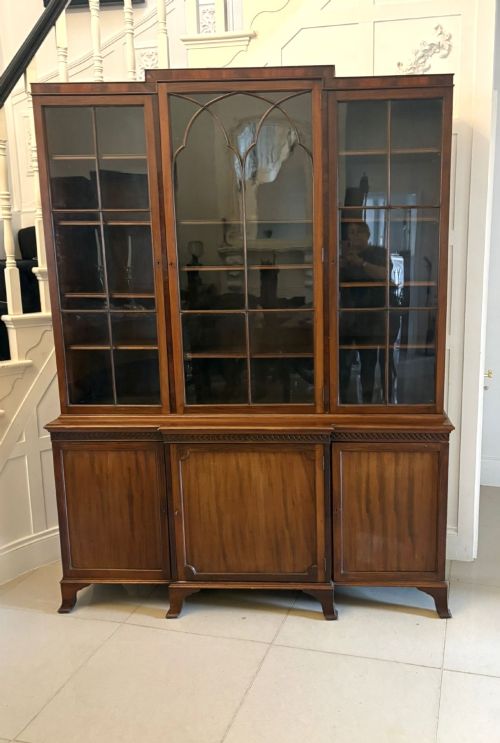
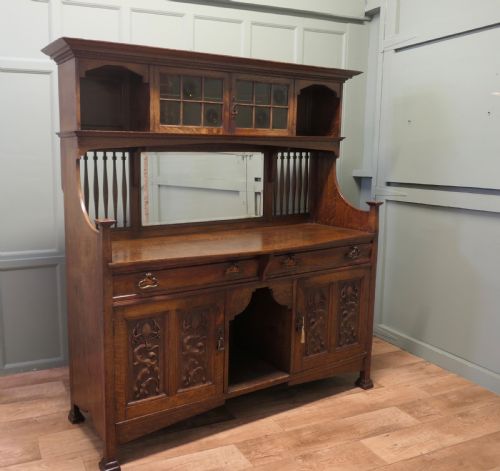
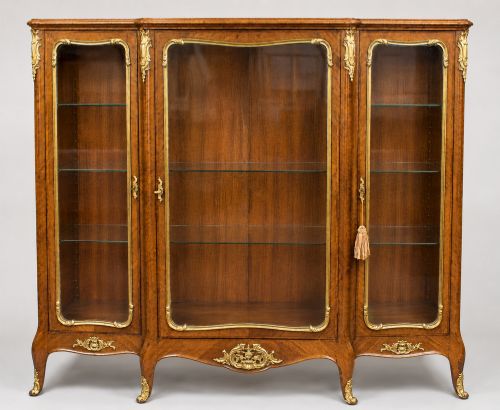
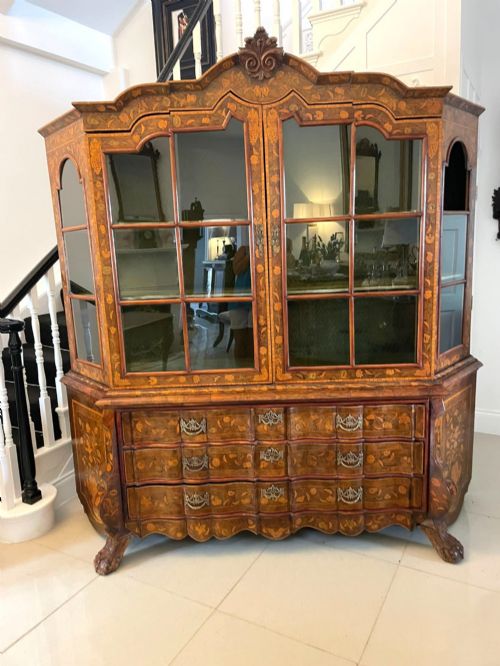
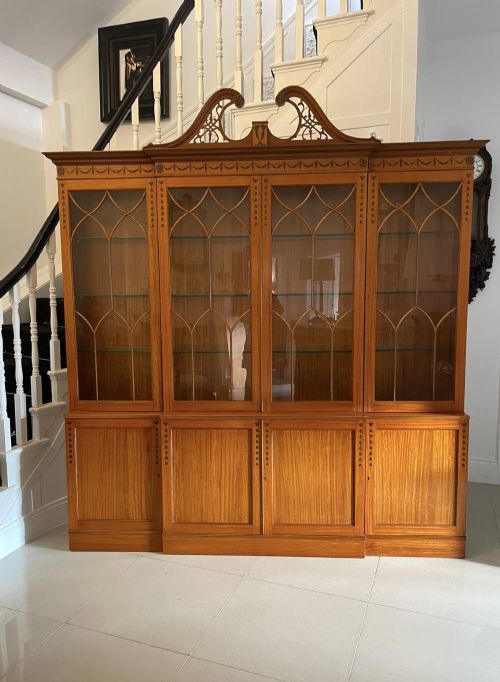
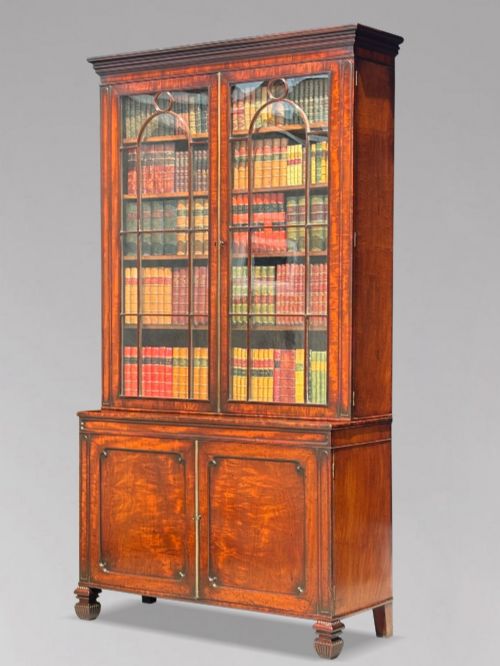
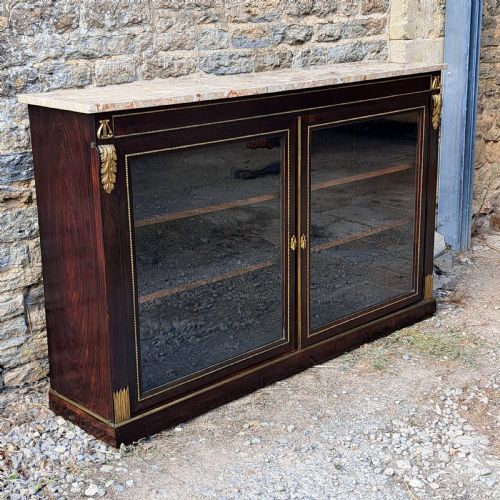
A large glass cabinet encompasses tall breakfront bookcases, glazed display vitrines, and sideboard credenzas designed to display and protect valuable contents. These pieces span the nineteenth and early twentieth centuries, drawing on Victorian, Edwardian, and Art Deco aesthetics.
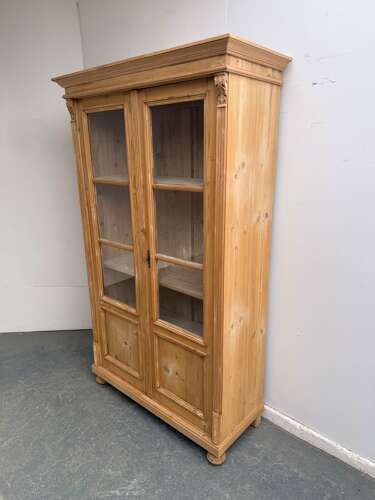
Bookcases and display cabinets form the majority of the current selection, constructed in mahogany, walnut, and oak. They range from formal library breakfronts with astral glazing to simpler pine and shop display counters.
Origin points include English workshops, French cabinet makers, and specialist regional manufacturers working in revivalist or contemporary modernist styles.
Materials and Construction
Cabinet makers utilised dense primary timbers such as mahogany, walnut, and oak, often applying veneers of burr walnut, amboyna, or satinwood to visible surfaces. Inlays of marquetry, floral motifs, and contrasting stringing provide decorative detail across door panels and friezes.
Glazing relies on individual glass panes held within wooden bars or leaded cames, paired with brass hardware, ormolu mounts, and locks. Structural integrity depends on sturdy dovetail joints in drawer construction and robust timber carcases to support heavy glass doors.
Large Glass Cabinet Retail Price Guide 2026
Typical asking prices for large glass cabinet among the pieces listed under this phrase on Sellingantiques today, from the lower quarter to the upper quarter. They describe what is for sale here now, not the wider market.
Several pieces include shop display counters, proving that commercial retail fittings make surprisingly handsome kitchen islands for the home.
Markers of Distinction
The refinement of the timber selection and the precision of the marquetry inlay dictate the standing of a piece, with figured burr veneers and intricate floral banding separating standard production from exceptional work. Proportions remain crucial, as well-balanced breakfront silhouettes and crisp carved mouldings reflect deliberate design rather than mass manufacture.
Original glass panes, untouched brass or ormolu mounts, and intact interior shelving elevate a cabinet's integrity. The fluidity of the door action and the seamless fit of the timber components demonstrate the original joiner's skill.
Shapland and Petter·Wylie and Lochhead·H and L Epstein
The Large Glass Cabinet Glossary
- Astral glazed
- Refers to glass doors divided into smaller panes by wooden glazing bars, commonly found on bookcases to create an orderly grid.
- Breakfront
- A cabinet design where the central section projects forward from the flanking wings, adding architectural depth to large pieces.
- Credenza
- A low sideboard or cabinet originating in Italy, often fitted with central doors and curved glass ends for display.
- Vitrine
- A glass-sided display cabinet designed specifically for the exhibition of porcelain, curiosities, or fine objects.
- Marquetry
- The art of applying decorative veneer pieces in geometric or pictorial patterns onto a solid timber carcase.
Large Glass Cabinet: Frequently Asked Questions
How do I style a large glass cabinet?
Balance heavy book collections with smaller decorative objects, leaving breathing space between shelves to maintain an open look.
Keep taller volumes on lower shelves and lighter items near eye level to ground the visual weight of the timber.
Where should I place a heavy wooden cabinet?
Position the piece against a stable interior wall away from direct sunlight to protect vulnerable wood veneers and antique glass.
Ensure the floor bears the weight evenly, particularly with large mahogany or oak structures holding dense book collections.
How do I clean antique glass and wood?
Dust timber surfaces regularly with a soft, dry cloth and apply occasional high-grade beeswax to nourish the polished grain.
Clean glass panes with a mild solution on a cloth rather than spraying directly, preventing moisture from reaching old wooden glazing bars.
Are these cabinets suitable for modern homes?
The generous proportions suit dining rooms, libraries, or large living spaces needing substantial storage and display capacity.
Mixing period cabinets with contemporary interiors creates a striking contrast that highlights the craftsmanship of the timber.