








Large Gilt Framed Canvas
When a large gilt framed canvas catches the eye, it brings the scale and warmth of historic oil paintings directly into a room.
Large Gilt Framed Canvas
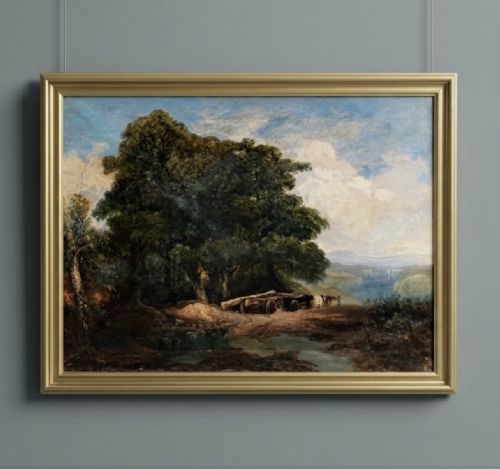
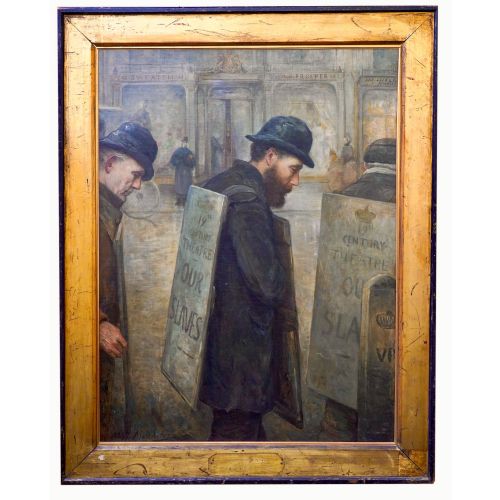
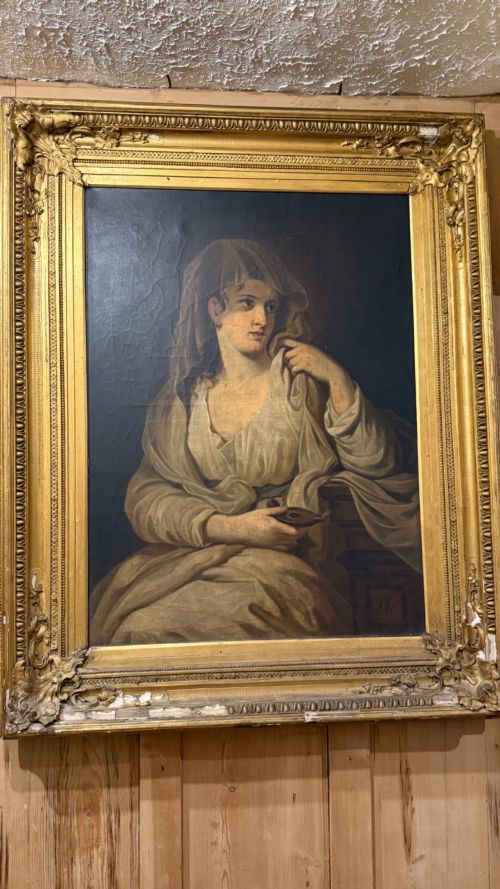
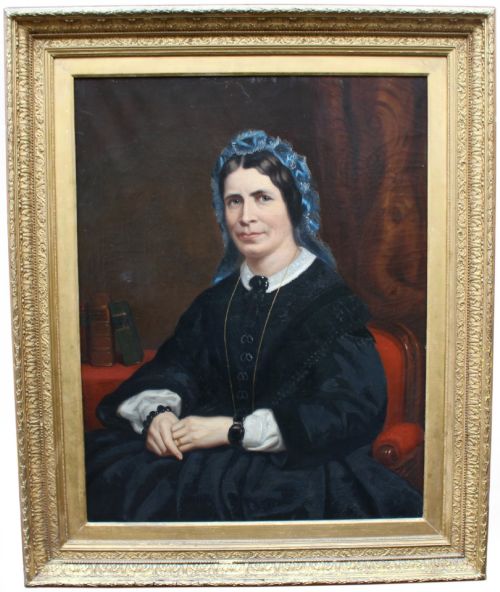
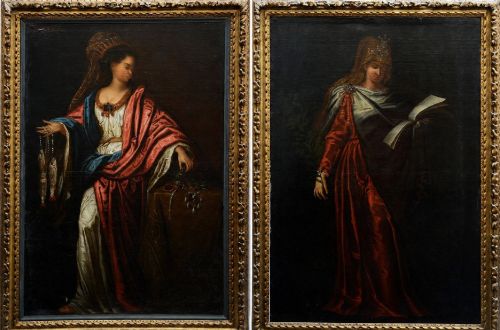
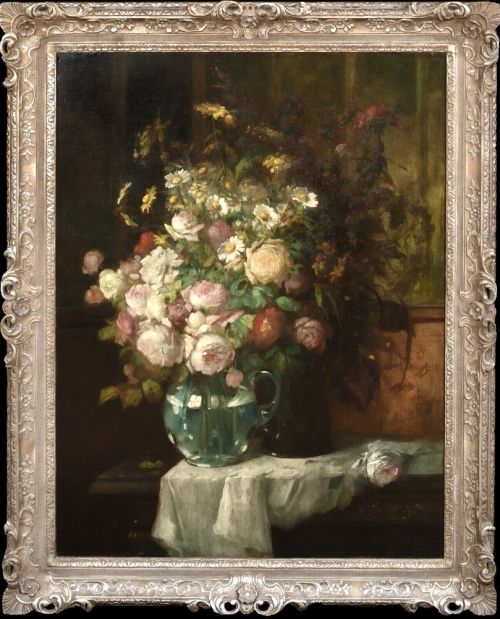
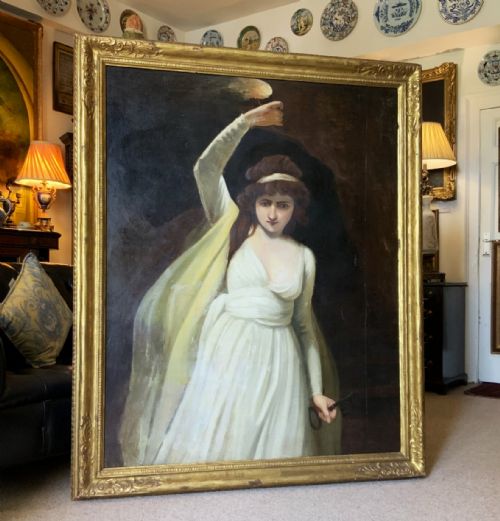
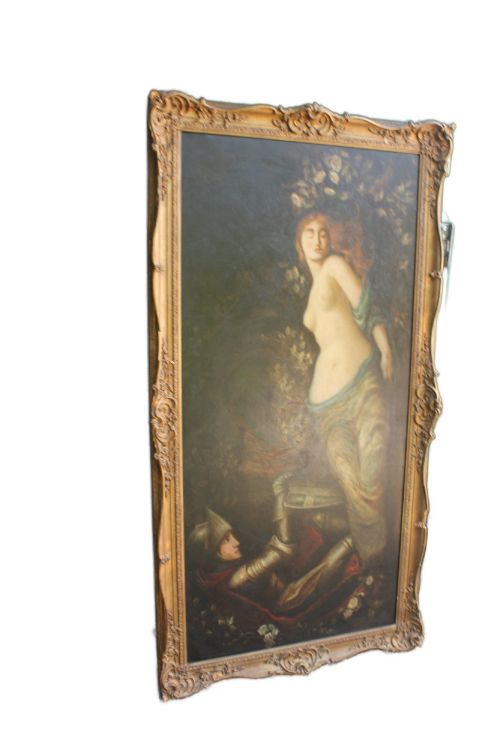
A large gilt framed canvas brings together substantial oil paintings on fabric and their original or period wooden surrounds. These works span centuries of fine art production, ranging from intimate portraits and rural landscapes to grand maritime scenes and still life arrangements.
The pieces on this page are dominated by nineteenth-century examples alongside eighteenth-century works and mid-century modern compositions. Buyers encounter historical portraits, pastoral scenes, and continental landscapes housed in substantial gilded wooden surrounds.
Subjects vary widely from domestic genre paintings and romantic landscapes to botanical still lifes and animal studies. Each piece combines pictorial depth with decorative presence, dominated by the rich sheen of gold leaf applied to carved wooden mouldings.
Materials and construction methods
The foundation of these works is woven canvas stretched across a wooden strainer or mortise-and-tenon stretcher frame, painted with oil-based pigments derived from ground minerals and plant oils. This combination allows for rich colour blending, subtle tonal shifts, and enduring surface durability.
Surrounding the canvas is a heavy wooden moulding, frequently built from pine or hardwood, coated in layers of gesso to provide a smooth surface for gilding. Artisans apply thin sheets of gold leaf or metal leaf over the prepared ground, often burnishing sections to create contrasting matte and reflective finishes.
Several Victorian canvases capture livestock and domestic pets staring intently outward, ensuring historical sheep and horses share the room with you.
Distinctions in quality and execution
Quality rests in the harmony between the painter's brushwork and the joinery of the surrounding housing. Superior canvases display confident draughtsmanship, anatomical precision, and balanced light, while finer frames exhibit hand-carved ornamentation rather than moulded composition paste.
The preservation of the original gilt surface dictates much of the visual impact. Pieces retaining their early layers of gold leaf without heavy over-painting or excessive re-gilding hold greater material integrity and historical continuity.
Sir Joseph Noel Paton·Richard Sebastian Bond·Felix Stone Moscheles·Georges de La Tour·Sir Joshua Reynolds·Eric Robertson·Thomas Smythe·W.R. Waters·Konstantin Stoitzner·John Opie RA·James Hamilton ARSA·Harold Knight RA·Erich Mercker·Robert Cleminson·Alexandre Le Bihan·William Henry Mander·Thomas Sidney Cooper·Amile Coppieters·Philipp Ferdinand de Hamilton·G.W. Butland
The Large Gilt Framed Canvas Glossary
- Gesso
- A plaster-like mixture applied to wooden frame mouldings as a smooth base for subsequent gilding. This mixture provides the crisp foundation necessary for intricate decorative details.
- Giltwood
- Timber carved and covered with thin sheets of gold leaf. It forms the primary decorative border for substantial historic paintings.
- Stretcher frame
- The internal wooden structure that keeps the fabric taut. Traditional versions feature expandable corners using wooden keys.
- Impressionism
- A nineteenth-century painting style focusing on loose brushwork and the shifting qualities of natural light. Artists working in this manner prioritized immediate visual impressions over rigid academic finish.
- Provenance
- The documented history of ownership associated with an artwork. Clear records help establish authenticity and past exhibition history.
Large Gilt Framed Canvas: Frequently Asked Questions
How do I hang a heavy framed canvas safely?
Substantial historic artworks require professional picture hooks rated for heavy loads, secured directly into wall studs or masonry using appropriate fixings.
Distributing the weight across two anchor points using steel wire or heavy-duty D-rings keeps the piece level and prevents strain on the original frame corners.
Should I clean the surface of an old oil painting?
Surface dust can be removed gently with a very soft, dry brush, but accumulated grime and discoloured varnish require professional conservation.
Attempting to clean the pigment layer with household solutions risks permanent damage to the delicate oil glazes beneath.
How do I identify the period of a gilt frame?
Frame styles shifted over time, moving from the elaborate, deep relief carvings of the eighteenth century to the flatter, wider profiles popular in later decades.
Inspecting the corner joins, the composition of the gesso layer, and the type of wood utilised beneath the gold leaf helps determine the era of manufacture.
What environment is best for canvas art?
Paintings on canvas respond to fluctuations in relative humidity and temperature by expanding and contracting, which can cause the paint layer to crack.
Keeping works away from direct sunlight, radiators, and damp exterior walls preserves both the fabric support and the gilded wooden surround.