




Large Geometric Rug
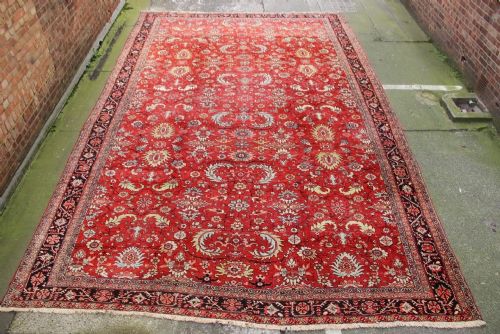
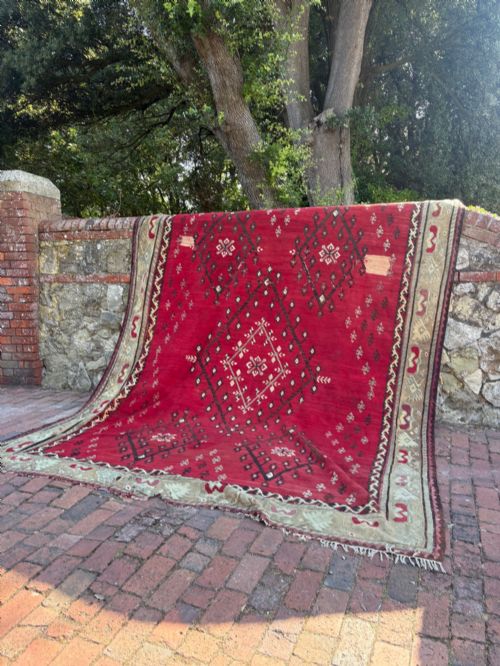
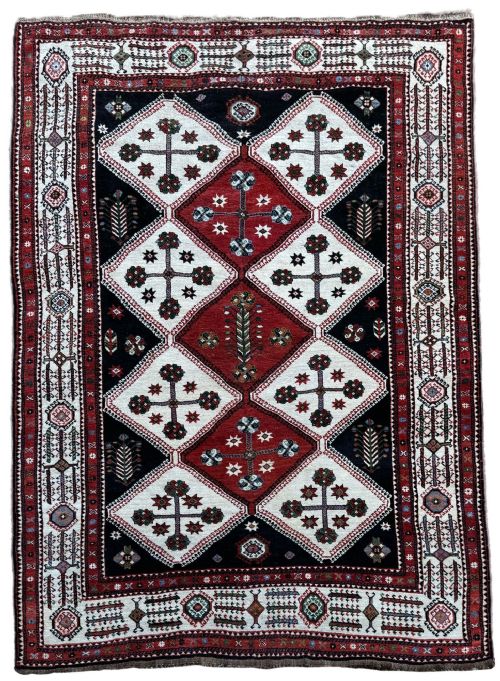
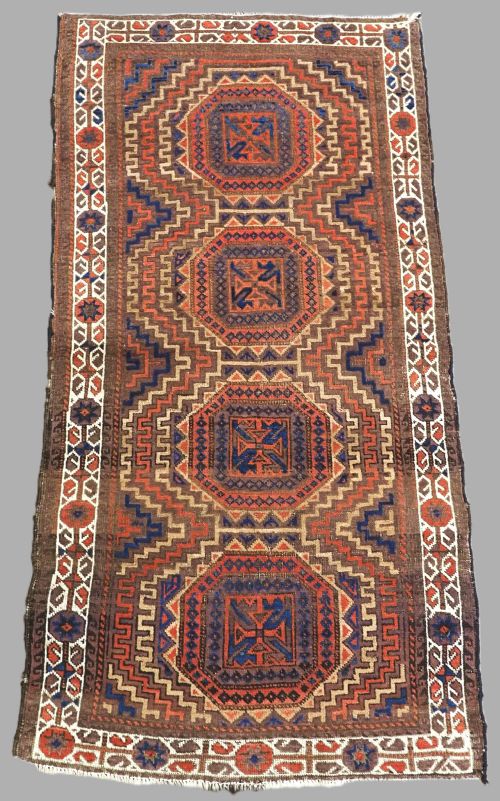
A large geometric rug delivers strong, structured pattern to a floor through traditional weaving traditions originating across Persia, Anatolia and the Caucasus.
Large Geometric Rug
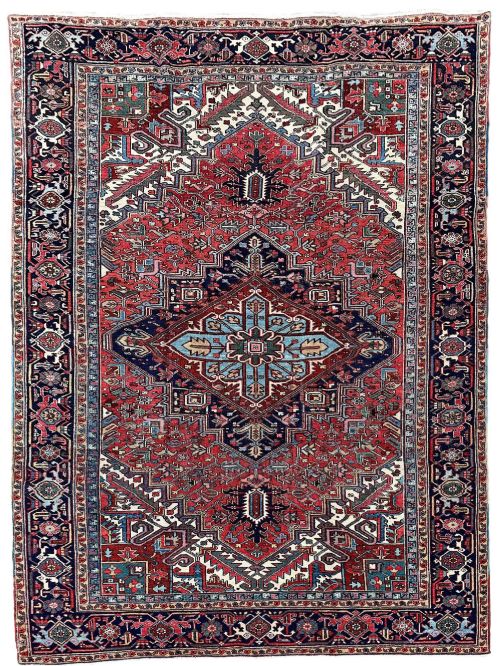
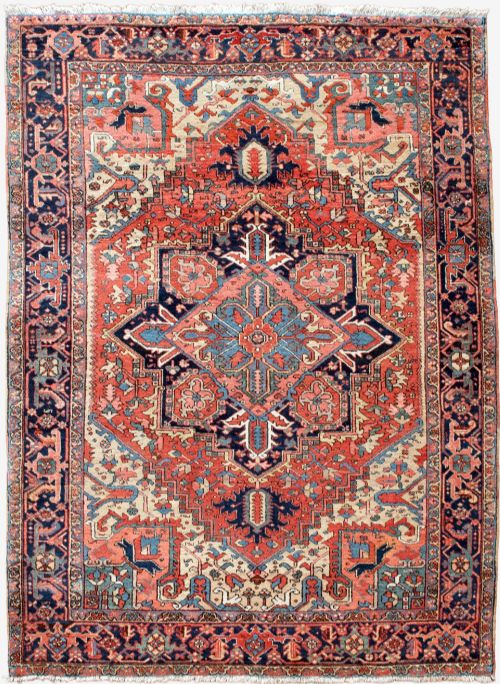
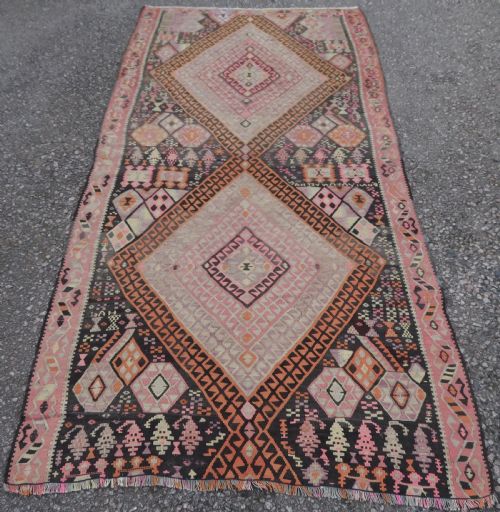
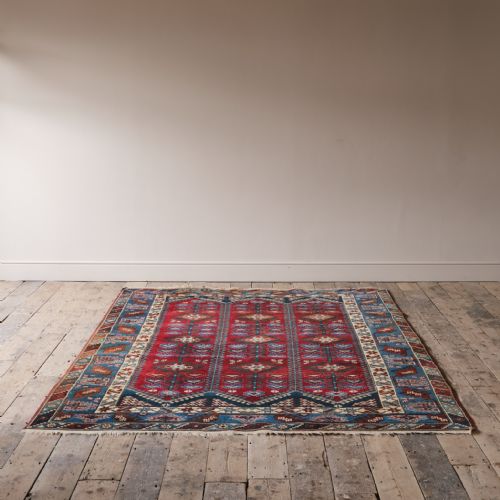
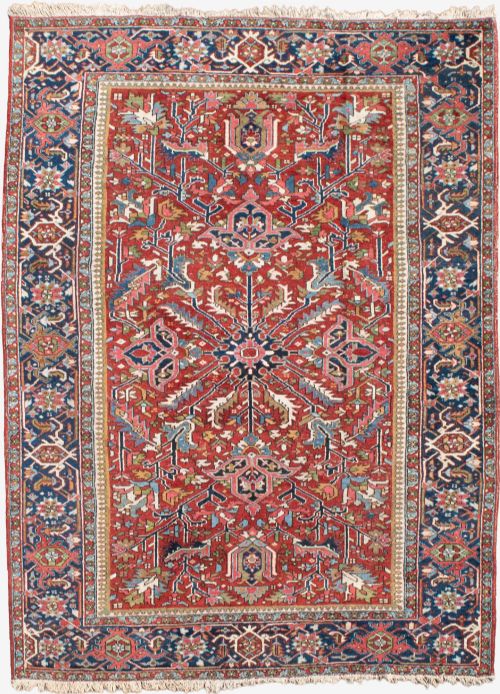
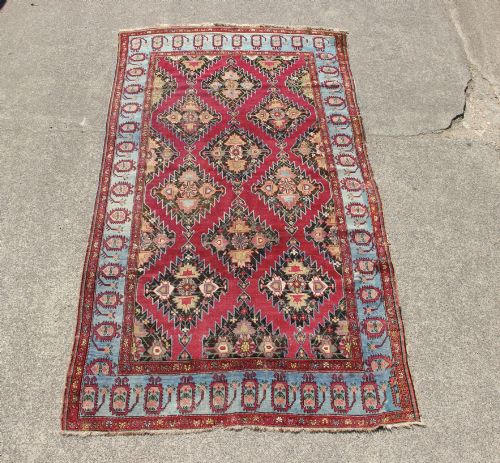
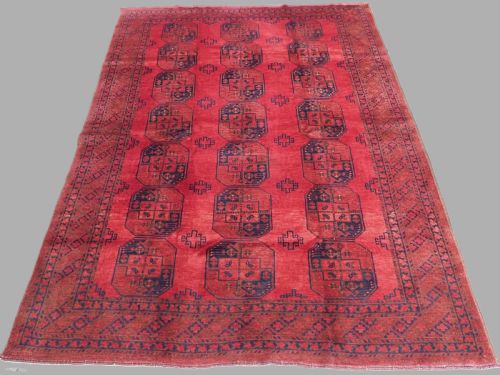
When someone searches for a large geometric rug, they encounter substantial floor coverings built around repeating motifs, medallions and angular lines. These textiles span from the late nineteenth century through to the middle of the twentieth century, bringing considerable floor presence to interiors.
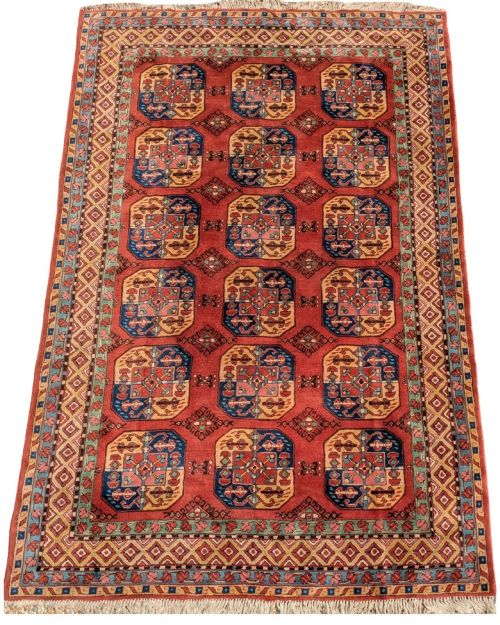
The most common examples on this page are Heriz carpets from north-west Persia, alongside pieces originating from tribal workshops in Afghanistan, Anatolia and the Caucasus. These rugs utilise hand-knotted wool and flatweave techniques to create enduring floor coverings with bold visual impact.
How they were made
The foundation of these rugs rests primarily on durable wool and cotton materials, utilised for both the pile and the underlying warp and weft threads. Weavers knotted or flatwove the fibres by hand on vertical looms, building up dense structures designed to withstand heavy daily use.
Natural and early aniline dyes provided the deep red, ivory and sky blue colour palettes seen across the listings. Artisans tied individual knots or worked flatweave structures closely to secure the angular patterns that define these regional styles.
Listings feature wool and cotton materials spanning the nineteenth and twentieth centuries, predominantly originating from Persian Heriz, Anatolian and Afghan tribal workshops.
What varies in quality
Knot density and structural tightness set the finer examples apart from coarser village work, influencing how sharply the geometric angles render across the field. Higher knot counts allow for crisper medallion outlines and greater resilience under foot traffic.
The balance of the dye palette and the integrity of the wool foundation determine the visual depth of the piece. Superior specimens retain rich, saturated colours and even wear across the field, maintaining structural stability throughout the carpet.
The Large Geometric Rug Glossary
- Heriz
- A style of Persian carpet originating from north-west Persia, known for bold central medallions and strong geometric structure. These rugs often feature durable foundations suited to large rooms.
- Kilim
- A flatweave textile produced without a pile, resulting in a thin, tapestry-like fabric. These pieces rely on interlocking weft threads to form sharp geometric patterns.
- Gul
- A repeating octagonal or medallion motif frequently found in tribal rugs from Afghanistan and Turkmenistan. Each design often signifies a specific weaving group or clan.
- Warp
- The vertical threads stretched tightly on the loom before knotting begins. They form the structural skeleton of the rug and often appear as fringe at either end.
Large Geometric Rug: Frequently Asked Questions
Where should I place a large geometric rug?
These sizable carpets suit principal reception rooms, dining areas or wide hallways where their bold patterns can anchor the furniture. Their robust construction handles high foot traffic while defining specific zones within an open interior.
Ensure you measure the floor space accurately to leave an even border of exposed timber or stone around the edges of the carpet.
How do I care for an antique wool rug?
Regular gentle vacuuming without a rotating brush roll prevents dust accumulation within the wool pile. Professional cleaning suited to antique textiles preserves the lanolin and dye stability.
Keep the rug out of direct, prolonged sunlight to prevent fading of the natural red, ivory and blue tones over time.
What is the difference between a carpet and a kilim?
Carpets feature a thick, hand-knotted wool pile that provides a plush surface under foot. This construction involves tying thousands of individual yarn snippets to the foundation.
Kilims are flatwoven without any pile, creating a lightweight, reversible textile with a smooth surface and crisp geometric boundaries.
How do I date an antique geometric rug?
Dating relies on examining the specific wool quality, dye composition, structural tightness and regional design characteristics. Pieces from the nineteenth century often display softer colour palettes and finely spun foundations.
Stylistic shifts toward simpler borders and brighter hues frequently point toward production dates in the early twentieth century.