

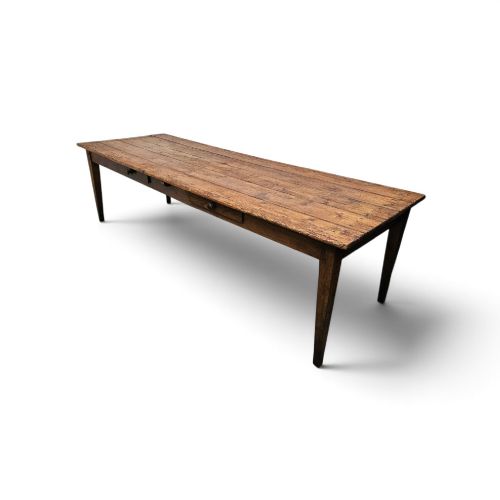
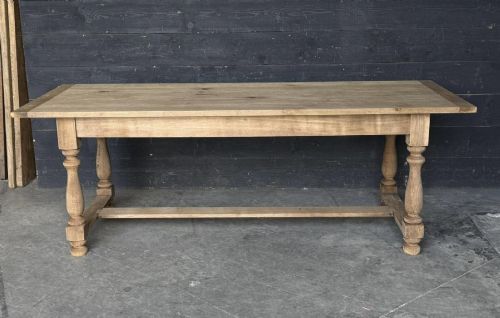
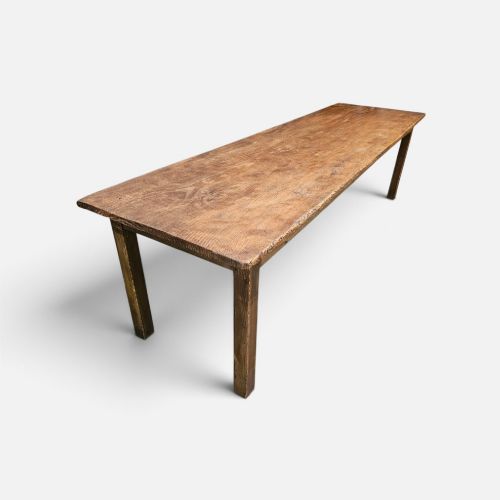
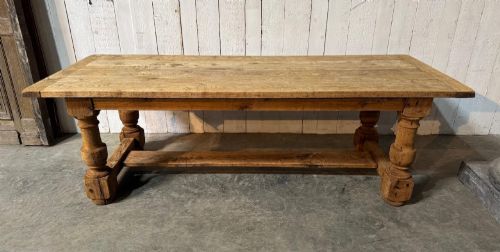
Large French Kitchen Table
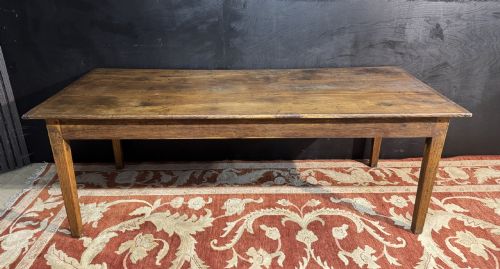
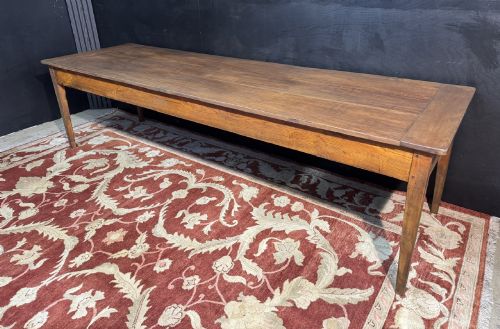
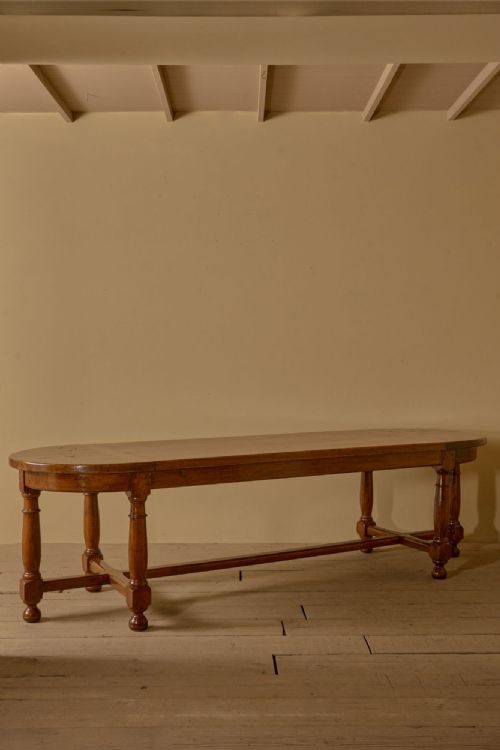
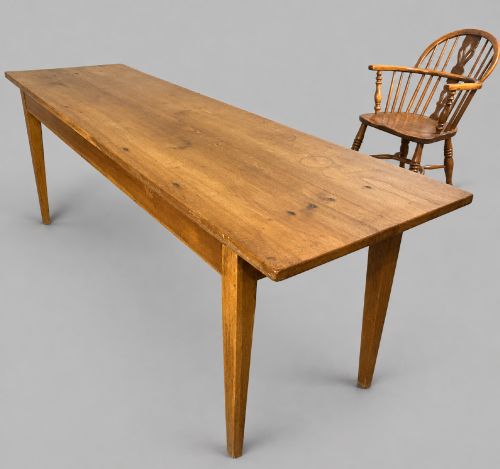
A large french kitchen table anchors a room with utility and presence, offering the expansive timber surface needed for daily life and communal gathering.
Large French Kitchen Table
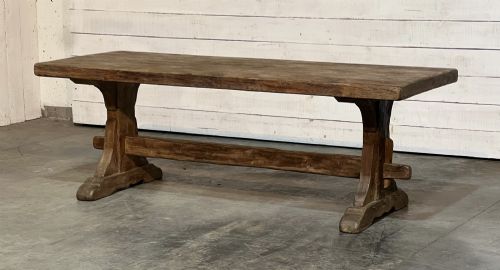
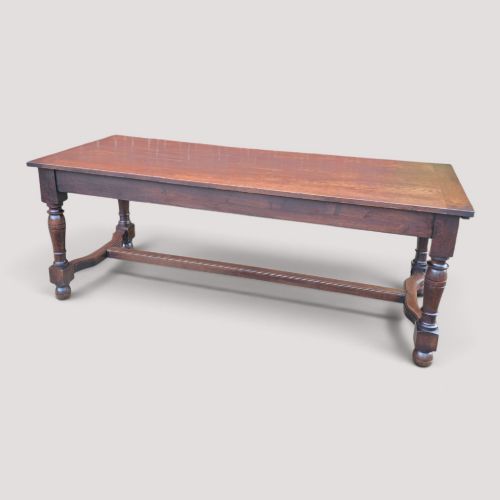
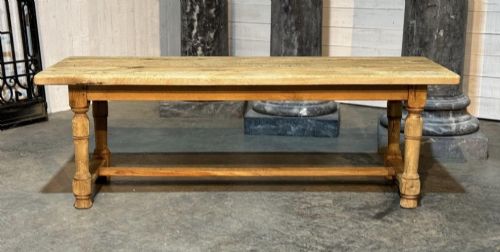
A large french kitchen table draws on regional traditions of utility, emerging in forms like refectory tables, drapers tables, and prep tables designed for heavy domestic labour. These pieces frequently appear in styles such as French provincial, rustic farmhouse, and French country, reflecting rural workshops rather than urban salons.
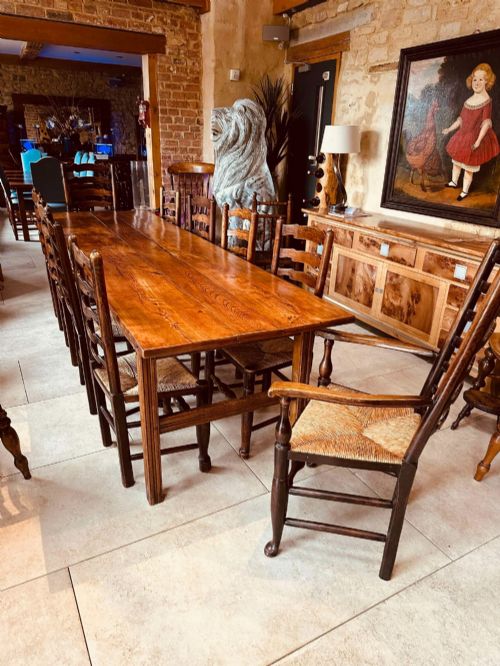
The pieces on this page span the nineteenth and early twentieth centuries, alongside occasional Georgian and Edwardian examples. Dining tables and extending versions predominate, often measuring three metres or more in length to accommodate large gatherings.
Makers remain largely anonymous, as these utilitarian boards were built by regional carpenters for function rather than signature. Surviving examples demonstrate the honest construction required for demanding kitchen environments.
Materials and Construction
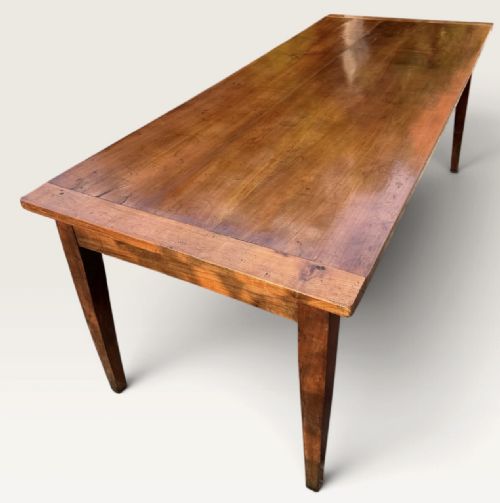
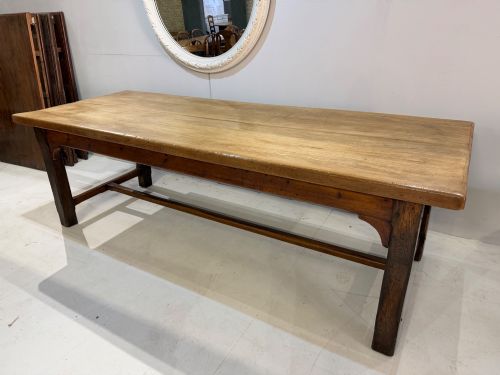
Construction relies on solid native timbers, with oak, pine, fruitwood, and cherrywood appearing most frequently alongside elm, chestnut, and sycamore. Carpenters selected these hardwoods and softwoods for their structural resilience, utilising thick plank tops supported by sturdy legs and robust stretchers.
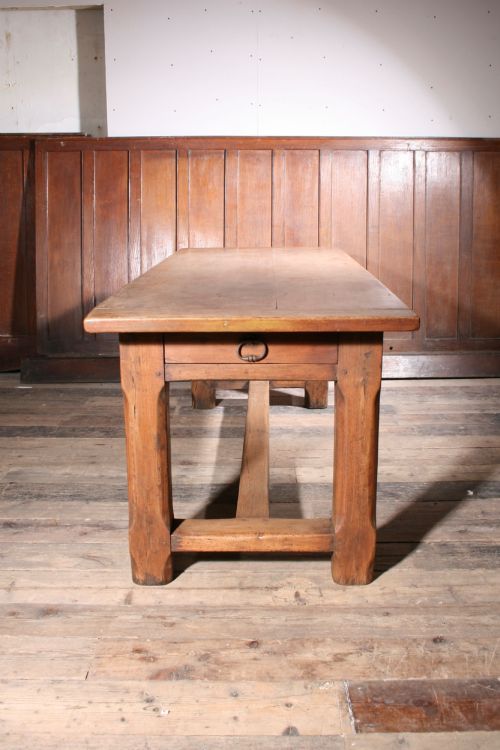
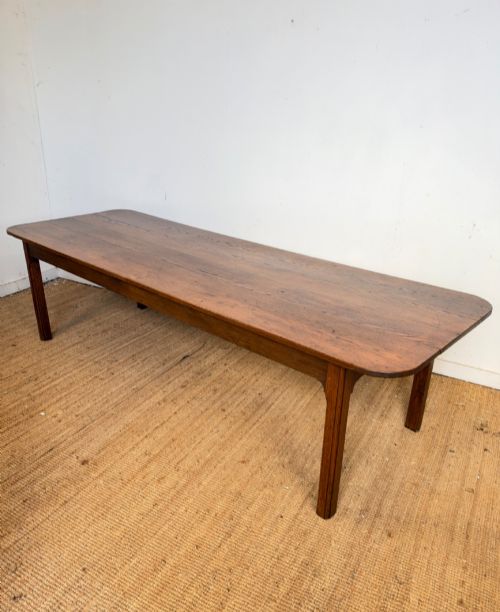
Many examples incorporate practical additions such as drawers for utensils or double extending mechanisms to expand the surface area. Surfaces range from naturally aged fruitwood and warm cherry to bleached pine and oak, showing the marks of decades of preparation and dining.
Large French Kitchen Table Retail Price Guide 2026
Typical asking prices for large french kitchen table among the pieces listed under this phrase on Sellingantiques today, from the lower quarter to the upper quarter. They describe what is for sale here now, not the wider market.
Listings feature timbers including oak, pine, fruitwood, cherrywood, elm, and chestnut across the nineteenth and early twentieth centuries.
Proportion and Timber Selection
Quality rests primarily in the choice of timber and the integrity of the plank top, where single-board or two-board construction commands greater respect than multi-piece tops. The density of the grain and the stability of the wood determine how well the table has weathered years of service.
Proportion and structural balance separate standard work tables from exceptional pieces, particularly in longer examples reaching three metres or more. The integration of functional elements, such as smoothly operating drawers or original extending mechanisms, dictates the refinement of the piece.
The Large French Kitchen Table Glossary
- Refectory table
- A long, narrow dining table traditionally used in monastic refectories and later adopted for domestic kitchens.
- Drapers table
- A long utility table with a broad timber top, originally utilised in fabric shops and now valued for kitchen prep.
- Bleached oak
- Timber that has been chemically or naturally lightened to soften the dark tones typical of older oak furniture.
- Two board top
- A table surface constructed from just two wide planks joined lengthwise, indicating a tree of substantial girth.
- Stretchers
- Horizontal wooden bars connecting the legs of a table to provide rigidity and structural support.
Large French Kitchen Table: Frequently Asked Questions
How do I care for a large wooden surface?
Maintain the timber by cleaning with a damp cloth and applying natural beeswax periodically to nourish the grain. Avoid excessive moisture and direct heat sources to prevent the wood planks from warping.
Allow the surface to age naturally, as daily use and minor marks contribute to the character inherent in these antique utilitarian boards.
Were these tables actually used in kitchens?
Many served as central work surfaces for food preparation, kneading dough, and household chores before moving into dining rooms. Their robust construction in dense hardwoods and softwoods was specifically engineered to withstand heavy daily labour.
Drawers built into the frames held utensils and linens close at hand for the cooks who relied on them.
Can an extending table be used daily?
Extending mechanisms on nineteenth-century tables allow the surface area to expand when hosting guests while remaining compact for everyday meals. Ensure the runners are kept clean and operate them carefully to protect the original timber joints.
Regular use of the extension leaves prevents the wood from settling unevenly over time.
How do I determine the period of the wood?
Examine the underside and joints for hand-cut marks, fastener types, and timber shrinkage that indicate nineteenth-century or earlier craftsmanship. Variations between pine, oak, fruitwood, and cherry help place the table within regional vernacular traditions.
Patina accumulated on the top boards offers reliable evidence of age and continuous domestic service.