
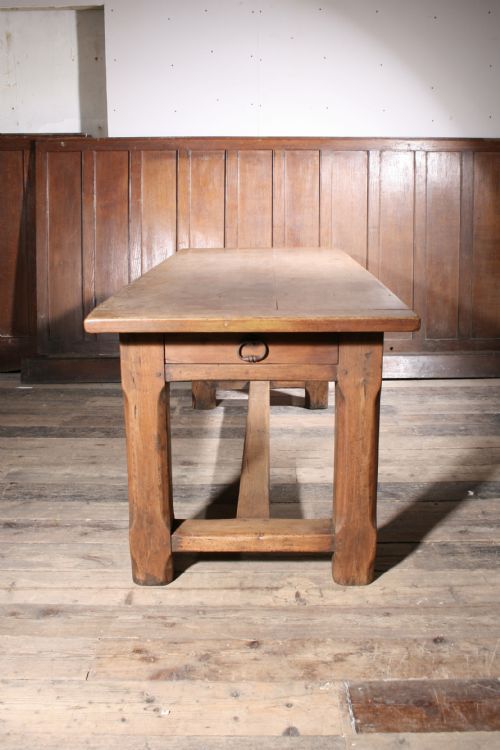
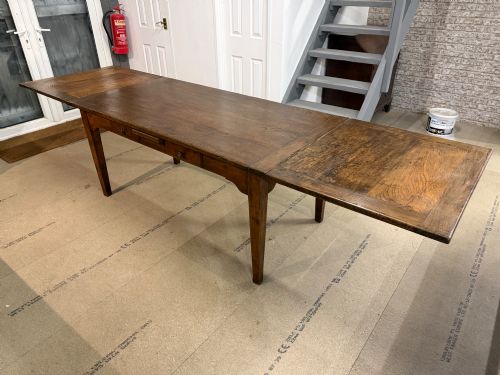
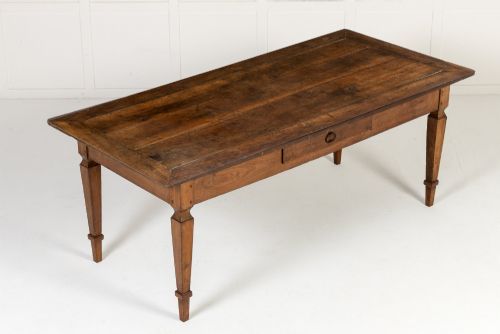
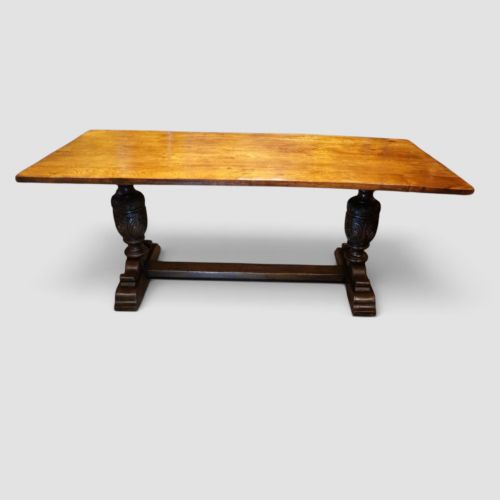




Warm Oak Farmhouse Table
A warm oak farmhouse table brings immediate weight and timber character to a room, built for daily use across centuries.
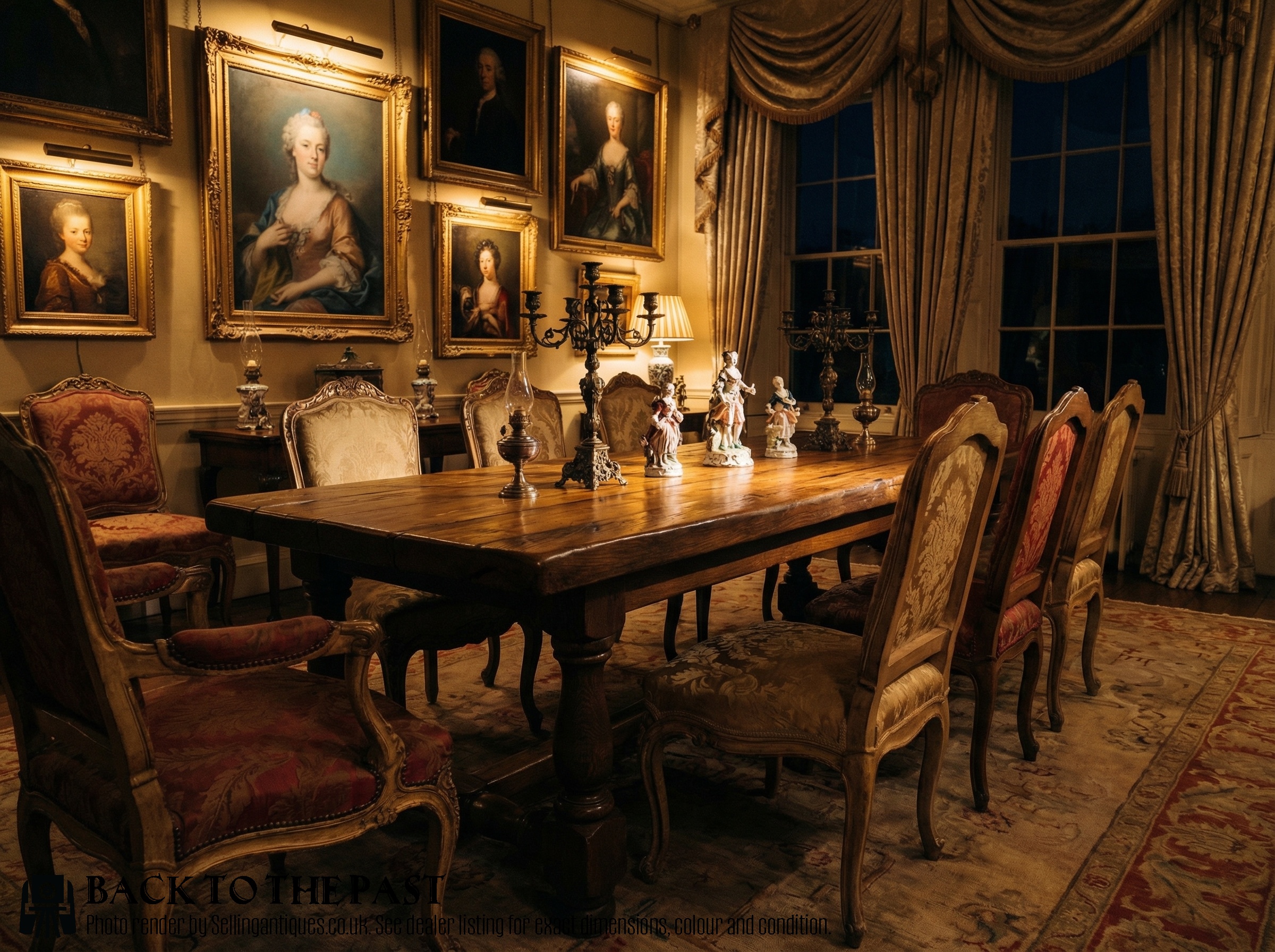
Warm Oak Farmhouse Table
A warm oak farmhouse table forms the literal and social heart of a country interior, designed to handle daily meals, family gatherings and heavy domestic tasks. When searching for a warm oak farmhouse table, buyers encounter substantial dining surfaces shaped by centuries of utility.
The selections available here span several distinct periods, notably the eighteenth and nineteenth centuries, alongside regional variations from English and French traditions. Forms range from compact gateleg formats and small kitchen tables to long refectory styles seating ten or more.
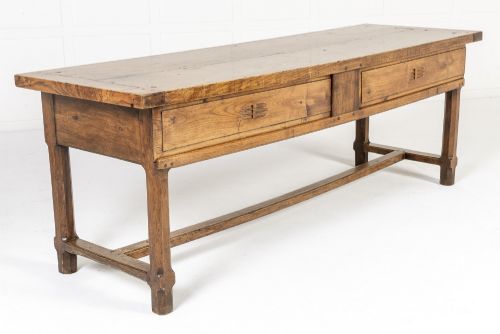
French provincial and Georgian examples appear frequently alongside rustic English tavern and refectory formats. Buyers find pieces featuring practical additions like bread slides or multiple drawers, constructed for hard service in large kitchens and dining spaces.
How they were made
Joiners built these tables primarily from solid timber, using oak alongside complementary woods like fruitwood, cherrywood and pine for secondary components. Construction relied heavily on traditional mortise and tenon joinery to secure heavy tops to sturdy underframes.
Working surfaces often utilised thick planks fixed with wooden pegs, while structural elements integrated iron and brass hardware only where necessary for extension mechanisms or bracing. Finish came through decades of natural waxing and physical wear rather than applied modern varnishes.
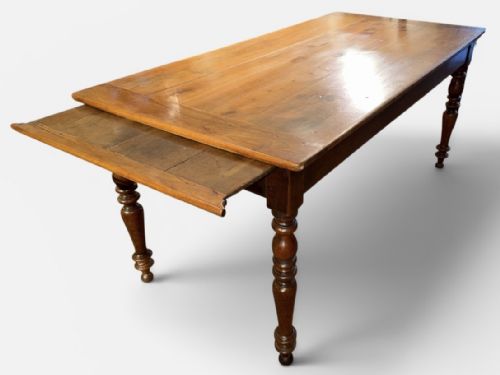
Several tables retain hidden bread slides once used for cooling loaves right by the kitchen hearth.
What varies in quality
Quality rests primarily in the choice of timber and the integrity of the original framing, with older eighteenth-century and George III examples showing superior density in the grain. Grain pattern, timber figure and deep patination accumulated through generations set finer tables apart from later reproductions or utilitarian workshop pieces.
Proportion and structural honesty dictate distinction, especially in extended refectory or trestle formats where timber spans must remain true. Original surface texture and minimal alteration to the primary top boards distinguish superior examples from heavily restored counterparts.
The Warm Oak Farmhouse Table Glossary
- Refectory table
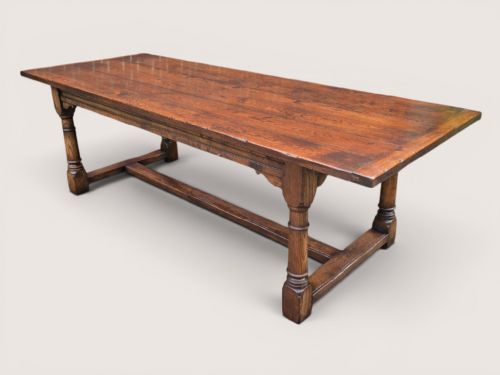
- A long, narrow dining table originally built for monastic dining halls and later adapted for large domestic kitchens. These pieces typically feature heavy legs joined by low floor stretchers for stability.
- Bread slide
- A pull-out wooden board integrated beneath the main tabletop, historically used for cooling loaves or expanding workspace. This feature appears frequently on provincial French examples.
- Gateleg table
- A drop-leaf table featuring hinged flaps supported by swing-out legs that pivot like a gate. This construction allows the piece to expand for dining and fold down for compact storage.
- Trestle table
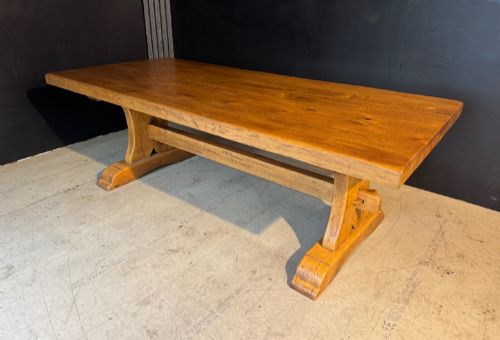
- A dining surface supported by two or more upright frames connected by a central horizontal beam. This design provides robust legroom along the entire length of the top.
- Patina
- The deep surface sheen and mellow colour developed by wood over decades of handling, cleaning and exposure to light. It serves as a primary indicator of age and genuine use.
Warm Oak Farmhouse Table: Frequently Asked Questions
How do I clean a vintage oak table?
Maintain the surface using a soft cloth and natural beeswax to nourish the dry timber without stripping the historic finish. Avoid modern chemical sprays and excessive moisture which can damage the open grain.
Protect the wood from direct heat and sharp objects by using placemats, allowing the natural patina to continue developing safely through everyday family use.
Can I seat ten people comfortably?
Long refectory and extended formats easily accommodate large gatherings, particularly Welsh and French tavern tables exceeding eight feet in length. Check the clearance beneath the side aprons to ensure chairs tuck in properly.
Compare the length and placement of the supporting legs or trestles against your seating requirements before selecting a specific format.
What is a bread slide used for?
Historically, the sliding wooden shelf provided extra surface area for slicing bread or cooling freshly baked loaves near the hearth. Today it offers a convenient pull-out shelf for serving or temporary placement during meals.
This practical feature remains a hallmark of traditional French kitchen tables from the nineteenth century.
How do I tell an 18th-century table apart?
Eighteenth-century examples display deep, hand-planed surface textures, pegged joinery, and dense heartwood oak or fruitwood that reflects early hand-tool methods. Look closely at the underside and structural framing for tool marks and signs of authentic period construction.
Later nineteenth-century and twentieth-century interpretations often show more uniform mechanical sawing and lighter framing.