
Large Footstool
A large footstool anchors a seating arrangement, offering practical comfort through generous proportions and solid timber framing.
Large Footstool
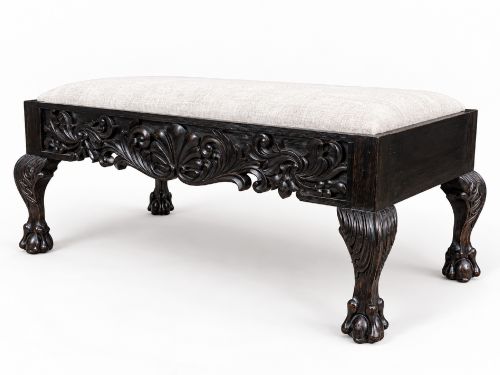
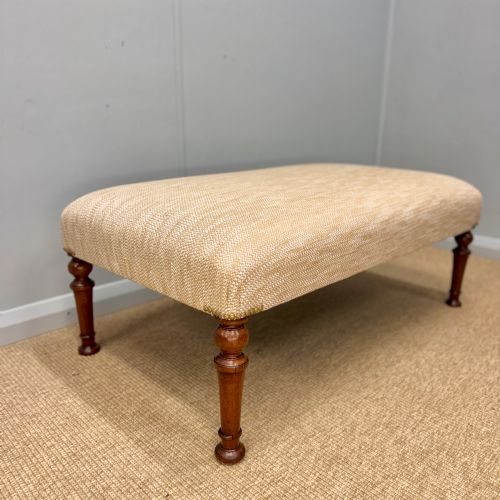
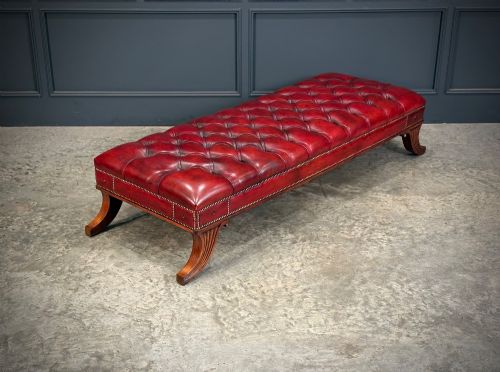
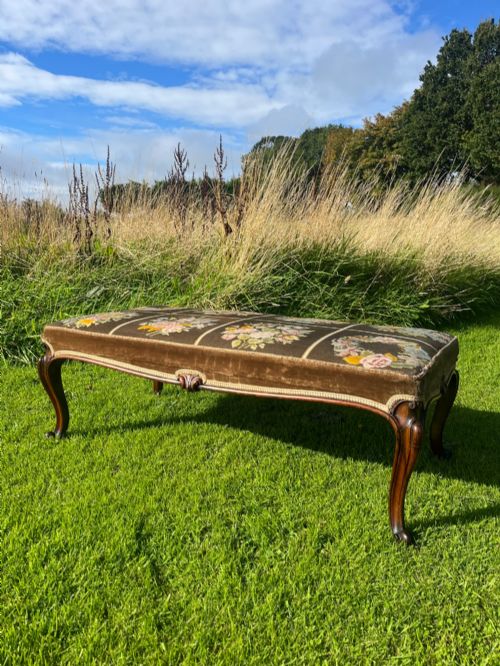
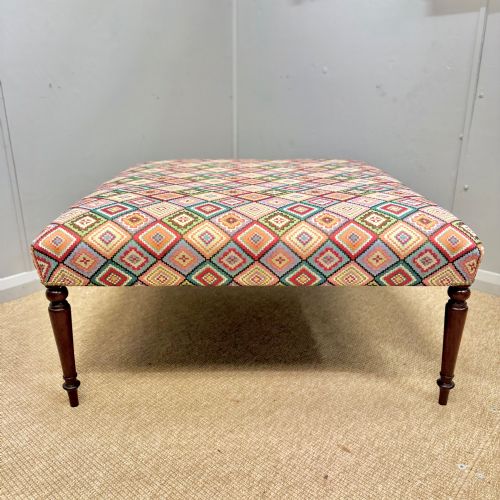
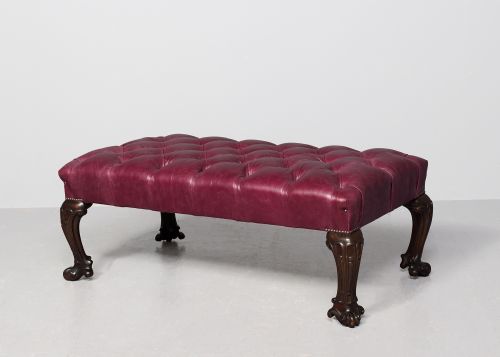
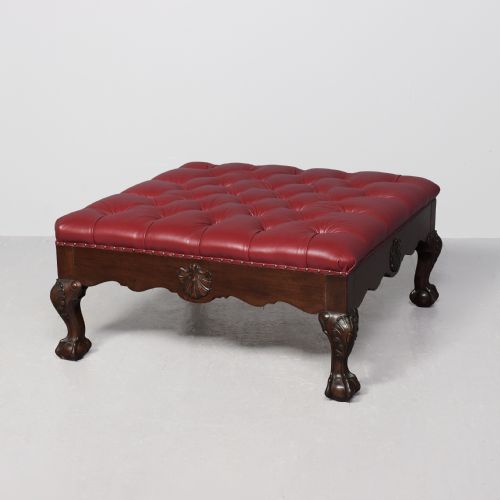
A large footstool appears primarily in Victorian and Regency iterations, taking the form of low centre stools, buttoned leather ottomans, and robust country house benches. These pieces often serve multiple functions, acting as coffee tables or fireside seating depending on their height and upholstery.
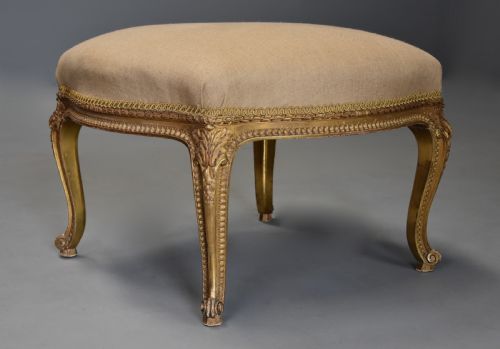
Makers utilised various regional designs, ranging from Scottish Baronial frames to Anglo-Indian carved structures and French giltwood variants. The proportions remain generous, designed to accommodate extended seating or heavy textiles.
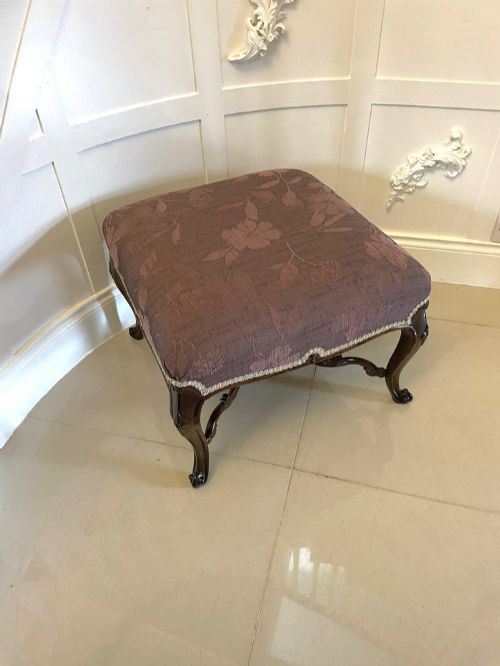
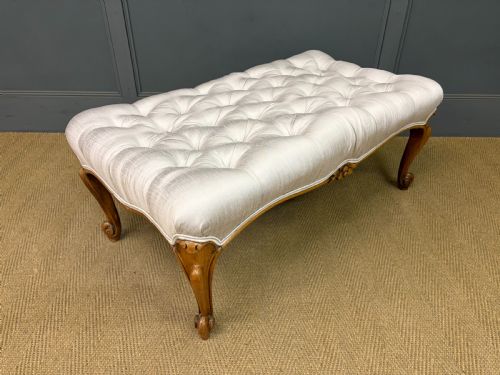
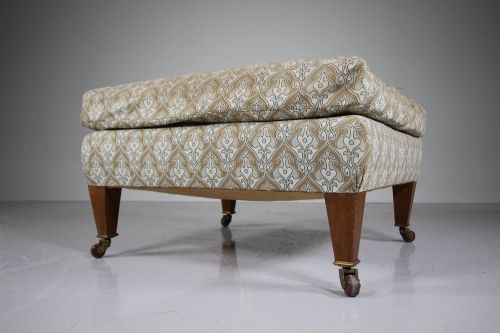
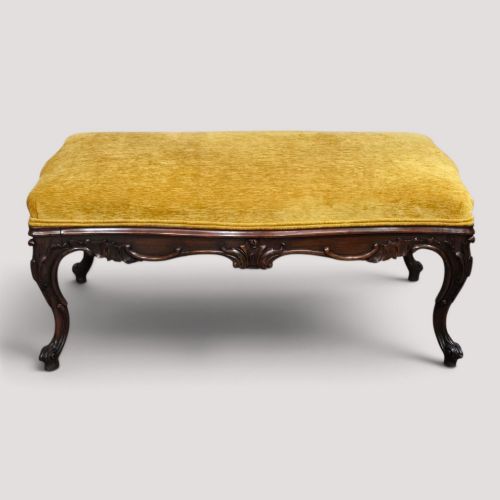
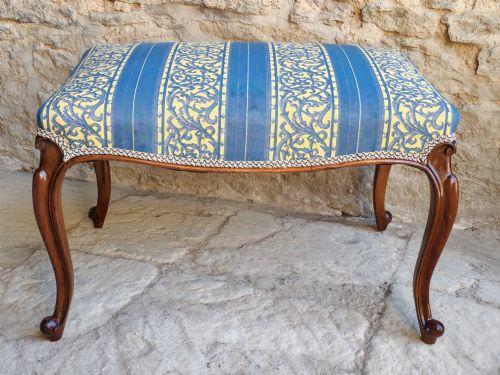
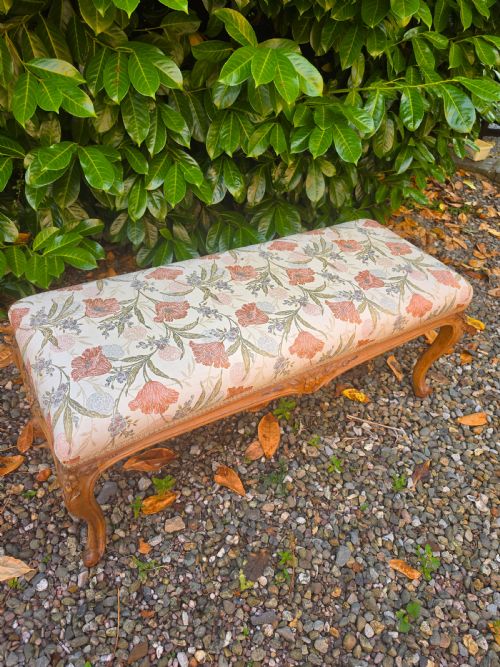
Buyers encounter numerous rosewood and mahogany frames alongside walnut and oak examples, frequently supported by cabriole legs or brass castors. The overarching form prioritises stability and substantial scale above delicate ornamentation.
Materials and Construction
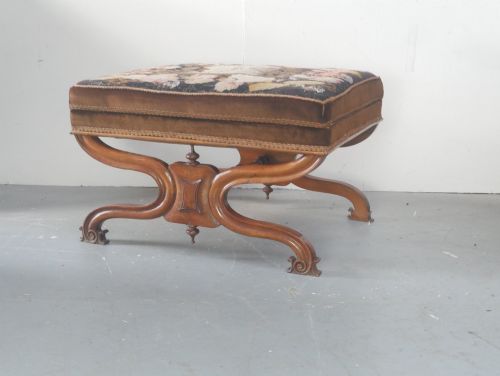
Frames are constructed from dense hardwoods like rosewood, mahogany, walnut, and oak, providing the structural integrity necessary for large seating platforms. Carved details and exposed polished wood borders frame the upholstered central sections.
Upholstery relies on traditional textiles including leather, hide, chenille, and velvet, often finished with buttoning or deep tufting. Brass castors and stretcher supports frequently reinforce the lower framework of nineteenth-century examples.
Listings feature woods including rosewood, mahogany, walnut, oak, and giltwood, paired with leather, velvet, and chenille upholstery.
Judging Quality
Quality reveals itself in the weight and density of the timber frame, alongside the precision of the wood carving and joinery. Finer pieces demonstrate crisp detailing in elements such as lion's head carvings or parcel gilding.
The sophistication of the secondary materials, from heavy buttoned hide to intricate rosewood grain, distinguishes standard production from exceptional country house commissions.
Hallett & Sons·Loidrault Freres Paris
The Large Footstool Glossary
- Ottoman
- A low upholstered seat or bench without a back or arms. These large versions often function as central coffee tables.
- Centre stool
- A freestanding seating piece designed to be viewed from all angles, typically positioned in the middle of a room.
- Cabriole leg
- A furniture leg that curves outward and then tapers inward, ending in a pad or foot. This shape is common on mid-nineteenth-century walnut frames.
- Giltwood
- Wood that has been coated with gold leaf or thin gold paint. It appears frequently on grand French and Regency frames.
- Stretcher
- A horizontal support connecting the legs of a piece of furniture for added stability. Cross stretchers appear on various dressing table and centre stools.
Large Footstool: Frequently Asked Questions
How do I use a large footstool in a modern room?
Position the piece centrally in front of a sofa to serve as an impromptu coffee table or an extra seat. Placing a large tray on top provides a stable surface for decorative objects while maintaining the option to rest feet.
The generous proportions make these items suitable for anchoring large reception spaces. Their solid wooden frames ensure they withstand daily domestic use.
What is the difference between an ottoman and a footstool?
Ottomans typically offer greater surface area and storage capabilities, functioning independently as central furniture pieces. Footstools traditionally accompany firesides or specific armchairs for elevating the legs.
Historical listings often use both terms interchangeably for larger upholstered seating. Scale remains the defining characteristic across these variations.
How do I identify a Victorian footstool?
Victorian examples frequently feature dense rosewood or walnut frames combined with buttoned leather or heavy fabric upholstery. Details such as cabriole legs and brass castors point toward mid-nineteenth-century production.
Proportions tend to be heavy and robust, reflecting the interior aesthetic of the period. Carved wooden details often display floral or scroll motifs.
Are these pieces suitable for everyday seating?
The dense hardwood construction provides strong structural support for regular use. Solid joints and sturdy timber frames ensure longevity in busy household environments.
Modern buyers often retain or update the traditional padding to suit contemporary comfort preferences. The underlying frames remain robust enough for daily weight.