

Large Footstool Bench
A large footstool bench anchors a room with substantial presence, combining utilitarian seating with decorative presence.
Large Footstool Bench
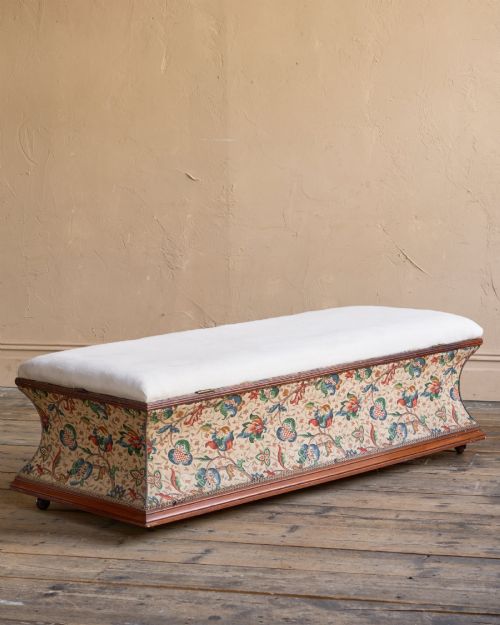
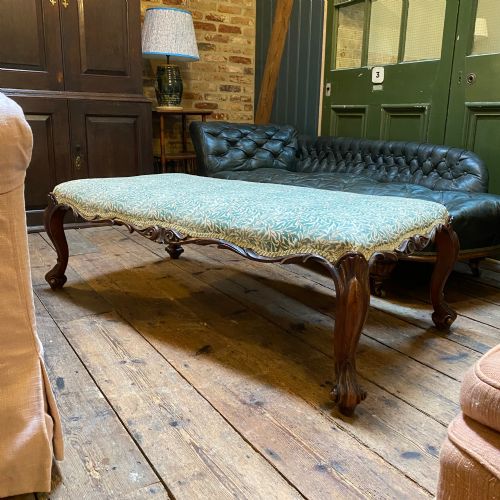
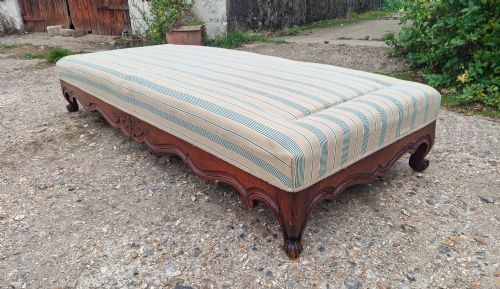
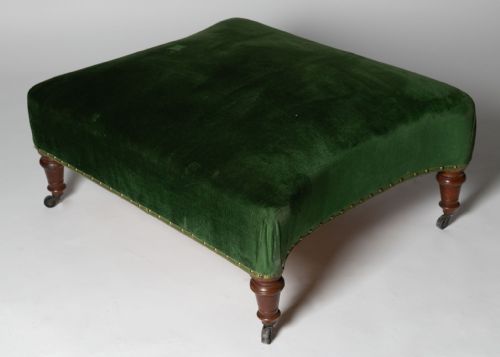
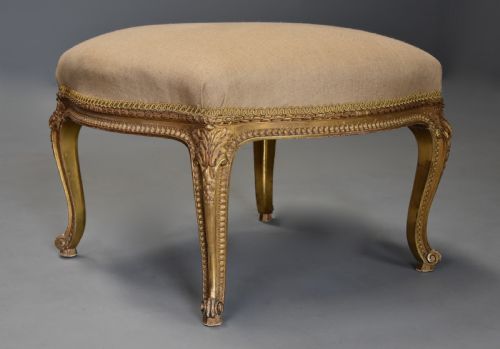
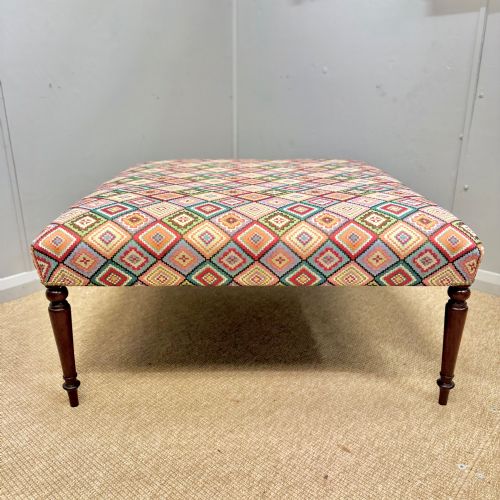
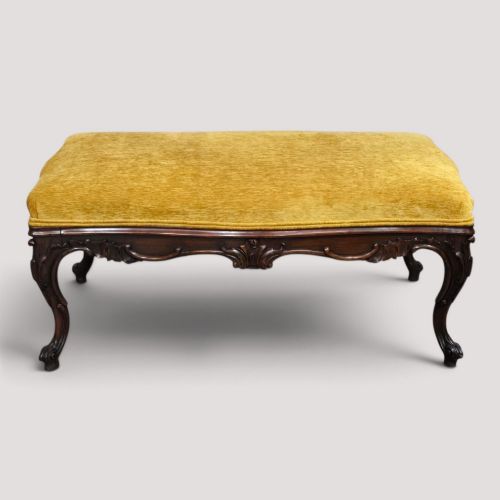
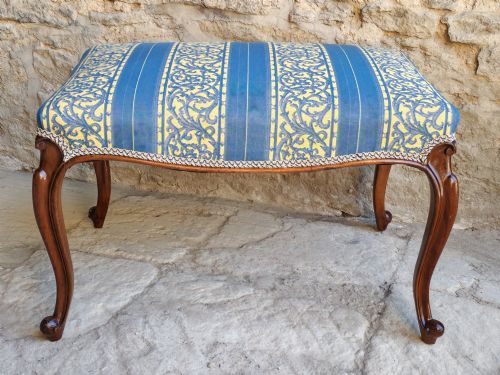
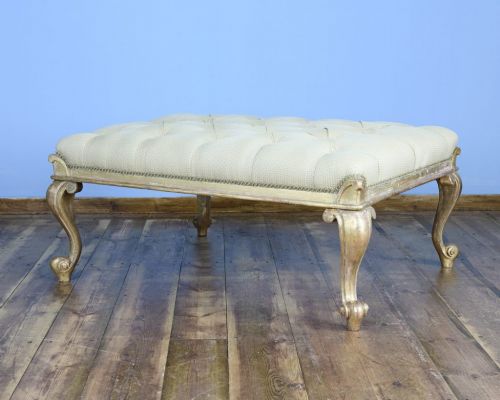
A large footstool bench is a low, substantial seat or rest designed for generous proportions, appearing across nineteenth-century and early twentieth-century periods. These pieces include French carved giltwood stools, English country house ottomans, and rosewood centre stools.
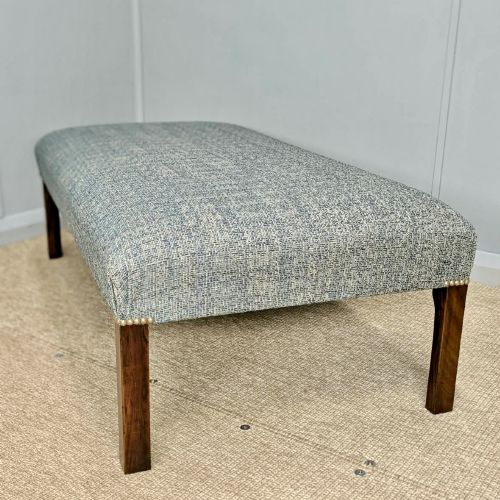
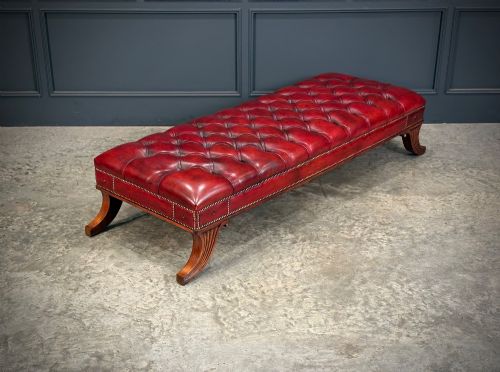
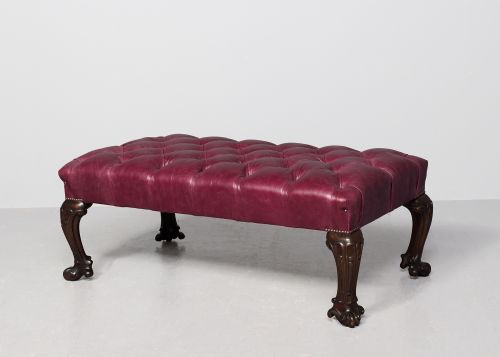
The inventory on this page ranges from Regency rosewood frames and Victorian buttoned leather ottomans to Anglo-Indian carved seating and Edwardian oak benches. Buyers encounter various interpretations of the form, from low hall seats to upholstered coffee table conversions.
How they were made
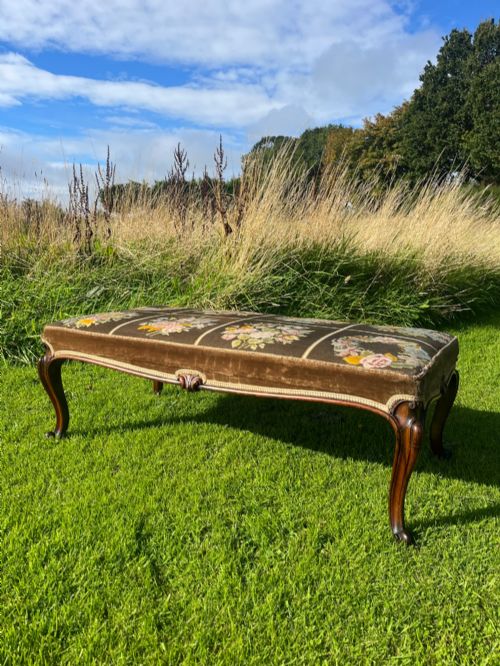
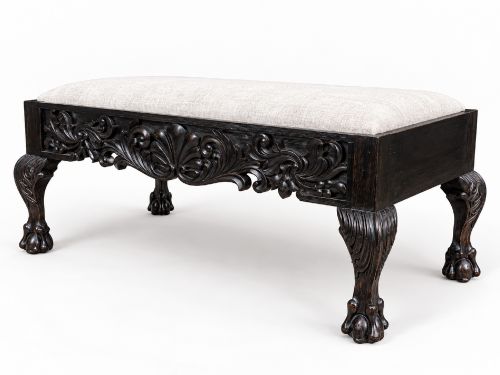
Frames rely on dense hardwoods such as mahogany, rosewood, walnut, calamander, and oak, often shaped with carved details like cabriole legs or parcel gilding. Brass castors frequently support the heavier timber bases for mobility.
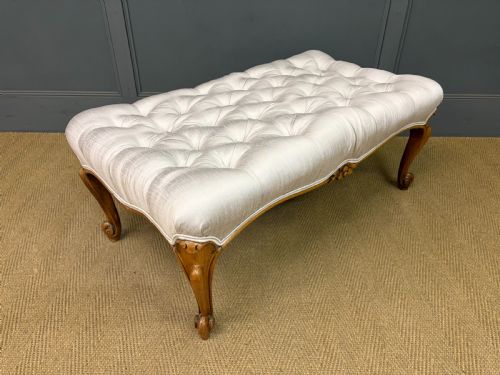
Upholstery techniques involve traditional stuffing finished in leather, velvet, chenille, or hide, secured with buttoning. Caned panels also appear on specific regional variants.
Large Footstool Bench Retail Price Guide 2026
Typical asking prices for large footstool bench among the pieces listed under this phrase on Sellingantiques today, from the lower quarter to the upper quarter. They describe what is for sale here now, not the wider market.
Periods represented span from the Regency era and Victorian decades through to the 1930s.
What varies in quality
The refinement of the timber carving and the integrity of the underlying wooden frame dictate the primary tier of craftsmanship. Pieces retaining original gilding or distinct maker stamps demonstrate superior workshop origin.
The choice of covering materials, from hand-stitched leather to patterned fabric, and the execution of deep buttoning determine the finishing standard of the piece.
LOIDRAULT FRERES PARIS·Hallett & Sons·Liberty
The Large Footstool Bench Glossary
- Ottoman
- A low upholstered seat or bench without a back or arms, often used as a footrest or table.
- Centre stool
- A large freestanding seat designed to sit in the middle of a room rather than against a wall.
- Buttoned
- An upholstery technique where indentations are created across the surface using buttons pulled tight to secure the padding.
- Castor
- A small wheel fitted to the base of furniture legs to allow easier movement across floors.
- Giltwood
- Timber treated with gold leaf or gilt paint to create a decorative metallic surface.
Large Footstool Bench: Frequently Asked Questions
What is a large footstool bench used for?
These large benches serve multiple functions in domestic spaces, acting as traditional footrests, extra seating in drawing rooms, or low coffee tables. Their generous proportions provide a solid surface for resting feet or placing trays.
In larger reception rooms, they anchor the centre of the space as freestanding centre stools. They also work effectively at the end of a bed or within a hallway as a low seat.
How do I identify a Regency period piece?
Regency pieces often utilise dark exotic timbers like rosewood and feature classical architectural influences. Look for refined proportions and restrained decorative carving typical of the early nineteenth century.
Turned wooden legs and brass mounts frequently accompany these designs. Comparing the timber grain and construction methods helps separate them from later Victorian revivals.
Can I use an ottoman as a coffee table?
Many large upholstered benches function effectively as coffee tables by placing a flat tray on top of the fabric or leather surface. This protects the upholstery while providing a stable area for books and objects.
Leather surfaces are particularly durable for this dual purpose. Firmly padded tops prevent items from wobbling when placed on the bench.
What are country house style footstools?
Country house pieces are characterised by generous scale, comfortable upholstery, and sturdy timber frames built for daily domestic use. They often show a mix of traditional materials like mahogany, oak, and worn leather.
These benches reflect generations of family use and adaptation. Their understated construction prioritises comfort and durability over delicate ornamentation.