
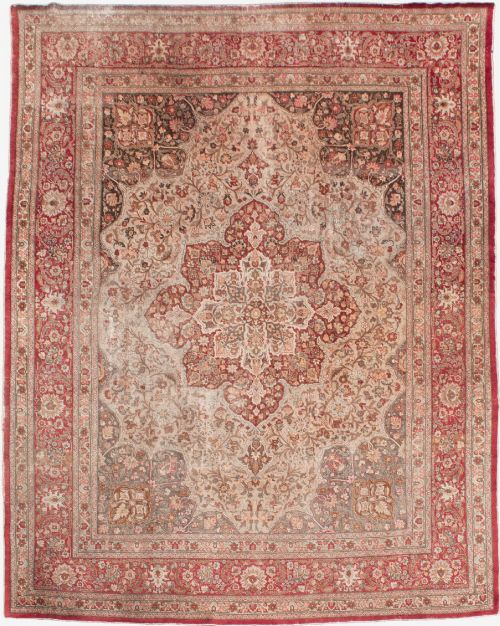
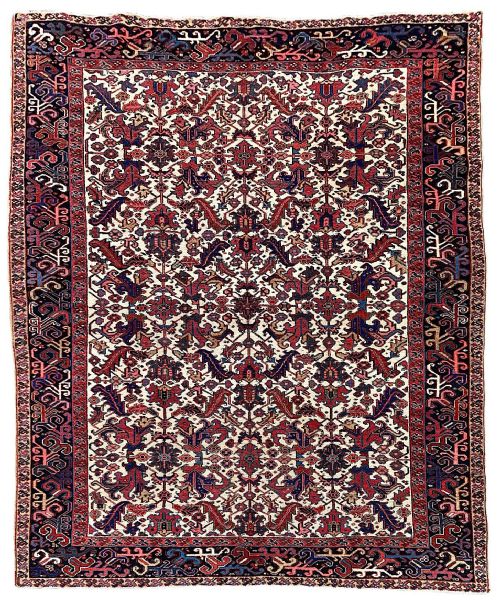
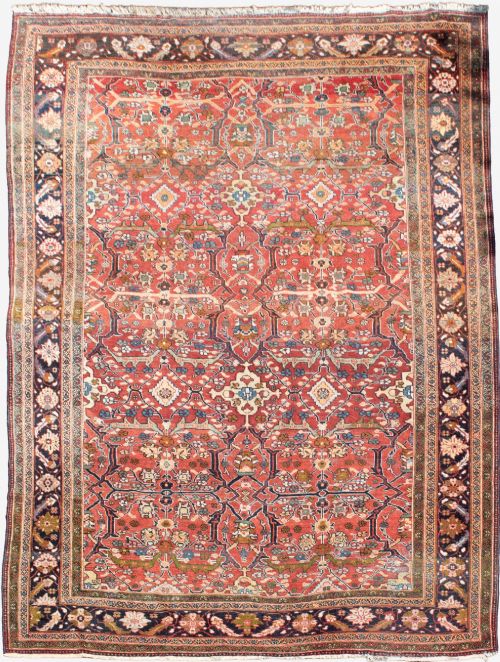
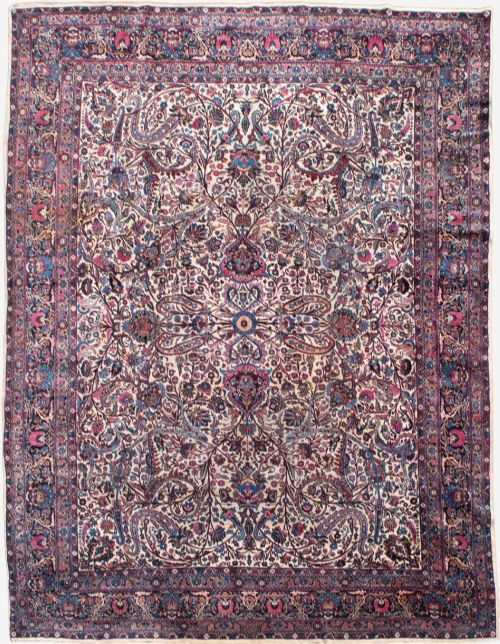


Large Floral Persian Carpet
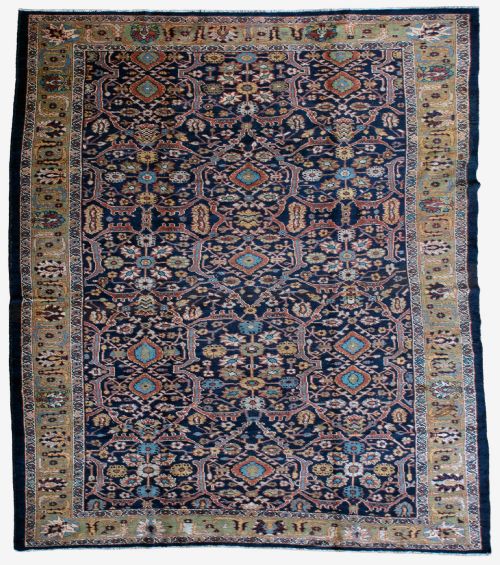
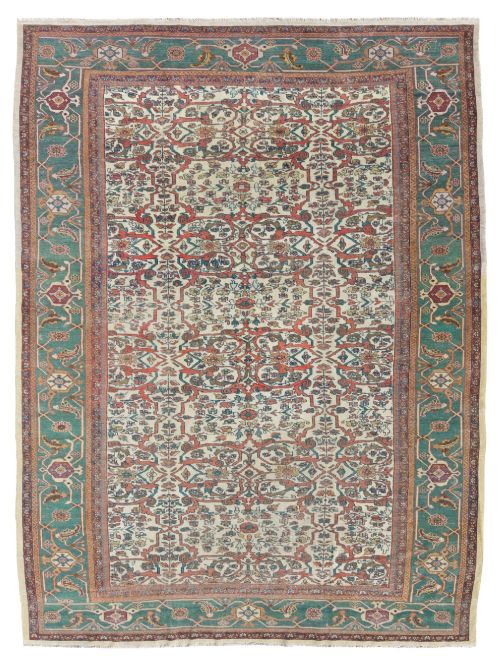
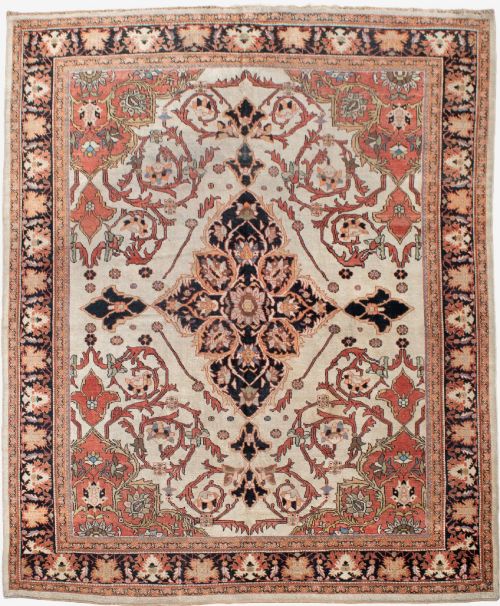
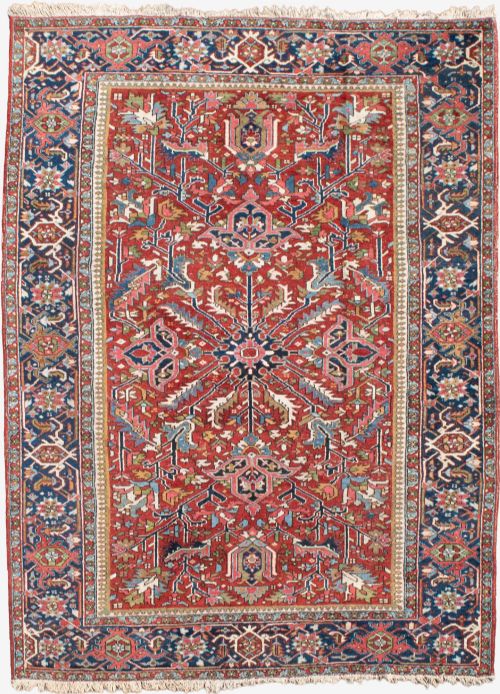
A large floral persian carpet anchors a generous room with centuries of hand-knotted tradition, rich botanical motifs and heavy wool pile.
Large Floral Persian Carpet
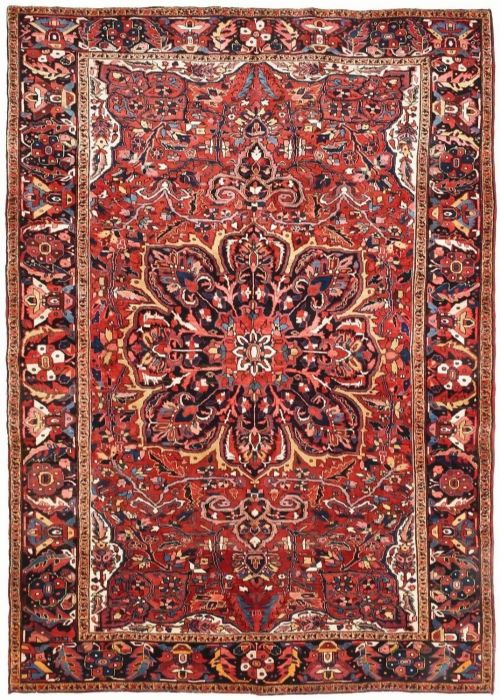
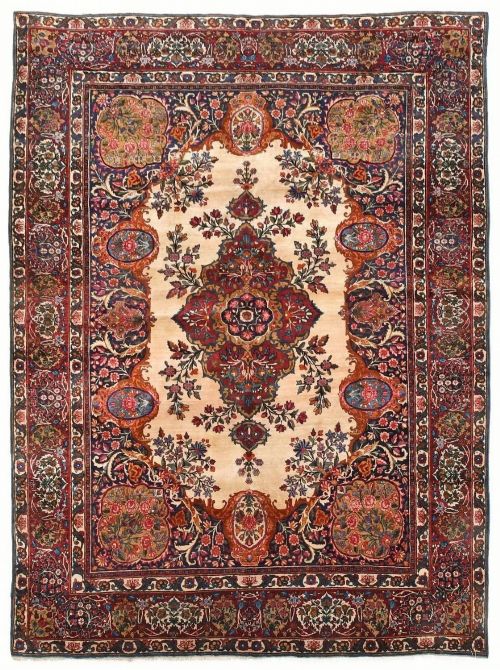
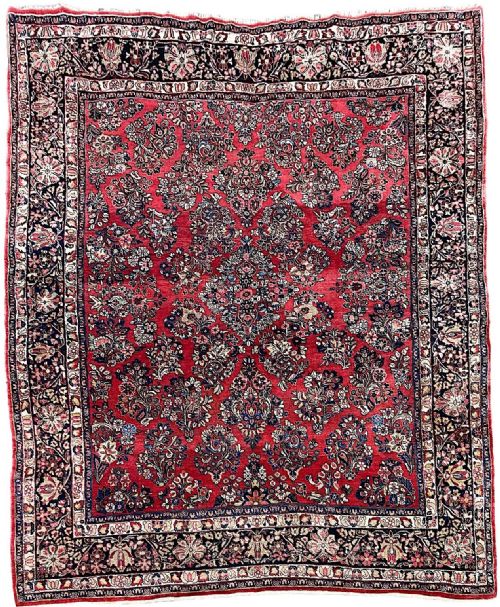
A large floral persian carpet delivers grand room-size floor coverings woven across various Persian and regional workshops from the mid-nineteenth century onwards. These floor coverings are dominated by intricate botanical patterns, floral sprays and central medallions that span generous dimensions.
Buyers meet room-size examples originating from specific weaving centres like Tabriz, Heriz, Mahal, Sultanabad, Kirman and Sarouk, alongside related pieces from Oushak and Amritsar. These range from heavy village weaves with geometric floral interpretations to finely knotted city pieces displaying curved palmettes and trailing vines.
The selections span production dates from the eighteen-fifties through to the nineteen-thirties, offering weathered country house rugs and stately town carpets alike. Each piece brings a distinct regional palette and structural density derived from its specific geographical origin.
Materials and Construction
Construction relies primarily on a foundation of sturdy cotton warps and wefts that support a dense wool pile, occasionally incorporating silk for fine detail work in specific city carpets. The pile is hand-knotted strand by strand, securing the intricate botanical designs for decades of heavy floor use.
Natural dye stuffs impart the varied colour palettes seen across the periods, yielding soft pastels, deep indigos, terracotta and ivory grounds that mellow gracefully over time. Skilled weavers employed asymmetrical and symmetrical knots depending on the regional workshop tradition.
The listings span eight distinct decades of production from the eighteen-fifties to the nineteen-thirties, utilising wool, cotton and silk.
Assessing Quality and Execution
Knot density and structural integrity dictate the calibre of the weaving, separating coarse village carpets from finely executed city workshop pieces with high-resolution floral detailing. The precision of the drawing in the central medallions and border scrolls reveals the mastery of the original workshop designer.
The condition of the wool pile and the stability of the cotton foundation determine the longevity of the carpet under foot traffic. Original dye saturation and even wear across the surface indicate a well-preserved piece that retains its intended visual balance.
Benlian
The Large Floral Persian Carpet Glossary
- Medallion
- A central ornamental motif, often symmetrical, that forms the focal point of the carpet field design.
- Warp
- The vertical threads stretched tightly on the loom that form the foundational skeleton of the woven carpet.
- Weft
- The horizontal threads passed between the warp threads to lock the rows of hand-tied knots firmly into place.
- Pile
- The dense upper surface of the carpet formed by the cut ends of the hand-tied wool, cotton or silk knots.
- Palmette
- A stylized floral motif resembling a fan-shaped palm leaf, frequently utilised in traditional Persian border and field designs.
Large Floral Persian Carpet: Frequently Asked Questions
How do I style a large carpet?
Position the carpet centrally in a principal reception room, allowing sufficient exposed floorboards or surround around the outer borders to frame the piece correctly. Heavy furniture pieces can rest partially or entirely on the wool pile depending on the room layout.
Ensure the botanical colours complement existing upholstery and wall treatments within the space. A room-size floor covering naturally divides open-plan areas and adds acoustic warmth.
How are different regional styles told apart?
Heriz carpets typically display geometric medallion layouts with bold, sturdy structures, whereas Tabriz pieces often feature refined curved floral motifs and intricate city designs. Mahal and Sultanabad carpets are recognised by their large-scale patterns and relaxed village aesthetics.
Kirman carpets present soft pastel colour palettes with delicate overall floral sprays, while Sarouk weaves show dense floral bouquets upon deep red or ivory grounds. Examining the knotting style and palette helps identify the specific weaving district.
What care does an antique carpet need?
Vacuum the wool pile regularly using a suction-only attachment without a rotating beater brush to protect the delicate hand-knotted foundation threads. Rotate the floor covering periodically to ensure even exposure to sunlight and foot traffic.
Professional cleaning should be undertaken periodically by specialists experienced in antique textiles. Avoid excessive moisture and address spills immediately with gentle blotting rather than rubbing.
How do I determine the age of a carpet?
Examine the natural dye variations, the wear patterns across the wool pile and the structural characteristics of the cotton foundation to gauge the period of manufacture. Construction materials and regional weaving traits provide reliable indicators for dating pieces from the nineteenth and early twentieth centuries.
Stylistic shifts in border designs and central motifs also assist in narrowing down the decade of production. Comparative study of known workshop outputs helps confirm the historical era.