
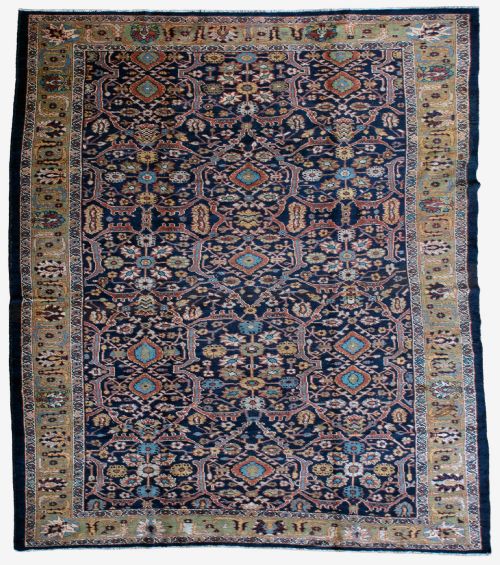
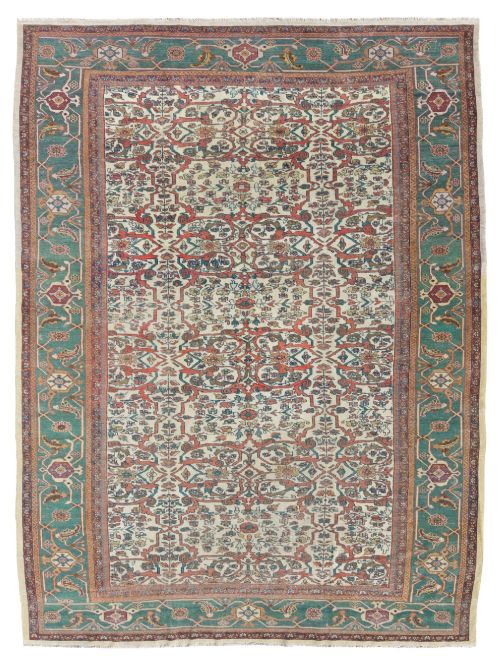
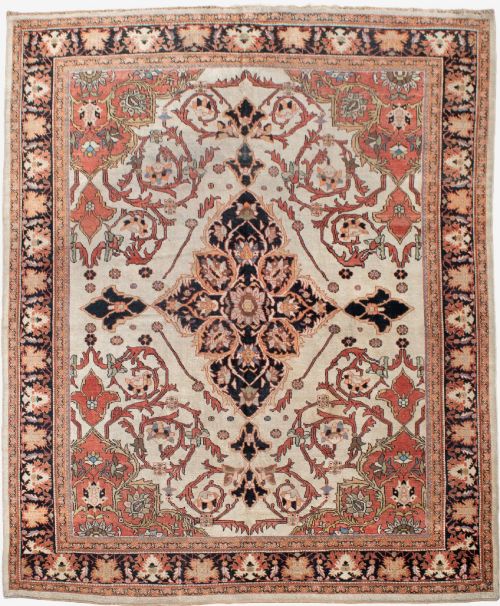
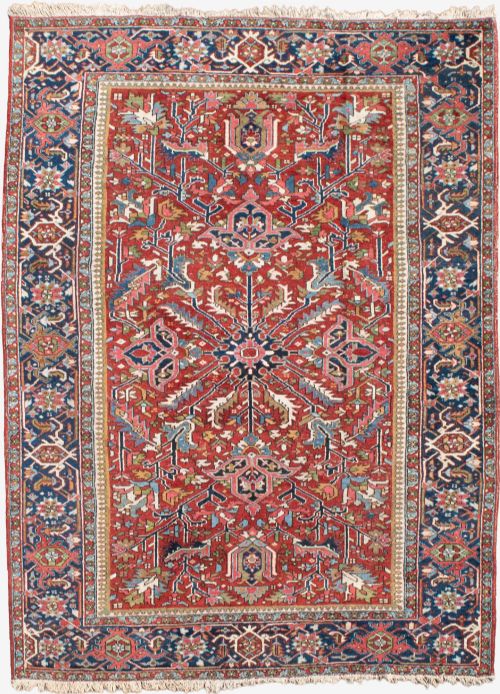
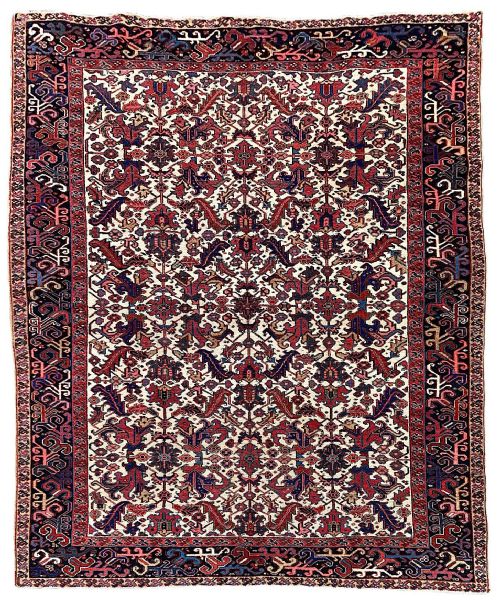
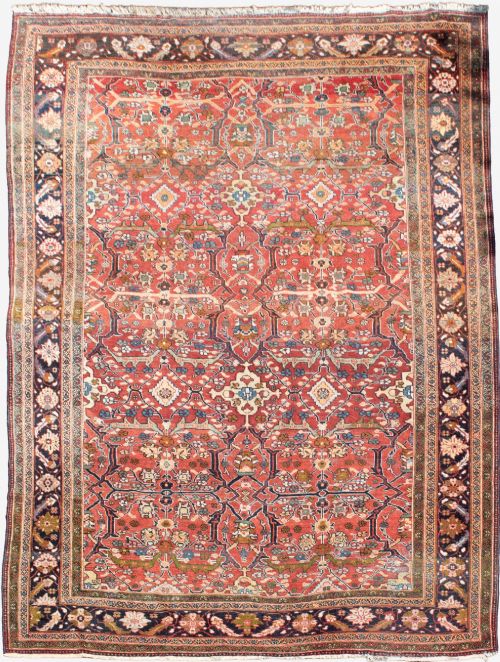
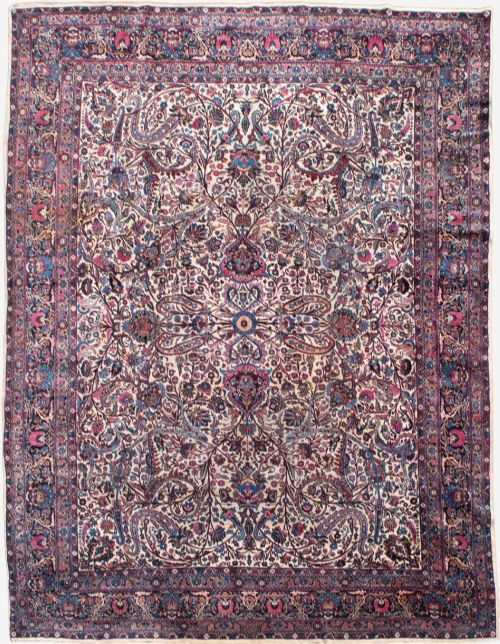
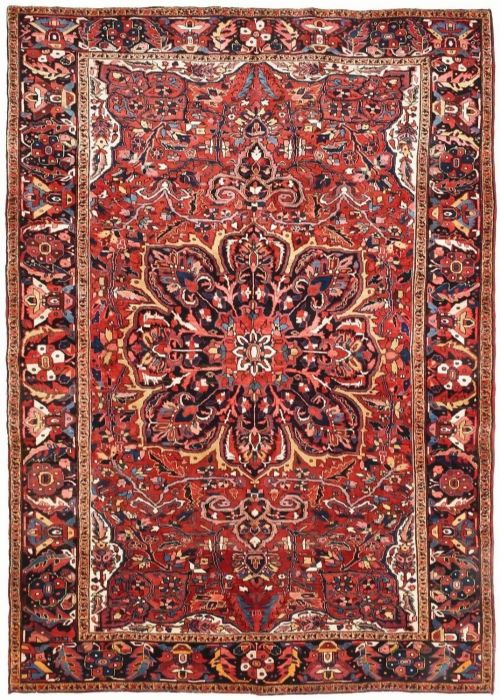
Large Floral Area Carpet
A large floral area carpet anchors a room with historic scale, grounding grand spaces through centuries of woven botanical tradition.
Large Floral Area Carpet
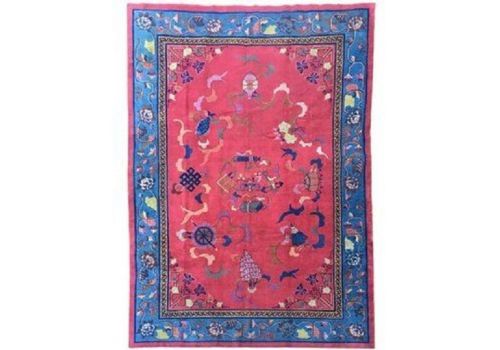
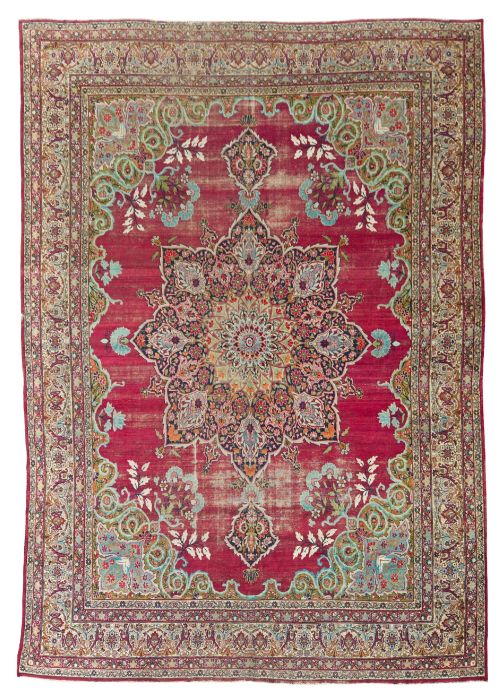
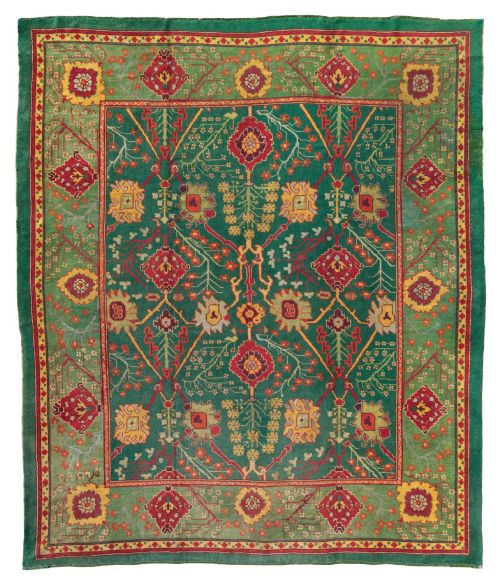
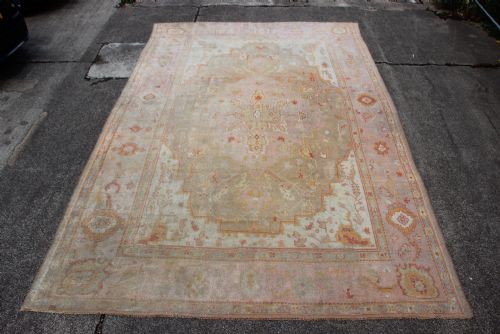
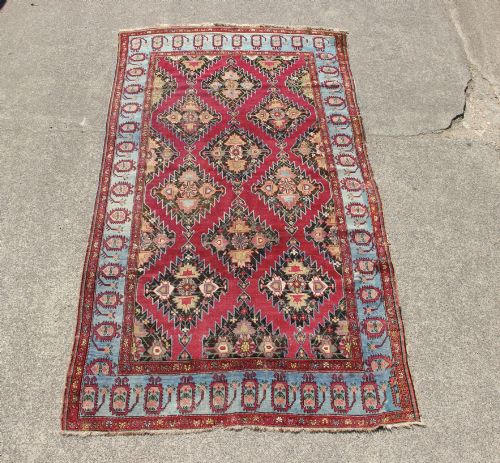
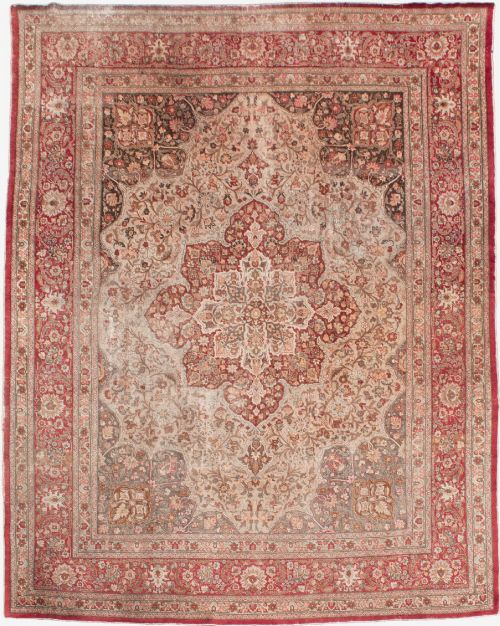
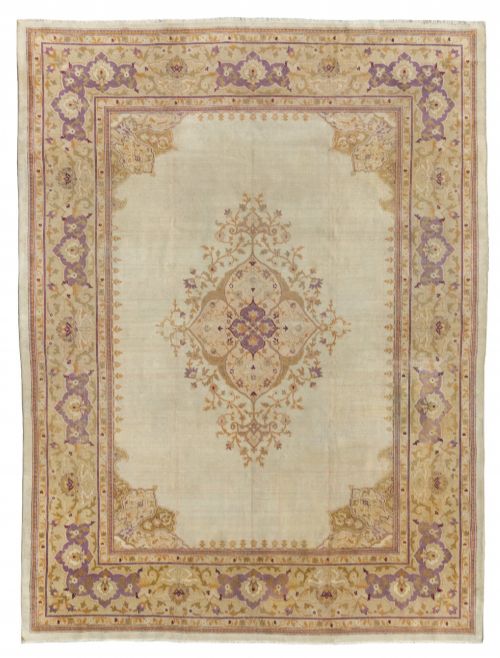
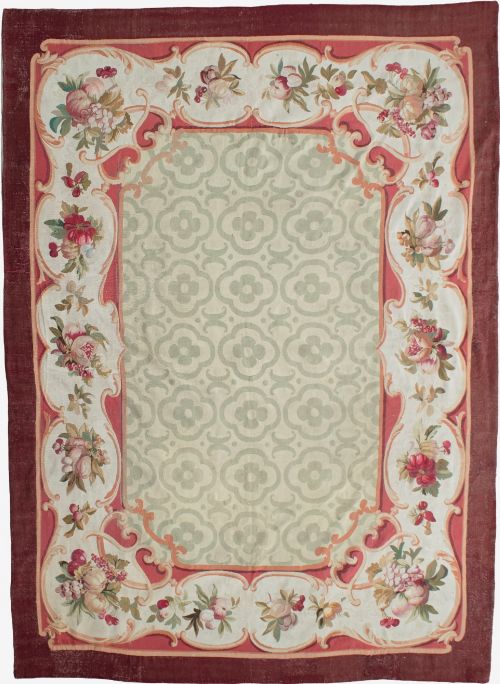
A large floral area carpet brings commanding scale and botanical ornamentation to substantial rooms. These room-sized floor coverings span periods from the mid-nineteenth century through the early twentieth century.
The selections encountered here originate primarily from Persian weaving centres alongside Ottoman and European workshops. Common regional forms include Heriz, Tabriz, Sultanabad, Mahal, Kirman, Oushak, and Amritsar carpets.
Designs rely heavily on expansive floral motifs, all-over garden patterns, and central medallions. Pieces range from grand country house carpets to decorative room-sized weaves suited to high ceilings.
Materials and construction
These floor coverings utilise wool pile knotted onto sturdy cotton foundations. The combination provides structural durability and allows intricate botanical details to hold their definition across expansive room-sized formats.
Natural dyes yield the muted palettes and soft pastel tones observed in older weaves. Hand-knotting techniques permit varied pile densities that respond to decades of daily friction.
Several grand carpets possess dimensions generous enough to comfortably host a family of bears holding an afternoon tea party.
Distinctions in quality
Knot density and structural integrity dictate the foundational grade of each carpet. Finer knotting allows greater precision in botanical drawing and crisper delineation of floral motifs.
The harmony and saturation of the dyework separate standard production from superior examples. Master weavers balanced complex palettes that mellow evenly over generations.
Benlian
The Large Floral Area Carpet Glossary
- Medallion
- A symmetrical central ornament placed in the field of a carpet. This focal design element often dictates the surrounding floral arrangement.
- Pile
- The upright yarn loops that form the usable surface of the carpet. Wool is the standard material utilised for this upper layer.
- Warp
- The vertical threads stretched lengthwise on the loom before knotting begins. Cotton typically forms this foundational grid.
- Weft
- The horizontal threads inserted across the warp after rows of knots. This stabilises the structural weave of the carpet.
- Field
- The central background area enclosed by the border. Floral sprays and medallions occupy this primary space.
Large Floral Area Carpet: Frequently Asked Questions
How do I style a large carpet?
Position the piece centrally within the room to anchor major furniture groupings. Allow adequate wooden flooring to show around the perimeter.
Keep surrounding decor complementary to the primary colours within the floral field. Avoid obstructing key medallions with heavy coffee tables.
What periods do these carpets cover?
The available selection spans production dates from the mid-nineteenth century through the early twentieth century. Victorian and Edwardian eras account for the majority of room-sized examples.
Specific decades represented include the eighteen-fifties up to the nineteen-thirties. Each period reflects distinct regional weaving preferences.
Where were these large carpets woven?
Origins are concentrated across traditional weaving regions in Persia, alongside Ottoman territories and European workshops. Specific cities like Tabriz, Kirman, and Heriz produced distinct local styles.
Production also extended to Northern India during the late nineteenth century. Each region utilised specific botanical motifs and colour palettes.
How do I care for antique wool?
Vacuum the pile gently using suction only without rotating bristle bars. Rotate the carpet periodically to ensure even foot traffic distribution.
Professional cleaning is recommended for historical textiles. Keep the piece away from direct, prolonged sunlight to protect natural wool dyes.