



Large Floor Covering
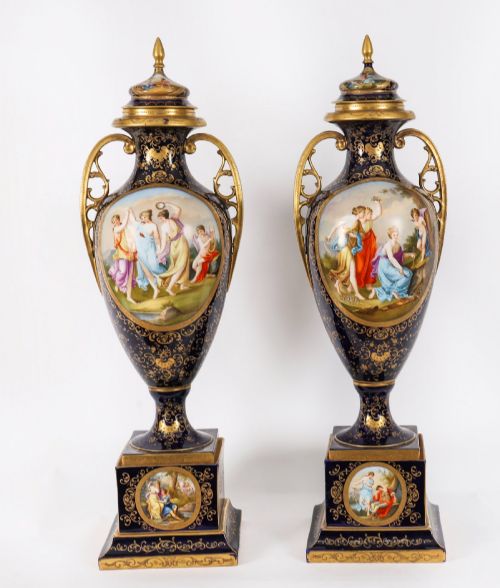
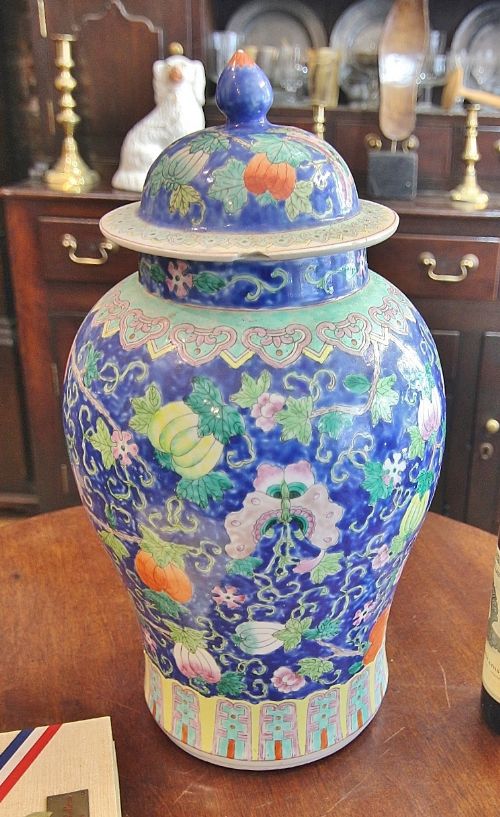
These large floor covering examples unite heavy room-scale Persian carpets with monumental porcelain jars to anchor a substantial interior space.
Large Floor Covering
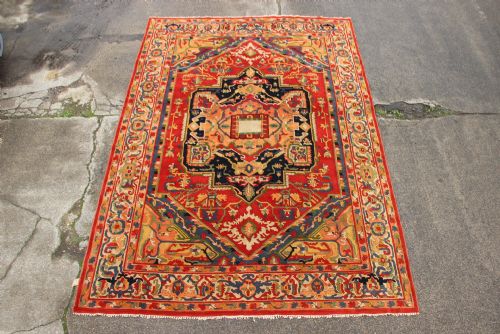
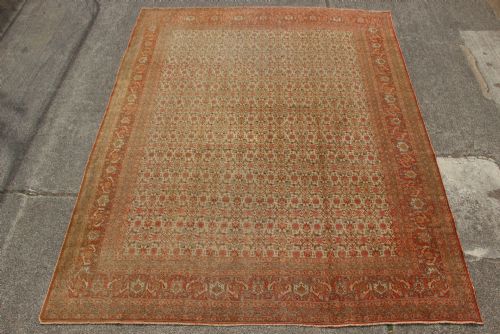
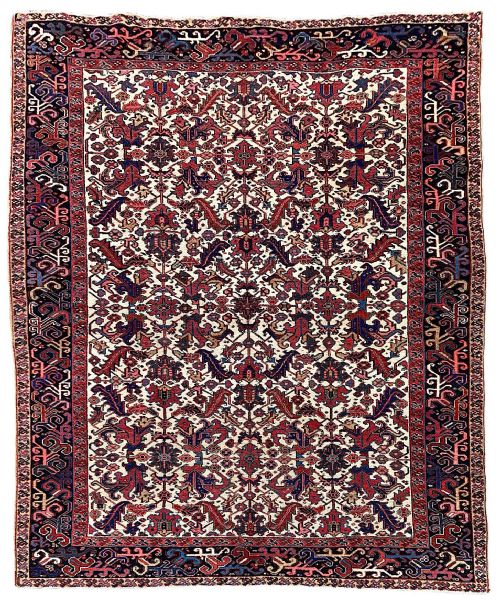
A large floor covering typically takes the form of a substantial room-size carpet originating from Persian weaving centres or Turkish looms dating from the nineteenth and early twentieth centuries. These pieces carry traditional tribal, Heriz, Oushak, Tabriz, or Kashan designs across expansive wool fields meant to anchor entire reception rooms.
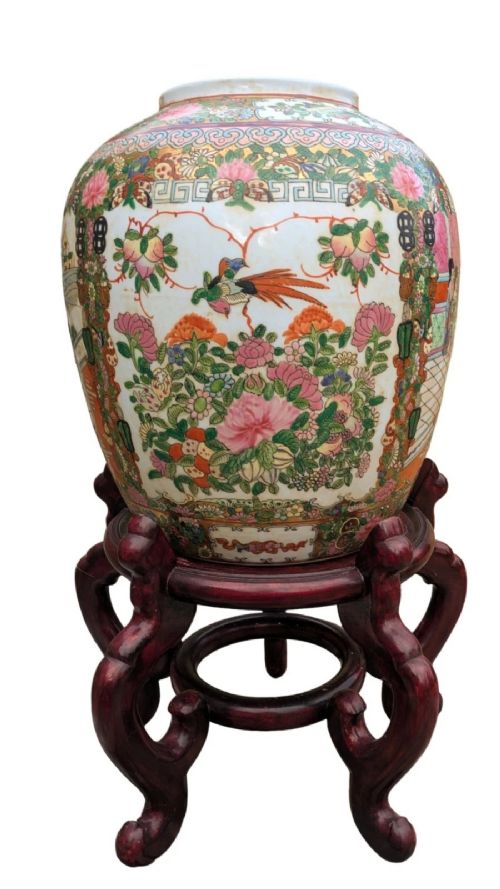
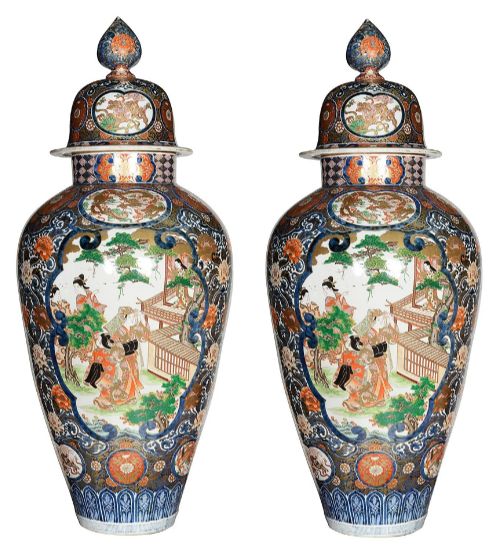
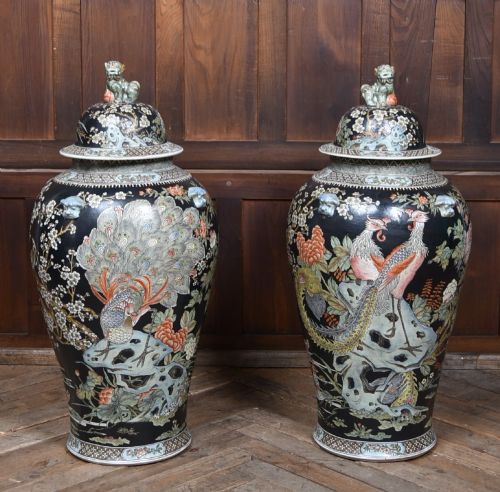
Buyers encounter woven wool carpets measuring several metres alongside unexpected ceramic floor vessels grouped under the same heading. The textile selection ranges from finely knotted Isfahan and Bidjar carpets to village weaves like Khamseh and Bakshaish, while the ceramic alternatives include monumental Chinese palace jars and Japanese Imari lidded vases.
The dominant aesthetic relies on room-scale proportions, whether through intricate medallion carpet layouts or towering porcelain forms standing directly upon the floor. Each piece is chosen for its ability to define a large spatial area through deep indigo, pink, or neutral grounds.
Materials and construction
The woven pieces depend on hand-spun wool foundations and pile, utilising natural dyes to achieve the varied colour palettes seen in Oushak, Mahal, and Heriz carpets. Artisans tied dense knots by hand over months or years to build resilient pile surfaces capable of withstanding heavy daily use.
Ceramic examples employ porcelain and enamel glazes, sometimes enhanced with gold leaf and gilding to accentuate the painted surfaces of nineteenth-century Japanese Imari, Satsuma, and Chinese palace vessels. These materials require precise kiln firing to achieve the hard-wearing decorative glazes found on large floor-standing urns.
Large Floor Covering Retail Price Guide 2026
Typical asking prices for large floor covering among the pieces listed under this phrase on Sellingantiques today, from the lower quarter to the upper quarter. They describe what is for sale here now, not the wider market.
Listings feature nineteenth and early twentieth-century wool carpets from Persian regions like Tabriz, Heriz, and Kashan, alongside porcelain vessels.
Quality variations
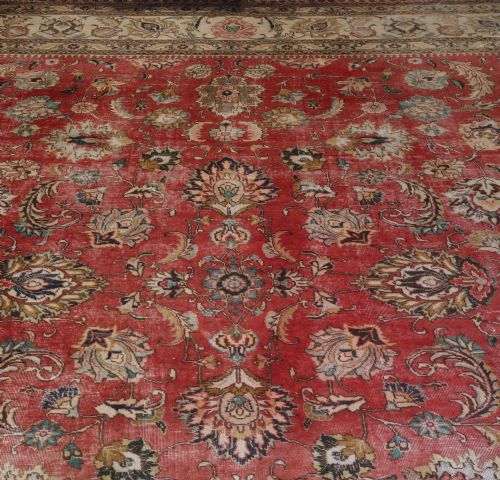
The distinction between standard and superior pieces rests on the density of the wool knotting and the crispness of the traditional Persian or Turkish design execution. Finer carpets exhibit greater precision in drawing and more complex abrash variations within the natural dyed wool.
For ceramic floor vessels, quality reveals itself in the delicacy of the enamel glaze work, the stability of large porcelain bodies, and the preservation of original gilding and gold leaf details across the surface.
The Large Floor Covering Glossary
- Abrash
- Natural tonal variation within the wool of a carpet caused by batches of hand-spun yarn absorbing dye slightly differently. This subtle striping indicates traditional dyeing methods rather than chemical uniformity.
- Baluster vase
- A large vessel characterised by a bulbous lower body tapering to a narrower neck and flared rim. These monumental forms often stand directly on the floor in palace settings.
- Hand-knotted
- A construction method where individual strands of wool are tied by hand around warp threads to form a durable pile. This technique defines genuine antique carpets.
- Imari
- A Japanese porcelain style featuring underglaze blue and overglaze iron red, green, and gold decoration. These wares were frequently produced in large scale for export.
- Oushak carpet
- A large textile originating from the Turkish town of Oushak, recognised by a relaxed geometric or floral design and a distinctive soft pink or terracotta ground.
Large Floor Covering: Frequently Asked Questions
How do I place a large floor covering?
Position the carpet centrally in a room to anchor the furniture arrangement, ensuring sufficient surrounding floor space to display the borders.
For ceramic floor vessels, place them in corners or halls where their height commands the room without obstructing movement.
What is an Oushak carpet?
An Oushak carpet is a large textile woven in Turkey, known for its softer pastel or pink grounds and expansive floral motifs.
These pieces were produced in room sizes to suit grand nineteenth-century interiors.
How do I care for antique wool carpets?
Protect the wool pile by using a heavy underlay to prevent sliding and reduce friction against hard floors.
Vacuum gently using suction attachments without rotating brushes to preserve the hand-spun fibres.
Are porcelain vases used on the floor?
Large nineteenth-century Imari and Chinese palace vessels were created to stand directly on the floor as monumental decorative elements.
Their substantial height and sturdy porcelain bodies make them suited for placement in entryways or wide hallways.