



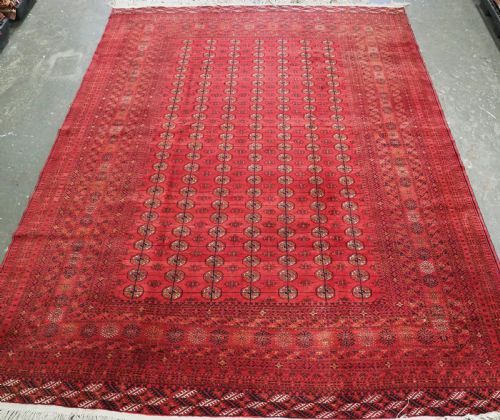


Large Ersari Wool Rug
A large ersari wool rug brings tribal depth and rich red tones into a room.
Large Ersari Wool Rug
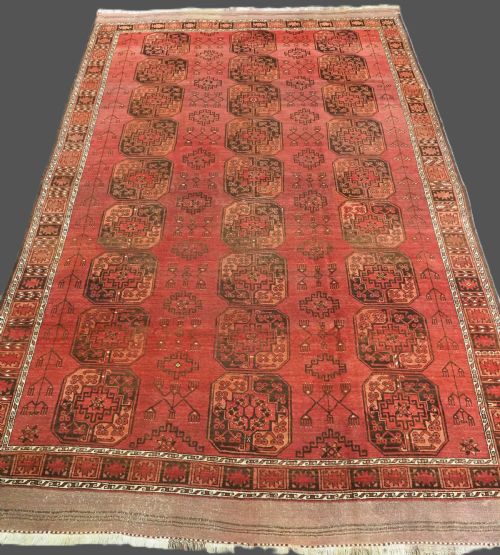
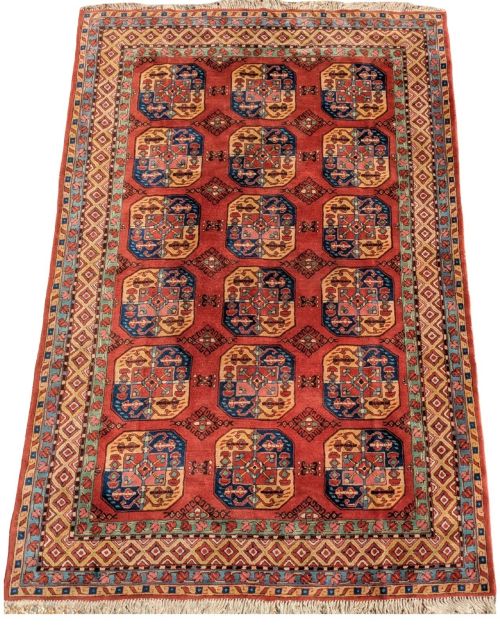
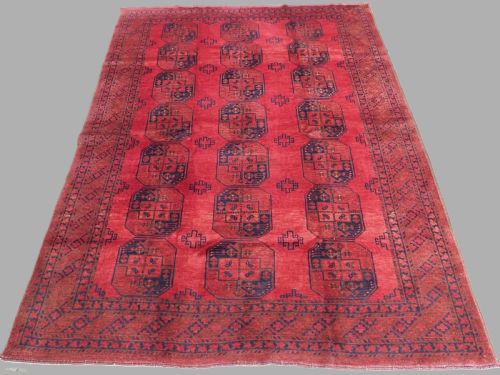
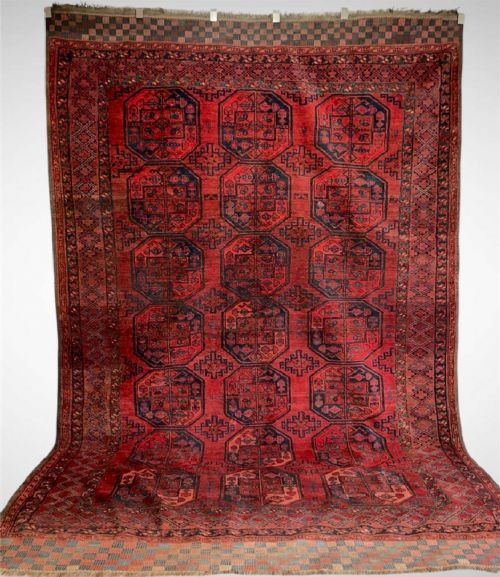
A large ersari wool rug represents the woven heritage of Turkmen and Afghan tribal makers, spanning periods from the mid-nineteenth century through to the early twentieth century. When searching for a large ersari wool rug, buyers encounter substantial floor coverings designed for main rooms, often categorised as main carpets, kellehs, or village carpets.
The dominant forms on this page include traditional Afghan Ersari Turkmen carpets displaying classic gul motifs, turreted gul designs, and occasionally ikat-inspired torba patterns. These textiles originate largely from Northern Afghanistan, serving both functional domestic roles and decorative country house settings.
Assessing quality and character
Quality in these rugs rests upon the depth and consistency of the natural dyes, particularly the vibrancy of the warm red colour that defines the best examples. Finer pieces demonstrate superior wool preparation and tight knotting in hand-spun wool.
The integrity of the traditional gul design and the preservation of original dimensions also separate standard village carpets from exceptional main carpets originating from Northern Afghanistan.
Large Ersari Wool Rug Retail Price Guide 2026
Typical asking prices for large ersari wool rug among the pieces listed under this phrase on Sellingantiques today, from the lower quarter to the upper quarter. They describe what is for sale here now, not the wider market.
Rug weight ensures that repositioning requires genuine teamwork.
The Large Ersari Wool Rug Glossary
- Gul
- A primary octagonal medallion motif repeated across Turkmen and Ersari carpets. These geometric emblems often hold tribal identification significance.
- Main carpet
- A large format floor textile traditionally produced for central domestic use by tribal weavers. These pieces measure considerably larger than standard rugs.
- Torba
- A small storage bag or hanging piece woven in tribal traditions, sometimes featuring distinctive ikat patterns. They demonstrate intricate auxiliary weaving techniques.
- Kelleh
- A long format carpet shape suited for narrow spaces or gallery placement. This rectangular proportion sits between standard rugs and large main carpets.
- Hand-spun wool
- Yarn produced manually using traditional spindle methods rather than industrial machinery. This technique creates subtle variations in texture and dye uptake.
Large Ersari Wool Rug: Frequently Asked Questions
Where were these rugs made?
These textiles originate from Northern Afghanistan and Turkmen tribal regions, produced by weavers following centuries-old cultural traditions.
The makers utilised local materials and traditional designs passed down through generations.
How do I care for a wool rug?
Regular gentle vacuuming without a beater bar keeps wool carpets clean and prevents dirt accumulation within the hand-spun pile.
Professional cleaning suited for antique textiles preserves the natural dyes and structural integrity over decades of use.
What is a gul design?
The gul is an octagonal medallion motif that forms the visual backbone of Turkmen and Ersari tribal weaving.
Different tribes arranged these geometric patterns to distinguish their specific regional heritage and weaving identity.
Can I use these in high traffic areas?
These heavy duty and hard wearing carpets were originally constructed for demanding domestic environments.
The resilient hand-spun wool and dense knotting allow them to endure daily foot traffic in busy rooms.