

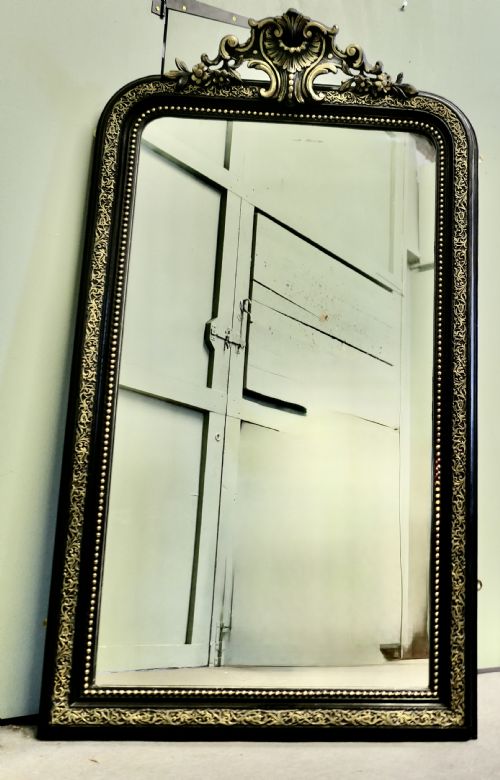
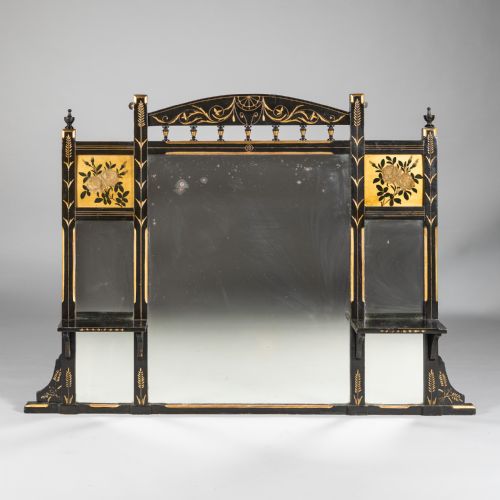
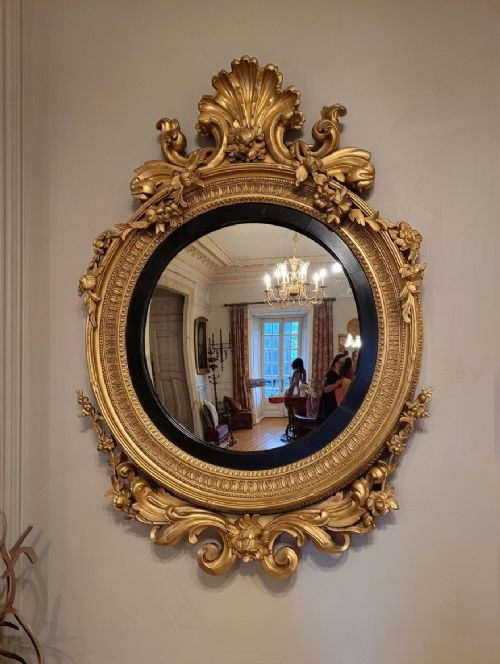


Large Ebonised Overmantel Mirror
A large ebonised overmantel mirror commands a chimney breast with dark, dramatic frames and expansive glass that draws light deep into a room.
Large Ebonised Overmantel Mirror
A large ebonised overmantel mirror belongs primarily to the nineteenth century, with strong representation from the Victorian period, Regency eras, and Napoleon III designs. These substantial wall mirrors were built specifically to sit above fireplace mantelpieces, reflecting interior light and expanding the visual dimensions of formal rooms.
Most examples encountered here combine ebonised wood frames with parcel-gilt highlights, often taking rectangular or arch-top forms. Makers during the Aesthetic Movement and late Victorian decades favoured this dark, contrasting palette to achieve a striking architectural presence.
Materials and construction
Frames rely on wood, gesso, and mirror glass, where the wood is finished with a deep ebonised coating to simulate expensive ebony. Craftsmen then applied gold leaf or silver leaf to carved parcel-gilt details, creating sharp contrasts against the blackened timber grounds.
The heavy glass plates are often original silvered mirror glass, secured within robust wooden frameworks designed to support considerable weight above a hearth.
Large Ebonised Overmantel Mirror Retail Price Guide 2026
Typical asking prices for large ebonised overmantel mirror among the pieces listed under this phrase on Sellingantiques today, from the lower quarter to the upper quarter. They describe what is for sale here now, not the wider market.
Some Victorian mirrors are so heavy they required entire architectural crews just to position them above the parlor fire.
Distinctions in craftsmanship
The division between standard production and superior work rests on the crispness of the gesso mouldings and the depth of the ebonised finish. Finer examples display finely hand-carved details and careful parcel-gilt application that remains intact across complex architectural frames.
The clarity and condition of the original mirror plate heavily influence the character of the piece, as genuine period glass often shows authentic age foxing while retaining a deep, heavy reflection.
The Large Ebonised Overmantel Mirror Glossary
- Ebonised
- Wood stained or painted black to imitate ebony. This dark finish gained immense popularity during the Victorian and Aesthetic Movement periods.
- Overmantel
- A large mirror or painting designed to hang directly above a mantelpiece. These pieces often anchor the decorative scheme of a nineteenth-century room.
- Parcel-gilt
- Partially gilded with gold leaf or silver leaf. The technique highlights specific carved details against a contrasting background colour.
- Gesso
- A plaster-like material applied to wood frames and carved into ornate relief ornamentation. It provides the smooth base needed for subsequent gilding.
- Aesthetic Movement
- A late nineteenth-century design style emphasising visual beauty over narrative content. It frequently utilised ebonised surfaces paired with gilt details.
Large Ebonised Overmantel Mirror: Frequently Asked Questions
Where should I hang a large ebonised overmantel mirror?
These mirrors were originally designed to sit securely upon or immediately above a fireplace mantelpiece, where they anchor the central wall of a reception room.
They also function effectively on large blank walls in hallways or dining rooms, provided the wall structure supports their considerable weight.
How do I identify a Victorian ebonised mirror?
Look for deep black ebonised wooden frames combined with parcel-gilt highlights, architectural arch tops, and heavy construction characteristic of the nineteenth century.
Many examples from this era also incorporate Aesthetic Movement design motifs or heavy gesso mouldings around the glass plate.
Are the mirror plates original?
Many surviving nineteenth-century examples retain their original silvered mirror glass, which often exhibits characteristic age spots known as foxing.
Original plates display a slightly wavy or distorted reflection compared to modern float glass, which helps confirm period authenticity.
How do I clean an antique ebonised frame?
Dust the ebonised wood gently with a dry, soft microfibre cloth to remove surface particles without disturbing the finish.
Avoid liquid cleaners, abrasives, or polishes, as harsh chemicals can damage the historic black stain and delicate gold leaf highlights.