



Large Drinks Tray
A large drinks tray anchors a gathering, bringing surface and proportion to glassware, decanters and bottles.
Large Drinks Tray
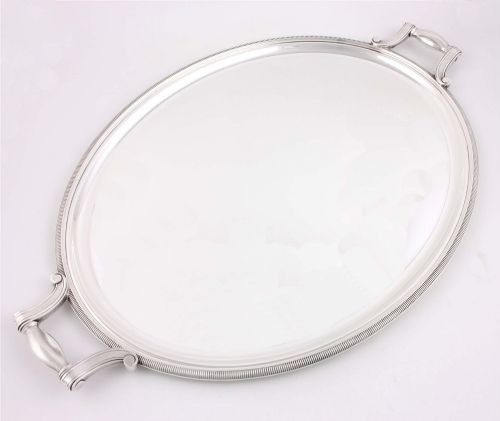
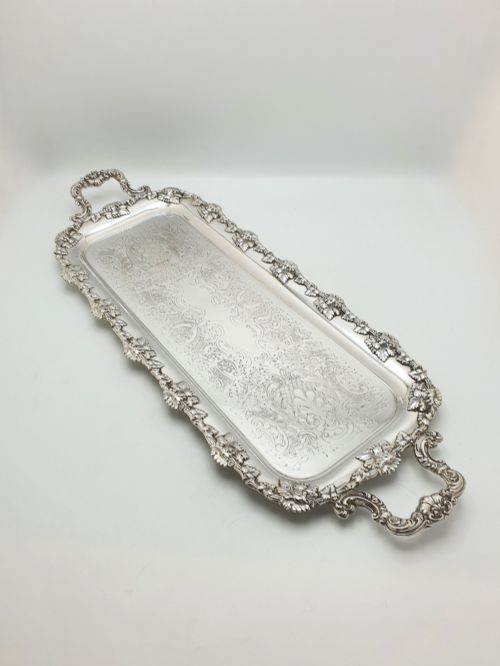
When searching for a large drinks tray, buyers encounter substantial serving pieces designed for carrying and displaying glassware, decanters, and cocktail accessories during the Victorian, Edwardian, and Art Deco periods. These items encompass heavy silver-plated and solid sterling silver surfaces, alongside warm wooden frames constructed from mahogany and oak.
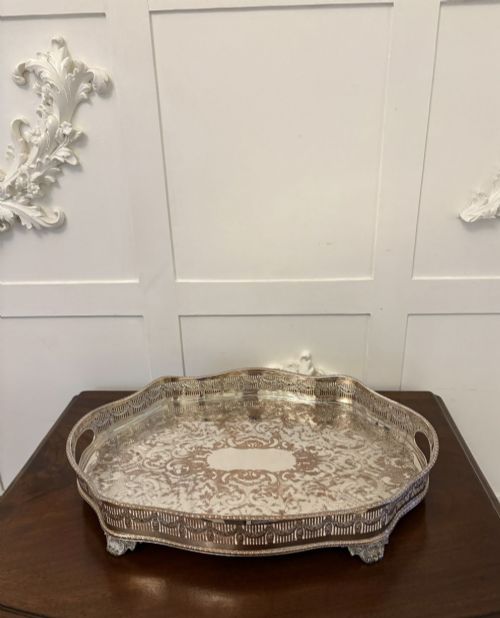
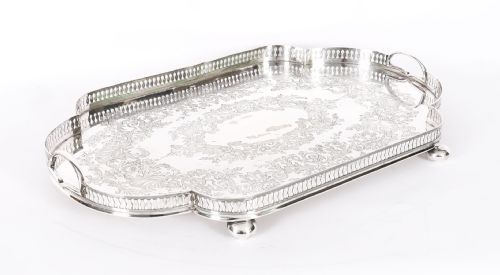
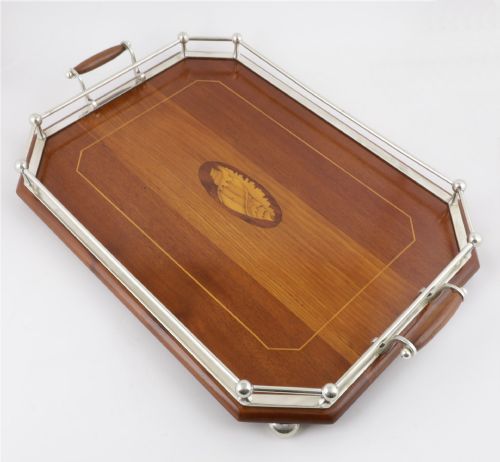
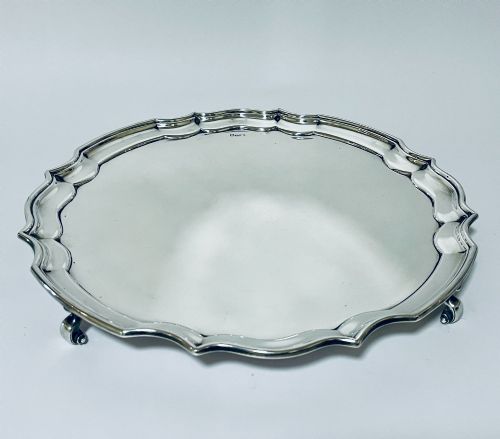
The most common examples on this page are Edwardian and Victorian silver-plated serving trays and gallery trays, frequently detailed with handles, engraved centre panels, or pierced brass and silver borders. Salvers and octagonal or oval cocktail trays also appear regularly, often combining wood bases with silver-plated galleries.
Originating predominantly from English workshops, these pieces range from utilitarian butler's trays to monumental presentation pieces carrying family crests or hotel provenance. Whether formed from plain copper or substantial Sheffield plate, each item reflects the social rituals of the nineteenth and early twentieth centuries.
How They Were Made
Makers constructed these trays using silver plating techniques over base metals, including electroplated nickel silver and copper, alongside solid sterling silver and natural timbers like oak and mahogany. Old Sheffield plate and later EPNS methods bonded thin sheets of silver to copper bases, creating durable surfaces capable of handling heavy decanters.
Silversmiths employed hand engraving, engine turning, and piercing to decorate the metal bodies, often soldering distinct gallery rails and cast handles to the perimeters. Wooden examples integrated silver-plated mounts and gallery borders screwed directly into hardwood bases fitted with shell inlay or brass footings.
Several trays carry the crests of noble families or hotel suites, having retired from grand dining rooms to quiet sideboards.
What Varies in Quality
The weight and gauge of the metal foundation dictate the rigidity of the tray, distinguishing heavy, substantial pieces from lighter alternatives that flex under load. Superior examples feature crisp, deep engraving and robustly jointed gallery rails rather than shallow stamping or loose soldered joints.
Maker attribution and the presence of familial crests or institutional provenance elevate the standing of a piece, while the preservation of the original silver plating across high-friction surfaces marks the distinction between well-maintained items and heavily worn examples.
James Deakin·Harrison Bros·Mappin & Webb·Christofle·Ralph Lauren·Elkington and Co·Hukin and Heath·Peters Hamburg·Atkin Brothers·Lee and Wigfull·John Grinsell
The Large Drinks Tray Glossary
- Gallery tray
- A serving tray featuring an elevated pierced or solid metal railing around its perimeter to secure glassware and decanters. This style became particularly popular during the Victorian and Edwardian eras for serving drinks.
- Salver
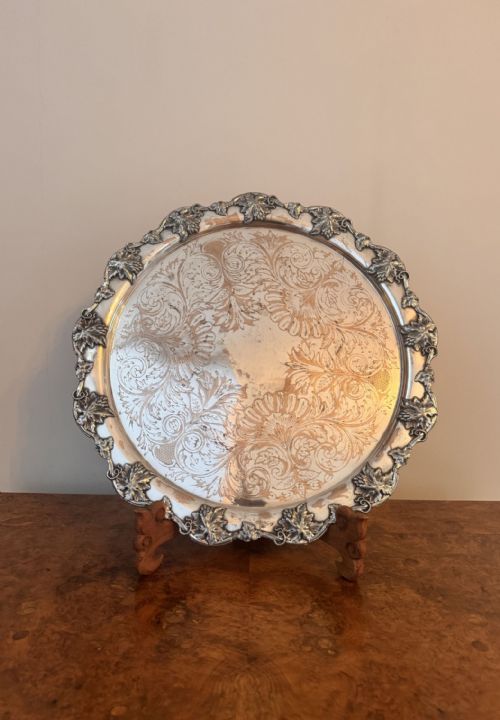
- A flat, circular or shaped serving tray typically supported on small feet. These pieces were traditionally used for presenting letters, calling cards, or beverages.
- EPNS
- Electroplated Nickel Silver, a common manufacturing method where a thin layer of silver is deposited onto a nickel alloy base. This technique gained widespread use during the nineteenth century.
- Sheffield plate
- An early form of composite metal created by fusing a sheet of silver to a copper core before rolling them together. This process predates modern electroplating.
- Engine turning
- A mechanical decoration technique that cuts precise geometric patterns into metal surfaces using a lathe. It provides both texture and grip on cocktail trays.
Large Drinks Tray: Frequently Asked Questions
How do I clean a silver plated tray?
Use a soft cloth and dedicated silver polish, working gently to avoid wearing through the plate.
Keep abrasive pads away from the surface to preserve the engraved details and original metal finish.
Can I use these trays for daily serving?
Solid silver and robust silver-plated trays handle everyday use quite well when treated with care.
Wooden gallery trays require protection from standing liquids to prevent warping or staining the timber.
What is the difference between a salver and a tray?
Salvers generally stand on small feet and present a formal flat surface for drinks or calling cards.
Trays often include handles or raised galleries specifically designed for carrying heavier loads across rooms.
How do I identify an Edwardian tray?
Edwardian pieces often feature neoclassical motifs, pierced galleries, and lighter proportions than Victorian items.
Maker marks and registration numbers stamped on the reverse help confirm the production era.