

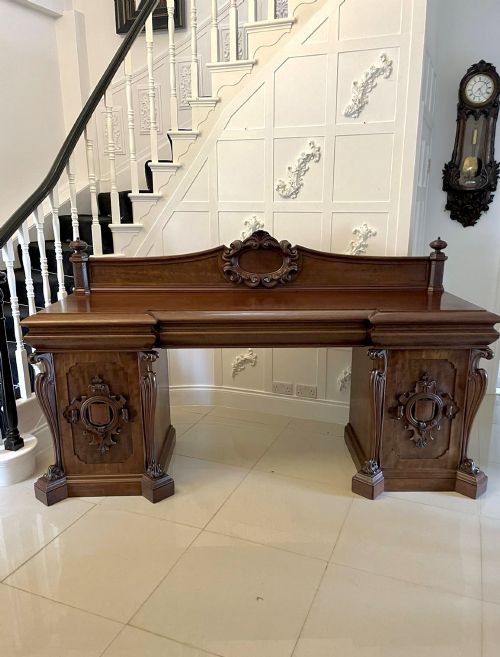
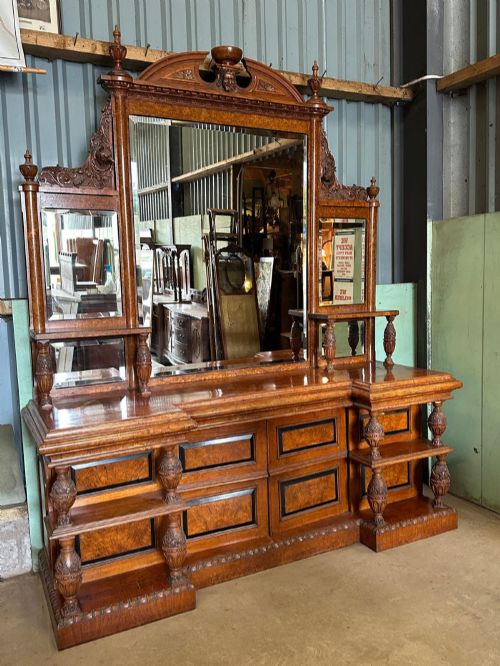
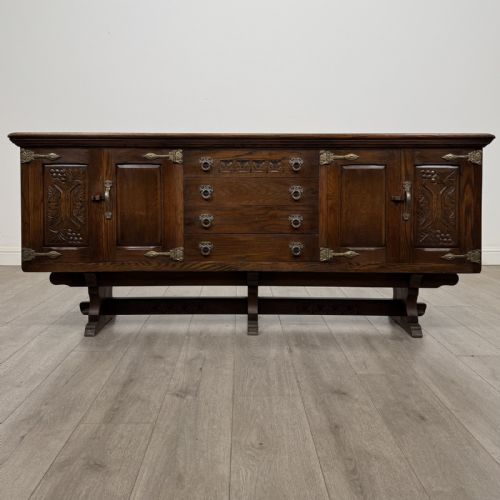
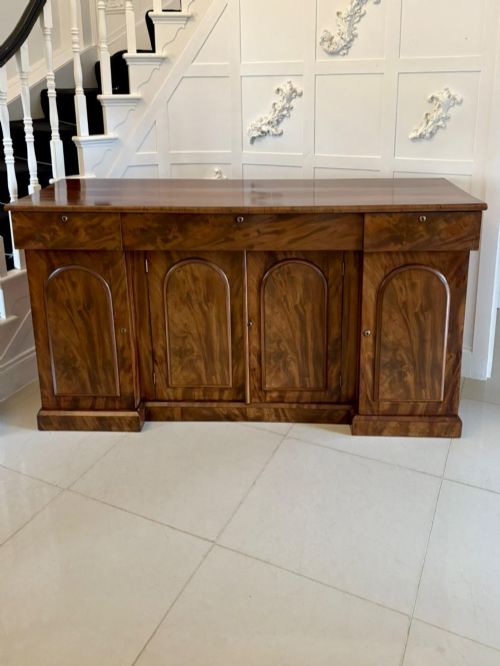


Large Dining Room Sideboard
A large dining room sideboard provides substantial storage and commanding presence, anchoring a traditional interior with timber character.
Large Dining Room Sideboard
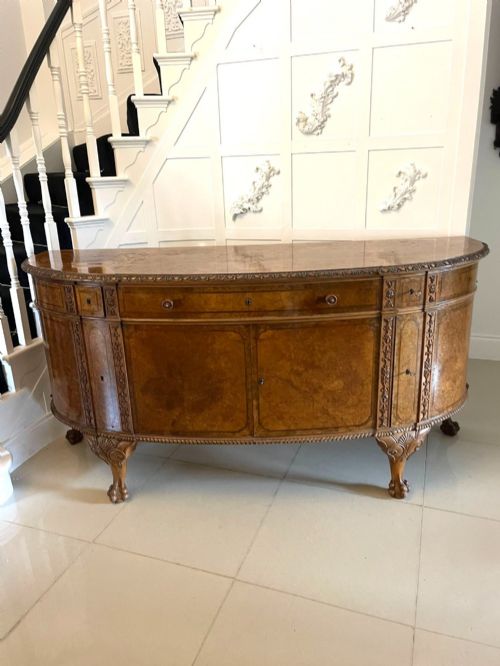
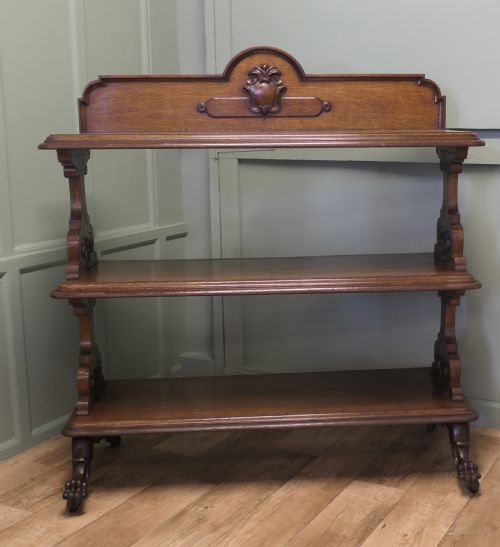
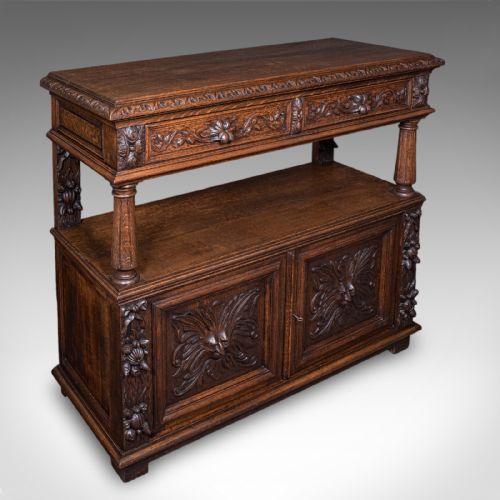
When you search for a large dining room sideboard, you encounter substantial dining furniture designed to store and serve food and drink. These items appear across several distinct historical periods, including the Georgian, Regency, and Victorian eras, alongside later revivals.
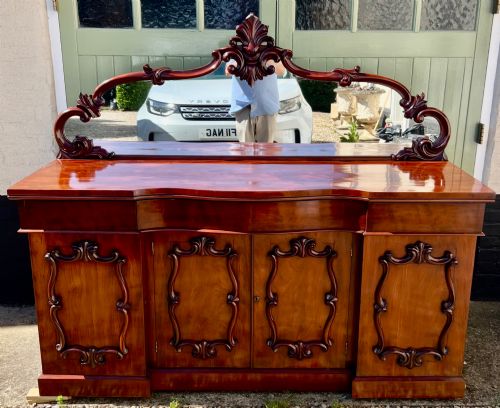
The forms vary from breakfront and pedestal configurations to simpler buffet servers and mirrored chiffoniers. Oak and mahogany dominate the selection, often featuring deep drawers and capacious cupboards intended for domestic service.
Victorian and Edwardian iterations frequently display heavy carvings or mirror backs, whilst Georgian and Regency examples rely on clean lines and inlaid veneers for visual weight.
Materials and construction
Cabinetmakers utilised dense timbers such as mahogany, oak, and pollard oak as the primary structural bodies. Flame mahogany veneer and satinwood inlay were frequently applied to frontal surfaces to create striking grain patterns and decorative contrast.
Brass handles and fixtures provided functional hardware that complemented the dark polished wood. Construction techniques combined solid timber framing with carefully matched veneers fixed to sturdy carcases to withstand heavy daily use.
Large Dining Room Sideboard Retail Price Guide 2026
Typical asking prices for large dining room sideboard among the pieces listed under this phrase on Sellingantiques today, from the lower quarter to the upper quarter. They describe what is for sale here now, not the wider market.
Listings span the Georgian, Regency, Victorian, and Edwardian periods, constructed primarily in mahogany and oak with flame veneer highlights.
Evaluating craftsmanship
The division between standard pieces and those of exceptional standing rests upon the selection of timber figures, such as figured mahogany or burr walnut, and the precision of inlaid boxwood or satinwood stringing. Finer examples exhibit meticulous hand-carved details and well-balanced proportions across broad facades.
Internal construction, including the integrity of drawer linings and the smooth operation of large doors, dictates the calibre of the piece. Superior items retain original brass hardware and well-preserved polish that highlights the depth of the grain.
Robson & Sons
The Large Dining Room Sideboard Glossary
- Breakfront
- A cabinet design where the central section projects forward from the flanking outer sections. This configuration adds architectural depth to large dining room furniture.
- Pedestal sideboard
- A form featuring two heavy pedestals or cupboards flanking a central recess or drawer. It represents a substantial nineteenth-century architectural style.
- Flame mahogany
- A veneer cut from the fork of the mahogany tree where the branches join the trunk. It produces a distinctive flickering flame pattern across the timber surface.
- Pollard oak
- Timber taken from oak trees that have been pollarded, resulting in a gnarled grain filled with dense clusters of knots. It creates a highly textured surface on Victorian furniture.
- Chiffonier
- A low sideboard or cabinet, frequently equipped with a mirror or shelving superstructure. It evolved during the nineteenth century for use in dining rooms and drawing rooms.
Large Dining Room Sideboard: Frequently Asked Questions
How do I style a large dining room sideboard?
Position the piece against a principal dining room wall to allow its substantial proportions to anchor the space. Pair the surface with complementary silver, ceramics, or a heavy mirror to balance the visual weight of the timber.
Ensure adequate clearance around the unit for opening heavy cupboard doors and pulling out deep serving drawers during meals.
What is the difference between a sideboard and a buffet?
Sideboards generally incorporate a combination of deep cupboards and long drawers designed for storing dining linen, cutlery, and heavy serving platters. Buffets often lean towards simpler serving surfaces with fewer internal compartments.
Many nineteenth-century examples blur these lines by combining display mirrors and wine racks within the same architectural framework.
How do I identify a Victorian sideboard?
Victorian examples frequently display darker mahogany or oak timbers, often accompanied by elaborate hand carvings, heavy brass handles, and occasionally mirror backs. The construction tends to be robust and imposing to suit the heavy domestic requirements of the period.
Later Victorian pieces from the nineteenth century may also incorporate revival styles like Gothic taste or Jacobean motifs.
How should I care for antique mahogany furniture?
Maintain the polished timber by dusting regularly with a soft, dry cloth and avoiding direct exposure to strong sunlight or radiator heat. Occasional application of appropriate wax polish helps preserve the moisture and depth of the wood grain.
Keep humidity levels stable within the room to prevent timber movement or veneer cracking over time.