





Large Dark Oak Wardrobe
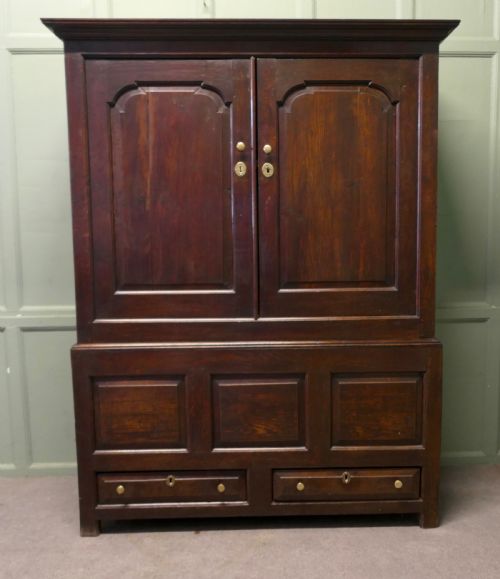
A large dark oak wardrobe is a substantial piece of vernacular furniture built to store linens and garments with enduring strength.
Large Dark Oak Wardrobe
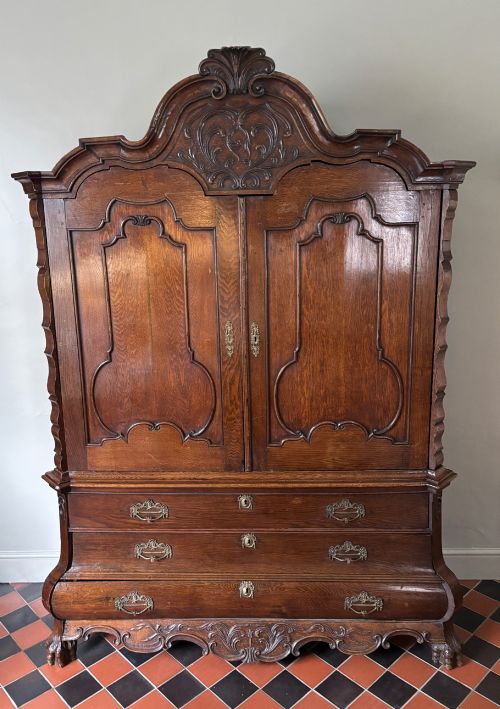
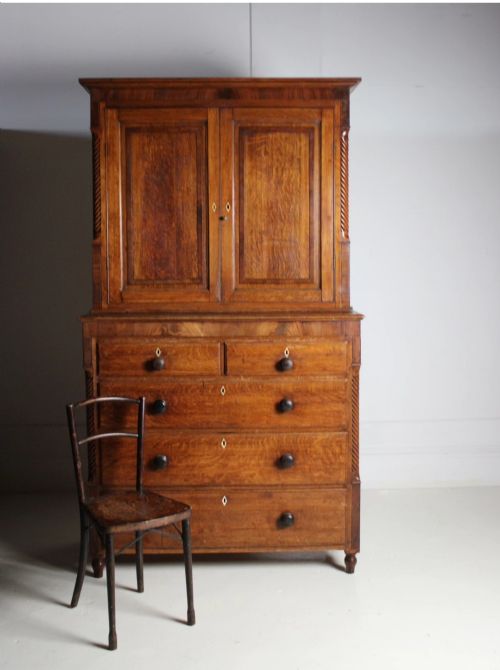
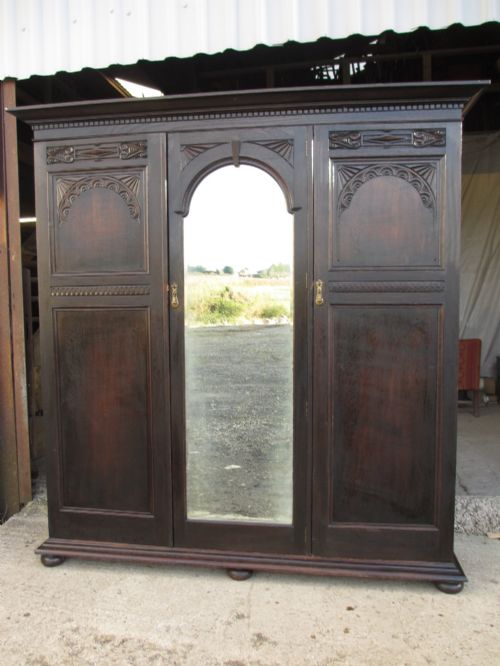
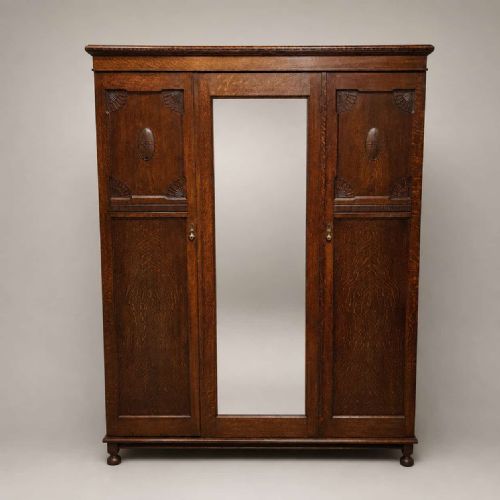
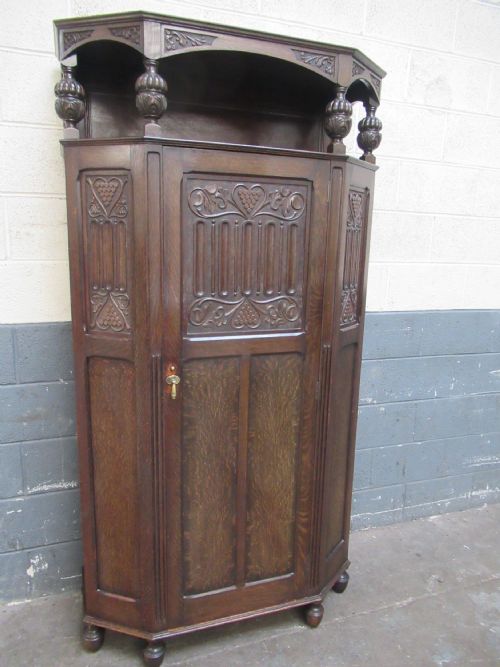
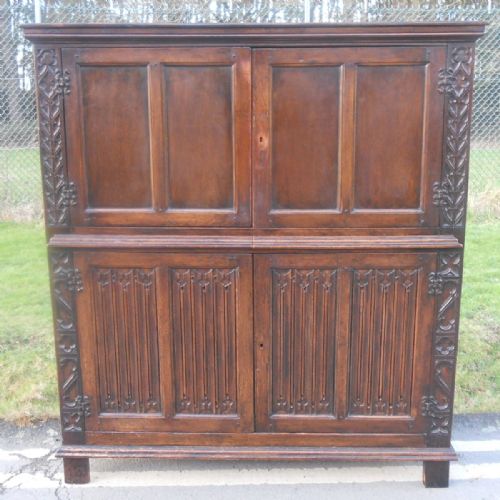
When you search for a large dark oak wardrobe, you encounter heavy timber storage furniture spanning from the eighteenth century through to the nineteen-thirties. These pieces take several related forms, including triple wardrobes, linen presses, housekeepers cupboards, tack cupboards, and storage cupboards. Georgian and Edwardian examples dominate the selection, often displaying regional vernacular characteristics alongside formal revival details.
The architectural presence of these cupboards stems from their generous proportions and deep timber tones. Many incorporate panelled doors, architectural cornices, and fitted internal hanging space or linen slides. Buyers often choose these pieces for bedrooms and hallways where substantial storage and period character are both required.
How they were made
Cabinet makers constructed these wardrobes primarily using solid oak timbers, often finished with dark patination that highlights the grain. Construction methods rely on traditional frame and panel joinery, which accommodates natural wood movement across the wide facades of these large pieces. Carved ornamentation appears on specific revival and Edwardian items, executed directly into the solid timber.
Functional metalwork forms an essential secondary material, with brass handles, hinges, and iron fittings securing the heavy doors. Glass panels occasionally feature in mirror door variants from the Edwardian period, while bone escutcheons or internal fixtures appear in select pieces. Every material serves a structural or practical purpose, typical of utilitarian and vernacular cabinet making.
Large Dark Oak Wardrobe Retail Price Guide 2026
Typical asking prices for large dark oak wardrobe among the pieces listed under this phrase on Sellingantiques today, from the lower quarter to the upper quarter. They describe what is for sale here now, not the wider market.
Several cupboards retain their original bone escutcheons, whispering secrets of forgotten keys and long-lost Georgian household inventories.
What varies in quality
The distinction between standard utility pieces and finer examples rests upon the selection of timber and the ambition of the joinery. Superior wardrobes display carefully matched oak boards with consistent grain patterns across the doors and cornices, alongside crisper execution of panel mouldings and carved details. The integrity of the internal configuration, whether original linen slides or fitted hanging space, also influences the standing of the piece.
Proportion and architectural balance set the better pieces apart from heavier, utilitarian storage cupboards. Finer examples maintain refined cornice work and well-balanced door proportions that lighten the visual weight of the dark timber. Hardware originality, from brass drop handles to iron hinges, further distinguishes pieces that retain their complete historical character.
The Large Dark Oak Wardrobe Glossary
- Linen press
- A tall cupboard featuring upper sliding trays for folded textiles and lower drawers for bulkier garments. These pieces date predominantly from the eighteenth and nineteenth centuries.
- Housekeepers cupboard
- A large storage cabinet traditionally used in country houses for household linen and provisions. They typically combine upper panelled doors with lower drawer configurations.
- Tack cupboard
- A utilitarian storage piece designed for harness equipment or estate gear. These heavy cupboards emphasise robust oak construction over decorative refinement.
- Triple wardrobe
- A grand three-section clothing cabinet offering expanded storage capacity. Edwardian and nineteen-twenties examples frequently incorporate central mirror doors into this format.
- Frame and panel
- A traditional joinery technique where a central floating panel sits within a grooved outer frame. This construction allows solid oak to expand and contract safely with humidity changes.
Large Dark Oak Wardrobe: Frequently Asked Questions
What is a housekeepers cupboard?
A housekeepers cupboard is a large storage piece traditionally used in country houses to store household linens, dry goods, and domestic supplies. These functional cabinets combine upper doors with lower drawer arrangements.
They offer exceptional capacity for modern clothing and linen storage while adding distinct vernacular character to large bedrooms or hallways.
How do I date an oak wardrobe?
Dating relies on observing construction methods, timber patination, and stylistic details such as cornices and panel mouldings. Georgian pieces show hand-planed surfaces and pegged joints, whereas Edwardian items often feature machine-sawn timber and fitted mirror doors.
Comparing hardware styles and internal configurations against established period characteristics helps narrow the decade of manufacture.
Will a large oak wardrobe fit my room?
These wardrobes are exceptionally heavy and possess deep footprints designed for spacious period properties. Measuring both floor space and ceiling height is essential before placement.
Many of these historic cupboards cannot be fully disassembled, so access through stairwells and doorways requires careful prior measurement.
What is the difference between a press and a wardrobe?
A linen press traditionally contains internal sliding trays intended for folded textiles rather than hanging garments. Wardrobes focus primarily on vertical space for hanging clothes on rails or hooks.
Over time, many presses have been adapted with hanging rails to suit contemporary clothing storage needs.